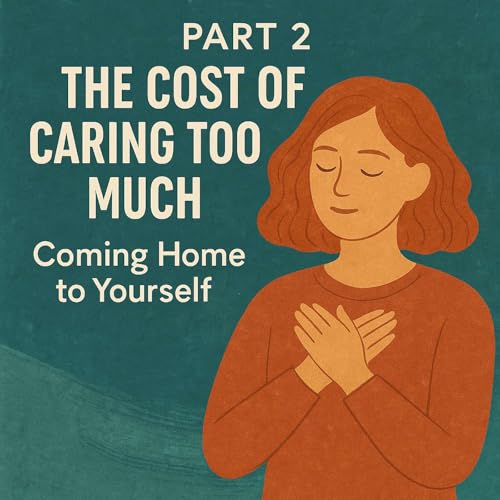
• Part Two: The Cost of Caring Too Much - Coming Home to Yourself
    Nov 27 2025

    TL/DR Episode Summary: This episode explores the tender line between empathy and emotional fusion, and why so many sensitive, overgiving women lose themselves while trying to care for others. If you’ve ever felt responsible for someone else’s feelings, this one will feel like coming home to yourself.

    Welcome Back!

    In this second part of the series, we step into one of the most tender, defining truths of the overgiving pattern: the difference between empathy and fusion. This is the moment in therapy where clients usually go quiet, or cry, or exhale in that way that tells me something finally landed.

    Because most people who care “too much” aren’t struggling with empathy at all. They’re struggling with over-identification. Emotional merging. Becoming a one-person sponge for everyone else’s feelings while slowly disappearing inside their own life.

    In this episode, we explore how fusion feels in the body, why it masquerades as kindness, and how it forms in childhood, long before you had words for any of this.

    We look at the nervous system mechanics behind over-attunement, the praise that rewarded your self-erasure, and the subtle ways fusion shapes your posture, your breath, your sense of self, and your relationships.

    You’ll hear real-world examples that make the pattern unmistakable, the heavy-text spiral, the relationship “pause,” the emotional weather system that turns someone else’s storm into your climate. And you’ll learn why this reflex isn’t a flaw; it’s a survival strategy your body learned to keep you safe.

    Most importantly, we talk about what healthy empathy actually looks like, and the sentence that becomes a turning point for so many sensitive, intuitive women:

    You can care… without carrying.

    If you’ve ever felt like you know everyone else’s feelings but not your own, if you’ve ever lost yourself in someone’s silence, if you’ve ever confused hyper-attunement with love, this episode is a homecoming.

    Let’s walk it slowly, together.

    Recommendations, Feedback, Comments? I’d love to hear from you!

    Support the show

    With warmth,

    Dr. Lauren Schaefer

    Voir plus Voir moins
    36 min
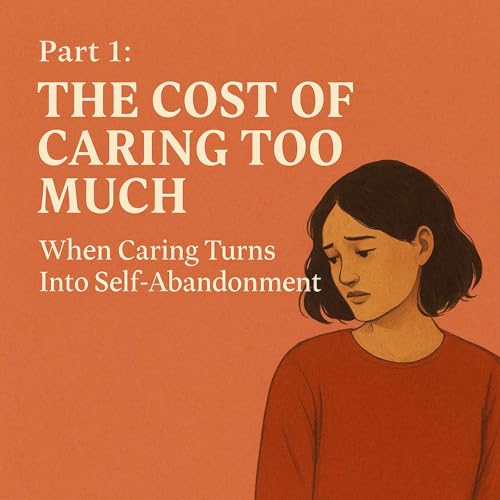
  • Part 1: The Cost of Caring Too Much - When Caring Turns Into Self-Abandonment
    Nov 19 2025

    Dr. Lauren Schaefer unpacks the psychology of overgiving and explores the quiet slide from compassion into self-erasure. We explore when empathy becomes vigilance, when connection becomes labor, and when our nervous system mistakes intensity for intimacy. Through attachment, trauma bonding, and neurodivergent wiring, we’ll look at why these patterns form and the addictive push-pull that keeps so many deep feelers stuck in relationships that drain them.

    We’ll learn why “caring harder” becomes a reflex, and why certain patterns feel magnetic even when they’re painful. A validating exploration of overgiving, for anyone who feels like they’re always managing the emotional weather around them.

    Recommendations, Feedback, Comments? I’d love to hear from you!

    Support the show

    With warmth,

    Dr. Lauren Schaefer

    Voir plus Voir moins
    33 min
  • From Triggered to Grounded: Why Calm Feels So Hard (and How to Find It Anyway)
    Nov 2 2025

    Ever feel like you know you’re overreacting but can’t stop? Dr. Lauren Schaefer breaks down why frustration hits harder for sensitive, high-alert nervous systems, and how small shifts in thought, breath, and rhythm can rebuild your frustration tolerance from the inside out.

    What if your frustration isn’t a flaw but a signal? In this episode, Dr. Lauren Schaefer unpacks the science and psychology behind an overactive alert system: the blend of hormones, beliefs, and attachment that turns small stress into big emotion. You’ll learn how to spot your body’s “I can’t stand this” loop and rewire it into calm, compassion, and trust. This episode bridges cognitive therapy and body-based regulation to help you move from reactive to resilient.

    Recommendations, Feedback, Comments? I’d love to hear from you!

    Support the show

    With warmth,

    Dr. Lauren Schaefer
    Voir plus Voir moins
    39 min
  • When Control Becomes the Cage: Letting Go of Anxious Safety Behaviors
    Oct 27 2025

    In this episode, we dig into the quiet habits that masquerade as “self-care” but actually keep us trapped in anxiety, what therapists call safety behaviors. A safety behavior is anything you do to try to feel less anxious, uncertain, or uncomfortable in the moment. From mental reassurance loops to over-planning every possible outcome, these small acts are our brain’s way of begging for certainty. The trouble is, they work against us in the fight to manage anxiety.

    We’ll explore how these patterns show up in everyday life (e.g., checking, avoiding, asking for validation) and how each one reinforces the belief that we can’t handle discomfort or uncertainty. We will explore how to respond more effectively.

    This is an invitation to meet uncertainty differently. To stop negotiating with fear and start experimenting with trust. If you’ve ever caught yourself thinking, “I just need to make sure,” this episode is for you.

    See my companion substack (When Control Becomes the Cage) for a written copy of what we review in this episode.

    Recommendations, Feedback, Comments? I’d love to hear from you!

    Support the show

    With warmth,

    Dr. Lauren Schaefer

    Voir plus Voir moins
    24 min
  • Why I Created the Hidden in Plain Sight Podcast
    Oct 27 2025

    This brief episode explores the purpose of this podcast and why it was created.

    So many women look fine on the outside, capable, kind, accomplished, while quietly suffering on the inside. Hidden in Plain Sight is for the ones who hold it all together, the ones who care too much, the the high-functioning, deeply feeling women who have been dismissed for their anxiety, while all along may have been dealing with something else (e.g., ADHD, ASD, OCD). In this podcast, Psychologist Dr. Lauren Schaefer invites listeners to understand what is behind the over-thinking, to unmask the roles of helper, fixer, good girl, and emotional manager, and begin coming home to who they really are.

    Each episode explores the intersection of neurodivergence, trauma, perfectionism, and emotional burnout with honesty and compassion. This is not a self-improvement show. It’s a self-seeing one.

    Recommendations, Feedback, Comments? I’d love to hear from you!

    Support the show

    With warmth,

    Dr. Lauren Schaefer

    Voir plus Voir moins
    8 min
  • Is It Anxiety or OCD? Understanding Overthinking
    Oct 27 2025

    If you’ve ever found yourself thinking and thinking and thinking, turning a situation over in your mind like a Rubik’s cube, trying to find the right feeling, the right explanation, the right evidence that you’re safe or good or okay—this episode is for you.

    Today on the podcast, we’re exploring one of the more confusing overlaps in mental health: the difference between anxiety and OCD, especially when it’s fueled by attachment wounds, a hyperactive mind, perfectionism, and a deeply wired need to feel “good enough” in your relationships.

    This isn’t your typical diagnostic breakdown. Instead, we’re gently unpacking the function of your thoughts, because in many cases, what looks like anxiety is actually mental compulsions.

    And when your nervous system has been shaped by early inconsistency, emotional attunement gaps, or rejection sensitivity, it makes sense that your brain might latch on to intrusive thoughts about:

    • Whether you upset someone
    • If you were “too much”
    • If your motives were pure enough
    • What a past interaction really meant

    In this episode, I’ll walk you through:

    • How OCD hijacks your brain’s natural meaning-making system
    • Why high-functioning women with anxious or disorganized attachment often go undiagnosed
    • The difference between emotional processing vs compulsive rumination
    • What mental compulsions sound like (spoiler: they’re often praised as "self-awareness" or "empathy")
    • The science-backed treatment approaches that actually work: including ERP and compassion-based strategies

    Plus, I’ll guide you through a closing reflection to help you practice sitting with uncertainty, the thing OCD tells you is unsafe, but your body needs to slowly learn to trust.

    If this episode resonates, I hope it helps you feel seen. I created Hidden in Plain Sight for people like you. For those who’ve always cared deeply, thought too much, and tried too hard… without realizing how much of that effort was rooted in survival, not self.

    You don’t need to keep earning your safety. You’re allowed to rest, to trust yourself, and to feel uncertain without needing to fix it.

    I’m so glad you’re here.

    Recommendations, Feedback, Comments? I’d love to hear from you!

    Support the show

    With warmth,

    Dr. Lauren Schaefer

    Voir plus Voir moins
    14 min
  • When the Mind Won’t Stop Checking: OCD and Mental Compulsions
    Oct 16 2025

    In this episode, Dr. Lauren Schaefer unpacks the often invisible or overlooked side of OCD, mental compulsions. While many people associate OCD with visible rituals or checking behaviors, for others the compulsions happen largely in the mind: replaying conversations, analyzing motives, or mentally reviewing to find certainty and relief.

    Lauren explores how these silent loops can disguise themselves as problem-solving or “just being thorough,” yet quietly maintain anxiety and self-doubt. She explains how to begin noticing when a thought becomes a compulsion, how reassurance-seeking reinforces the fear cycle, and what healing looks like when you learn to let the uncertainty stay.

    Gentle, relatable, and deeply validating, this episode is for anyone who feels trapped in their thoughts and ready to start reclaiming their mental space.

    Relevant Links:

    Non-Engagement Responses https://iocdf.org/expert-opinions/how-do-i-stop-thinking-about-this-what-to-do-when-youre-stuck-playing-mental-ping-pong/ and this

    https://www.treatmyocd.com/blog/effective-ways-you-can-respond-to-unwanted-thoughts

    International OCD Foundation: How to find the right therapist. https://iocdf.org/ocd-finding-help/how-to-find-the-right-therapist/

    Read more on Lauren’s Substack: https://substack.com/@hiddeninplainsightpodcast

    Recommendations, Feedback, Comments? I’d love to hear from you!

    Support the show

    With warmth,

    Dr. Lauren Schaefer

    Voir plus Voir moins
    15 min
  • Healing After Betrayal: Learning to Feel Your Feelings With Self-Compassion
    Sep 20 2025

    Welcome back to the Hidden in Plain Sight Podcast.

    TLDR Summary

    This episode is an invitation to pause those harsh inner narratives and discover another way forward in feeling your emotions: self-compassion. Together, we’ll explore how to access your feelings safely, speak to yourself with gentleness, and remind the hurting parts of you that they are not alone, or unworthy.

    Betrayal

    If you’re listening today, I imagine you’ve been through betrayal: maybe by a partner, a friend, a family member, or even a system you thought you could trust. When that happens, it shakes the ground beneath you. It’s not just about what someone did, it’s about the rupture in safety, in belonging, in your sense of worth.

    Betrayal leaves an ache that lingers long after the moment it happens. For highly sensitive people, the impact can feel especially sharp, echoing through the body, emotions, and even self-worth. It’s not only about what someone else did, but also about the stories we begin telling ourselves in the aftermath: stories of blame, shame, or not being “enough.”

    You might hear an inner voice that says, “How could I not see this coming? Why wasn’t I enough? What’s wrong with me that they treated me this way?”

    Those voices are painful, but they’re also trying to protect you. They think that if you blame yourself, maybe you can prevent future pain. But self-blame keeps you locked in a cycle of suffering, long after the betrayal itself. So how do we begin to soften those harsh inner voices? This is where self-compassion comes in.

    Learning Self-Compassion

    Self-compassion isn’t saying, “It’s fine, I’ll just let in this go.” It’s saying, “This hurts, and I deserve kindness while I’m hurting.” It involves three simple moves:

    1. Mindfulness: Naming what you feel. “This is pain. This is betrayal. This is grief.”
    2. Common humanity: Reminding yourself, “I am not the only one. Others have walked this same road and survived.”
    3. Self-kindness: Offering to yourself the tone you would use with someone you love.

    Accessing Your Feelings

    Sometimes betrayal leaves us numb, cut off from our feelings. If that’s you, try this: instead of asking “What am I feeling?” start with “Where do I feel it in my body?” Maybe it’s a tightness in your chest, a sinking in your stomach, or a heaviness in your shoulders.

    Let that body signal be your doorway. Place your attention there. Say: “This is my grief. This is my anger. This is my hurt.”

    Take a slow breath. Let yourself notice, “I am hurting right now.”

    Say silently or aloud: “Of course I feel this. Anyone would feel this if they’d been betrayed. May I treat myself with gentleness right now.”

    If you notice resistance, that’s normal. Self-compassion takes practice. For many of us, it feels foreign at first. You don’t have to force it. Even the act of trying is enough.

    Self-compassion doesn’t erase betrayal, but it prevents betrayal from erasing you.

    Every time you pause to notice your feelings and respond with gentleness (not avoidance), you reclaim a little piece of yourself.

    Take this with you today:

    • Being hurt by someone else’s choices does not mean you are unworthy, unlovable, or naïve.
    • It means you are human, and you loved or trusted deeply enough to risk being hurt: that’s bravery!
    • Betrayal is not evidence that you’re broken.
    • Your sensitivity is not a flaw, it’s the reason you feel deeply.

    Thank you for being here, for listening, and for letting me share this space with you.

    Feel free so send any re

    Recommendations, Feedback, Comments? I’d love to hear from you!

    Support the show

    With warmth,

    Dr. Lauren Schaefer

    Voir plus Voir moins
    26 min