

Questions and Answers Episode 42
Échec de l'ajout au panier.
Échec de l'ajout à la liste d'envies.
Échec de la suppression de la liste d’envies.
Échec du suivi du balado
Ne plus suivre le balado a échoué

Questions and Answers Episode 42
-
Narrateur(s):
-
Auteur(s):
À propos de cet audio
In this episode, we delve into a lesser-known but essential aspect of First World War life: the use and organisation of latrines on the battlefield. Where did soldiers actually go to the toilet, how were these facilities constructed, and did men really need permission to use them?
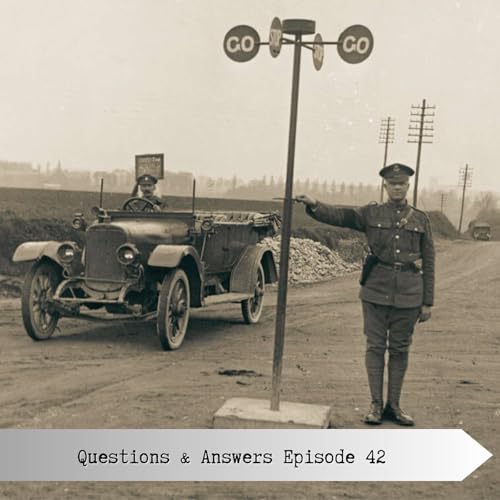
We then explore the history of the Military Police in WW1, from the Military Foot Police and Military Mounted Police to the Military Provost Staff Corps, looking at their varied roles — from traffic control and maintaining discipline to operating military prisons.
Next, we examine the long-standing question of German trenches on the Western Front. Were they truly deeper, stronger and more permanent compared to Allied positions, and what does the archaeology and evidence show?
Finally, we focus on the Boy Soldiers of the Great War — what happened when their real ages were uncovered, how the army dealt with them, and how to trace their stories in surviving military records.
A wide-ranging episode exploring the daily life, policing, engineering and human stories of the Great War.
Richard Van Emden's book: Boy Soldier's of the Great War (via Amazon).
Main image: Military traffic control signal post at Blendecques, 6 May 1918. Note signboard pointing way to No. 7 General Hospital. (IWM Q8802)
Sign up for the free podcast newsletter here: Old Front Line Bulletin.
You can order Old Front Line Merch via The Old Front Line Shop.
Got a question about this episode or any others? Drop your question into the Old Front Line Discord Server or email the podcast.
Send us a text
Support the show