


Building Applications with AI Agents
Designing and Implementing Multiagent Systems
Échec de l'ajout au panier.
Échec de l'ajout à la liste d'envies.
Échec de la suppression de la liste d’envies.
Échec du suivi du balado
Ne plus suivre le balado a échoué
30 jours d'essai gratuit à Audible Standard

Building Applications with AI Agents
Acheter pour 24,33 $
-
Narrateur(s):
-
Nick Mondelli
-
Auteur(s):
-
Michael Albada
À propos de cet audio
Generative AI has revolutionized how organizations tackle problems, accelerating the journey from concept to prototype to solution. As the models become increasingly capable, we have witnessed a new design pattern emerge: AI agents. By combining tools, knowledge, memory, and learning with advanced foundation models, we can now sequence multiple model inferences together to solve ambiguous and difficult problems. From coding agents to research agents to analyst agents and more, we've already seen agents accelerate teams and organizations. While these agents enhance efficiency, they often require extensive planning, drafting, and revising to complete complex tasks, and deploying them remains a challenge for many organizations.
This book is your indispensable guide through this intricate and fast-moving landscape. Author Michael Albada provides a practical and research-based approach to designing and implementing single- and multiagent systems.
- Discover the core components and design principles of AI agents
- Explore design trade-offs and implement effective multiagent systems
- Design and deploy tailored AI solutions, enhancing efficiency and innovation in your field
PLEASE NOTE: When you purchase this title, the accompanying PDF will be available in your Audible Library along with the audio.
©2025 Advance AI LLC (P)2026 Ascent AudioVous pourriez aussi aimer...

-
Designing Machine Learning Systems
- An Iterative Process for Production-Ready Applications
- Auteur(s): Chip Huyen
- Narrateur(s): Kathleen Li
- Durée: 12 h et 55 min
- Version intégrale
-
Au global1
-
Performance1
-
Histoire1
Machine learning systems are both complex and unique. Complex because they consist of many different components and involve many different stakeholders. Unique because they're data dependent, with data varying wildly from one use case to the next. In this book, you'll learn a holistic approach to designing ML systems that are reliable, scalable, maintainable, and adaptive to changing environments and business requirements. Author Chip Huyen, cofounder of Claypot AI, considers each design decision in the context of how it can help your system as a whole achieve its objectives.
Auteur(s): Chip Huyen
-
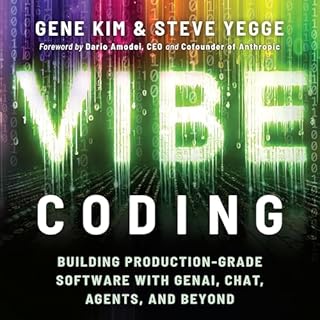
Vibe Coding
- Building Production-Grade Software with GenAI, Chat, Agents, and Beyond
- Auteur(s): Gene Kim, Steve Yegge
- Narrateur(s): David Cui Cui
- Durée: 11 h et 48 min
- Version intégrale
-
Au global4
-
Performance4
-
Histoire4
GenAI is fundamentally changing the world of software development like nothing since the internet. Vibe Coding is a first-of-its-kind, groundbreaking book that shows developers how to embrace this new frontier. Science fiction is now reality. Programmers no longer need to toil over code and syntax. They can now describe what they want and watch it materialize instantly. Welcome to the future—Vibe Coding.
-
-
great explanation
- Écrit par Goodsir le 2026-03-02
Auteur(s): Gene Kim, Autres

-
Fundamentals of Software Architecture (2nd Edition)
- A Modern Engineering Approach
- Auteur(s): Neal Ford, Mark Richards
- Narrateur(s): Perry Daniels
- Durée: 16 h et 55 min
- Version intégrale
-
Au global1
-
Performance1
-
Histoire1
Salary surveys worldwide regularly place software architect in the top ten best jobs, yet no real guide exists to help developers become architects. Until now. This updated edition provides a comprehensive overview of software architecture's many aspects, with five new chapters covering the latest insights from the field. Aspiring and existing architects alike will examine architectural characteristics, architectural patterns, component determination, diagramming architecture, governance, data, generative AI, team topologies, and many other topics.
Auteur(s): Neal Ford, Autres

-
Software Architecture: The Hard Parts
- Modern Trade-Off Analyses for Distributed Architectures
- Auteur(s): Neal Ford, Mark Richards, Pramod Sadalage, Autres
- Narrateur(s): Dena Dahilig
- Durée: 12 h et 53 min
- Version intégrale
-
Au global3
-
Performance2
-
Histoire2
There are no easy decisions in software architecture. Instead, there are many hard parts—difficult problems or issues with no best practices—that force you to choose among various compromises. With this book, you'll learn how to think critically about the trade-offs involved with distributed architectures. Architecture veterans and practicing consultants Neal Ford, Mark Richards, Pramod Sadalage, and Zhamak Dehghani discuss strategies for choosing an appropriate architecture.
-
-
requires to follow along with visuals
- Écrit par Amazon Customer le 2024-03-18
Auteur(s): Neal Ford, Autres

-
Prompt Engineering for Generative AI
- Future-Proof Inputs for Reliable AI Outputs
- Auteur(s): James Phoenix, Mike Taylor
- Narrateur(s): Mike Chamberlain
- Durée: 11 h et 6 min
- Version intégrale
-
Au global0
-
Performance0
-
Histoire0
Large language models (LLMs) and diffusion models such as ChatGPT and Stable Diffusion have unprecedented potential. Because they have been trained on all the public text and images on the internet, they can make useful contributions to a wide variety of tasks. And with the barrier to entry greatly reduced today, practically any developer can harness LLMs and diffusion models to tackle problems previously unsuitable for automation. With this book, you'll gain a solid foundation in generative AI, including how to apply these models in practice.
Auteur(s): James Phoenix, Autres

-
Learning Systems Thinking
- Essential Non-Linear Skills and Practices for Software Professionals
- Auteur(s): Diana Montalion
- Narrateur(s): Wendy Tremont King
- Durée: 11 h et 16 min
- Version intégrale
-
Au global1
-
Performance1
-
Histoire1
A decade ago, developers built information-sharing software by writing a lot of custom code in a single code base, then adding layers of caching. Now we build information systems: interdependent software and services, data platforms, and event streams. Many of our software-to-systems initiatives fail, though, and when they do, we double down on traditional linear approaches. But linear thinking cannot resolve systems challenges. We need to shift to systems thinking.
Auteur(s): Diana Montalion
-
Designing Machine Learning Systems
- An Iterative Process for Production-Ready Applications
- Auteur(s): Chip Huyen
- Narrateur(s): Kathleen Li
- Durée: 12 h et 55 min
- Version intégrale
-
Au global1
-
Performance1
-
Histoire1
Machine learning systems are both complex and unique. Complex because they consist of many different components and involve many different stakeholders. Unique because they're data dependent, with data varying wildly from one use case to the next. In this book, you'll learn a holistic approach to designing ML systems that are reliable, scalable, maintainable, and adaptive to changing environments and business requirements. Author Chip Huyen, cofounder of Claypot AI, considers each design decision in the context of how it can help your system as a whole achieve its objectives.
Auteur(s): Chip Huyen
-
Vibe Coding
- Building Production-Grade Software with GenAI, Chat, Agents, and Beyond
- Auteur(s): Gene Kim, Steve Yegge
- Narrateur(s): David Cui Cui
- Durée: 11 h et 48 min
- Version intégrale
-
Au global4
-
Performance4
-
Histoire4
GenAI is fundamentally changing the world of software development like nothing since the internet. Vibe Coding is a first-of-its-kind, groundbreaking book that shows developers how to embrace this new frontier. Science fiction is now reality. Programmers no longer need to toil over code and syntax. They can now describe what they want and watch it materialize instantly. Welcome to the future—Vibe Coding.
-
-
great explanation
- Écrit par Goodsir le 2026-03-02
Auteur(s): Gene Kim, Autres
-
Fundamentals of Software Architecture (2nd Edition)
- A Modern Engineering Approach
- Auteur(s): Neal Ford, Mark Richards
- Narrateur(s): Perry Daniels
- Durée: 16 h et 55 min
- Version intégrale
-
Au global1
-
Performance1
-
Histoire1
Salary surveys worldwide regularly place software architect in the top ten best jobs, yet no real guide exists to help developers become architects. Until now. This updated edition provides a comprehensive overview of software architecture's many aspects, with five new chapters covering the latest insights from the field. Aspiring and existing architects alike will examine architectural characteristics, architectural patterns, component determination, diagramming architecture, governance, data, generative AI, team topologies, and many other topics.
Auteur(s): Neal Ford, Autres
-
Software Architecture: The Hard Parts
- Modern Trade-Off Analyses for Distributed Architectures
- Auteur(s): Neal Ford, Mark Richards, Pramod Sadalage, Autres
- Narrateur(s): Dena Dahilig
- Durée: 12 h et 53 min
- Version intégrale
-
Au global3
-
Performance2
-
Histoire2
There are no easy decisions in software architecture. Instead, there are many hard parts—difficult problems or issues with no best practices—that force you to choose among various compromises. With this book, you'll learn how to think critically about the trade-offs involved with distributed architectures. Architecture veterans and practicing consultants Neal Ford, Mark Richards, Pramod Sadalage, and Zhamak Dehghani discuss strategies for choosing an appropriate architecture.
-
-
requires to follow along with visuals
- Écrit par Amazon Customer le 2024-03-18
Auteur(s): Neal Ford, Autres
-
Prompt Engineering for Generative AI
- Future-Proof Inputs for Reliable AI Outputs
- Auteur(s): James Phoenix, Mike Taylor
- Narrateur(s): Mike Chamberlain
- Durée: 11 h et 6 min
- Version intégrale
-
Au global0
-
Performance0
-
Histoire0
Large language models (LLMs) and diffusion models such as ChatGPT and Stable Diffusion have unprecedented potential. Because they have been trained on all the public text and images on the internet, they can make useful contributions to a wide variety of tasks. And with the barrier to entry greatly reduced today, practically any developer can harness LLMs and diffusion models to tackle problems previously unsuitable for automation. With this book, you'll gain a solid foundation in generative AI, including how to apply these models in practice.
Auteur(s): James Phoenix, Autres
-
Learning Systems Thinking
- Essential Non-Linear Skills and Practices for Software Professionals
- Auteur(s): Diana Montalion
- Narrateur(s): Wendy Tremont King
- Durée: 11 h et 16 min
- Version intégrale
-
Au global1
-
Performance1
-
Histoire1
A decade ago, developers built information-sharing software by writing a lot of custom code in a single code base, then adding layers of caching. Now we build information systems: interdependent software and services, data platforms, and event streams. Many of our software-to-systems initiatives fail, though, and when they do, we double down on traditional linear approaches. But linear thinking cannot resolve systems challenges. We need to shift to systems thinking.
Auteur(s): Diana Montalion