

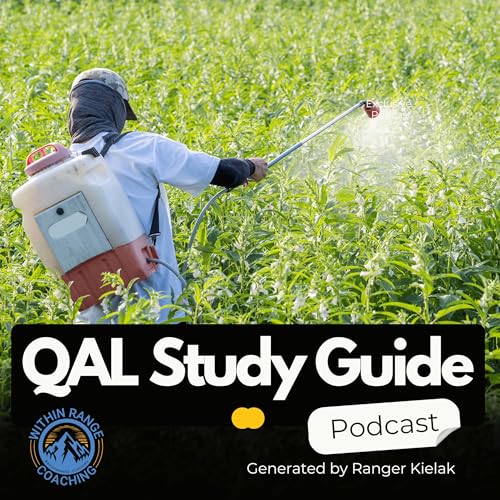
Category B - Part 2/11: Integrated Pest Management (Strategy, Controls & Pesticides)
Échec de l'ajout au panier.
Veuillez réessayer plus tard
Échec de l'ajout à la liste d'envies.
Veuillez réessayer plus tard
Échec de la suppression de la liste d’envies.
Veuillez réessayer plus tard
Échec du suivi du balado
Ne plus suivre le balado a échoué

Category B - Part 2/11: Integrated Pest Management (Strategy, Controls & Pesticides)
-
Narrateur(s):
-
Auteur(s):
À propos de cet audio
Episode Summary In this second installment of our Category B study series (Part 2 of 11), we move from identifying pests to managing them. This episode covers Chapter 2: Managing Landscape Pests, focusing on the shift from "total war" to strategic suppression. We break down why eradication is rarely the goal in outdoor landscapes and how to implement a true Integrated Pest Management (IPM) program. We also explore the fascinating (and often frustrating) phenomenon of "secondary pests"—problems created when we accidentally kill the good bugs while trying to kill the bad ones.
Key Topics Covered:
- Suppression vs. Eradication: Why total eradication is practical indoors but nearly impossible (and often undesirable) in outdoor landscapes due to migration from surrounding areas.
- The Three Pest Categories:
- Key Pests: The regulars that require constant management (e.g., aphids, mites).
- Occasional Pests: The opportunists that flare up due to weather or food changes.
- Secondary Pests: The man-made problems that occur when pesticides wipe out natural enemies.
- The IPM Toolbox:
- Biological Control: The difference between Preservation (protecting existing predators) and Augmentation (releasing new ones like lady beetles or lacewings).
- Mechanical & Cultural: Using physical tools like barriers, traps, and proper mowing/watering to make the environment hostile to pests.
- Sanitation: How removing "inoculum-filled" debris and preventing weeds from seeding stops future outbreaks.
- Pesticides in IPM: Understanding the broad legal definition of pesticides (including defoliants and growth regulators) and using them only when monitoring indicates they are needed.
Resources Mentioned:
- Integrated Pest Management (IPM): An ecosystem-based strategy focusing on long-term prevention.
- Control Methods: Solarization (using clear plastic to heat soil) and Flaming (using torches for weed control).
Pas encore de commentaire