Épisodes

  • Understanding Gender as a System
    Nov 28 2025

    In this first instalment of our two-part finale on gender justice, we explore the foundations needed to understand gender as a social system, one that shapes power, roles, resources and everyday experiences across different contexts.

    Together with our guests, we look at how gender is embedded within social, economic and institutional structures. The episode examines what gets lost when gender is treated as a separate category, and why complexity, context and lived experience matter for anyone working across health, development or rights.

    This conversation lays the groundwork for Part 2, where we look at how these insights translate into practice

    In this episode:

    Ishrat Jahan - Research Fellow at the Centre for Gender and Sexual and Reproductive Health at BRAC James P. Grant School of Public Health in Dhaka, Bangladesh.

    Ishrat’s research focuses on the intersection of gender, health, and environmental issues. She is involved in national and international projects exploring the impact of climate change on women’s health, adaptive practices in marginalised communities, and Global South-led curricula in higher education.

    Dr Rosemary Morgan - Associate Professor, Department of International Health, Johns Hopkins Bloomberg School of Public Health

    Dr. Morgan is recognised as a specialist in gender analysis in health and health systems research, interventions, and programmes and has published 90 peer-reviewed journal articles. With a focus on women’s health and wellbeing, her research explores methods for gender analysis and examines how gender inequities influence health outcomes and health systems, using qualitative approaches to centre lived experiences and challenge structural inequalities. Dr. Morgan co-directs the Gender and Health Summer Institute and coordinates the Gender and Health Certificate at the Johns Hopkins Bloomberg School of Public Health.

    Selima Sara Kabir - Senior Research Associate, BRAC James P Grant School of Public Health

    Selima is a transdisciplinary, mixed-methods researcher and educator. She holds an MPH from the Liverpool School of Tropical Medicine, and her research lies at the intersections of gender, health systems and policy, digital cultures, and social justice. Since 2019, she has led and contributed to interdisciplinary projects exploring relationships, care, and health equity in low- and middle-income country contexts to Global South-led scholarship on gender and transformation.

    Useful links:

    • Gender and Equity ensuring women, and children survive.
    • Tackling Gender Backlash During Crises
    • Gender Backlash and the Erosion of Everyday Rights
    • Allyship in Gender Justice
    • Disability and Gender Justice
    • Art and Activism for Gender Justice
    • Countering Backlash - Reclaiming Gender Justice

    Want to hear more podcasts like this?

    Follow Connecting Citizens to Science on your usual podcast platform or YouTube to hear more about current research and debates within global health and development.

    The podcast cuts across disciplines, including health systems strengthening, gender and intersectionality, tropical diseases (NTDs, TB, Malaria), maternal and child healthcare (antenatal and postnatal care), mental health and wellbeing, vector-borne diseases, climate change and co-production approaches.

    If you would like your project or programme to feature in an episode or miniseries, get in touch with the producers of Connecting Citizens to Science,

    Voir plus Voir moins
    17 min
  • TB Realities in the UK and Globally
    Nov 7 2025

    Tuberculosis (TB) is the world’s biggest killer among infectious diseases — and yet it’s curable. While global efforts continue to eliminate TB, the UK’s low incidence rate brings its own set of challenges: delayed diagnoses, persistent stigma, and low public awareness. This episode of Connecting Citizens to Science explores how these factors shape TB care and prevention in the UK, and what it will take to ensure no one is left behind in the global push to end TB.

    In this episode:

    Kate Bradfield - Community TB Nursing Team Leader, North Merseyside, University Hospitals of Liverpool Group

    Kate has been a TB specialist nurse since 2020 and now leads the North Merseyside service, driving quality improvement and community-based support for patients. Her work focuses on ensuring people can complete treatment successfully while managing both clinical and social challenges.

    Amina Farah - Programme Manager, Latent Tuberculosis Infection Screening Programme, Liverpool

    Amina has worked in TB since 2016 and brings both professional insight and personal experience, having supported a family member through TB treatment. She leads efforts to identify and treat latent TB infections in at-risk groups, addressing stigma and promoting early diagnosis and awareness.

    Useful links:

    • LSTM Centre for Tuberculosis Research
    • Tuberculosis Community Team :: NHS University Hospitals of Liverpool Group
    • The Union World Conference on Lung Health 2025

    Want to hear more podcasts like this?

    Follow Connecting Citizens to Science on your usual podcast platform or YouTube to hear more about current research and debates within global health and development.

    The podcast cuts across disciplines, including health systems strengthening, gender and intersectionality, tropical diseases (NTDs, TB, Malaria), maternal and child healthcare (antenatal and postnatal care), mental health and wellbeing, vector-borne diseases, climate change and co-production approaches.

    If you would like your project or programme to feature in an episode or miniseries, get in touch with the producers of Connecting Citizens to Science, the SCL Agency.

    Voir plus Voir moins
    18 min
  • Art and Activism for Gender Justice
    Oct 3 2025

    In this fifth episode of Backlash, Resistance and the Path to Gender Justice, we explore how art and creativity can act as powerful tools for resistance, solidarity, and joy in activism. Moving beyond health into global development, this conversation looks at how artivism resists repression, engages young people, and connects struggles across borders — showing that gender justice is also imagined and sustained through culture and creativity.

    In this episode:

    Ishrat Jahan - Research Fellow at the Centre for Gender and Sexual and Reproductive Health at BRAC James P. Grant School of Public Health in Dhaka, Bangladesh.

    Ishrat’s research focuses on the intersection of gender, health, and environmental issues. She is involved in national and international projects exploring the impact of climate change on women’s health, adaptive practices in marginalised communities, and Global South-led curricula in higher education.

    Trishia Nashtaran - President, OGNIE Foundation, Bangladesh

    Trishia is a Human-centred Design Specialist and feminist organiser with over a decade of experience in grassroots activism, community building, and futures practice. She is the founder of Meye Network, President of OGNIE Foundation Bangladesh, and coordinates the Feminist Alliance of Bangladesh, amplifying progressive and decolonial feminist voices across local and global spaces.

    Nusaiba Sultana - Team Leader, Oroddho Foundation, Bangladesh

    Oroddho Foundation is a youth feminist organisation in Bangladesh that uses art, education, and advocacy to challenge social injustice. Nusaiba oversees initiatives addressing gender discrimination, sexual harassment, sexual violence, and religious and ethnic discrimination, working to tackle these issues at their roots through education and cultural awareness.

    Useful links

    • CREA - Feminist Human Rights - Our Voices Our Futures
    • Countering Backlash - Reclaiming Gender Justice
    • Disability and Gender Justice
    • Allyship in Gender Justice
    • Gender Backlash and the Erosion of Everyday Rights
    • Tackling Gender Backlash During Crises

    Want to hear more podcasts like this?

    Follow Connecting Citizens to Science on your usual podcast platform or YouTube to hear more about current research and debates within global health and development.

    This podcast cuts across disciplines, including health systems strengthening, gender and intersectionality, tropical diseases (NTDs, TB, Malaria), maternal and child healthcare (antenatal and postnatal care), mental health and wellbeing, vector-borne diseases, climate change and co-production approaches.

    If you would like your project or programme to feature in an episode or miniseries, get in touch with the producers of Connecting Citizens to Science, the SCL Agency.

    Voir plus Voir moins
    23 min
  • Disability and Gender Justice
    Aug 29 2025

    In this episode of Backlash, Resistance and the Path to Gender Justice, we explore how gender and disability rights intersect in Bangladesh. As civic and digital spaces shrink, women and gender-diverse persons with disabilities face systemic barriers that silence their voices and limit access to rights, services, and representation. We hear from two leading advocates about the structural inequalities that persist, and the ways in which disability-led organisations are resisting exclusion and demanding justice.

    Advisory note: This episode includes discussion of sensitive topics, including sexual violence.

    In this episode:

    Ishrat Jahan - Research Fellow at the Centre for Gender and Sexual and Reproductive Health at BRAC James P. Grant School of Public Health in Dhaka, Bangladesh.

    Ishrat’s research focuses on the intersection of gender, health, and environmental issues. Ishrat is involved in national and international projects exploring the impact of climate change on women’s health, adaptive practices in marginalised communities, and Global South-led curricula in higher education.

    Salma Mahbub - General Secretary, Bangladesh Society for the Change and Advocacy Nexus (B-SCAN)

    Salma is the Founder General Secretary of B-SCAN, a women-led DPO in Bangladesh advocating for accessibility, inclusive education, employment, and women’s rights. She also serves as General Secretary of PNSP, a national OPD network. Her work centres on policy advocacy, accessibility, and the empowerment of persons with disabilities.

    Ayon Debnath - Campaign Adviser, Sightsavers

    Ayon is a disability rights advocate and Campaign Adviser at Sightsavers, leading the Equal Bangladesh campaign. He works with over 30 organisations to promote inclusive governance, policy reform, and public awareness. Ayon brings over 15 years of national and international experience in advocacy for disability justice.

    Useful Links (including other episodes in this series)

    • Sightsavers - Equal Bangladesh
    • B-Scan - Bangladesh Society for the Change and Advocacy Nexus
    • CREA - Feminist Human Rights - Our Voices Our Futures
    • Countering Backlash - Reclaiming Gender Justice
    • Allyship in Gender Justice
    • Gender Backlash and the Erosion of Everyday Rights
    • Tackling Gender Backlash During Crises

    Want to hear more podcasts like this?

    Follow Connecting Citizens to Science on your usual podcast platform or YouTube to hear more about current research and debates within global health and development.

    The podcast cuts across disciplines, including health systems strengthening, gender and intersectionality, tropical diseases (NTDs, TB, Malaria), maternal and child healthcare (antenatal and postnatal care), mental health and wellbeing, vector-borne diseases, climate change and co-production approaches.

    If you would like your project or programme to feature in an episode or miniseries, get in touch with the producers of Connecting Citizens to Science, the SCL Agency.

    Voir plus Voir moins
    19 min
  • Allyship in Gender Justice
    Aug 1 2025

    We explore what allyship really means in the fight for gender justice. Co-hosted by Ishrat Jahan from the Countering Backlash, Reclaiming Gender Justice programme, the conversation unpacks how power, privilege, and positionality shape allyship, and how solidarity must move beyond tokenism to be truly transformative. Our guests reflect on allyship within health systems, across movements, and in the face of patriarchal and political backlash in Brazil and India. Part of our mini-series Backlash, Resistance and the Path to Gender Justice, this episode highlights lived experiences and fresh perspectives from long-standing gender justice advocates.

    In this episode:

    Ishrat Jahan - Research Fellow at the Centre for Gender and Sexual and Reproductive Health at BRAC James P. Grant School of Public Health in Dhaka, Bangladesh.

    Ishrat’s research focuses on the intersection of gender, health, and environmental issues. Ishrat is involved in national and international projects exploring the impact of climate change on women’s health, adaptive practices in marginalised communities, and Global South-led curricula in higher education.

    Dr. Abhijit Das - Consultant, SAHAYOG, India

    Dr. Abhijit Das is a public health physician with over 35 years of work on gender equality and understanding harmful masculinities. He is a co-founder of the MenEngage Global Alliance and COPASAH, and has worked extensively on building bottom-up knowledge for health systems reform. He is currently an Independent Researcher and Clinical Associate Professor at the University of Washington in Seattle.

    Professor Cecilia Sardenberg - Professor of Anthropology and Feminist Studies, NEIM, Federal University of Bahia, Brazil

    Professor Cecilia Sardenberg is a Brazilian feminist scholar and activist who has worked at the intersection of academia and grassroots organising for more than five decades. She is one of the founders of NEIM, the Women’s Studies Research Centre at the Federal University of Bahia, and currently co-coordinates the Countering Backlash, Reclaiming Justice programme in Brazil.

    Useful links:

    • Nucleus of Interdisciplinary Women's Studies of the Federal University of Bahia (NEIM)
    • MenEngage Alliance - MenEngage
    • CREA - Feminist Human Rights - Our Voices Our Futures
    • Countering Backlash - Reclaiming Gender Justice

    Want to hear more podcasts like this?

    Follow Connecting Citizens to Science on your usual podcast platform or YouTube to hear more about current research and debates within global health and development.

    The podcast cuts across disciplines, including health systems strengthening, gender and intersectionality, tropical diseases (NTDs, TB, Malaria), maternal and child healthcare (antenatal and postnatal care), mental health and wellbeing, vector-borne diseases, climate change and co-production approaches.

    If you would like your project or programme to feature in an episode or miniseries, get in touch with the producers of Connecting Citizens to Science, the SCL Agency.

    Voir plus Voir moins
    22 min
  • Gender Backlash and the Erosion of Everyday Rights
    Jul 4 2025

    We explore how gender backlash deepens the marginalisation of sex workers in Bangladesh, affecting their access to health, justice, and basic rights. Featuring the voice of a sex worker and insights from gender justice advocates, we examine how shrinking civic space and growing stigma are putting lives at risk, and what can be done to resist. Part of our mini-series Backlash, Resistance, and the Path to Gender Justice.

    In this episode:

    Afsana - Committee Member, Kallanmoyee Nari Shongho

    ‘Afsana’ has been an executive committee member of Kallanmoyee Nari Shongho since 2021. She has been actively engaging with sex workers’ health and rights through HIV prevention work since 2012.

    Nazia Zebin - Communications Manager, BRAC James P Grant School of Public Health

    Nazia is an advocate for gender justice and inclusion. She brings over a decade of experience in social justice initiatives, specialising in strategic communication, digital safety, and feminist leadership.

    Kamrun Nahar – Director, Naripokkho

    Kamrun is a human rights lawyer and Director at Naripokkho, with over 30 years of experience advancing legal reform and justice for women in Bangladesh. Her work spans legal aid, policy advocacy, and capacity strengthening to challenge structural discrimination and promote gender equality.

    Useful links

    • CREA - Feminist Human Rights - Our Voices Our Futures
    • Countering Backlash - Reclaiming Gender Justice

    Takeaways:

    • The podcast elucidates the alarming rise of backlash against gender equality efforts that negatively impacts health outcomes worldwide, particularly for marginalised groups.
    • Afsana's narrative underscores the urgent necessity for recognising the rights of sex workers, highlighting the dire consequences of systemic support withdrawal.
    • The conversation emphasises the importance of amplifying the voices of silenced women, as seen in the initiatives aimed at empowering sex workers in various countries.
    • The discourse reveals a growing trend of societal and legal exclusion faced by sex workers, drawing attention to the interplay between stigmatisation and access to essential services.
    • The episode advocates for collaborative efforts among marginalised communities to combat patriarchal backlash and to promote equitable access to justice and health services.
    • The importance of a paradigm shift in societal perceptions towards sex work is highlighted, advocating for dignity, legal protection, and the elimination of stigma surrounding sex workers.

    Want to hear more podcasts like this?

    Follow Connecting Citizens to Science on your usual podcast platform or YouTube to hear more about current research and debates within global health and development.

    The podcast cuts across disciplines, including health systems strengthening, gender and intersectionality, tropical diseases (NTDs, TB, Malaria), maternal and child healthcare (antenatal and postnatal care), mental health and wellbeing, vector-borne diseases, climate change and co-production approaches.

    If you would like your project or programme to feature in an episode or miniseries, get in touch with the producers of Connecting Citizens to Science, the SCL Agency.

    Voir plus Voir moins
    23 min
  • Tackling Gender Backlash During Crises
    May 30 2025

    *Show correction - Nay El Rahi is introduced in the episode as a journalist. While she previously worked in journalism, her current role is more accurately described as a Lebanese researcher and activist.*

    In this opening episode of the mini-series, we explore how moments of crisis—from economic collapse to political instability—create fertile ground for anti-feminist backlash. We hear how patriarchal power is mobilised across contexts and how resisting it requires collective action that cuts across sectors, including health. Co-host Ishrat Jahan is joined by Lebanese researcher and activist Nay El Rahi and Kenyan programme officer Alfred Makabira, who share personal reflections and strategies for countering gender backlash in their own work.

    In this episode:

    Ishrat Jahan - Research Fellow at the Centre for Gender and Sexual and Reproductive Health at BRAC James P. Grant School of Public Health in Dhaka, Bangladesh.

    Ishrat’s research focuses on the intersection of gender, health, and environmental issues. Ishrat is involved in national and international projects exploring the impact of climate change on women’s health, adaptive practices in marginalised communities, and Global South-led curricula in higher education.

    Nay El Rahi – Researcher, Lebanese American University, Arab Institute for Women (AiW)

    Nay is an intersectional feminist writer, researcher, and political activist with over a decade of experience in journalism, research, and programming. Based at the Arab Institute for Women at the Lebanese American University, Nay’s work focuses on anti-feminist backlash, gender-based violence, and kinship in Lebanon. She co-founded HarassTracker, a pioneering tool for reporting sexual harassment in Lebanon, and was named one of the BBC’s 100 Women in 2016.

    Alfred Makabira - Programme Officer, Advocates for Social Change-Kenya (ADSOCK).

    Alfred is a human rights advocate working as part of the Countering Backlash: Reclaiming Justice project, developing and implementing practical strategies to help individuals and communities identify, resist, and challenge patriarchal backlash both online and in their local contexts.

    Useful links:

    • CREA - Feminist Human Rights - Our Voices Our Futures
    • Countering Backlash - Reclaiming Gender Justice

    Want to hear more podcasts like this?

    Follow Connecting Citizens to Science on your usual podcast platform or YouTube to hear more about current research and debates within global health.

    The podcast cuts across disciplines, including health systems strengthening, gender and intersectionality, tropical diseases (NTDs, TB, Malaria), maternal and child healthcare (antenatal and postnatal care), mental health and wellbeing, vector-borne diseases, climate change and co-production approaches.

    If you would like your project or programme to feature in an episode or miniseries, get in touch with the producers of Connecting Citizens to Science, the SCL Agency.

    Voir plus Voir moins
    23 min
  • The PhD Balancing Act for Lasting Capacity in Practice
    May 2 2025

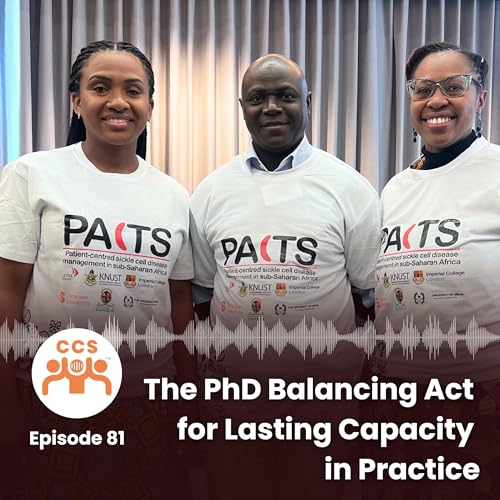
    In this final episode of our mini-series on research capacity strengthening, we explore how pursuing a PhD, using the PACTS programme (Patient-centred Sickle Cell Disease Management in sub-Saharan Africa), as a real-world example—can enhance, rather than compete with, clinical practice.

    Our guests reflect on what it means to balance research with clinical care, teaching, community outreach, and academic responsibilities, and share honest insights about the challenges and opportunities that come with embedding a PhD within a larger programme. From learning by doing to mentoring the next generation, this episode looks at how research can be a powerful tool for real-world impact in health systems.

    In this episode:

    Dr. Mmamulatelo Siame Mumba - PhD Student, SBA lead, Project coordinator, Zambia

    Dr. Mmamulatelo Siame Mumba is a paediatrician and implementation researcher based in Zambia. She is undertaking a PhD with the Liverpool School of Tropical Medicine and leads the Standards-Based Audit teams across PACTS sites while coordinating research activities on the ground.

    Dr. Hezekiah Isa Albarka - Lecturer at University of Abuja, Nigeria

    Dr. Hezekiah Isa Albarka is a senior lecturer at the University of Abuja and a haematologist with a long-standing interest in sickle cell disease. He is currently pursuing a PhD through the PACTS project, building on years of experience in clinical care and academic teaching.

    Dr. Eunice Agyeman Ahmed - PhD Student Liverpool School of Tropical Medicine, Ghana

    Dr. Eunice Agyeman Ahmed is a haematologist at Komfo Anokye Teaching Hospital in Ghana and a PhD student at the Liverpool School of Tropical Medicine. Her research supports adolescents with sickle cell disease transitioning into adult care, alongside her wider advocacy and training work across Ghana and Africa.

    • Patient-Centered Sickle Cell Disease Management in Sub-Saharan Africa
    • Patient-centred sickle cell disease management in sub-Saharan Africa (PACTS) | LSTM

    Want to hear more podcasts like this?

    Follow Connecting Citizens to Science on your usual podcast platform or YouTube to hear more about current research and debates within global health.

    The podcast cuts across disciplines, including health systems strengthening, gender and intersectionality, tropical diseases (NTDs, TB, Malaria), maternal and child healthcare (antenatal and postnatal care), mental health and wellbeing, vector-borne diseases, climate change and co-production approaches.

    If you would like your project or programme to feature in an episode or miniseries, get in touch with the producers of Connecting Citizens to Science, the SCL Agency.

    Voir plus Voir moins
    20 min