Épisodes

  • License to Survive: James Bonds Escapes from Death
    Dec 16 2025

    James Bond doesn't just have a License to Kill—he's got a License to Survive. In this episode of Cracking the Code of Spy Movies, hosts Dan and Tom take you on a thrilling journey through the 25 Eon Productions James Bond films to uncover the countless times 007 has stared death in the face and walked away unscathed. From the iconic laser scene in Goldfinger to the crocodile run in Live and Let Die, the ski jump in The Spy Who Loved Me, and even a space station shootout in Moonraker, Bond's death-defying escapes are legendary.

    We'll explore the concept of plot armor, the gadgets from Q Branch that save Bond's life, and the sheer audacity of stunts that changed cinema forever. How does Bond survive avalanches, sharks, and explosions without a scratch? Is it skill, luck, or just great writing? And why did his streak finally end in No Time to Die?

    Packed with humor, insider trivia, and a chronological countdown of Bond's greatest escapes, this episode is perfect for spy movie fans, action lovers, and anyone fascinated by the art of cinematic survival. Whether you're a lifelong Bond enthusiast or new to the franchise, you'll discover why James Bond remains the ultimate escapist hero.

    Join us as we decode the thrills, the near misses, and the moments that made audiences gasp. Subscribe now so you never miss an episode of Cracking the Code of Spy Movies.

    Tell us what you think about how James Bond's Licence to Survive

    What's your favorite James Bond's cheating death scene? Drop us a note and let us know.

    Let us know your thoughts, ideas for future episodes, and what you think of this episode. Just drop us a note at info@spymovienavigator.com. The more we hear from you, the better the show will surely be! We'll give you a shout-out in a future episode!

    You can check out all our CRACKING THE CODE OF SPY MOVIES podcast episodes on your favorite podcast app or our website. In addition, you can check out our YouTube channel as well.

    Episode Webpage: https://bit.ly/4al2dRs

    Voir plus Voir moins
    48 min
  • How James Bond Villains of the 1960s shaped the 007 franchise
    Dec 9 2025

    The 1960s were a defining era for James Bond, and much of that success came from its unforgettable villains. In this episode, we dive deep into How James Bond Villains of the 1960s shaped the 007 franchise, exploring the masterminds who turned spy thrillers into global phenomena. From the calculating genius of Ernst Stavro Blofeld to the gold-obsessed Auric Goldfinger, these characters didn't just challenge Bond—they set the standard for cinematic villains for decades to come.

    We'll examine how these antagonists influenced the tone, style, and storytelling of the early Bond films. Why did Blofeld become the ultimate symbol of evil? How did Goldfinger's obsession with wealth redefine villainy? And what about Rosa Klebb? How did she add psychological depth to espionage drama? Each villain brought unique traits that shaped Bond's evolution as a character and cemented the franchise's identity.

    This episode also looks at the cultural impact of these villains. Their extravagant lairs, iconic henchmen, and world-domination plots became templates for countless spy movies and even parodies. We'll uncover behind-the-scenes details, including casting choices, design decisions, and how Ian Fleming's novels influenced their on-screen portrayals.

    Whether you're a lifelong Bond fan or new to the series, this discussion offers fresh insights into why the 1960s villains remain legendary. They weren't just bad guys—they were trendsetters who defined an era of cinematic sophistication and suspense.

    Tune in to learn how these iconic adversaries shaped the legacy of 007 and why their influence still resonates in modern spy films. Subscribe now and join us as we revisit the decade that made James Bond—and his villains—immortal.

    Tell us what you think about our decoding of how James Bond villains of the 1960s shaped the 007 franchise

    Finally, do you agree with our assessment here? Drop us a note and let us know.

    Let us know your thoughts, ideas for future episodes, and what you think of this episode. Just drop us a note at info@spymovienavigator.com. The more we hear from you, the better the show will surely be! We'll give you a shout-out in a future episode!

    You can check out all our CRACKING THE CODE OF SPY MOVIES podcast episodes on your favorite podcast app or our website. In addition, you can check out our YouTube channel as well.

    Episode Webpage: https://bit.ly/bond-villains-of-the-1960s

    Voir plus Voir moins
    47 min
  • Pre-Title Sequences Before James Bond and Beyond!
    Dec 2 2025

    In this episode of Cracking the Code of Spy Movies, Dan and Tom uncover the hidden history of pre-title sequences long before James Bond ever ordered a martini. We look at pre-title sequences – before James Bond and Beyond.

    Although the 007 franchise made the pre-title or "cold open" world-famous, it certainly didn't invent the idea. Today, we take you on a deep, cinematic journey exploring when pre-title sequences really began, how filmmakers used them, and why they evolved into one of the most iconic elements of modern filmmaking.

    What we examine:

    We break down pre-title sequences starting in the 1930s through more modern movies, including film noir innovations, experimental openings from classic Hollywood, and surprising influences that shaped the James Bond formula. You'll hear examples from Double Indemnity, The Killers, D.O.A., The Great Train Robbery, Citizen Kane, Casablanca, North by Northwest, Psycho, and more. We even examine the fascinating proto-Bond styles found in Viennese Nights (1930), The Public Enemy, King Kong, and other early films that used storytelling before the title card.

    Then we explore how EON Productions transformed the cold open into a cinematic event. Starting with From Russia with Love (1963), the Bond franchise turned the pre-title sequence into a mini-story before the story, complete with action, intrigue, a fake-out death, and a seamless transition into the iconic Bond title design. Movies like Goldfinger perfected the formula, cementing the expectation that every Bond film begins with a thrilling pre-title mission.

    We also identify earlier cinematic influences on the Bond gun-barrel sequence. This includes the 1934 film Crime Without Passion and the legendary ending of The Great Train Robbery.

    Finally, we look at how James Bond's success inspired other genres such as action, horror, and thrillers. We even look at television shows like Mission: Impossible and The X-Files. This is to demonstrate how these shows and movies embrace the cold open as a storytelling weapon.

    If you love movie history, spy films, James Bond, or filmmaking craft, this episode is packed with insights, references, and fun analysis.

    Tell us what you think about our decoding of pre-title sequences – before James Bond and beyond?

    Did you already know this history? Did we miss anything?

    Let us know your thoughts, ideas for future episodes, and what you think of this episode. Just drop us a note at info@spymovienavigator.com. The more we hear from you, the better the show will surely be! We'll give you a shout-out in a future episode!

    You can check out all our CRACKING THE CODE OF SPY MOVIES podcast episodes on your favorite podcast app or our website. In addition, you can check out our YouTube channel as well.

    Episode Webpage: https://bit.ly/49PVHSE

    Voir plus Voir moins
    38 min
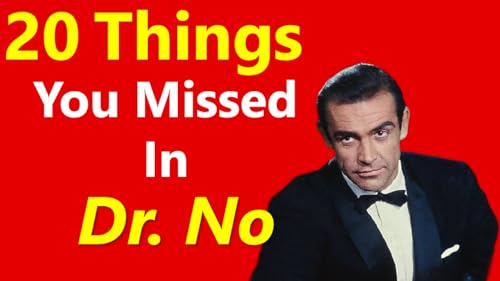
  • 20 Things You Missed in DR. NO!
    Nov 18 2025

    In this episode, Dan and Tom show you 20 things you missed in DR. NO! You'll be surprised by how many of these you missed. Watch to find out! You'll certainly learn something new.

    Every movie has questionable sequences and stuff that you miss, especially on your first time viewing the movie, and maybe your 5th time as well. Well, in this episode, we're going to the beautiful Jamaica (and a few other places) to find out what we've been missing.

    Some of the questions we answer include:
    • Is that a pistol in your holster?
    • Wait, is that the same blood?
    • Who is that statue of?
    • How did those mice get there?
    • What is Honey Ryder wearing in the shower?
    • James Bond shoots how many different guns in that scene?
    • Does a megaphone really work like that?
    • Where did that record player come from?
    • Who was the first to say "Shaken, not stirred" in a James Bond movie?
    • Why do they lick flash bulbs?
    • Where have I seen that ship before?
    • Is there such a thing as consistent inconsistency?
    • And of course, there are more bonuses, including some.

    We find that by looking for these types of things, you watch the movie more closely, especially when watching a movie for the second or third time. And some of these things you miss are continuity issues, so EON Productions missed them, too.

    Tell us what you think about our list of 20 Things You Missed in DR. NO?

    Finally, this video covers our top 20 things you are likely to have missed. Did you know about any of these already? Are there some we missed? If so, drop us a note and let us know.

    Let us know your thoughts, ideas for future episodes, and what you think of this episode. Just drop us a note at info@spymovienavigator.com. The more we hear from you, the better the show will surely be! We'll give you a shout-out in a future episode!

    You can check out all our CRACKING THE CODE OF SPY MOVIES podcast episodes on your favorite podcast app or our website. In addition, you can check out our YouTube channel as well.

    Episode Webpage: https://bit.ly/3JKbZ4S

    Voir plus Voir moins
    29 min
  • Killing James Bond: Bold Move or Betrayal?
    Nov 11 2025

    NO TIME TO DIE shocked audiences around the globe by doing what no Bond movie had ever dared to do — killing James Bond. After decades of near-death escapes, 007 finally met his end in Daniel Craig's last outing as the iconic British spy. But was it the bold, emotional conclusion the franchise needed, or an unforgivable betrayal of everything James Bond stands for?

    Now that the shock value has worn off, it's time to reexamine this. Was it bold storytelling, betrayal, or a cop out?

    In this episode of Cracking the Code of Spy Movies from SpyMovieNavigator.com, hosts Dan and Tom are joined by passionate Bond experts from across the globe: Morgan Lisney (Canada), Pietro Rossi (UK), Bill Kanas, and Stuart Bassinger (US). They debate one of the most controversial endings in movie history. Together, they dive deep into No Time to Die's themes, story arcs, plot holes, production decisions, and what Barbara Broccoli and Michael G. Wilson might have been thinking when they agreed to end Bond's story.

    From discussions about Bond's legacy, Daniel Craig's arc, and Amazon's takeover of the franchise, to speculation about the future of 007, this episode explores every angle. Was Bond's death a creative risk that gave the series emotional weight, or did it destroy the fantasy that made audiences fall in love with the character for over 60 years?

    We also examine how the Craig era compares to classic Bond films, from Casino Royale to Skyfall, and whether the next generation of filmmakers should reboot, revive, or completely reinvent 007.

    🎙️ Subscribe now to Cracking the Code of Spy Movies for weekly insights, deep-dive film analysis, and the latest James Bond updates, news, and theories.

    Tell us what you think about the killing of James Bond

    So, who do you agree with. Was killing James Bond the right move, betrayal, or bold storytelling. Jump in and let us know.

    Also, please let us know your thoughts, ideas for future episodes, and what you thought of this episode. Just drop us a note at info@spymovienavigator.com. The more we hear from you, the better the show will surely be! We'll give you a shout-out in a future episode!

    You can check out all of our CRACKING THE CODE OF SPY MOVIES podcast episodes on your favorite podcast app or our website. In addition, you can check out our YouTube channel as well.

    Episode Webpage: https://bit.ly/4qOc3Bf

    #JamesBond #NoTimeToDie #007 #DanielCraig #SpyMovies #BondFans #MovieDebate #FilmAnalysis #CrackingTheCode #SpyMovieNavigator

    Voir plus Voir moins
    1 h et 7 min
  • 10 Things You Did Not Know About THE 39 STEPS
    Nov 4 2025

    Step into the shadows of cinematic history with this thrilling episode of Cracking the Code of Spy Movies, where Dan and Tom uncover 10 things you did not know about THE 39 STEPS (1935)

    This 1935 Alfred Hitchock classic didn't just entertain—it laid the groundwork for the entire spy genre, influencing everything from James Bond to Mission: Impossible.

    In this episode, we explore how Hitchcock transformed John Buchan's novel into a suspenseful masterpiece, inventing iconic tropes like the "innocent man on the run," the mysterious MacGuffin, and the romantic tension of handcuffed leads. You'll hear how Robert Donat's performance shaped the British spy hero archetype, and how Madeleine Carroll became Hitchcock's first "cool blonde"—a blueprint for future leading ladies.

    From improvised speeches to hidden visual clues (like the villain's missing fingertip), Hitchcock's genius shines through. We reveal behind-the-scenes secrets, including how Hitchcock "accidentally" lost the handcuff key to spark real chemistry between his stars, and how the groundbreaking train sequence set a new standard for chase scenes.

    You'll also learn about Hitchcock's early cameo tradition, the clever use of British vaudeville in the finale, and how THE 39 STEPS helped launch Hitchcock's Hollywood career. Whether you're a die-hard spy film fan or new to the genre, this episode is packed with wit, insight, and historical gems.

    🎧 Subscribe now and join Dan and Tom as they decode the DNA of spy cinema—one thrilling bit at a time.

    Tell us what you think about our look at 10 things you did not know about THE 39 STEPS

    So, did you know any of these 10 things you did not know about THE 39 STEPS? Let us know what was new to you.

    Have you seen this movie yet? If not, consider it your next operation.

    Also, please let us know your thoughts, ideas for future episodes, and what you thought of this episode. Just drop us a note at info@spymovienavigator.com.  The more we hear from you, the better the show will surely be!  We'll give you a shout-out in a future episode!  

    You can check out all of our CRACKING THE CODE OF SPY MOVIES podcast episodes on your favorite podcast app or our website. In addition, you can check out our YouTube channel as well.  

    Episode Webpage: https://bit.ly/49BuGlv

    Voir plus Voir moins
    24 min
  • James Bond's Guns - What's Real? Walther PPK, Colt, SIG 226?
    Oct 28 2025

    James Bond Guns – What Is Real? Walther PPK, Colt, SIG 226? with Caleb Daniels, Author of Licensed Troubleshooter.

    In this explosive episode, we're joined by firearms historian and author Caleb Daniels to dive deep into the iconic—and often misunderstood—guns of James Bond. Caleb's new book, Licensed Troubleshooter: The Guns of James Bond, is a meticulously researched, visually stunning tribute to 007's cinematic and literary arsenal. From the Walther PPK to the elusive WA2000 sniper rifle, we explore what Bond actually used on screen, what Fleming wrote in the novels, and where Hollywood took creative liberties.

    🎙️ Hosts Dan and Tom of the Cracking the Code of Spy Movies podcast bring their frame-by-frame analysis and passion for spy cinema to the table, uncovering surprising gun anomalies in DR. NO, FROM RUSSIA WITH LOVE, TOMORROW NEVER DIES, and more. Caleb shares behind-the-scenes insights from his years in the firearms industry, including how he tracked down screen-used weapons, why some guns were swapped mid-scene, and how real-world intelligence agencies influenced Bond's gear.

    💥 Some of our topics to answer the question: James Bond's Guns - What's Real? include:

    • Why Bond's Beretta in DR. NO isn't what it seems
    • The real story behind Walther PPK vs. PP
    • Suppressors: fact vs. fiction (and why they heat up fast)
    • The HK P7's unique squeeze-cocking mechanism
    • Fleming's original firearm choices—and their real-world implications
    • All while showing what these guns look like in reality

    Whether you're a Bond aficionado, a firearms buff, or just love uncovering movie magic, this episode is packed with rare details, expert commentary, and a few surprises from Caleb's personal collection—including a WWII-era Colt 1911 issued to British forces.

    📺 Watch the full episode to see the guns up close and subscribe for more deep dives into spy movie lore. Don't forget to like, comment, and tell us: which Bond weapon do you think is the most underrated?

    Where you can find Caleb Daniels

    Preorder Caleb's book, Licensed Troubleshooter: The Guns of James Bond, find him on Instagram, or YouTube. Look for CommandoBond.

    Tell us what you think about our discussion of James Bond's Guns – What's Real?

    So, what new facts did you learn about the guns of 007? Let us know what was new to you.

    Also, please let us know your thoughts, ideas for future episodes, and what you thought of this episode. Just drop us a note at info@spymovienavigator.com. The more we hear from you, the better the show will surely be! We'll give you a shout-out in a future episode!

    You can check out all of our CRACKING THE CODE OF SPY MOVIES podcast episodes on your favorite podcast app or our website. In addition, you can check out our YouTube channel as well.

    Episode Webpage: https://bit.ly/3LaowyP

    Voir plus Voir moins
    1 h et 4 min
  • SPY BITS: The James Bond Gun Barrel Sequence
    Oct 21 2025

    "Spy Bits: The James Bond Gun Barrel Sequence" is a sharp, focused deep dive into the James Bond gun barrel sequence. And it is brought to you by Cracking the Code of Spy Movies.

    Dan and Tom trace the sequence's origin with Maurice Binder. They then look at its evolution from pinhole-camera shots and optical compositing to CGI, and how each Bond actor reshaped the pose, timing, and tone.

    The episode explains the visual language—Bond as hunter, not hunted. Similarly, we dive into the technical design of rifled barrels and blood effects, and how the sequence functions as one of cinema's most enduring brand signatures.

    What you'll find

    • History: From DR. NO (1962) through GOLDENEYE, DIE ANOTHER DAY, and the Daniel Craig era. We note key changes and why the sequence was reshot for new actors.
    • Technical notes: Early in-camera methods, later CGI, and the use of photographed rifling, optical overlays, and painted blood effects.
    • Actor variations: Connery, Lazenby, Moore, Dalton, Brosnan, Craig—how stance, timing, and color shifted with each era.
    • Themes and trivia: Identity, mortality, continuity, music cues, hidden details like Bob Simmons' stunt work, rifling quirks, and the first omission of blood in No Time to Die.
    Listen and subscribe

    Our SPY BITS are short, laser-focused Spy Bits episodes we drop irregularly to explore single iconic moments in spy cinema. Subscribe to the Cracking the Code of Spy Movies podcast for concise, authoritative takes on film craft, lore, and the small details that make spy movies an important genre.

    Tell us what you think about our list of our look at the James Bond gun barrel sequence.

    Finally, this episode covers the gun barrel sequence. Do you have any fun facts about the sequence we didn't mention? If so, drop us a note and let us know.

    Let us know your thoughts, ideas for future episodes, and what you think of this episode. Just drop us a note at info@spymovienavigator.com. The more we hear from you, the better the show will surely be! We'll give you a shout-out in a future episode!

    You can check out all of our CRACKING THE CODE OF SPY MOVIES podcast episodes on your favorite podcast app or our website. In addition, you can check out our YouTube channel as well.

    Episode Webpage: http://bit.ly/4htJ3ub

    Voir plus Voir moins
    26 min