Épisodes

  • THE SPLENDID BOHEMIANS PRESENT TWO CLASSIC EPISODES OF "AND THE SPLENDID BOHO GOES TO..." HONORING TWO SUPPORTING PERFORMANCES BY IRREPLACEABLE CHARACTER ACTORS: WITH LAIRD CREGAR AND MARGARET WYCHERLY.
    Feb 1 2026

    TWO CLASSIC SUPPORTING PERFORMANCES BY IRREPLACEABLE CHARACTER ACTORS IN FILMS WITHOUT WHOM WOULD NOT HAVE BEEN AS GREAT.

    LAIRD CREGAR (1913-1944) from I WAKE UP SCREAMING (1941), https://en.wikipedia.org/wiki/I_Wake_Up_Screaming

    and MARGARET WYCHERLY (1881-1956) from WHITE HEAT (1949) https://en.wikipedia.org/wiki/White_Heat

    Voir plus Voir moins
    57 min
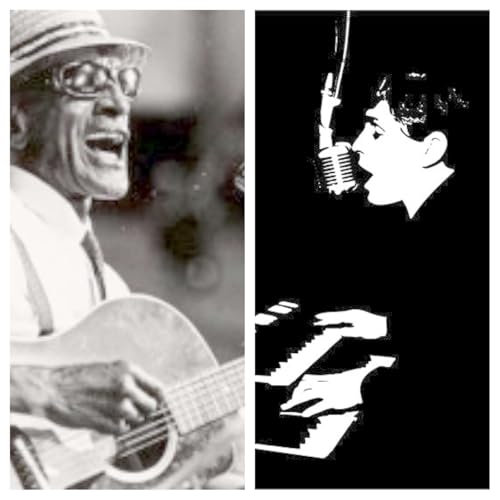
  • THE SPLENDID BOHEMIANS PRESENT "DOUBLE TROUBLE" - SHADES OF BLUES WITH SLEEPY JOHN ESTES AND GEORGIE FAME: TWO SIDES OF A TURQUOISE COIN. DOUBLE DOWN!!
    Jan 27 2026

    Here’s a cosmic riddle for you: A blind man and a mod walk into a bar…. Is it a coffee bar, with a make-shift stage on a corner platform, attended by the beatnik intelligentsia?, or is it a sweaty discotheque packed with beautiful people unabashedly swinging their hips? It’s definitely a transmogrifying chamber where the musical output of a sharecropper or convict from the work farm can be turned into sexy jazzbo stylings through the sleight of hand of some nifty cultural appropriation and syncopated finesse.

    There are many manifestations of the “blues” and here we have two vastly different - practically unrecognizable from each other - masters - Sleepy John Estes (1899-1977), and Georgie Fame (born 1943) - existing across the pond, across generations, and across many layers of lived experience, but bonded by their singular love of this primitive music that started in the Mississippi delta, and went on to conquer the world.

    SLEEPY JOHN ESTES

    Everybody thought that Sleepy John Estes was dead because Big Bill Broonzy said so. Blind in one eye, folks called him “sleepy” because of a low blood pressure disorder, or some believed he had narcolepsy. He started recording in the 20’s with Hammie Nixon on harp, made some records, went basically “radio silent” throughout the 40s and 50s until Sam Charters rediscovered him in 1962, blind and frail, and kick-started his late in life fame. “Rats in my Kitchen” was recorded at Sun Studios in 1952, but it wasn’t until 10 years later that his recording career gained traction, fueled by those he was influencing across the pond, like Robert Plant of Led Zeppelin. Sleepy John always wrote about his life, and this record has an almost journalistic authenticity.

    GEORGIE FAME

    What can one say about Georgie Fame? The man has style for days, and it was thus from the very beginning - in shark skin suits, tab collars, and skinny ties. Born in 1943 as Clive Powell, Georgie Fame and his Blue Flames made their bones swinging his Hammond organ in the mod clubs of the early 60s, and had big commercial hits with Yeh Yeh, and The Ballad of Bonnie and Clyde. Recently, he’s name checked all over the place, and has done notable collaborations with Van Morrison and others.

    In Parchman Farm you can hear the undeniable influence of the coolest of the cool white blues men, Mose Allison, and the organ of Booker T and the MGs’ Green Onions - a persuasive combination. I’m sure that Bukka White, who wrote this bottle neck Delta blues shouter in 1940 had no inkling that his experience in the Mississippi State Pen would become such a sexy signature tune. You never can tell….

    Voir plus Voir moins
    13 min
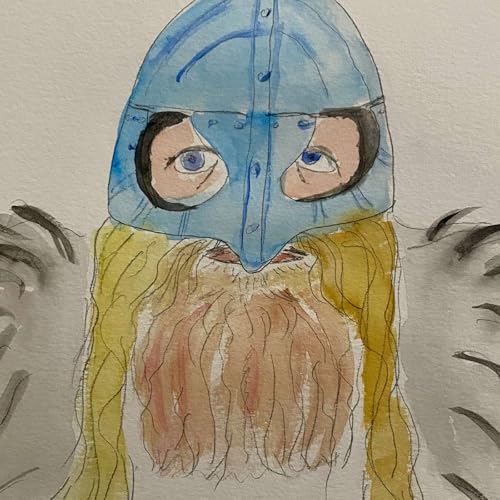
  • THE SPLENDID BOHEMIANS PRESENT A TEUTONIC TWOFER: “THE MOONDOG AND NICO QUEST" BILL AND RICH ENTER THE REGAL REGION OF MYTHICAL MUSICIAN MOONDOG, AND THE ETERNAL INFERNO KNOWN AS NICO.
    Jan 25 2026

    "In 1960s New York City lived a blind, often homeless man with a long, flowing beard, who dressed as a Viking and stood sentinel at the corner of West 54th Street and Sixth Avenue in midtown Manhattan. He sold his poetry and performed on custom-built percussion. His recordings are considered legendary pieces of original sound emanating from a unique artist who continues to be misunderstood and under appreciated."

    "Nico was used to being treated as a physical spectacle. At the Dom, Leonard Cohen was a regular guest, and he began writing songs in hopes of seducing her. Her improbable bone structure, and her role in “La Dolce Vita,” intrigued prominent rock managers like Albert Grossman, who worked with Bob Dylan. But her songs were less appealing, and the Dom’s clientele often laughed through her set. She was eventually accompanied on guitar by Tim Buckley, and then by Jackson Browne, who had just arrived in New York. Browne became enamored with Nico, and before they fell out—she accused him of harassing her with obscene phone calls—he gave her two songs: “The Fairest of the Seasons” and “These Days,” both of which appeared on her 1967 début, “Chelsea Girl.”-


    Voir plus Voir moins
    48 min
  • THE SPLENDID BOHEMIANS PRESENT "DOUBLE TROUBLE" - FEMMES OF FUSION: COMIN' UP TO THE HOUSE WITH SARAH JAROSZ AND DOWN INTO A WHIRLPOOL WITH WANDA JACKSON. DOUBLE DOWN!!
    Jan 22 2026

    Here are a couple of ladies who span generations and genres. They can rock, swing, and croon like nobody’s business, and are renown for their independence. Wanda Jackson is a founding mother of Rockabilly and still partying at 88; She started recording in 1954, and just recently retired. Although she forged the magical fusion elixir that we call Rockabilly, she has also scored hits in the Gospel and Country genres.

    Sarah Jarosz, 50+ years younger, studied at the New England Conservatory of Music, but remains pure Texas, like Nanci Griffith or Lyle Lovett - indie Americana artists who fuse country with jazz in an irresistible freshness. She has stated that she relishes expansion, collaboration, and experimentation, with a goal toward “honoring the song” and bringing it to life in the most exciting way possible.

    Both women are accomplished songwriters as well as vocal interpreters, but today we feature them in the latter position - Wanda, from 1962, keens the vertiginous “Whirlpool”, by Fred Burch and Marijohn Wilken, and Sarah crushes Tom Wait’s “Come on Up to the House” with a funky mandolin.

    SARAH JAROSZ

    I first heard Sarah Jarosz about 10 years ago on Garrison Keillor’s radio show, and was smitten immediately. Her tender, and at the same time fluid voice and funky mandolin charms completely - reminding me of the great John Hartford and how he transformed bluegrass to Newgrass. She continued after Garrison left with successor Chris Thile, teaming up with Sarah Watkins, another star from that ensemble, and Aoife O’Donovan to form the trio I’m With Her. At 34, no longer a prodigy, she has become a contemporary bluegrass goddess, who keeps expanding her range. Here she essays Tom Wait’s Come on up to the House, in which she manages to combine spirituality with sex appeal - brilliant.

    WANDA JACKSON

    Whirlpool is like a psychedelic Torch Song. Uncharacteristically, Wanda takes the role of a vulnerable, love damaged damsel instead of the Take No Prisoners, kick-ass Rocker she usually projects. Released on Capitol Records and produced by their A&R exec, Ken Nelson, this cut obviously is swinging for the bleachers of commercial Country appeal, but its weirdness kept it from charting. However, it remains a monument to her range and dramatic power.

    Voir plus Voir moins
    11 min
  • THE SPLENDID BOHEMIANS OFFER YOU A QUADRUPLE SCOOP OF SUNSHINE: FOUR CLASSIC EPISODES FROM THE SUNNY SIDE OF MY STREET, WITH JACK TEAGARDEN, HENRY MANCINI, JOHNNY MERCER, AND HORTON THE ELEPHANT.
    Jan 18 2026

    To counteract whatever "derangement syndrome" you might be experiencing at the moment, Bill Mesnik of the Splendid Bohemian's offers an antidote to your psychic gray skies.

    Today we're cracking open the big magnums of joy juice, and going back to the very beginning of the Sunny Side of My Street archives with 4 delightful infusions from the land of smiles:

    100 Years From Today, by Jack Teagarden

    The Pink Panther Theme, by Henry Mancini

    Accentuate the Positive, by Johnny Mercer

    and

    The Hut Sut Song, by Horton the Elephant and Freddy Martin.

    Take as directed....

    Voir plus Voir moins
    20 min
  • Hotel Bohemia Rewind:The Rat Pack Edition- The Infamous 1962, 4AM Show Live From The 500 Club In Atlantic City- Only 250 Vinyl Copies Were Pressed For Special Guests- Frank, Dino and Sammy Request Your Presence!
    Jan 12 2026

    DINO, AND SAMMY, AND FRANK - O MY!

    What tomfoolery! It’s 4 o’clock in the morning, and these bad boys are just getting started. This recording is a rare glimpse into the real, live, Rat Pack experience - and, the slightly distorted, overloaded sound is just part of the cinema verite. “YOU ARE THERE,” as Walter Cronkite once intoned.

    The year is 1962. Dean Martin has circled back to the 500 club in Atlantic City, where his career with Jerry Lewis first exploded, and his rat pack brothers in arms are there to support. For anybody devoted to, or interested in this celebrated entourage of 20th century entertainers, you can’t get any closer to the actual experience of being there.

    The banter is not particularly clever (they’re enjoying themselves, I won’t say MORE than the audience, but equally, at least). There are lapses in taste and attention to keeping the show moving - (an extended drunken improv about stools is one example) - and, though the finest singers of that generation are not always on perfect pitch here, it matters not a jot! The real personalities of these icons is vividly on display. The pecking order and inter-relationships are fascinating. And, as far as sheer entertainment value goes: The band swings hard, the legendary Sammy Davis Jr. sings, dances, and does impressions; Sinatra and Dino croon medleys to die for, and the whole 40 minutes is boffo. Not to be missed!

    “The 4AM Rat Pack performance presented here was privately pressed on vinyl as a special gift to very special 500 Club patrons.

    We present this untouched audio from the original acetate as it represents the taste and feel of this historic occasion.”

    By Don Altobell

    I will never forget August 26, 1962.

    I was 24 at the time and after having the good fortune of seeing Dean Martin's appearance at the 500 Club in Atlantic City on Aug 19 -- his first solo gig since his split with Jerry Lewis -- the following week gave me an added treat.

    Thanks to a drawing I did of Dean, I was able to see his opening shows and also attend rehearsals. And 500 Club owner Skinny Damato introduced me to Dean, who autographed my drawing, which still hangs on my living room wall.

    Fans knew that Dean's pal, Frank Sinatra, would join him midweek to conclude the engagement. Atlantic City was bursting at the seams, with all hotels, motels, and restaurants jam-packed. At the club itself, tables were pushed together to make room for more patrons. It was a bonanza time for Atlantic City long before the first casino was opened.

    That closing night after early dinner, I made my way through the block-long line and was ushered inside by a policeman who remembered me after seeing me at so many shows. I didn't mind that I had no seat.

    Dean was introduced as the star of the show and opened with "I'm Gonna Sit Right Down and Write Myself a Letter" followed by "Volare," "On An Evening in Roma" and "Goody, Goody."

    Then Sinatra sang, "I Get a Kick Out Of You," followed by Sammy Davis' Jr. doing "The Lady Is A Tramp." (Davis also imitated some actors singing the song including James Cagney and Marlon Brando).

    Then Frank, Dean and Sammy clowned around and sang "You Are Too Beautiful," "Love Walked Right In" and "This Is My First Affair."

    While Dean and Frank sang, Sammy danced to "I Can't Give You Anything But Love," "Too Marvelous for Words," "It Had To Be You," and "I've Got the World on a String."

    Then all three stars joined to close the s

    Voir plus Voir moins
    58 min
  • THE SPLENDID BOHEMIANS PRESENT "DOUBLE TROUBLE" - GETTING LOST IN A MYSTICAL MIST WITH ERROLL GARNER AND BIX BEIDERBECKE - TWO TITANS OF JAZZ TRANSPORT US TO REALMS OF MYSTERY. DOUBLE DOWN!!
    Jan 10 2026

    Today we present two piano instrumentals that explore the mysteries of Mist. Strictly speaking, a “mist” can be defined by some water vapor that obscures your vision, but how many more evocative instances can you think of where a mist appears in a story or film, usually preceding an arrival of some spiritual manifestation? There was a video game called “Myst” (spelled with a Y) which featured a series of puzzles saturated with a heady whiff of the arcane. Your sight is always obscured; your emotional restlessness is never assuaged.

    Erroll Garner and Bix Beiderbecke were two jazz titans writing compositions separated by 30 years that hint at this other-worldly quality inherent in the idea of the Mist. Their music excites the senses and tugs at the heart simultaneously; it’s music that lifts off and keeps insinuating an urge to maintain altitude in an unresolved quest for landing, but never deciding on a perch.

    ERROLL GARNER

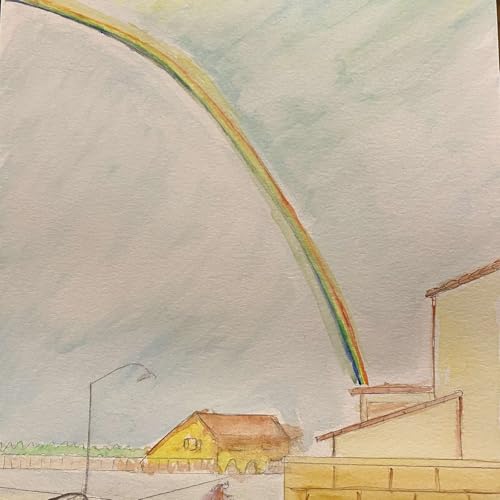
    Most of you probably know Johnny Mathis’s version of Misty, with lyrics by Johnny Burke, that was a monster hit of 1959, but Erroll Garner wrote the song as an instrumental 5 years earlier, on a plane flight to Chicago’s OHare airport, after seeing a rainbow through the airplane window. That’s a fitting image for the complicated feelings invoked here: a glimpse of hope through tears.

    Influenced by Earl Hines, Garner played with spontaneous timing changes, liquidy octaval melodies, and improvised chordal voicings, and his contribution to jazz evolution was to reconcile the gap between BeBop spontaneity and Orchestral formalism. His style was so free that he was dubbed “the happy man” because this joy he exuded was so palpable. Misty was concocted from the eternal music of the spheres - maybe because his feet were not on the ground when he composed it.

    BIX BEIDERBECKE

    The comet of Bix Beiderbecke’s talent was a mystery in itself: dead from alcohol in 1931 at the age of 28, his cornet style and compositional originality continues to fascinate almost 100 years later. A self taught musician, Bix appeared from podunk Iowa and immediately became a ragtime sensation at the height of the Jazz era with The Wolverines, then with Paul Whiteman’s orchestra (along with Bing Crosby). He was a white man playing a traditionally black form of music, which was a novelty, and that made him easier to market to middle America - but such genius is color blind.

    Although renowned for his horn playing, he composed In a Mist on piano in 1927 (he was 24), and it’s here that you see the influence of the impressionist composer Claude Debussy, the creator of such sensuous works as Prelude to the Afternoon of a Faun and La Mer. Is this Jazz? How did he do it? Clearly, Bix was in touch with mystical forces beyond human understanding, or maybe, like Robert Johnson, he just made a deal with the devil. Either way, the spiritual quest suggested by these chord changes transports us into a misty continent of emotional confusion.

    Voir plus Voir moins
    11 min