Page de couverture de Dr. Roy Casagranda Podcast

Dr. Roy Casagranda Podcast

Dr. Roy Casagranda Podcast

Auteur(s): Dr. Roy Casagranda
Écouter gratuitement

À propos de cet audio

The Dr. Roy Casagranda Podcast is dedicated to unerasing the erased peoples of the world. Too often, history is written by the powerful, leaving entire communities, cultures, and truths out of the dominant narrative. This show seeks to tell those stories.

Through these conversations, Dr. Roy digs for the truth, weeds out misinformation, and challenges conventional wisdom. The conversations span politics, world history, philosophy, and culture, always with an eye toward justice and a deeper understanding of where we've been, where we are, and where we are heading.

This is the official podcast of Dr. Roy Casagranda and Sekhmet Liminal Productions, FZCO.

© 2025 Dr. Roy Casagranda & Sekhmet Liminal Productions, FZCO
Monde Politique Sciences politiques
Épisodes
  • Grace and Tolerance in History: Toussaint
    Dec 17 2025

    The Haitian Revolution was the most radical and unlikely uprising in the modern world. In this episode, Dr. Roy Casagranda traces the rise of Toussaint Louverture and the extraordinary transformation of Saint-Domingue from the richest slave colony on earth to a revolutionary force that challenged Europe’s greatest empires. Dr. Roy explores the brutality of the slave system, the brilliance of Toussaint’s leadership, and the imperial betrayals that shaped Haiti’s future.

    Takeaways:

    • The Haitian Revolution emerged from one of the most brutal slave systems ever created, driven by European greed and racial hierarchy.
    • The colony of Saint-Domingue became immensely profitable through the exploitation of enslaved Africans, creating rigid class divisions among whites, free Blacks, mixed-race populations, and enslaved people.
    • Toussaint Louverture demonstrated extraordinary leadership defined by discipline, mercy, forgiveness, and long-term economic vision.
    • Toussaint consistently protected even former oppressors, believing stability required reconciliation rather than vengeance.
    • His decision to maintain plantations (without slavery) was an attempt to preserve economic viability and prevent imperial retaliation.
    • Napoleon’s racism, insecurity, and desire to restore slavery led to catastrophic betrayal, invasion, and genocide.
    • Haiti’s later struggles stem partly from France’s punitive actions, leadership fragmentation, and global isolation driven by fear of slave uprisings.
    • The Haitian Revolution remains one of history’s most extraordinary acts of liberation and one of its most sabotaged.

    References & Resources:

    • The Haitian Declaration of Independence
    • The Code Noir
    • The French Revolution: The Declaration of the Rights of Man and of the Citizen
    • Treaty of Ryswick

    Beyond the podcast:

    • Want to watch this lecture? Check out the full video.
    • Want to support the show? Buy Dr. Roy a coffee!

    This lecture was originally recorded at the Museum of the Future for the series Lessons from the Past (2025).

    Voir plus Voir moins
    1 h et 15 min
  • The Islamic Golden Age
    Dec 10 2025

    Most histories of the Islamic Golden Age focus on its discoveries. But in this episode, Dr. Roy goes further back, tracing the long arc of Western civilization from ancient Egypt and Mesopotamia to Greece, Rome, Persia, and the rise of Islam. He reveals how one Persian emperor’s decision to build a library, one Arab army’s humility in conquest, and one political revolution in Baghdad created the perfect conditions for philosophy, science, medicine, and mathematics to flourish. This episode reframes the Golden Age as a broader human achievement, shaped by cultural tolerance, intellectual curiosity, and the preservation of ancient knowledge.

    Takeaways:

    • How early Egyptian and Mesopotamian innovations shaped the first age of Western civilization.
    • Why Rome’s destruction of the Great Library and suppression of philosophy created a centuries-long intellectual vacuum.
    • The astonishing story of Emperor Shapur I, the captured Roman legions, and the founding of Gunde-Shapur.
    • How Greek, Roman, Persian, Egyptian, Indian, and Chinese knowledge all converged in one extraordinary place.
    • Why the Arab conquest of Persia succeeded without destroying its intellectual legacy.
    • How the Abbasid Revolution shifted the empire’s cultural center of gravity toward Persian traditions of scholarship.
    • The creation of Baghdad’s House of Wisdom and its role in reviving Aristotle, Plato, and scientific inquiry.
    • The breakthroughs of scholars like Al-Kindi, Al-Khwarizmi, Ibn al-Haytham, and Ibn Sina across mathematics, optics, medicine, and astronomy.
    • How the Islamic Golden Age indirectly triggered the European Renaissance through Sicily, Venice, and Spain.
    • Why the future of civilization hinges on curiosity, tolerance, and our willingness to learn from the past.

    Resources & References:

    • The Great Library of Alexandria
    • The Code of Hammurabi
    • The Book of Optics
    • The Canon of Medicine

    Beyond the podcast:

    • Want to watch this lecture? Check out the full video.
    • Want to support the show? Buy Dr. Roy a coffee!

    This lecture was originally recorded at the Museum of the Future for the series Lessons from the Past (2025).

    Voir plus Voir moins
    58 min
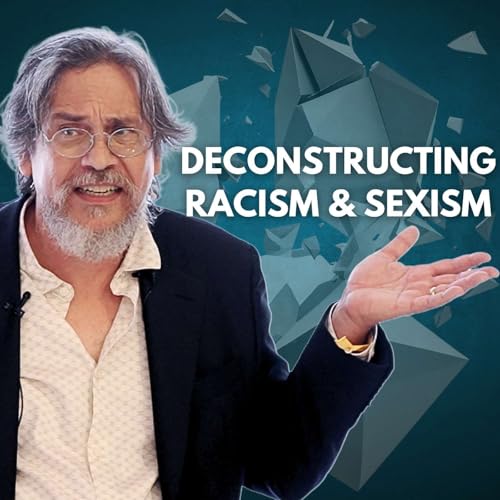
  • Deconstructing Racism and Sexism in the Envisagement of Western Civilization
    Dec 3 2025

    Racism and sexism didn’t emerge naturally or accidentally. In this episode, Dr. Roy explains how Western societies constructed rigid hierarchies of gender and race, often in contrast to more egalitarian cultures in the ancient world. He examines how Greek philosophers like Aristotle shaped Western ideas about rationality and superiority, how the Roman Empire institutionalised patriarchy, how Christianity encoded obedience into gender norms, and how modern nationalism fused racism into the fabric of political identity. This lecture offers a clear historical roadmap showing how present-day discrimination evolved over thousands of years.

    Takeaways:

    • How ancient Mesopotamian and Egyptian societies often included women as leaders, property owners, and warriors.
    • Why ancient Greece marked a dramatic shift toward rigid patriarchy and exclusion of women from public life.
    • How Aristotle’s ideas on rationality, “natural slaves,” and female inferiority shaped centuries of Western thought.
    • The Roman Empire’s adoption of Greek patriarchal norms and the legal structures that cemented male dominance.
    • How early Christianity fused obedience, hierarchy, and gender roles into doctrine and social life.
    • Why Western Europe associated whiteness with purity and superiority, laying the groundwork for racial hierarchy.
    • How the Enlightenment, despite its ideals, linked reason with whiteness and expanded scientific racism.
    • The role of nationalism in transforming racism from a prejudice into a political identity.
    • How sexism and racism were essential tools for controlling labor, land, and social order across empires.
    • Why understanding these origins is essential for dismantling the systems still shaping inequality today.

    Resources & References

    • The Code of Hammurabi
    • The Book of the Dead
    • The Politics
    • The Republic
    • The Allegory of the Cave
    • Paul’s Letters

    Beyond the podcast:

    • Want to watch this lecture? Check out the full video.
    • Want to support the show? Buy Dr. Roy a coffee!
    Voir plus Voir moins
    1 h et 46 min
Pas encore de commentaire