Épisodes

  • #99 Three lessons from Open the valve. Because creativity loves a triangle.
    Feb 5 2026

    John Klymshyn & Isaac Naor join Federico Ramallo for a special episode: three voices, three lessons, and three stories inspired by Open the Valve, the third installment in the “Intersections That Illuminate” series. They unpack how creativity shows up at key intersections—like rest and risk, language and music, and brain and mind—and why this book is meant as encouragement for creative practitioners, not a step-by-step “how-to.”


    The conversation moves from big themes to real moments: gratitude as a daily posture, a shooting star as a reminder to grab what’s fleeting, and how collaboration can sharpen (and lovingly challenge) the work. Federico shares how co-authoring the Spanish adaptation, Abre la Válvula, became more than translation—bringing cultural context, humor, and meaning so the ideas truly land across Latin America, Spain, and beyond.


    They also explore a core idea: creativity can be solitary, but it doesn’t have to be lonely—solitude can mean focus, purpose, and momentum.


    The episode closes with a simple invitation: start anywhere, take notes, and then go make something—because the point is to open the valve and let the work flow through you.


    About Open the valve:

    - https://openthevalve.com/


    About Federico Ramallo ✨👨‍💻🌎

    🚀 Software Engineering Manager | 🛠 Founder of DensityLabs.io & PreVetted.ai | 🤝 Connecting 🇺🇸 U.S. teams with top nearshore 🌎 LATAM engineers

    - 💼 https://www.linkedin.com/in/framallo/

    - 🌐 https://densitylabs.io

    - ✅ https://prevetted.ai


    🎙 PreVetted Podcast 🎧📡

    - 🎯 https://prevetted.ai/podcast

    - 🐦 https://x.com/PrevettedPod

    - 🔗 https://www.linkedin.com/company/prevetted-podcast


    Voir plus Voir moins
    42 min
  • #98 John Karsant: SDRs in the Age of AI, Cold Calling, and Building Pipeline Without Hiring
    Feb 2 2026

    John Karsant shares the unexpected path that took him from college tennis and coaching to sales, remote work, and ultimately founding LevelUp Leads in 2021. John explains how a bold life move—quitting coaching and moving to Argentina to learn Spanish—pushed him to find one of the rare remote roles available in 2015, where he became the first SDR at a small startup and learned sales by wearing multiple hats.


    In this conversation, John breaks down what appointment setting really looks like today and why many companies choose outsourced SDR support instead of building an internal team. He explains the real costs and risks of hiring in-house (tools, management, ramp time, churn) and why SDR turnover makes consistency hard to maintain. John also walks through the different ways teams use outsourced outbound: testing new markets, launching new products, expanding internationally with native English speakers, or covering peak demand around conferences and events.


    Federico and John dive into what’s working now across outbound channels. John shares why cold calling is the strongest single channel today, and why a multi-channel approach (calls + email + LinkedIn) can improve conversion by adding touchpoints and awareness. They also talk about common mistakes companies make—especially setting unrealistic meeting goals without prior outbound data—and why outbound should often start as a testing and learning process, not an immediate ROI play. John offers a practical view on when to adjust campaigns and how to avoid overreacting too early.


    Finally, John tackles the big question: SDRs in the age of AI. He shares why most buyers assume messages are AI-written, how to keep personalization human, and why real relationships—podcasts, events, in-person connections—matter more than ever. He closes with his outlook on the future of SDR work: outbound is getting harder and more crowded, but the need for human-to-human selling isn’t going away.


    About John Karsant:

    - https://levelupleads.io

    - https://www.linkedin.com/in/johnkarsant/

    - https://x.com/Jkarsant


    About Federico Ramallo ✨👨‍💻🌎

    🚀 Software Engineering Manager | 🛠 Founder of DensityLabs.io & PreVetted.ai | 🤝 Connecting 🇺🇸 U.S. teams with top nearshore 🌎 LATAM engineers

    - 💼 https://www.linkedin.com/in/framallo/

    - 🌐 https://densitylabs.io

    - ✅ https://prevetted.ai


    🎙 PreVetted Podcast 🎧📡

    - 🎯 https://prevetted.ai/podcast

    - 🐦 https://x.com/PrevettedPod

    - 🔗 https://www.linkedin.com/company/prevetted-podcast


    Voir plus Voir moins
    26 min
  • #97 Michael Green: Building “Tunnels of Truth” to Detect Weapons and Prevent Targeted Violence
    Feb 2 2026

    Michael Green explains why he co-founded Athena Security and how a real, heartbreaking incident in 2023 reinforced the urgency of their mission: saving lives by detecting and denying weapons—and sometimes dangerous people—before they enter facilities. He shares how targeted violence can slip through gaps in coverage and how that reality pushed his team to deploy faster and more widely.


    Federico and Michael unpack what it takes for security programs to work in the real world. Michael explains that detection is only part of the system: outcomes depend on disciplined processes, well-designed secondary screening, and consistent officer performance over time. They discuss the core tradeoff every organization faces—accuracy, speed, and convenience—and the “necessary friction” required to keep environments safe without overwhelming staff with alarms or fatigue.


    Michael breaks down Athena’s approach to weapons screening using multi-frequency electromagnetic detection to identify metallic contraband, with customers setting the “threat target” based on what they want to keep out. He describes how most teams handle alerts through secondary screening (often with hand wands), and why higher sensitivity (like detecting small blades) inevitably increases alarms and workload. They also cover the challenges of 24/7 operations versus event venues, where staffing is concentrated for a short window.


    The conversation goes beyond weapons: Michael highlights rising concerns like phones and smart devices as new forms of contraband and data risk, and explains why schools face unique challenges due to large perimeters and the creativity of students. He also outlines how Athena uses AI to increase accountability—confirming officers are present, resolving alarms with documented reasons, and providing audit trails and system health monitoring.


    Finally, Michael shares his vision for the next 3–5 years: a convergence of systems—weapon screening, X-ray, visitor management, access control, and video—into a unified security operations view, moving toward a more seamless, less manual “tunnel of truth” experience.


    About Michael Green:

    - https://www.athena-security.com/

    - https://www.linkedin.com/in/michaelleonardgreen/


    About Federico Ramallo ✨👨‍💻🌎

    🚀 Software Engineering Manager | 🛠 Founder of DensityLabs.io & PreVetted.ai | 🤝 Connecting 🇺🇸 U.S. teams with top nearshore 🌎 LATAM engineers

    - 💼 https://www.linkedin.com/in/framallo/

    - 🌐 https://densitylabs.io

    - ✅ https://prevetted.ai


    🎙 PreVetted Podcast 🎧📡

    - 🎯 https://prevetted.ai/podcast

    - 🐦 https://x.com/PrevettedPod

    - 🔗 https://www.linkedin.com/company/prevetted-podcast


    00:00 Introduction to Athena Security and Its Mission

    00:58 The Importance of Threat Detection Technology

    05:25 Innovative Screening Solutions for Public Safety

    07:23 Challenges in Different Environments

    11:45 Balancing Accuracy, Speed, and Convenience

    14:12 Common Failures in Security Technology

    16:37 Choosing the Right Detection Setup

    19:47 The Future of Threat Detection Technology


    Voir plus Voir moins
    22 min
  • #96 Swati Swoboda: Metaprogramming Shopify, Rails Love, and the AI-Accelerated Engineer
    Jan 29 2026


    Swati Swoboda traces her path from an eighth-grade research project on a library computer to leading development for Vault in Shopify’s Office of the CEO—work she calls “metaprogramming the company.” In this conversation, Swati and Federico dive into the arc of modern engineering: from Classic ASP and hand-editing production files to Rails’ elegant conventions, from code reviews to reading far more code than you write, and from individual craftsmanship to orchestrating AI agents at scale.


    Swati’s origin story begins pre-Google, when Yahoo directories and Ask Jeeves sparked a fascination with how the web worked. A 37signals (Basecamp) redesign demo later revealed the power of product and UX to remove friction from everyday tasks—an ethos that still guides her. She reminisces about Classic ASP (“Response.write everywhere”), the security lessons of SQL injection, and why C# plus Visual Studio felt magical—before discovering how Rails’ readability and conventions make both writing and reading code feel like prose.


    Inside Shopify, Swati explains Vault, the internal system that houses projects, reviews, and company knowledge. Through the GSD cadence, leaders (including founder/CEO Tobi) review thousands of projects on a regular rhythm, creating alignment, shared context, and accountability. Is that bureaucracy? Swati’s view: every company has bureaucracy; the question is whether it creates clarity and reduces waste—duplicate work, abandoned efforts, and misaligned launches that erode trust with merchants. Vault acts like GPS for work: it surfaces direction, status, risks, and trade-offs so teams can move faster in the same direction.


    On autonomy vs. micromanagement, Swati draws a line between intrusive time-tracking and principled, opinionated leadership. Engineers “earn agency” by aligning frequently, exposing assumptions, and inviting context.


    AI is everywhere in her workflow. Shopify teams use Claude and agents heavily, which means 100+ PRs in a day isn’t unusual. The skill that shines now is less about hand-optimizing algorithms and more about communication, problem framing, and system design: expressing outcomes, sharing context, and rigorously steering agents. PMs can “vibe-code” prototypes to validate ideas; engineers elevate to higher-leverage problems and faster learning loops. Far from shrinking the field, Swati expects AI to create more engineers overall (though fewer per company), with roles blending product sense, architectural judgment, security awareness, and foundational CS literacy.


    Themes you’ll hear throughout: build tools that reduce pain; prefer clarity to speed when it protects trust; ship to learn, then iterate; and treat culture as a product you can shape with systems. It’s a candid tour through how a founder-led company scales alignment, why Rails still “fits the brain,” and how the next generation of engineers will manage fleets of intelligent collaborators to deliver real-world impact.


    About Swati Swoboda:

    - https://x.com/swatiswoboda


    About Federico Ramallo ✨👨‍💻🌎

    🚀 Software Engineering Manager | 🛠 Founder of DensityLabs.io & PreVetted.ai | 🤝 Connecting 🇺🇸 U.S. teams with top nearshore 🌎 LATAM engineers

    - 💼 https://www.linkedin.com/in/framallo/

    - 🌐 https://densitylabs.io

    - ✅ https://prevetted.ai


    🎙 PreVetted Podcast 🎧📡

    - 🎯 https://prevetted.ai/podcast

    - 🐦 https://x.com/PrevettedPod

    - 🔗 https://www.linkedin.com/company/prevetted-podcast


    00:00 Introduction to Swati Swoboda

    01:40 Swati's Origin Story in Software Development

    04:41 The Impact of Engineering on User Experience

    06:38 Rails vs. Other Programming Languages

    09:35 The Beauty of Code and Readability

    11:15 The Evolution of Programming Languages

    15:42 Metaprogramming at Shopify

    20:23 Company Culture and Project Alignment

    22:44 Avoiding Wasted Efforts in Engineering

    25:04 Balancing Bureaucracy and Innovation

    27:07 Learning from Mistakes and Iteration

    35:28 AI's Role in Software Development

    46:31 The Future of Engineering with AI

    Voir plus Voir moins
    48 min
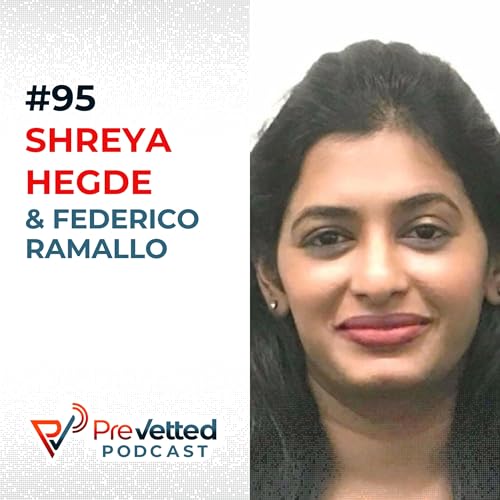
  • #95 Shreya Hegde: From Feature Shipping to Systems Thinking at Startup and Big Tech Scale
    Jan 27 2026

    Shreya Hegde: Senior Product Manager–Technical at Amazon, traces her path from software engineering in India to healthcare startups and finally Big Tech—showing how her craft evolved from “shipping more features” to designing resilient systems that deliver real outcomes. She explains the spark that drew her to product: realizing that technology quietly shapes how people live and work. Early on, she measured success by launches and deadlines; over time, she pivoted to validating the problem first, using deep customer empathy, “day-in-the-life” research, and treating constraints as design inputs rather than blockers.


    Shreya walks through her career tour: CGI (engineering, ERP), a healthcare startup (MedAsset), and a larger healthcare firm where she shipped B2B products for hospitals nationwide. Her most formative launch was a price-transparency product built amid evolving regulation for the No Surprises Act; the lesson: in regulated spaces, compliance and product thinking must be integrated from day one. Moving to Amazon was the inflection point where scale met full accountability—decisions suddenly affected thousands of operators and meaningful dollars—demanding multi-year thinking, narrative clarity, and influence without authority.


    Inside Amazon, the SPM-T role blends problem framing, engineering/design reviews, one-way/two-way door trade-off calls, stakeholder alignment, and metric inspections. Her favorite part of the job is the ambiguous pre-work: connecting dots before writing a single PRD because “clarity compounds,” and skipping that investment just creates rework later. On measurement, she frames a pyramid: North-star business outcomes at the top, with leading indicators beneath—guided by data but grounded in product sense and real customer anecdotes. Ambiguous goals become testable bets; roadmaps should express intent, outcomes, and learning, not false certainty. She cites a recent project where technical depth (accurate modeling of spatial/operational complexity) unlocked customer value that a market-only lens would have missed.


    Advice threads the conversation. PMs moving from small companies to Big Tech often underestimate influence and overestimate authority—earn trust early with crisp narratives and data. To her younger self: don’t rush to prove value; build judgment through active listening. Across contexts—from startups to Amazon—Shreya argues for systems thinking, disciplined discovery, and the courage to slow down up front so teams can move faster, smarter, and with greater customer trust over the long run.


    About Shreya Hegde:

    - https://aws.amazon.com/blogs/iot/delivering-an-integrated-approach-to-safety-how-aws-workforce-safety-solutions-make-work-safer/


    About Federico Ramallo ✨👨‍💻🌎

    🚀 Software Engineering Manager | 🛠 Founder of DensityLabs.io & PreVetted.ai | 🤝 Connecting 🇺🇸 U.S. teams with top nearshore 🌎 LATAM engineers

    - 💼 https://www.linkedin.com/in/framallo/

    - 🌐 https://densitylabs.io

    - ✅ https://prevetted.ai


    🎙 PreVetted Podcast 🎧📡

    - 🎯 https://prevetted.ai/podcast

    - 🐦 https://x.com/PrevettedPod

    - 🔗 https://www.linkedin.com/company/prevetted-podcast


    00:00 Introduction to Shreya Hegde

    02:49 Evolving as a Product Manager

    05:42 Career Journey and Key Inflection Points

    08:22 Challenges in Healthcare Product Launches

    11:09 Mindset Shift in Big Tech

    12:43 Day-to-Day as a Senior Product Manager

    14:59 Metrics and Measuring Success

    17:44 Translating Business Goals into Roadmaps

    19:05 Technical Depth vs. Market-First Approach

    19:55 Advice for Product Managers Transitioning to Big Tech

    21:32 First Principles Thinking

    22:08 Final Thoughts and Advice for Future PMs


    Voir plus Voir moins
    25 min
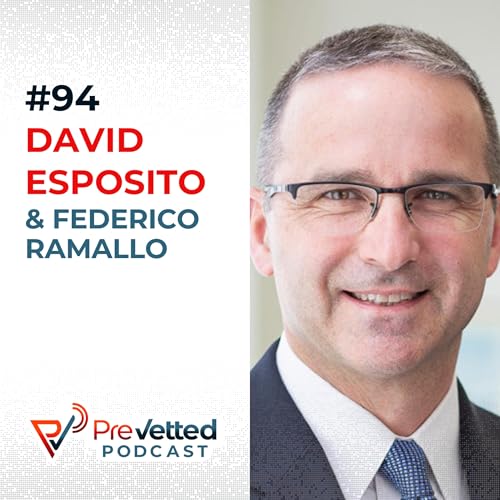
  • #94 David Esposito: From West Point Leadership to Vision-Saving Biotech and Values-Driven Impact
    Jan 26 2026

    David Esposito traces how West Point, the 101st Airborne, and leading soldiers in high-stakes environments shaped his approach to listening first, setting clear principles, and acting with calm resolve as a healthcare CEO. He and Federico dive into his work at ONL Therapeutics, a biotech company developing therapies to protect retinal cells in diseases like age-related macular degeneration, glaucoma, and retinal detachment. David explains how the retina works, why retinal cells don’t regenerate, and how ONL aims to “help patients see the future” by stopping stressed cells from dying.


    He also offers advice on eye health: why regular exams matter, how many eye diseases progress silently, and why people should understand options and tradeoffs before procedures like laser surgery. Shifting to leadership, David describes running a small team executing a large global clinical trial—balancing workload, avoiding burnout, and breaking down silos so experts solve problems together instead of protecting turf.


    The conversation then moves to his role on the board of Allergenis, a company using blood-based diagnostics to better understand pediatric food allergies. David explains what board work looks like versus being a CEO, the value of emotional detachment when advising founders, and why honest feedback is essential for building stronger businesses. He and Federico reflect on the importance of trusted advisors who can see what operators miss when they are “too deep in the game.”


    David also shares the story behind Harvest Time Partners, his “side hustle” focused on helping people be their best at home, at work, and in the community. Starting with a family conversation board game, he has built tools and books to reinforce principles like compassion, honesty, sacrifice, and teamwork. He talks about co-creating with his wife Tracy, the challenges and rewards of working with a spouse, and why having a strong partner at home reshapes how you experience wins and losses.


    Finally, David reflects on exits—both acquisitions and wind-downs—what he wishes he had known beforehand, and what other CEOs should understand: deals are never smooth, something always goes sideways, and the real fulfillment comes from moving science forward and helping patients, not just the headline valuation. Looking ahead, he hopes his companies are known for developing leaders who stay deeply human in an age of AI: present with their teams, able to connect, and committed to mission-driven work.


    About David Esposito:

    - https://onltherapeutics.com/

    - https://www.linkedin.com/in/davidesposito2/


    About Federico Ramallo ✨👨‍💻🌎

    🚀 Software Engineering Manager | 🛠 Founder of DensityLabs.io & PreVetted.ai | 🤝 Connecting 🇺🇸 U.S. teams with top nearshore 🌎 LATAM engineers

    - 💼 https://www.linkedin.com/in/framallo/

    - 🌐 https://densitylabs.io

    - ✅ https://prevetted.ai


    🎙 PreVetted Podcast 🎧📡

    - 🎯 https://prevetted.ai/podcast

    - 🐦 https://x.com/PrevettedPod

    - 🔗 https://www.linkedin.com/company/prevetted-podcast


    00:00 Introduction to Leadership and Vision

    04:33 Understanding ONL Therapeutics and Its Importance

    08:14 Eye Health: Importance and Preventive Measures

    13:24 Leadership Challenges in Early-Stage Biotech

    19:12 The Role of Teamwork in Leadership

    21:54 Board vs. CEO: Different Leadership Roles

    23:54 The Emotional Connection in Leadership

    28:42 Harvest Time Partners: A Journey of Impact

    35:01 The Dynamics of Working with a Spouse

    39:36 Navigating Business Transitions and Exits

    43:52 The Future of Leadership in an AI World


    Voir plus Voir moins
    47 min
  • #93 Dan Kurdys: AI, CRISPR and Smarter Crops for a Changing Climate
    Jan 22 2026

    Dan Kurdys joins the PreVetted Podcast to explore how AI, CRISPR, and modern plant science can help crops – and the people who depend on them – keep up with a changing climate. As Executive Vice President of Business Development at Pairwise and former Global Business Lead for GenAI at Bayer Crop Science, he works where agriculture and deep tech meet, focused on turning science into real products for farmers and families.


    Using the blight-stricken Earth of Interstellar as a starting point, Dan explains why that Hollywood scenario is exaggerated, but why the risk behind it is real if agriculture becomes complacent while nature keeps evolving. He shares his early days walking cornfields in Michigan with a punch card and carbon-copy forms, contrasted with the robotics and vision systems he saw in pharmaceutical plants. A story about his tool-and-die-maker grandfather leads to a key idea that runs through the episode: you don’t start with a shiny tool like AI or CRISPR, you start with the problem and then pick the right tool for it.


    Dan describes Pairwise’s mission as making plants easier to grow and easier to eat. He and Federico talk about picky kids, pitless cherries, seedless blackberries, and compact plants that produce more fruit per acre. With the analogy of editing a long document, Dan explains how CRISPR lets scientists “find and edit” specific parts of a plant’s genome to improve traits such as plant architecture, flowering time, yield, and resilience. The same approach can help move crops to regions with better water access, make them more resource, efficient, and finally bring serious innovation to under, served crops like avocados and cacao that never had big breeding programs behind them.


    The second half of the conversation focuses on AI as the other big lever. Agriculture today is drowning in data, Dan says, but the real challenge is turning that data into insight at the exact moment a decision must be made. He talks about specialized AI agents that can pull in the right context, reduce errors in complex, weather-driven systems, and act as force multipliers for agronomists in the field and scientists in R&D, while partnerships help extend these tools to smallholder farmers and regional crops.


    Throughout the episode, Dan comes back to trust, mission, and impact. People trust what they can see and taste, so a great product experience plus transparency beats any technical lecture. The best AI plus biology plus business teams he has seen are united by a shared mission rather than an org chart, with mutual accountability pushing everyone to raise their game.


    About Dan Kurdys:

    - https://www.pairwise.com/

    - https://www.linkedin.com/in/dankurdys/


    About Federico Ramallo ✨👨‍💻🌎

    🚀 Software Engineering Manager | 🛠 Founder of DensityLabs.io & PreVetted.ai | 🤝 Connecting 🇺🇸 U.S. teams with top nearshore 🌎 LATAM engineers

    - 💼 https://www.linkedin.com/in/framallo/

    - 🌐 https://densitylabs.io

    - ✅ https://prevetted.ai


    🎙 PreVetted Podcast 🎧📡

    - 🎯 https://prevetted.ai/podcast

    - 🐦 https://x.com/PrevettedPod

    - 🔗 https://www.linkedin.com/company/prevetted-podcast


    00:00 Introduction to Agricultural Innovation

    02:52 The Role of Technology in Agriculture

    05:47 Personal Journey into Agriculture

    08:19 Understanding Pearwise and CRISPR Technology

    10:40 The Future of Food: Making Produce Fun

    13:35 CRISPR: Editing the Genetic Code

    16:10 Adapting Agriculture to Climate Change

    18:32 From Concept to Field: The Journey of Crop Innovation

    20:19 Impact of AI on Agriculture

    26:08 AI and Gene Editing for Smallholder Farmers

    28:21 Balancing Traits in Crop Development

    31:05 Building Trust in Technology

    32:17 Regulatory Frameworks and Innovation

    34:50 CRISPR vs. GMO: A New Era

    37:10 The Role of Context in AI

    38:49 Creating High-Performance Teams

    41:21 Future of Food: A Vision for 10 Years


    Voir plus Voir moins
    43 min
  • #92 Beth Flory: Leading Safe House to Stop Domestic Violence and Help Survivors Rebuild
    Jan 20 2026

    Beth Flory is the CEO of Safe House in Henderson, Nevada, a comprehensive domestic violence agency supporting survivors and their children. Beth explains how Safe House provides a 62-bed emergency shelter in a confidential location, a 24/7 crisis hotline, victim advocacy through the legal process, licensed counseling, and community outreach.Always free of charge.


    Beth shares why this work matters so much in Nevada, a state that consistently ranks among the highest for domestic-violence-related homicides. She also explains how domestic violence can lead to homelessness, and how Safe House helps remove barriers through practical support like safety planning, help obtaining vital documents, and even assistance with security deposits and first month’s rent.


    The conversation explores the cycle of violence, incident, honeymoon phase, tension building, and repeat, and how generational patterns can continue when children grow up in violent homes. Beth highlights financial abuse as a major trap: controlling income, stealing paychecks, opening credit cards in a victim’s name, and creating debt that makes it harder to leave. She also describes how abusers with resources can use the legal system to wear victims down, and how advocates and community partners like Legal Aid can help survivors navigate court.


    Beth’s path to leadership is a core theme. After a personal experience that pushed her to work in violence prevention, she joined Safe House in 2008 as an entry-level residential advocate. She worked overnight shifts, supported clients in crisis, later became a children’s advocate, then moved into operations,handling HR, volunteers, bookkeeping, and pandemic protocols, before being succession, planned into the CEO role.


    Beth also speaks openly about the emotional weight of trauma work, the need for self-care, and being trauma-informed not only with clients but with staff, many of whom are survivors themselves. The episode closes with a simple but powerful takeaway: when someone is in crisis, don’t overthink it,just say, “I’m here when you need me.


    About Beth Flory:


    About Federico Ramallo ✨👨‍💻🌎

    🚀 Software Engineering Manager | 🛠 Founder of DensityLabs.io & PreVetted.ai | 🤝 Connecting 🇺🇸 U.S. teams with top nearshore 🌎 LATAM engineers

    - 💼 https://www.linkedin.com/in/framallo/

    - 🌐 https://densitylabs.io

    - ✅ https://prevetted.ai


    🎙 PreVetted Podcast 🎧📡

    - 🎯 https://prevetted.ai/podcast

    - 🐦 https://x.com/PrevettedPod

    - 🔗 https://www.linkedin.com/company/prevetted-podcast


    00:00 Introduction to Safe House and Beth Flory

    03:27 Understanding Domestic Violence and Safe House Services

    14:15 Beth's Personal Journey into Social Services

    17:41 The Interconnection of Gambling Addiction and Domestic Violence

    22:34 Challenges in Providing Support and Resources

    25:58 The Emotional Toll of Supporting Victims

    32:12 Transformative Journeys: From Crisis to Resilience

    37:44 Climbing the Ranks: A Personal Journey to Leadership

    45:58 Building a Supportive Community in Leadership

    48:22 Being There: Simple Ways to Support Someone in Crisis


    Voir plus Voir moins
    50 min