Page de couverture de Legal News for Weds 12/17 - A Judge Revisits Trump's Deportation Policy, Judge Thapar's Xenophobia as "Constitutional Theory," and a $500m Avatar Suit

Legal News for Weds 12/17 - A Judge Revisits Trump's Deportation Policy, Judge Thapar's Xenophobia as "Constitutional Theory," and a $500m Avatar Suit

Legal News for Weds 12/17 - A Judge Revisits Trump's Deportation Policy, Judge Thapar's Xenophobia as "Constitutional Theory," and a $500m Avatar Suit

Écouter gratuitement

Voir les détails du balado

À propos de cet audio

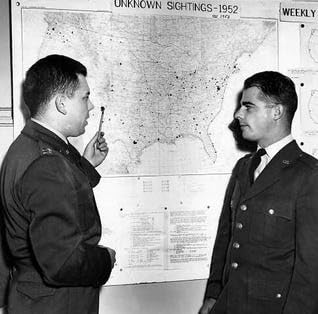
This Day in Legal History: Project Blue Book EndsOn this day in legal history, December 17, 1969, the U.S. Air Force officially terminated Project Blue Book, its two-decade-long investigation into unidentified flying objects (UFOs). Launched in 1952 during a peak in UFO sightings and Cold War anxiety, Project Blue Book reviewed over 12,000 reports of aerial phenomena. The Air Force concluded that most sightings could be explained by natural phenomena, aircraft, or hoaxes, and found no evidence of extraterrestrial activity or threats to national security. With its closure, the government effectively stepped back from public-facing UFO investigations, although some believe military interest continued behind closed doors.Legally, the end of Project Blue Book catalyzed decades of litigation and Freedom of Information Act (FOIA) requests, as citizens, journalists, and researchers sought access to government-held UFO data. The skeptical legal view has often emphasized that classified information typically relates to military technology or surveillance programs, not alien spacecraft. Despite popular culture’s fixation on extraterrestrials, courts have routinely deferred to executive branch claims of national security in resisting full transparency.While the project’s conclusion did not trigger direct legislation, it helped shape a legal culture around government secrecy, classification standards, and the public’s right to know. It also fueled persistent legal tension between conspiratorial narratives and evidentiary standards. As UFOs—now reframed as “unidentified anomalous phenomena” (UAPs)—have resurfaced in congressional hearings in recent years, Blue Book remains a touchstone for the limits of disclosure and the enduring gap between public curiosity and provable claims.Skepticism remains warranted: decades later, no clear evidence has emerged to support the claim of extraterrestrial contact—despite tens of thousands of pages released and re-litigated under FOIA.U.S. District Judge Brian Murphy in Boston expressed openness to again striking down a Trump policy that allows for the rapid deportation of migrants to third countries without meaningful notice or an opportunity to raise fears of persecution or torture. The case challenges Department of Homeland Security (DHS) policies that permit deportation to countries other than a migrant’s country of origin, often with as little as six hours’ notice. Judge Murphy had previously issued an injunction in April to halt such deportations, arguing they violated due process, but the Supreme Court paused that order in June via its “shadow docket” without providing detailed reasoning.Despite acknowledging the likely involvement of the Supreme Court again, Murphy indicated that he may still rule on the merits of the case, though any decision would likely be temporarily stayed. The lawsuit, a class action, targets a DHS memo from March and guidance from July that permits deportations based on “credible” diplomatic assurances. Plaintiffs argue these policies fall short of constitutional protections, while the Justice Department insists migrants already have opportunities to raise objections during proceedings. The judge criticized the lack of clarity from the Supreme Court’s earlier intervention and emphasized the importance of due process in removal proceedings.US judge open to again striking down Trump policy on third-country deportations | ReutersA Trump-appointed federal appeals court judge has argued that constitutional rights do not extend to immigrants who entered the United States unlawfully, a position he laid out in a partial dissent in a Second Amendment case. Sixth Circuit Judge Amul Thapar agreed with upholding a federal ban on firearm possession by undocumented immigrants but rejected the majority’s reasoning. Instead, he argued the case should have been resolved by declaring that only U.S. citizens are included in “the people” protected by the Constitution. Thapar relied heavily on the Constitution’s preamble and an originalist reading of history, asserting that the Founders never intended constitutional protections to apply to non-citizens, especially those unlawfully present.The majority opinion rejected that framing, pointing to Supreme Court precedent recognizing that non-citizens who develop substantial connections to the country may invoke constitutional rights. Thapar went further, suggesting that even the First and Fourth Amendments were not originally meant to protect non-citizens. The case arose from a challenge by a Guatemalan national convicted of unlawfully possessing firearms, but Thapar’s reasoning reached far beyond gun regulation. His dissent echoes arguments long advanced by the Trump administration and aligns with his status as a former Trump Supreme Court shortlist candidate.From my perspective, this is a racist, xenophobic, and profoundly ahistorical take that threatens to usher in a shameful new...
Pas encore de commentaire