Page de couverture de Life of the Record

Life of the Record

Life of the Record

Auteur(s): Life of the Record / Talkhouse
Écouter gratuitement

À propos de cet audio

Classic albums, told by the people who made them.Life of the Record / Talkhouse Musique
Épisodes
  • The Making of "Fairytale of New York" by The Pogues - featuring Steve Lillywhite, Jem Finer and James Fearnley
    Dec 15 2025
    In celebration of the Pogues’ 'Fairytale of New York' EP, we take a detailed look at how their classic Christmas single came together. The Pogues originally formed in London in 1982 by Shane MacGowan, Spider Stacy and Jem Finer. MacGowan had gotten his start playing in the punk band, the Nipple Erectors, and when that band broke up, he began playing in an Irish traditional music style. Gradually, he brought in James Fearnley, Cait O’Riordan and John Hasler to become a sextet. Andrew Ranken replaced John Hasler as they signed with Stiff Records. Their debut album, Red Roses for Me, was released in 1984. For their second album, they added Philip Chevron on guitar and hired Elvis Costello as their producer. Rum Sodomy & the Lash was released in 1985, and they continued working with Costello for the Poguetry in Motion EP, released in 1986. At this point, Cait O’Riordan left the band and they updated the lineup to include Darryl Hunt and Terry Woods. They signed to Island Records and hired Steve Lillywhite to produce their third album. If I Should Fall from Grace with God was eventually released in 1988 and included the Christmas single, “Fairytale of New York.” In this episode, Steve Lillywhite describes working with the Pogues at this pivotal time in their career when they were expanding the lineup and becoming more ambitious with their song structures and arrangements. Despite not having experience recording a traditional folk band, Lillywhite proved to be the right producer for the Pogues at this moment. His input and confidence in the studio led to them splicing two sections of “Fairytale of New York” together and also enlisting his wife Kirsty MacColl to sing the female part in the song. Jem Finer talks about his initial writing process for the song and how he wrote two potential Christmas ideas that his wife Marcia dismissed as being far too sentimental. Her input led to him rethinking the song and writing about a down on their luck couple, inspired by people who lived in their neighborhood in London. Finer describes how Shane MacGowan then took the song and moved the setting to New York City and added some key lines that were taken from real conversations. James Fearnley describes the thrill of recording the opening section with just piano and voice and how he practiced repeatedly to be able to get that part right. He talks about how the song deserved an ambitious string arrangement and so he worked out some ideas on a synthesizer before bringing in Fiachra Trench to help with the orchestration. By taking inspiration from film scores like Ennio Morricone’s Once Upon a Time in America and Leonard Bernstein’s On the Waterfront, Fearnley talks about wanting to bring a cinematic sound to match the classic American story that was being told. From the song’s long gestation period of a few years, to Steve Lillywhite bringing the tapes home and casually asking Kirsty MacColl to sing on it, to the inspiration behind the classic “I could’ve been someone” line, to the initial disappointment of getting to number 2 in the charts, to the perfect sparring duet partners in Shane and Kirsty, to the anti-Christmas Christmas song that has become timeless, we’ll hear the stories of how the record came together.
    Voir plus Voir moins
    1 h et 13 min
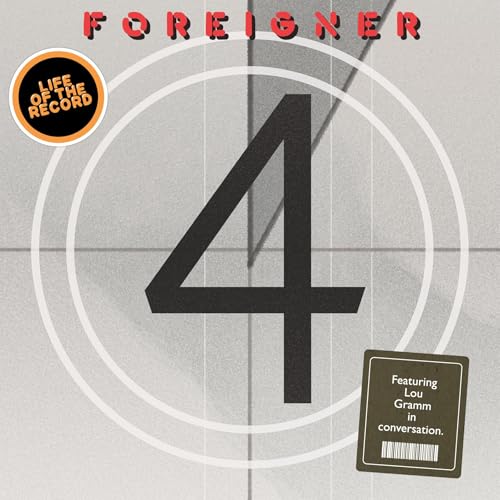
  • The Making of 4 by Foreigner - featuring Lou Gramm
    Dec 2 2025
    In celebration of the deluxe edition of Foreigner’s fourth album, 4, we take a detailed look at how it was made. After Mick Jones broke into the music industry as a session musician while playing in multiple bands, including Spooky Tooth, he envisioned starting a new project for the songs he was writing. He recruited musicians Ian McDonald, Dennis Elliott, Al Greenwood and Ed Gagliardi before turning his attention to finding the right lead singer for the band. After recalling meeting Lou Gramm when he was the singer of the Rochester, New York band Black Sheep, Jones asked Gramm to audition in New York City. Gramm was immediately hired and the lineup was complete. They signed a deal with Atlantic Records and released their self-titled debut album in 1977, which became a big success. Their second album, Double Vision, was released in 1978 and continued their run of hit singles. For their third album, Head Games, they clashed with producer Roy Thomas Baker and the album was not as successful as the first two. Rick Wills had taken over on bass at this point and after Head Games, they decided to let go of Ian McDonald and Al Greenwood to become a four-piece. They hired producer Mutt Lange and began recording at Electric Lady Studios. Foreigner 4 was eventually released in 1981. In this episode, Lou Gramm shares stories of growing up in Rochester, getting to see artists like Jimi Hendrix and the Rolling Stones, which went on to inspire his lyrics for “Jukebox Hero.” He describes this turning point moment for the band when they wanted to update their sound and image for the 1980s. By paring down to a four-piece and bringing in outside musicians like Thomas Dolby on synthesizers, they forged a new path forward for the band. With the help of producer Mutt Lange, they were able to focus on crafting a tight set of rock songs while exploring new sonic territory with songs like “Waiting for a Girl Like You” and “Urgent.” From long hours and late nights in the studio, to Mutt Lange’s perfectionist tendencies, to Thomas Dolby’s art rock approach, to Mick Jones falling in love with synthesizers, to spontaneously recruiting Junior Walker for a saxophone solo, to a mysterious muse in the studio while recording “Waiting for a Girl Like You,” to both Foreigner and Mutt Lange at the height of their powers, we’ll hear the stories of how the album came together.
    Voir plus Voir moins
    1 h et 11 min
  • The Making of PSYCHOCANDY by The Jesus and Mary Chain - featuring Jim Reid and William Reid
    Nov 14 2025
    For the 40th anniversary of The Jesus and Mary Chain’s landmark debut album, Psychocandy, we take a detailed look at how it was made. Growing up in East Kilbride, Scotland, brothers William and Jim Reid had their lives changed by punk rock and both made plans to start their own bands. When they had trouble finding like-minded musicians in their town, they realized they could pool their resources and start a band together. After their father was made redundant from his job at a factory, he gave them a gift of 300 pounds, which they used to buy a Portastudio 4-track machine. Recording the songs they were writing allowed them to find the sound of the band that they were looking for. By 1984, they had recruited Douglas Hart on bass and Murray Dalglish on drums and were sending around a demo tape to try and get gigs. Their tape was passed on to Bobby Gillespie, who loved it and connected them with Alan McGee of Creation Records. After seeing them live, McGee signed them to a deal and they released their first single, “Upside Down,” in 1984. The single, along with their notorious live performances, generated a lot of interest and they ended up signing a deal with a subsidiary of Warner Music Group, called Blanco y Negro. At this point, Bobby Gillespie replaced Murray Dalglish on drums and they released their follow-up single, “Never Understand,” in early 1985. Their full-length debut album, Psychocandy, was eventually released in late 1985. In this episode, Jim Reid describes the impetus for starting a band with his brother William and how they would spend hours talking about music and envisioning the type of band that could start a cultural revolution. He describes how they were of a shared mind in those early days and how they would each write songs and flipped a coin to ultimately decide that Jim would become the lead singer. William Reid talks about his punk-inspired approach to guitar and how a chance purchase of a used Shin-ei fuzz pedal from a neighbor kid gave him the sound he was looking for. By blending feedback and noise with 60s-inspired pop, the Reid brothers found their unique sound and went to great lengths to protect it from being watered down by the record company. From being emboldened to experiment by engineer John Loder, to the chaos of their early live gigs, to the standup drumming style of Bobby Gillespie, to swapping shifts in the studio with Ministry, to creating an album where every song could be a single, to punk music as the missing ingredient in their lives, to their shared confidence in making a record that would stand the test of time, we’ll hear the stories of how the album came together.
    Voir plus Voir moins
    1 h et 45 min
Pas encore de commentaire