

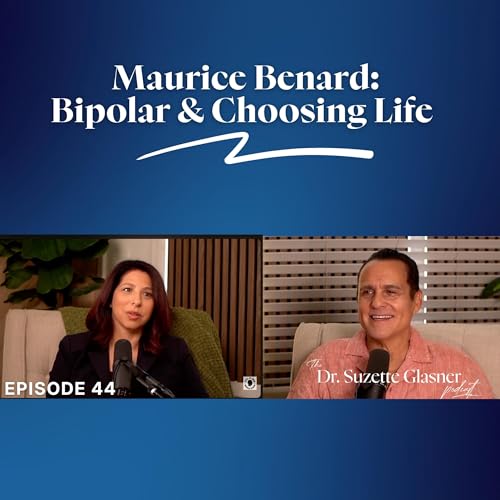
Maurice Benard on Bipolar Disorder, Suicidal Thoughts, and Choosing Hope
Échec de l'ajout au panier.
Échec de l'ajout à la liste d'envies.
Échec de la suppression de la liste d’envies.
Échec du suivi du balado
Ne plus suivre le balado a échoué

Maurice Benard on Bipolar Disorder, Suicidal Thoughts, and Choosing Hope
-
Narrateur(s):
-
Auteur(s):
À propos de cet audio
Bipolar disorder can bring periods of severe depression, hopelessness, and suicidal thoughts. In this episode, Dr. Glasner reflects on a powerful conversation with Emmy Award–winning actor Maurice Benard about living with bipolar disorder and how people can find hope during their darkest moments.
What does it feel like to live through the darkest moments of bipolar disorder — and choose to keep going? In this episode, Dr. Glasner reflects on her recent conversation with Maurice Benard about suicidal thoughts, treatment, and the fight to hold onto hope.
Watch the full episode here:
In This Episode
* Maurice Benard’s experience living with bipolar disorder
* What suicidal thoughts can feel like during bipolar depression
* Why hopelessness is one of the most dangerous symptoms
* The importance of staying connected to treatment and support
* How people can get through the darkest moments of mental illness
Bipolar Disorder, Suicidal Thoughts, and Choosing Hope
In this episode, Dr. Glasner reflects on a powerful conversation with Emmy Award–winning actor Maurice Benard about bipolar disorder, suicidal thoughts, and suicide prevention.
Maurice Benard has lived with bipolar disorder since his early twenties and has openly shared his mental health journey with millions of people. Dr. Glasner recently joined Maurice on his podcast, State of Mind, where they spoke candidly about surviving the darkest moments of bipolar disorder and finding reasons to keep going.
Maurice Benard is a suicide survivor. At different times in his life, he experienced intense suicidal thoughts and impulses, but he did not act on them. Instead, he chose to stick with treatment, and continue fighting through the most difficult periods of the illness.
Dr. Glasner reflects on the insights from their conversation, including how moments of deep hopelessness can arise during mood disorders and how treatment, support, and persistence can help people move through these periods.
Maurice’s story offers hope to anyone living with bipolar disorder, depression, or suicidal thoughts, and to those who care about someone who may be struggling. Dr. Glasner also shares clinical insights about how individuals and families can better anticipate and navigate periods of severe emotional distress.
About Maurice Benard
Maurice Benard is an Emmy Award–winning actor, best known for his role as Sonny Corinthos on General Hospital. He has lived with bipolar disorder since his early twenties and has become one of the most visible advocates for mental health awareness.
Maurice hosts the podcast State of Mind, where he speaks openly with guests about mental health, trauma, resilience, and recovery in order to reduce stigma and encourage honest conversations about mental illness.
Learn more about Maurice Benard’s podcast State of Mind:https://www.mbstateofmind.com
Mental Health Support Resources
If you or someone you know is experiencing emotional distress or suicidal thoughts, confidential support from a trained counselor is available 24/7 through the 988 Suicide & Crisis Lifeline.
Call or text 988Visit:
https://988lifeline.org
You can also contact the Substance Abuse and Mental Health Services Administration (SAMHSA) National Helpline, available 24/7 for treatment referrals and information about mental health and substance use disorders.
Call: 1-800-662-HELP (4357)TTY: 1-800-487-4889
Frequently Asked Questions
What does bipolar depression feel like?Bipolar depression can involve intense sadness, hopelessness, low energy, difficulty concentrating, and sometimes suicidal thoughts. Therapy, medication, and support can significantly improve outcomes.
Where can someone get help for suicidal thoughts?In the United States, the 988 Suicide & Crisis Lifeline provides free, confidential support 24/7 by calling or texting 988.
If this episode helped you, consider sharing it with someone who might benefit from hearing this conversation about bipolar disorder, hope, and suicide prevention.
This is a public episode. If you would like to discuss this with other subscribers or get access to bonus episodes, visit drglasner.substack.com