Obtenez 3 mois à 0,99 $/mois

OFFRE D'UNE DURÉE LIMITÉE
Page de couverture de Navigating India

Navigating India

Navigating India

Auteur(s): Navigating India
Écouter gratuitement

À propos de cet audio

India is an unnatural nation accommodating multitudes and sustaining a million mutinies. Through conversations with authors, academics, activists and thinkers, this podcast attempts to navigate through the story of this complex nation.Navigating India Art
Épisodes
  • Periyar: The Life and Times of an Iconoclast
    Nov 29 2025
    Why is Periyar E.V. Ramasamy Naicker, who passed away over half a century ago, still a controversial yet unavoidable and crucial figure in Tamil Nadu? While this year marks 100 years of the Self-Respect Movement, initiated by Periyar, he was also labelled anti-national, anti-Hindu, anti-Brahmin, and anti-Dalit, generating extreme hate and accusations. Who was Periyar? How did his ideas evolve? What are his key contentions? Did he want a separate country? What was his relationship with Ambedkar, Annadurai, and Kamaraj? How did he leave a lasting impact on the people of Tamil Nadu? In this episode, I’m joined by A. R. Venkatachalapathy and Karthick Ram Manoharan to delve deeper into the life and ideas of Periyar.References:The Cambridge Companion to Periyar, Edited by A. R. Venkatachalapathy and Karthick Ram ManoharanA. R. Venkatachalapathy: Profile, XKarthick Ram Manoharan: Profile, XBooks by A. R. Venkatachalapathy: In Those Days There Was No Coffee, Swadeshi Steam: V.O. Chidambaram Pillai and the Battle against the British Maritime Empire, Who Owns that Song?: The Battle for Subramania Bharati’s Copyright, Tamil Characters: Personalities, Politics, Culture, The Province of the Book: Scholars, Scribes, and Scribblers in Colonial Tamilnadu, The Brief History of A Very Big Book: The Making of the Tamil EncyclopaediaBooks by Karthick Ram Manoharan: Periyar: A Study in Political Atheism, Frantz Fanon: Identity and ResistanceDravidian Movement and Saivites, 1927-1944 by A. R. VenkatachalapathySudras and the Nation: Periyarist Explorations, Freedom from God: Periyar and Religion, In the path of Ambedkar: Periyar and the Dalit question by Karthick Ram ManoharanM.S.S. Pandian: Denationalising the Past-Nation in E V Ramasamy's Political Discourse, Brahmin and Non-Brahmin: Genealogies of the Tamil Political Present V Geetha: Periyar, Women and an Ethic of Citizenship, Towards a Non-Brahmin Millennium: From Iyothe Thass to Periyar (Co-authored with S.V. Rajadurai)Anandhi S.: Women’s Question in the Dravidian Movement c. 1925-1948Robert L Hardgrave Jr: The Nadars of Tamilnad: The Political Culture of a Community in Change Selig S. Harrison: Caste and the Andhra CommunistsLloyd I. Rudolph and Susanne Hoeber Rudolph: The Political Role of India’s Caste AssociationsB.R. Ambedkar: Annihilation of Caste (An Introduction by Arundhati Roy)Vignesh Rajahmani: The Dravidian Pathway: How the DMK Redefined Power and Identity in South IndiaEpisode 18: The Dravidian Pathway: How the DMK Redefined Power and Identity in South India by Vignesh RajahmaniD. Veeraraghavan: Half a Day for Caste? Education and Politics in Tamil Nadu, 1952-55 Nellai R. Jebamani, Cho Ramaswamy, Maraimalai Adigal, K. Veeramani, Maniammai, C.N. Annadurai, K. Kamaraj, J. JayalalithaaBipin Chandra, Aditya Mukherjee, Ranajit Guha, Partha Chatterjee, K. A. Nilakanta Sastri, D.D. Kosambi, Romila Thapar, M.N. Srinivas, Namdeo Dhasal
    Voir plus Voir moins
    2 h et 51 min
  • The Unexpected Force of Non-Violence
    Nov 18 2025

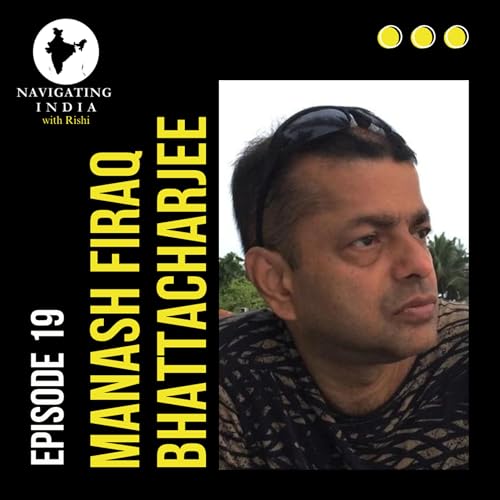
    Gandhi’s method of non-violence faced significant challenges after Jinnah’s declaration of Direct Action Day, continuing until the partition and beyond. The miracle of non-violence seemed to fade, leaving peace as a fleeting hope. To counter the violence, Gandhi walked through areas devastated by violence- Noakhali, Bihar, Calcutta, and Delhi in the last fifteen months of his life, before his tragic assassination. During these travels, he advocated for peace and offered courage to those in need. In his recent book, 'Gandhi: The End of Non-Violence', Manash Firaq Bhattacharjee delves deeper into the questions that remain: Why did a nation that had fought through non-violence descend into violence? What is the psychology behind communal violence? What is non-violence, and how can it transform the human condition? What does it mean ‘to die a beautiful death’? And how can one write the history of a period so tragic? Tune into this episode to find answers to these questions and many others.


    References:

    1. Gandhi: The End of Non-Violence by Manash Firaq Bhattacharjee
    2. Other Works by Manash Firaq Bhattacharjee: Nehru and the Spirit of India, Looking for the Nation: Towards Another India of India, The Town Slowly Empties: On Life and Culture During Lockdown
    3. Manash Firaq Bhattacharjee: X
    4. Hind Swaraj or Indian Home Rule by M.K. Gandhi
    5. Nationalism by Rabindranath Tagore
    6. The Discovery of India by Jawaharlal Nehru
    7. The Intimate Enemy: Loss and Recovery of Self under Colonialism by Ashis Nandy
    8. The Power Game by Paavo Havikko, translated from Finnish by David Barrett
    9. Otherwise Than Being, or Beyond Essence by Emmanuel Levinas, translated from French by Alphonso Lingis
    10. Civil Disobedience by Henry David Thoreau
    11. On Violence by Hannah Arendt
    12. Pakistan or the Partition of India by B.R. Ambedkar
    Voir plus Voir moins
    2 h et 9 min
  • The Dravidian Pathway: How the DMK Redefined Power and Identity in South India
    Oct 26 2025
    How did a transformative socio-cultural movement become an electorally successful political force? To answer this question, we have with us Vignesh Rajahmani. In his book, ‘The Dravidian Pathway’, he illustrates how the Dravidian movement transformed into an electorally viable political party, the Dravida Munnetra Kazhagam (DMK). We also explore the ideas of the Dravidian-Tamil ethos, key agitations led by the DMK, the foundational role of Periyar and the Self-Respect movement, the importance of reading rooms, the language question, and moreReferences:Vignesh Rajahmani: Biography, LinkedIn, X, Instagram The Dravidian Pathway: How the DMK Redefined Power and Identity in South India by Vignesh RajahmaniInclusive growth in Tamil Nadu: The role of political leadership and governance by Kartik Akileswaran and Luca GraziadeiComparative Grammar of the Dravidian or South Indian Family of Languages by Robert CaldwellTamil Nadu’s new assembly in 33 charts: Lowest women representation in 25 years, OBCs dominate by Gilles Verniers, Vignesh Karthik KR, Mohit Kumar and Neelesh AgrawalThe glossary for addressing the LGBTQIA+ Community by the Social Welfare and Women Empowerment Department, Government of Tamil NaduThe Caste System in Tamil Nadu by K.K. PillayCaste and the Andhra Communists by Selig S. HarrisonAnts among Elephants: An Untouchable Family and the Making of Modern India by Sujatha GidlaThe Political Role of India’s Caste Associations by Lloyd I. Rudolph and Susanne Hoeber RudolphThe Nadars of Tamilnad: The Political Culture of a Community in Change by Robert L Hardgrave JrThe Palace of Illusions by Chitra Banerjee DivakaruniThe First Rebels: When Madras was at the forefront of the struggle for Dalit Emancipation by V SobhaMothers in the Fatherland: Women, the Family and Nazi Politics by Claudia KoonzSixteen Stormy Days: The Story of the First Amendment of the Constitution of India by Tripurdaman SinghHalf a Day for Caste? Education and Politics in Tamil Nadu, 1952-55 by D. VeeraraghavanMovies: Mari Selvaraj’s Karnan, Sukumar’s Rangasthalam, RJ Balaji’s Mookuthi Amman
    Voir plus Voir moins
    1 h et 23 min
Pas encore de commentaire