Épisodes

  • Inform, Respect, Deliver: Local Government Managers in the Policy Arena
    Jan 16 2026

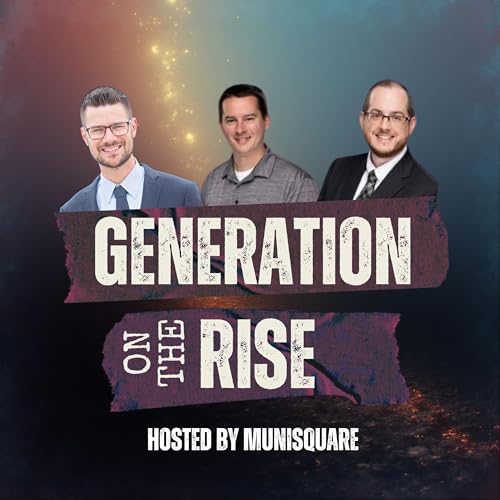
    In this kickoff-to-2026 episode of Generation on the Rise, hosts Dave Pribulka, Brandon Ford, and Eden Ratliff tackle the question: what is the real role of a municipal manager in forming local government policy?

    Generation on the Rise is produced by Nancy Hess (Publisher of MuniSquare) and features Eden Ratliff (Middletown Township Manager, Bucks County PA), Brandon Ford (Lower Merion Assistant Township Manager, Montgomery County PA, and Dave Pribulka (Bellefonte Borough Manager, Centre County PA)

    MuniSquare is a reader-supported publication. To subscribe to this feed, receive new posts and support our work, consider becoming a free or paid subscriber.

    This is a great listen for anyone interested in the work of local government or just wants to understand how it really works. Be sure to leave your comments and questions for the crew to tackle in a future episode.

    “Our job is to inform the process, respect the outcome, and then deliver with enthusiasm.” - Eden

    “We took ‘leaf blower ban’ as a goal and did what staff does—we turned it into options, wrote the ordinance, and recommended a seasonal ban. The board said, ‘Thanks, but we want a full ban.’ And that’s democracy.” - Brandon

    “Sometimes the textbook says, ‘The board sets policy, the manager administers.’ The real work is everything in between—the translation, the conflict, the opportunity costs.” - Dave

    TIMESTAMPS:

    00:00 – New Year banter & Y2K

    03:30 – First-week-back routines & “Purge Day”

    06:30 – Reorganization meetings as the “real” New Year

    09:00 – Setting up the topic: managers and policy formation

    10:00 – Textbook council–manager model vs reality

    12:00 – How Eden reads and frames board policy priorities

    13:30 – Who really sets the agenda? Chair vs manager

    14:30 – Is capital equipment a policy question?

    16:00 – Municipal vs nonprofit vs corporate boards

    17:30 – Disagreeing with the board and processing it at home

    21:00 – Culture, roles, and “no big emotions” about policy

    24:00 – Translating decisions up and down the organization

    28:00 – “Negotiation” vs expectations and culture

    29:30 – When managers do and don’t make recommendations

    33:00 – Budgets, tax policy, and whether a balanced budget is a recommendation

    36:00 – Assistant manager perspective: one functional unit

    38:00 – Preemption, home rule, and plastic-bag bans

    44:00 – Inertia, backlash, and revisiting policy after it “marinates”

    47:00 – What’s distinctive about the Generation on the Rise cohort?

    48:00 – When operations are failing and the manager must force the policy conversation

    49:00 – Closing reflections & takeaways

    Voir plus Voir moins
    50 min
  • When Loyalty Gets Complicated in Local Government - Generation on the Rise shows us some heat!
    Dec 30 2025

    Summary: In this thought-provoking episode, Brandon, Dave, and Eden tackle the complex topic of workplace loyalty in local government. The hosts debate what loyalty means in practice, whether it’s connected to tenure, and how it differs from professionalism. The conversation takes an unexpected turn into residency requirements, sparking passionate disagreement about whether living in the community you serve impacts your work. As they wrap up 2024, the hosts announce exciting changes coming in 2025, including guest appearances.

    Generation on the Rise is produced by Nancy Hess (Publisher of MuniSquare) and features Eden Ratliff (Middletown Township Manager, Bucks County PA), Brandon Ford (Lower Merion Assistant Township Manager, Montgomery County PA, and Dave Pribulka (Bellefonte Borough Manager, Centre County PA)

    MuniSquare is a reader-supported publication. To subscribe to this feed, receive new posts and support our work, consider becoming a free or paid subscriber.

    Show Notes:

    1. What does workplace loyalty mean in local government?
    2. The connection (or disconnection) between loyalty and tenure
    3. ICMA’s two-year standard and generational shifts in career mobility
    4. Professionalism vs. loyalty: which matters more?
    5. The heated residency debate: does living in your community change your recommendations?
    6. Small town dynamics vs. larger municipalities
    7. Looking ahead: Generation on the Rise adds guests in 2025!

    Timestamps:

    1. 00:00 - Cold open: ICMA’s two-year standard discussion
    2. 01:00 - Holiday gift assembly war stories
    3. 05:00 - Defining workplace loyalty in local government
    4. 08:00 - The role of personal affinity in job selection
    5. 11:00 - Measuring loyalty: what does it look like?
    6. 15:00 - The two-year standard and its implications
    7. 18:00 - Why managers move more frequently now
    8. 22:00 - ICMA’s two-year standard revisited
    9. 27:00 - Loyalty vs. professionalism in difficult decisions
    10. 31:00 - The residency debate begins
    11. 40:00 - Does living in your community affect recommendations?
    12. 46:00 - Generational differences in mobility and commitment
    13. 50:00 - Episode wrap-up and 2025 announcement

    Voir plus Voir moins
    54 min
  • Strategic Planning: From Vision to the Cross-offable Action
    Dec 17 2025

    As the calendar year closes out, Eden Ratliff sits down with Brandon Ford and Dave Pribulka to talk about strategic planning in the real world: not as a glossy document, but as a working “rudder” for budget decisions, priorities, and day-to-day execution.

    They dig into the tension between aspirational goals (the “why”) and cross-offable action steps (the “how”)—including how to avoid plans that sound inspiring but don’t translate into steps, owners, timelines, or resources.

    Along the way, they compare planning approaches in large and small communities, debate when to use consultants vs. doing the work in-house, and talk honestly about what happens when boards turn over and want to toss the plan on the shelf.

    Generation on the Rise is produced by Nancy Hess and features Eden Ratliff (Middletown Township Manager, Bucks County PA), Brandon Ford (Lower Merion Assistant Township Manager, Montgomery County PA, and Dave Pribulka (Bellefonte Borough Manager, Centre County PA)

    Subscribe to MuniSquare on Substack and sign up for the Generation on the Rise feed.

    Highlights

    00:00 - Welcome & Year-End Check-In

    00:01 - Episode Introduction: Strategic Planning

    00:02 - Brandon's Love/Hate Relationship with Strategic Planning

    00:03 - The Chicken or Egg Debate: Aspirational vs. Practical

    00:04 - Dave Introduces "Cross-Offable" Action Steps

    00:05 - The Comp Plan vs. Strategic Plan Hierarchy Debate

    00:07 - Eden's Cascade Model: How Plans Connect

    00:08 - Lower Merion's Annual Priorities Workshop Process

    00:11 - Strategic Planning for Small Communities

    00:15 - Dave: Small Communities Need It MORE

    00:17 - Brandon's Reality Check: Need vs. Resources

    00:18 - In-House vs. Hiring Consultants

    00:20 - Dave on Pros and Cons of Each Approach

    00:22 - Eden's Charlottesville Story: Third-Party Facilitation

    00:24 - Most Memorable Planning Experiences

    00:26 - Eden's 112-Person Strategic Team: "Planning Is Messy"

    00:28 - Strategic Plans Cannot Replace Policy Process

    00:30 - The Big Question: What When Boards Throw Out Your Plan?

    00:31 - Defining AMI and ALICE (Housing Affordability Context)

    00:34 - Dave: Sometimes Things Just Change

    00:35 - "Failing to Plan Is Planning to Fail" - True or False?

    00:37 - Emergency Planning Discussion

    00:38 - Dave's Key Insight: Strategic Plans Give Managers "Cover"

    00:40 - Final Wisdom: Planning for Communities of All Sizes

    00:41 - Closing & Where to Listen

    Voir plus Voir moins
    41 min
  • Navigating Bias in Local Government
    Dec 9 2025

    In this episode of ‘Generation on the Rise’, the hosts Dave Pribulka, Eden Ratliff, and Brandon Ford “go there” to unpack the inherent biases present in local government, and how it can impact decision-making processes.

    They explore how biases affect hiring practices and public policy formation, emphasizing the need for a culture of challenge and building perspective in leadership. The conversation also touches on the impact of confirmation bias and the necessity of engaging with voices from outside familiar turf to challenge the status quo.

    Chapters

    02:51 The Meaning Behind ‘Generation on the Rise’

    12:06 Understanding Bias in Local Government

    23:47 Bias in Hiring Processes and Practices

    28:27 Navigating Education Choices in Suburban Life

    29:41 Blind Reviews and Bias in Hiring

    31:35 The Importance of Diverse Perspectives

    33:17 Creating a Culture of Disagreement

    35:01 Affinity Bias in Team Dynamics

    37:47 The CAO and Assistant Relationship

    42:54 Confirmation Bias in Municipal Management

    54:58 The Impact of Experience on Management Bias

    59:22 Bias in Public Policy Formation

    Voir plus Voir moins
    58 min
  • Generation on the Rise: Work Life Balance
    Nov 26 2025

    In this episode, Brandon Ford leads the conversation with co- hosts Eden Ratlif and Dave Pribulka. They discuss the challenges of work-life balance in local government, touching on public comment dynamics, the pioneering leaf blower ban initiative, and the importance of personal life beyond work. They explore generational differences in work expectations, the impact of remote work policies, and the recent implementation of a paid parental leave policy. The conversation emphasizes the need for boundaries and support in achieving a healthy work-life balance.

    Highlights include: why culture starts at the top (and why “first in, last out” can quietly poison a workplace), why “email jail” keeps people from fully unplugging, what it looks like to structure remote work without creating resentment, and a concrete example of a benefits move that actually supports families: a 12-week paid parental leave policy that includes birth, non-birth parents, adoption, and foster adoption.

    “Work-life balance is not about time management. It’s about boundary management. You could always make the time work, but it’s those boundaries—setting those boundaries up.” - Brandon
    Voir plus Voir moins
    48 min
  • Generation on the Rise - How to Shape Your Team
    Nov 21 2025

    Hosts Dave Pribulka, Eden Ratliff, and Brandon Ford, candid talk about shaping your team in your municipal organizations.

    They explore the essential roles needed in local government, the importance of dedicated HR departments, and the challenges of managing diverse personalities within teams. The conversation delves into the hiring process, community engagement in recruitment, and the dynamics of leadership, emphasizing the need for a balance between doers and thinkers.

    TAKEAWAYS

    • HR is crucial for understanding municipal dynamics.
    • Community engagement is vital in the hiring process.
    • The role of the police chief can significantly impact management.
    • Home Rule Charters allow municipalities to create their own regulations.
    • Public safety funding is often misallocated in municipalities.
    • Dedicated HR departments can enhance employee wellness and education.
    • Managing doers and thinkers requires different strategies.
    • Building relationships with new leaders is essential for team cohesion.
    • Internal service departments play a key role in supporting operations.
    • The hiring process should focus on culture fit and qualifications.

    Voir plus Voir moins
    43 min
  • APMM Series: Everybody’s Hometown: How Media Borough Built a Sense of Place with Brittany Forman
    Nov 21 2025

    🎧 This episode of PCC Local Time is part of the APMM Series, featuring conversations with Pennsylvania’s municipal managers and leaders about the evolving practice of local government.

    In this episode, I talk with Brittany Forman, Manager of Media Borough in Delaware County, Pennsylvania, about what it takes to build — and preserve — a strong sense of place in a small community that has suddenly become a regional magnet.

    Brittany walks us through Media’s evolution from a struggling commercial district in the 1990s to today’s walkable, lively, “everybody’s hometown,” complete with trolleys, a regional rail station, an energetic restaurant district, and a deep environmental ethic.

    Listeners will hear a grounded, practical conversation about what local leaders can control, what they can influence, and what they simply need to adapt to as their communities change.

    This episode is for municipal managers, planners, elected officials, and anyone wrestling with growth, affordability, and the tension between tourism appeal and local character.

    CONTACT:

    Brittany Forman

    APMM

    PCC Local Time on MuniSquare

    SHOWNOTES

    00:00–01:10 — Opening & Purpose

    I introduce Brittany and set the stage: a conversation for municipal managers and elected leaders about transformation and sense of place.

    01:10–04:00 — Brittany’s Path to Media

    Her career in HUD, Norfolk, mayor’s office, planning, private-sector consulting — and how Media’s economic development plan brought her to the borough.

    04:00–06:00 — Living and Working in the Same Community

    Why Media feels like the right fit and what it's meant to be embedded in the place she serves.

    06:00–08:30 — “Everybody’s Hometown” & The Trolley

    We discuss Media’s iconic branding, its historic trolley system, and early investments that anchor identity.

    08:30–11:00 — Media’s Built Form & Good Bones

    Grid layout, transit access, mixed housing types, courthouse activity, and how the borough’s size (¾ sq mile) shapes everyday life.

    11:00–13:30 — Media’s Recovery Story

    The 1990s: crime, vacancies, and disrepair — and how Mayor McMahon and elected officials actively recruited businesses and built events that revived the town.

    13:30–15:30 — A Full Calendar: 30+ Annual Street Closures

    Brittany describes Dining Under the Stars, seasonal festivals, parades, and weekly programs that create social cohesion.

    15:30–18:00 — Parks, Environmental Ethos & Regional Connectivity

    Media’s strong environmental culture, parks investment, and the importance of looking to adjacent municipal assets.

    18:00–21:00 — Housing Pressure & Becoming a “Victim of Success”

    Demand outpacing supply, luxury units, price spikes, first million-dollar home, and concerns about seniors and young families.

    21:00–23:30 — Media’s Affordable Housing Strategy

    Vision: a place where residents can access housing at every stage of life.

    Focus areas: households under $75k, seniors, zoning changes, office conversions.

    23:30–26:00 — Preserving Character While Welcoming Growth

    Placemaking investments (Plum Street Mall), creating “third places,” and designing for...

    Voir plus Voir moins
    43 min
  • APMM Series - City Managers as Deliberative Systems Leaders with Martín Carcasson
    Nov 14 2025

    🎧 This episode of PCC Local Time is part of the APMM Series, featuring conversations with Pennsylvania’s municipal managers and leaders about the evolving practice of local government.

    Follow APMM on LinkedIn and Read more at APMM.net

    In this episode of the APMM Series, produced in partnership with PCC Local Time, Nancy J. Hess and Dr. Martin Carcasson explore how local government leaders can shift from problem-solvers to systems builders. Together, they trace how small shifts in process — better questions, framing, and facilitation — can profoundly affect trust and decision-making in communities.

    Dr. Martin Carcasson is a professor of Communication Studies at Colorado State University and the founding director of the Center for Public Deliberation (CPD) — a university-community partnership that helps local governments, school districts, and civic organizations improve how they talk about complex public issues.

    Martin’s work draws from communication theory, social psychology, and systems thinking to design better public conversations about “wicked problems” — the issues that have no simple or permanent solutions.

    He has collaborated extensively with the Kettering Foundation, the National Civic League, and the International City/County Management Association (ICMA), where he’s trained city managers and superintendents to act as deliberative systems leaders.

    In his words:

    “If city managers see themselves as systems leaders — deliberative systems leaders — their job is to get a sense of how this system works, and then figure out how to intervene in this system to improve it.”

    More resources from Dr. Martin Carcasson:

    CPD resources page and my youtube channel

    🧭 Timestamps00:00 – 02:20Opening: Why talk about conversations at all?

    Martin distinguishes debate, deliberation, and dialogue.

    “Debate, deliberation, and dialogue… each has strengths and weaknesses.” 02:20 – 05:10The Charlie Kirk example and what it reveals about campus “deliberative systems”

    A live example of tough conversations and what universities can learn.

    05:10 – 07:30Nancy introduces Paul Bloom’s “Against Empathy” and the need for reflection“Am I being manipulated or am I being educated?” — Nancy 07:30 – 10:00Why conversation matters in local government

    Nancy frames the skepticism many leaders have: “Do we really need all these meetings?”

    Martin connects it to wicked problems and shared goals

    “We prefer the simple story… but these issues require complexity.” — Martin 10:00 – 13:00Brain science and the limits of human nature

    Why we resist nuance — and how public processes often make this worse.

    13:00 – 16:40Pre-work matters: why tough conversations shouldn’t start “on the fly”“Confidence becomes very powerful… often when it shouldn’t be.” —...
    Voir plus Voir moins
    45 min