Épisodes

  • Gyros in Motion: The Hidden Physics Keeping You Oriented in the Sky
    Dec 12 2025

    In this episode, we unpack the fascinating world of gyroscopic flight instruments—the quiet, spinning heroes that keep pilots oriented and aircraft under control. You’ll learn how two fundamental principles, rigidity in space and precession, allow the attitude indicator, heading indicator, and turn coordinator to deliver steady, reliable information even as the aircraft maneuvers through three dimensions. We’ll explore how mounting systems shape an instrument’s behavior, why gyros drift, and how pilots correct for these subtle quirks in flight.

    Then we dive into the power systems behind these instruments, examining the vacuum, pressure, and electrical sources that keep the gyros spinning. From the engine-driven vacuum pump to the 4.5–5.5 "Hg operating range, you’ll hear how redundancy is built into aircraft systems—and what happens when suction drops below safe limits. Whether you're a pilot, student, or aviation enthusiast, this episode will give you a clear and practical understanding of the physics and power systems behind the gyroscopic instruments you rely on every flight.

    Voir plus Voir moins
    11 min
  • How Electronic Flight Displays Revolutionized Pilot Awareness
    Dec 5 2025

    In this episode we dive into the world of Electronic Flight Displays (EFDs) — the “glass cockpit” revolution that replaced the old six-pack of steam gauges with sleek, software-driven Primary Flight Displays and Multi-Function Displays. You’ll hear how EFDs consolidate flight-critical data, boost reliability and safety, cut installation and maintenance costs, and let pilots see the future of flight with features like six-second trend vectors.

    We’ll unpack the anatomy of the PFD (airspeed and altitude tapes, attitude horizon, VSI, heading and turn indicators), explain the invisible workhorses behind the screens — the Air Data Computer (ADC) and Attitude, Heading & Reference System (AHRS) — and show how digital architecture makes upgrades, customization, and aircraft integration far easier than ever before. Along the way we’ll cover practical pilot benefits (clearer instrument scans, predictive trend cues), failure-mode design choices (where the tach lives and how displays failover), and what this technology means for training and maintenance.

    Whether you’re a pilot curious about modern instrumentation, an A&P fascinated by modular avionics, or just love how software keeps planes flying smarter, this episode translates technical detail into real-world insight — with clear examples, a few cockpit stories, and takeaways you can use next time you step into a glass cockpit.

    Voir plus Voir moins
    14 min
  • Trapped Pressure: When the Static System Fails
    Nov 28 2025

    In this episode, we dig into one of the most deceptive failures in light aircraft instrumentation: a blocked static system. When the static ports become obstructed—but the pitot tube remains clear—the aircraft’s most trusted instruments start lying with confidence. We break down why the Airspeed Indicator still moves yet becomes dangerously unreliable, why the altimeter freezes in place, and why the VSI goes silent with a flat zero reading.

    You’ll learn how a pilot’s climb or descent can create the illusion of changing airspeed, even when the aircraft hasn’t sped up or slowed down at all. We’ll also look at how flying above or below the blockage altitude twists the ASI’s readings in predictable ways, and why understanding these patterns is essential for diagnosing the failure in real time.

    Finally, we explore the role of the alternate static source—how it can save the day, why it introduces its own instrument errors, and what corrections pilots must know before relying on it.

    If you’ve ever wondered how quickly a static blockage can turn reliable instruments into misleading storytellers, this episode brings the clarity you need.

    Voir plus Voir moins
    10 min
  • When the Air Lies: Pitot-Static Blockages and the Surprising Ways Your Instruments Fail
    Nov 21 2025

    In this episode, we dive into one of the most deceptive and potentially dangerous failure modes in light aircraft: pitot-static system blockages. Moisture, ice, dirt, or even a well-placed insect can quietly compromise the very instruments you rely on for airspeed, altitude, and vertical trend awareness.

    We’ll break down exactly how these blockages occur, what they do to each instrument, and—most importantly—how to recognize the difference between a simple pitot blockage and a full pitot-and-drain-hole obstruction. You’ll learn why a blocked pitot can make your airspeed collapse to zero, and how a fully trapped pitot system can trick your ASI into acting like an altimeter—with indications that increase during a climb and decrease during a descent, regardless of your real airspeed.

    We’ll also explore static port failures, why they affect all three instruments simultaneously, and how a pilot can spot the telltale signs in flight. Finally, we’ll cover prevention and mitigation: smart preflight habits, proper use of pitot heat, and the procedures your POH/AFM expects you to follow.

    If you’ve ever wondered what really happens when your aircraft’s pressure ports stop telling the truth, this episode will give you the clarity needed to recognize the symptoms and respond with confidence.

    Voir plus Voir moins
    11 min
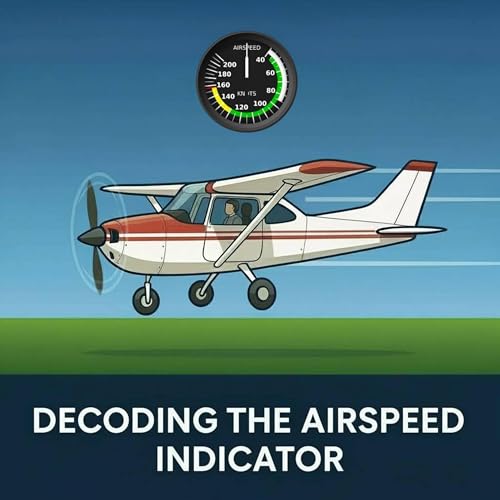
  • Decoding the Airspeed Indicator
    Nov 14 2025

    In this episode, we dive into one of the most information-rich instruments on the flight deck: the Airspeed Indicator. Building on our exploration of the pitot-static system, we unpack how the ASI translates pressure into performance—and why understanding its nuances is essential for safe and efficient flying.

    We’ll break down the mechanism behind the instrument, explore the four key types of airspeed every pilot must master, and demystify the color-coded arcs that define the aircraft’s operational envelope. From stall speeds and flap limits to VNE and the caution range, you'll learn how to interpret the ASI at a glance and understand what’s not shown on the dial—like maneuvering speed, climb speeds, and critical multi-engine limitations.

    Finally, we’ll walk through the simple but essential pre-flight checks that verify the ASI’s health before takeoff.

    Whether you’re a student pilot building your foundation or an experienced aviator refreshing the essentials, this episode will give you a clearer, more confident grasp of one of aviation’s most fundamental instruments.

    Voir plus Voir moins
    12 min
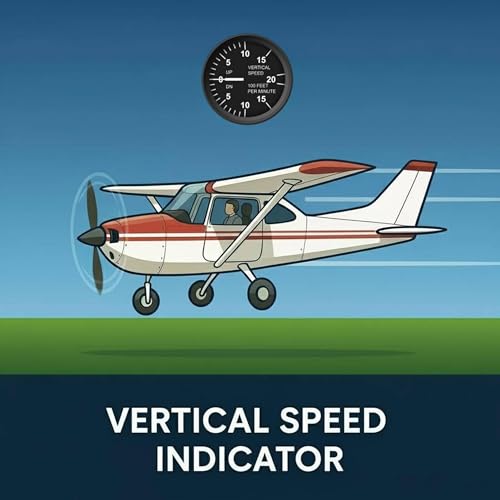
  • The Vertical Speed Indicator: Reading the Rate of Change
    Nov 7 2025

    In this episode of Aviation Essentials, we explore one of the most informative yet often misunderstood instruments in the cockpit—the Vertical Speed Indicator (VSI), also known as the Vertical Velocity Indicator (VVI). This episode unpacks how this differential pressure instrument helps pilots interpret an aircraft’s rate of climb or descent in feet per minute, and why understanding its lag and limitations is essential to accurate altitude control.

    We’ll break down:

    • The Core Function: How the VSI translates changes in static pressure into readable vertical speed.

    • Inside the Instrument: The role of the diaphragm, airtight case, and calibrated leak that make the VSI work.

    • Trend vs. Rate Information: How the VSI first shows the direction of change, then stabilizes to show the rate of change.

    • Instrument Lag: Why every standard VSI has a 6–9 second delay—and what that means in turbulence or during aggressive maneuvers.

    • The IVSI Advantage: How the Instantaneous Vertical Speed Indicator uses accelerometers to provide immediate, accurate readings.

    • Preflight Checks: The vital steps to ensure the VSI is functioning correctly before and during flight.

    Whether you’re a student pilot learning your first scan or an experienced aviator refining your instrument awareness, this episode will give you a deeper appreciation for the VSI’s role in maintaining smooth, controlled vertical flight.

    Voir plus Voir moins
    13 min
  • Altimeter Settings and Altitude: The Hidden Math of Flight Safety
    Oct 31 2025

    In this episode of Aerodynamic_Poison, we unravel one of aviation’s most deceptively simple—but critically important—instruments: the aircraft altimeter. Pilots depend on it for terrain clearance, traffic separation, and performance calculations—but what happens when it’s just a little off?

    We’ll dive into how altimeter settings are derived, why a small error in barometric pressure can put you hundreds of feet off your intended altitude, and how to avoid the dangerous illusion of being “higher than you really are.” You’ll also learn how the five types of altitude—Indicated, True, Absolute, Pressure, and Density—interact to define a pilot’s vertical awareness, and why Density Altitude is the silent performance killer on hot days.

    From pressure systems to preflight checks, this episode lays out the practical science behind barometric accuracy—and how pilots translate shifting air into precise altitude readings.

    Voir plus Voir moins
    16 min
  • Altitude Illusions: The Truth Behind the Aircraft Altimeter
    Oct 24 2025

    In this episode of Aerodynamic_Poison, we uncover the inner workings—and hidden pitfalls—of one of aviation’s most deceptively simple flight instruments: the altimeter.

    At first glance, it’s just a dial showing how high you are. But beneath that glass lies a delicate stack of evacuated metal wafers—an ingenious barometric system translating pressure into altitude. We’ll explore how this mechanical marvel measures your height above the earth, the role of the Kollsman window, and why a single oversight in setting barometric pressure can turn a routine flight into a terrain hazard.

    From the chilling reality of “GOING FROM A HIGH TO A LOW, LOOK OUT BELOW” to the cold-weather warning “FROM HOT TO COLD, LOOK OUT BELOW,” this episode dissects the physics, standard atmosphere assumptions, and operational corrections that every pilot must master to fly safely.

    Join us as we decode how the atmosphere conspires to deceive the altimeter—and how skilled aviators stay one step ahead of it.

    Voir plus Voir moins
    15 min