Épisodes

  • The Night Shift
    Mar 13 2026

    The narrator has worked the graveyard shift at the Starlight Diner for as long as they can remember. That should probably bother them more than it does—the not remembering. But the nights are long, and thinking too hard makes them longer.

    The regulars make it bearable. Marla, who orders decaf at midnight and stares at headlights that never arrive. Doug the trucker, who nurses a single cup for hours. The teenager in the corner booth, hunched over a phone with no signal, hiding from something she can't outrun.

    And Mr. Carroll. Every night at exactly 2:15 AM. Coffee and cherry pie. Five-dollar tip on a four-dollar check. A nod like they've shared something important.

    Then the narrator finds a newspaper someone left on the counter. Mr. Carroll's face smiles from an obituary dated six months ago. Heart attack. Passed peacefully. No surviving family.

    The newspaper is six months old. But Mr. Carroll walks in at 2:15, same as always, moving to his booth with measured steps, eating pie he doesn't seem to taste, looking through the narrator at something just behind their face.

    One by one, the narrator searches the regulars. Car accident. Overdose. Missing for two years.

    Everyone in the diner is dead.

    Everyone except—

    The search results load. The photo shows a face that used to be theirs. The obituary is dated eight months ago.

    Voir plus Voir moins
    17 min
  • The Man Who Reads to Her
    Mar 11 2026

    The first drawing came home on a Tuesday. Orange construction paper. Emma's bedroom, rendered in crayon: purple walls, star nightlight, a small figure with yellow hair sleeping peacefully.

    And in the doorway, a shape.

    Tall. Dark. No face—just a black scribble where features should be. Proportions wrong in ways that feel intentional, like she's trying to capture something she doesn't have the skill to render.

    "That's the man who reads to me."

    Emma is five years old. Her mother died eight months ago. The grief counselor says children process loss in strange ways, create imaginary figures to fill the absence.

    But the drawings keep coming. Every day, the man is closer. First the doorway. Then the foot of the bed. Then beside the pillow, those wrong-long hands almost touching her sleeping form.

    The camera he sets up gets turned to face the wall. The nights he sleeps outside her door, he hears her talking to someone—question, pause, answer—and when he bursts in, the room is empty but charged with presence.

    "He's not in the house anymore, Daddy. He's in me now."

    When Emma picks up a crayon and fills an entire page with darkness—a face that somehow looks back even without eyes—her father understands too late. The man has finished reading to his daughter.

    Now she's going to read to him.

    Voir plus Voir moins
    17 min
  • The Man on the Hill
    Mar 9 2026

    Delphine went missing on a Tuesday in September, and by Friday the whole parish had decided she'd run off looking for something better. But Mama Celeste knows the truth: the girl's money is still under the floorboard. Her mother's locket is still behind the chimney brick. She didn't leave.

    She was taken.

    The man on the hill has had many names—Étienne Lemaire in the 1800s, Esteban Lamar later, Stephen Marsh now. The property records show the same descriptions across decades: dark hair, thin build, prominent cheekbones. The same man, seen by different census workers over sixty years, always looking roughly the same age.

    Every thirty-three years, someone disappears. Someone who won't be missed. And the cycle starts again.

    When Mama Celeste's grandson Marcus returns from the war, she tells him everything her grandmother's grandmother passed down: the ritual, the body-stealing, the binding that might stop it. Armed with bones carried from Africa through generations of keepers, they go to the house on the hill to end what should have ended long ago.

    But destroying a monster is only half the battle. What do you do with its knowledge? What do you do with a book that won't burn, pages that won't tear, secrets that whisper immortality to a young Black man in 1920s Louisiana who has already seen too much death?

    Some curses don't end when the monster dies. Some curses just change hosts.

    Voir plus Voir moins
    29 min
  • The Lighthouse Keeper's Daughter
    Mar 6 2026

    The lighthouse had been dark for three days when Tammi Holloway got the call. Her father, Clinton Brennan, was dead. Heart attack. Found on the rocks at the water's edge with an expression of pure terror on his face—like he'd seen something coming for him. Something he'd been expecting for a long time.

    Tammi hadn't spoken to her father in fifteen years. She'd left the lighthouse at eighteen, bitter and confused about why he chose a light that ran itself over his own daughter. Every visit ended the same way: mid-sentence, mid-word, his eyes would go distant, and he'd walk toward the tower.

    "I have to tend the light."

    Now the light is out. And in her father's journals—hundreds of them, filling her old bedroom—Tammi discovers why.

    The first lighthouses weren't warnings to ships. They were temples. Offerings. Constant flames of worship to keep something in the deep satisfied. Something vast and old that had been swimming through voids before our sun ignited. Something that accepts the light as tribute—or, when the light goes out, expects something else.

    Tammi's mother didn't drown in an accident. She was taken as an offering when the light flickered out for twenty minutes in 1979.

    The light has been dark for three days. Something is stirring in the deep, ancient and hungry, expecting tribute. And Tammi is the last of her line—the last keeper of a compact that predates written history.

    Voir plus Voir moins
    29 min
  • The Layover
    Mar 4 2026

    The flight was supposed to leave at 6:15. Daniel Hartley missed it by two minutes—two minutes spent stuck behind idiots in the security line, running through a terminal that seemed designed to waste his time.

    He screamed at the customer service rep. Demanded to see a manager. Made someone's day a little worse because that's what he does, what he's always done, what people like him have always gotten away with.

    They rebooked him on the redeye. Gate 66. Terminal C.

    Terminal C isn't on any map. The corridor leads through a door marked AUTHORIZED PERSONNEL ONLY, past flickering fluorescent lights, into a terminal that looks like it was built in the 1970s and never updated. Orange plastic chairs. Brown carpet. A departure board with mechanical letters that flip with a soft clack-clack-clack.

    FLIGHT 666 — DELAYED

    The other passengers have been waiting for a long time. Richard, the businessman, has been here three days. Linda, the executive, has been here two months. Harold, the insurance man who denied claims to dying patients, has been here since 1987.

    No one ages. No one sleeps. No one leaves.

    Time doesn't work right in Terminal C. The windows show only darkness. The phones have no signal. And the announcement that finally comes doesn't promise departure—it calculates the sentence.

    FLIGHT 666 — BOARDING IN 100 YEARS

    One hundred years to think about every person he made cry. Every day he ruined. Every apology he never gave.

    The loop never ends. The lights never dim. And somewhere, another passenger is being rude to a gate agent, earning their ticket to Gate 66.

    Voir plus Voir moins
    26 min
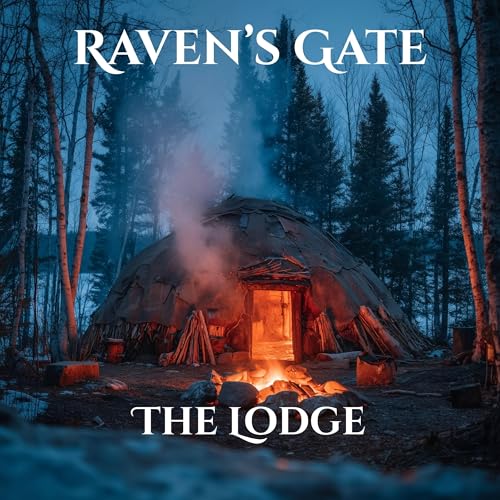
  • The Lodge
    Mar 2 2026

    The whisky wasn't helping. James Kincade had brought two bottles to Lake Superior, thinking that would be enough—enough to quiet the voice replaying his wife's last phone call, enough to numb the memory of his daughter screaming, enough to give him courage to slide over the side of the boat and let the cold water do what he couldn't do himself.

    It's been two years since the home invasion that killed them. Two years of knowing that if he'd just come home from work on time, they might still be alive. Two years of drowning in guilt that no conviction, no justice, no amount of time has been able to touch.

    Then the fog rolls in.

    It pulls his boat to an island that doesn't appear on any map, where an old man named Waaseyaa is waiting for him. A man with eyes the color of deep water, who knows James's name without being told, who speaks of sweat lodges and vision quests and doors that must be opened.

    Inside the madoodiswan, with grandfather stones glowing red in the darkness, James faces what he's been running from. His mother, whose cruelty shaped him. His wife and daughter, who need him to hear what they couldn't say before they died. And himself—the man he could become if he chose to live instead of just survive.

    Some stories are about monsters. This one is about healing. About choosing to stay when everything in you wants to let go.

    Voir plus Voir moins
    26 min
  • The Inheritance
    Feb 27 2026

    His mother said his uncle's name only once—on her deathbed, with her last breaths, warning him never to claim the inheritance.

    "Don't go there, Caleb. Promise me."

    Three weeks later, the letter arrives. Caleb Mercer is the sole beneficiary of an estate in the Appalachian mountains: a cabin on forty acres in a hollow so remote it doesn't appear on most maps. An uncle he never knew existed. Property his family spent generations hiding from him.

    The cabin should be falling apart after a century of mountain winters. Instead, it's pristine. Smoke rises from the chimney. Someone has been maintaining it. Someone is there now.

    In the cellar—far larger than the cabin above, carved into the bedrock itself, walls covered in symbols older than any alphabet—Caleb finds a chair. Ancient. Carved from black wood. Waiting at the center of a circle etched into stone.

    Something speaks to him there. Something vast and old that has been watching his family since before America had a name. It shows him the truth: his ancestors murdered the original keepers of this hollow in 1843 and were cursed with the responsibility of containing what sleeps in the deep. Every generation produces a keeper. Someone who must tend the binding. Someone who must serve.

    Caleb is the last of his line. Whether he stays or goes, the ending is the same. But staying buys time. A few more decades before the binding breaks and the world transforms into something with no memory of what humanity ever was.

    Voir plus Voir moins
    23 min
  • The Hitchhiker
    Feb 25 2026

    The scar runs down his right cheek—a faded pink line from eye to jaw that most people are too polite to ask about. The truth is uglier than the story he tells: his father's belt buckle caught him at age five, and he's been running ever since.

    At twenty-three, he finally leaves. Two hundred dollars. A duffel bag. A car barely worth the gas. Nothing but highway stretching ahead and everything he's escaping in the rearview.

    Then he sees the hitchhiker.

    Average height. Average build. Standing on the shoulder at midnight, thumb raised. Against his better judgment, he pulls over.

    It's not until twenty minutes into the drive that he notices the man's eyes. His own eyes, staring back from a stranger's face. And the scar. The exact scar, in the exact position, from the exact belt buckle that caught him at an angle no one else could possibly recreate.

    The hitchhiker knows everything. The Smiths collection. The coffee preferences. The night after prom when the engine was running and the garage door was closed. And he has a confession to make: tonight, just up the road, he killed a man.

    "I hit him going sixty-five. And I felt nothing. Because you can't outrun what's in your blood. You can't escape who you're going to become."

    The loop has no beginning. The loop has no end. And violence isn't something you do.

    It's something you are.

    Voir plus Voir moins
    16 min