

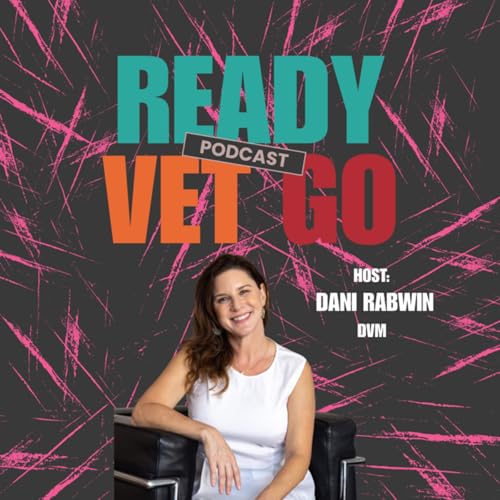
ReadyVetGo S1E19: Vet Student Networking, Mentorship & Distributive Clinical Rotations with Noah Gershoni | Ready Vet Go
Échec de l'ajout au panier.
Échec de l'ajout à la liste d'envies.
Échec de la suppression de la liste d’envies.
Échec du suivi du balado
Ne plus suivre le balado a échoué

ReadyVetGo S1E19: Vet Student Networking, Mentorship & Distributive Clinical Rotations with Noah Gershoni | Ready Vet Go
-
Narrateur(s):
-
Auteur(s):
À propos de cet audio
In this inspiring and practical episode of ReadyVetGo, Dr. Dani Rabwin sits down with Noah Gershoni (he/him), a final-year veterinary student at the University of Arizona, to talk mentorship, networking with authenticity, and how to get the most out of clinical rotations—especially in a distributive model program.
Noah shares his non-traditional path to vet school (community college prereqs, years working in ER), how meaningful connections opened doors like Venom Week, and why collaboration beats competition in veterinary medicine. They also dig into the realities of rotating through different clinics and states, the hidden challenge of housing logistics, and how to learn from every mentor and team—without coming off combative.
📌 What You’ll Learn:
- How to network without being transactional (and actually maintain connections)
- Community college to vet school: confidence, resilience, and belonging
- Why UA’s culture (no grades + group-based learning) builds collaboration
- Distributive clinical year: real-world medicine, pros/cons, and logistics
- Why general practice can do more than people think (and why it matters for access)
- Mentorship on short rotations: how to ask questions well and respect time
- Two must-use rotation tips: “keep the technicians happy” + find value in everything
🎬 Timestamps:
00:00 – Intro + pronouns: Noah (he/him) + Dani (she/her)
01:44 – How they met: conference lunch line + service dog networking
03:00 – ReadyVetGo networking night: “bring as many as you can” (20 students show up)
04:39 – Networking that isn’t transactional: curiosity, real connection, follow-through
06:35 – Non-traditional path: community college prereqs (no “traditional college” route)
09:33 – Working in ER for 5 years: learning fast, growing responsibility
10:42 – Falling for surgery: mixed animal + OR confidence
11:35 – Why University of Arizona: Venom Week + meeting faculty through networking
13:41 – Personal statement: vulnerability, first-gen story, resilience, family pride
16:43 – UA culture: no GPAs/grades + group-based learning = collaboration over competition
21:29 – Clinical year (distributive model): rotating clinics/states + real-world medicine
22:18 – The tough part: housing/logistics + advocating for classmates
25:23 – General practice “can do it”: accessibility, internal medicine in GP, specialization trend
28:15 – Mentorship nuance: asking questions vs respecting time (the “dance”)
30:07 – Evidence-based vs “old school”: how to ask “why” without being combative
32:53 – Tip #1: keep technicians happy (donuts + teach-back + teamwork)
34:23 – Tip #2: find value in everything (even “how not to do it”) + don’t take it personally
👇 QUESTION FOR YOU: What’s one mentoring tip you wish you learned earlier in vet school or practice?
Season 1 Ep 18
✅ If this helped, like, subscribe, and share with a vet student or new grad who needs it today.
🎧 Available on Spotify, Apple Podcasts, and all major platforms.
📲 Follow: @readyvetgo_
📧 Contact: info@pacificlensstudios.com
#ReadyVetGo #VeterinaryMedicine #VetMentorship #VetStudent #ClinicalRotations #Networking #NewGradVet #GeneralPractice #VetSchool #DistributiveModel