OFFRE D'UNE DURÉE LIMITÉE | Obtenez 3 mois à 0.99 $ par mois

14.95 $/mois par la suite. Des conditions s'appliquent.
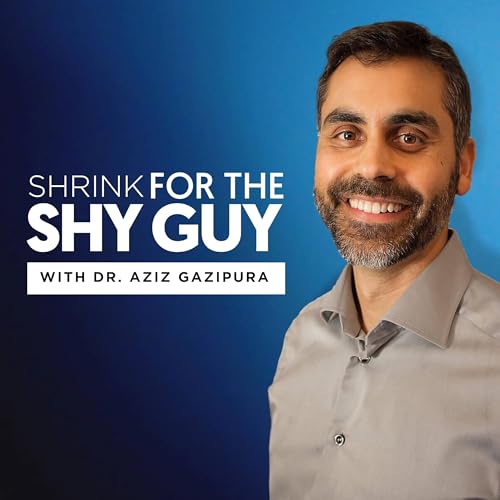
Page de couverture de Shrink For The Shy Guy

Shrink For The Shy Guy

Shrink For The Shy Guy

Auteur(s): Dr. Aziz: Social Anxiety And Confidence Expert Author and Coach
Écouter gratuitement

À propos de cet audio

Everyone has some level of fear in social situations. For you it might be meeting someone new, networking, dating, sales conversations, presenting, public speaking, or business meetings. In order to get to the next level in your life, create better relationships, find love, earn more money, or advance in your career, you must overcome fear, social anxiety, and self-doubt. In order to be outstanding, you must have confidence. That's where Dr. Aziz comes in. After struggling with shyness and social anxiety for 9 years, he decided to take life into his own hands and master confidence. A decade later, he is the world's leading expert on social anxiety and social confidence. He received a doctorate in clinical psychology from Stanford and Palo Alto Universities and now works as a confidence and success coach with people from all over the world. This show contains the profound and immediately life-changing information he teaches high-paying clients every day. Learn from the best about how to overcome social fear, gain confidence in dating, public speaking, sales presentations, business meetings, and all of life.© 2026 2014 Dr. Aziz Gazipura Développement personnel Gestion et leadership Hygiène et mode de vie sain Psychologie Psychologie et santé mentale Réussite Économie
Épisodes
  • Nice People Don't Care Too Much
    Jan 6 2026
    Think you care too much about other people’s feelings? Think again. In this bold kickoff to 2026, Dr. Aziz pulls back the curtain on the real reason “nice people” overextend themselves, struggle to say no, and feel constantly responsible for everyone’s emotions. Spoiler alert: it’s not because they care too much—it’s because they’re trying to stay safe. Deep down, many people-pleasing behaviors are driven by fear, guilt, and the unconscious belief that your worth hinges on making others happy. In this eye-opening episode, you’ll learn: Why over-functioning and “caring” often mask codependencyThe hidden emotional cost of being overly responsibleHow niceness traps you in an outdated identity that’s not really youThe essential difference between real care and fear-based appeasementWhy it’s time to update your inner operating system—not just tweak your habits If you’ve ever said yes when you wanted to say no, answered texts out of anxiety, or felt guilty for simply protecting your time and energy, this episode will speak to your soul. And it will challenge you to finally liberate yourself from the nice person identity and step into the bold, authentic leader you were meant to be. Dr. Aziz also shares a powerful invitation to make 2026 the year you fully upgrade your life—starting with your confidence. Tune in, commit, and get ready to reclaim your freedom. -------------------------------------------- Why “caring” can be fear in disguise—and how to break free from the Nice Cage Most people start the new year thinking about goals: relationships, health, career, money, confidence. But underneath all of that, there’s a deeper goal. Liberation. Liberation from the old identity. Liberation from the old operating system. Liberation from social anxiety, people-pleasing, self-doubt… and the nice cage that keeps you small. And today I want to challenge one of the biggest beliefs that keeps “nice” people trapped: Nice people don’t actually care too much. That might sound surprising—because nice people often feel like they care more than everyone else. They feel guilty if someone’s upset. They say yes when they want to say no. They carry other people’s emotions like they’re responsible for them. And they tell themselves: “I care about them, so I can’t disappoint them.”“If I say no, it means I don’t care.”“If they’re struggling, who am I to refuse?”“A good person should help.” But here’s what I want you to see: When it feels like you care too much… it often isn’t caring at all. It’s something else masquerading as care. The Nice Cage: When “being good” becomes self-erasure Niceness can feel like virtue. It can feel like love. It can feel like generosity. It can feel like being a “good person.” But a lot of the time, niceness is actually a strategy—an unconscious survival strategy—to stay safe. Because underneath niceness is a fear that sounds like: “If I upset people, I’ll be rejected.”“If I disappoint them, I’ll be abandoned.”“If they’re angry with me, I’m not safe.”“If I don’t keep them happy… I’m bad.” So niceness becomes a cage: you keep trying to be acceptable, agreeable, harmless. And the cost? You don’t live your life. You live a managed version of yourself. The big misunderstanding: “Caring” vs. fear Nice people don’t actually care too much. They often have something else running the show: 1) Codependence Codependence is basically: “I’m okay if you’re okay. And if you’re not okay… I’m not okay.” So if someone is happy, you relax. If someone is disappointed, irritated, stressed, or hurt—you go into emergency mode. Your hair is on fire. “What do you need?” “How do I fix this?” “How do I make it right?” And it feels like caring. But really, it’s fear. 2) Over-responsibility This is the core belief behind niceness: “I am responsible for your emotional state.” Not that you’re responsible to feed someone like a baby— but you feel responsible for whether they’re upset. So you avoid saying no. You avoid being direct. You avoid expressing your truth. You override your own needs. Because if they’re upset… you feel like you’ve done something wrong. The “or else” feeling: the clearest sign it’s fear Here’s one of the easiest ways to tell whether something is care or fear: If it has an “or else” feeling—it’s fear. “I have to respond right now… or else.” “I have to say yes… or else.” “I have to make them happy… or else.” “I can’t disappoint them… or else.” That “or else” is not love. That “or else” is survival mode. And it’s usually not about the current situation—it’s an old pattern repeating itself. Why niceness drains your vitality Here’s the truth that many nice people don’t want to look at: You will not be fully alive in the nice operating system. At best, you can ...
    Voir plus Voir moins
    22 min
  • Become Doubtless - How To Believe In Yourself And Trust In Life
    Dec 16 2025
    What if your self-doubt wasn’t something you had to live with? What if you could become truly doubtless—able to believe in yourself fully and trust life, no matter what? In today’s powerful episode, Dr. Aziz shares the origin story and key insights behind his brand new book Doubtless: How to Believe in Yourself and Trust in Life. You’ll learn how self-doubt forms, why it persists even after personal growth, and how it subtly robs you of joy, freedom, and authenticity. Dr. Aziz explores the deeper armor we all build to protect ourselves—and how that same armor becomes a cage. He introduces a new way forward: a path of liberation, where you build not just unshakable self-confidence, but a living trust in life itself. If you've ever felt like fear or inner control mechanisms are holding you back—especially after achieving outer success—this episode will speak directly to your soul. Plus, discover how to get your copy of Doubtless and join the free masterclass to start your own journey.--------------------------------------- What if the thing holding you back isn’t a lack of confidence—but a lack of trust? Most people assume that self-doubt means you don’t believe in yourself enough. And while that’s partly true, it’s only half the story. Because even when you do believe in yourself—your skills, your intelligence, your capability—you can still feel anxious, guarded, and unsure deep down. That’s where doubtlessness comes in. Being doubtless isn’t about hyping yourself up or convincing yourself you’re amazing. It’s a state of being where self-doubt no longer runs the show. Where you trust yourself and trust life enough to move forward, even when you don’t have certainty, guarantees, or perfect understanding. Self-doubt often disguises itself as being “reasonable.” It sounds cautious. Mature. Sensible. But underneath, it’s usually a protective strategy—something you learned long ago to avoid pain, rejection, or humiliation. Maybe you were laughed at when you expressed yourself. Maybe you were judged, criticized, or shut down. And somewhere along the way, you built armor. That armor may have helped you survive. But years later, it quietly becomes a cage. “Self-doubt isn’t wisdom—it’s armor that’s grown too tight.” Doubt shows up in familiar ways: questioning your instincts, dismissing your desires, postponing what matters to you, or needing to fully understand something before you allow yourself to act. It keeps you stuck in your head, trying to control outcomes, emotions, and even life itself. And control feels safer than uncertainty—until you realize how much aliveness it costs. Some of the most meaningful moments in life don’t come from certainty or logic. They come from letting yourself be moved. From trusting an inner pull you can’t fully explain. From allowing life to move through you without needing to justify every step. That’s the difference between believing in yourself and trusting life. Believing in yourself gives you courage to act. Trusting life gives you permission to let go. And both are required to truly become doubtless. Becoming doubtless isn’t a switch you flip or a quote you memorize. It’s something you cultivate over time—like building a muscle and tending a garden at once. You create the conditions. You learn to recognize how doubt hooks you. You stop obeying its rules. And gradually, something new grows: a quieter mind, a more grounded body, and a deeper sense of inner safety. From that place, authenticity becomes natural. Connection feels less forced. Decisions feel clearer. You don’t need certainty to move forward anymore—you need alignment. And when you start living this way, life begins to feel less like a battle you must win and more like a relationship you can trust. That’s the invitation of doubtlessness. Not to eliminate fear entirely—but to stop letting fear decide who you get to be. Because when doubt no longer runs your life, what opens up isn’t just confidence—it’s freedom. And that freedom allows you to finally be 100% you. Get the Book on Amazon Purchase Become Doubtless on Amazon (Kindle & Paperback):👉 https://a.co/d/5hdcSYXBook Bonuses & Resources Access bonus materials, masterclasses, and companion resources for the book: 👉 www.socialconfidencecenter.com/doubtlessbook Learn more about Dr. Aziz, his work, and coaching programs: 👉 www.socialconfidencecenter.com/
    Voir plus Voir moins
    25 min
  • When Self-Confidence Isn't Enough
    Dec 9 2025
    🌟 In this episode of Shrink for the Shy Guy, Dr. Aziz explores a surprising truth that almost no one talks about: self-confidence alone can only take you so far. If you’ve ever worked hard to become more confident—only to still feel anxious, overwhelmed, or like the next level of life is somehow out of reach—this conversation will hit home. Dr. Aziz breaks down what he calls the self-confidence ceiling—the invisible limit you run into once you’ve taken risks, pushed yourself, built skills, and created a good life… and yet still feel anxious, grasping, or afraid of losing what you’ve built. Through stories of his own journey and powerful metaphors (the famous red, green, and gold balls), he reveals why success can sometimes increase anxiety, and what deeper ingredient is needed to finally feel grounded, secure, and free. You’ll discover why confidence without trust eventually collapses under its own weight, and why true liberation comes from pairing “believe in yourself” with something bigger: a lived sense of trust in life itself. This subtle shift unlocked a profound transformation in Dr. Aziz’s relationships, peace, and purpose—and it’s the core of his upcoming book Doubtless. Packed with insight, humor, and honest personal stories, this episode invites you into a new phase of growth—beyond performance, beyond proving yourself, and into a deeper kind of freedom. 🎧 Ready to break past your self-confidence ceiling and step into something greater? Tune in now and learn the missing piece that makes confidence finally feel effortless, stable, and real. ------------------------ When Self-Confidence Isn’t Enough There’s a moment in your growth when you look around at your life and think: “Shouldn’t I feel better than this?” You’ve worked hard. You’ve pushed yourself. You’ve taken the risks, had the breakthroughs, improved your relationships, built your career, maybe even created a life that younger you never thought was possible. And yet… the anxiety doesn’t fully go away. It shifts. It takes on a new shape. That’s what this episode dives into—the surprising point where self-confidence stops being enough, and why so many high-functioning, self-aware people suddenly feel overwhelmed, afraid, or “on edge” right when life gets good. I call this moment the Self-Confidence Ceiling. In this episode, I share how I personally smashed into that ceiling—even after overcoming years of social anxiety, breaking free from people-pleasing, building deep relationships, and creating work I love. I thought I had “made it.” But instead of peace, I found myself more anxious than ever… not because life was bad, but because it was good. Really good. When you’ve been pulling red balls for years—rejections, setbacks, pain—you learn how to handle the struggle. But when you start pulling green balls—love, success, connection, purpose—suddenly you have something precious to lose. And that’s where fear can explode. “The better it gets, the more danger your nervous system predicts.” Maybe you’ve felt that too. That tightening in your chest when things are going well. That fear that the other shoe is about to drop. That constant scanning for what might go wrong. This isn’t a failure of confidence—this is the boundary line between self-confidence and something deeper: trust in life. For years I could talk about trust, teach trust, write about trust. But emotionally? Physically? Nervously? I didn’t trust anything. Not the good. Not the stability. Not the love. Not the blessing of a beautiful home, two little boys, my marriage, my work, my clients, my health—none of it felt safe. I was hypervigilant, checking for danger everywhere. And I had no idea why. This episode walks through the moment everything shifted—when I realized I wasn’t facing a skill problem or a mindset problem. I was facing a faith problem. Not faith in a religious sense, but a faith in life, in goodness, in the unseen forces that hold us, guide us, and love us even when our minds doubt it. It’s the journey that led to my new book, Doubtless: How to Believe in Yourself and Trust in Life, which is finally coming out next week. (We’re putting the finishing touches on it now!) And on the release week, I’ll be teaching a free live masterclass on how to stop living in fear and finally trust the good in your life. I’ll share the link as soon as it’s ready. Make sure you’re on my email list so you don’t miss it. If you’ve ever felt like your anxiety shouldn’t be this strong… if you’ve ever wondered why success still comes with fear… if you’ve ever sensed that self-confidence alone can’t lift the weight you’re carrying… this episode will speak directly to your heart. Because you’re not broken. You’re not failing. You’re simply bumping into your next breakthrough. And on the other side of that ceiling is a life of freedom, connection, gratitude,...
    Voir plus Voir moins
    27 min
Pas encore de commentaire