Obtenez 3 mois à 0,99 $/mois

OFFRE D'UNE DURÉE LIMITÉE
Page de couverture de Summed

Summed

Summed

Auteur(s): Summed Podcast
Écouter gratuitement

À propos de cet audio

Each episode of Summed sums up one of the greatest money books of all time in less than 20 minutes. Master your money with lessons from the greatest and learn to "Invest Like the Best". Curated by humans, synthesized with AI.


Powered by NotebookLM.

An experiment in using AI to hack your life and make your money work for you.

(Education only; not financial advice.)

Hosted on Acast. See acast.com/privacy for more information.

Summed Podcast
Art Finances personnelles Économie
Épisodes
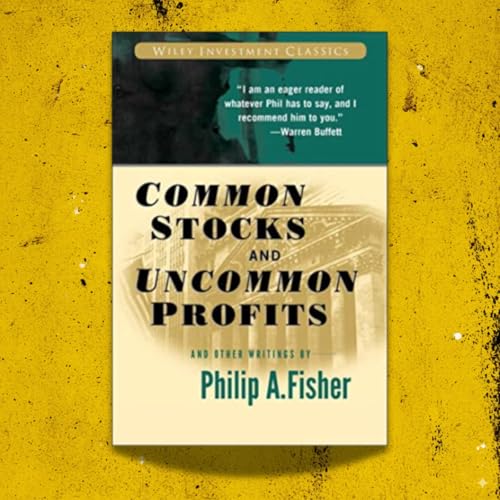
  • Common Stocks and Uncommon Profits — Philip Fisher
    Oct 17 2025

    In this episode of Summed, we deliver a complete Common Stocks and Uncommon Profits summary—Philip Fisher’s classic on how to identify outstanding growth companies and hold them for years. In ~20 minutes, you’ll learn Fisher’s scuttlebutt research (talking to suppliers, customers, competitors), his famous 15-point checklist for management quality and runway, when to buy, add, or hold, and why “don’t sell too soon” is a powerful rule. Perfect for beginners and busy listeners who want a practical way to turn real-world insight into long-term investing edge.


    About the author

    Philip A. Fisher (1907–2004) was a pioneering growth investor whose ideas influenced legends like Warren Buffett—especially the focus on quality businesses, exceptional management, and long holding periods.


    Key takeaways

    • Scuttlebutt method: learn from an ecosystem—customers, vendors, competitors, ex-employees.
    • 15-point Fisher checklist: size of market, competitive edge, sales organization, R&D effectiveness, profit margins, integrity/ability of management, and more.
    • Buy right, hold long: concentrate in a few great businesses; let compounding work.
    • Add on progress, not dips: increase when the business executes, not just when price falls.
    • Don’t over-diversify: too many holdings dilute attention and results.
    • When to sell: thesis broken, management deteriorates, or a clearly superior opportunity arises.


    This week’s playbook

    1. Build a one-page scuttlebutt plan for a company you use: list 3 customers, 2 suppliers, 1 competitor to contact or research.
    2. Run Fisher’s 15-point checklist (adapted) and score your top idea 0–2 on each point.
    3. Write a hold thesis with 2–3 milestones; add only if milestones are met.
    4. Trim diworsification: consider consolidating small “why do I own this?” positions.

    Powered by NotebookLM.

    An experiment in using AI to hack your life and make your money work for you.

    (Education only; not financial advice.)

    Hosted on Acast. See acast.com/privacy for more information.

    Voir plus Voir moins
    18 min
  • The Index Card — Helaine Olen & Jonathan Clements
    Oct 16 2025

    In this episode of Summed, we deliver a complete The Index Card summary—a back-to-basics guide to simple, common-sense personal finance. Journalists Helaine Olen and Jonathan Clements lay out the rules that fit on one card: spend less than you earn, crush high-interest debt, automate saving, max out tax-advantaged accounts, invest in low-cost index funds, keep fees and taxes low, buy adequate insurance, and keep it simple so you actually stick with it. In ~20 minutes, you’ll get the no-fluff checklist to run your money on autopilot.


    About the authors

    • Helaine Olen — Personal-finance journalist and author known for cutting through industry myths.
    • Jonathan Clements — Veteran personal-finance writer and author focused on low-cost, behavior-first investing.


    Key takeaways

    • Live below your means and build a cushion first.
    • Pay off high-interest debt before investing aggressively.
    • Automate: savings, bill pay, and investments on payday.
    • Use tax-advantaged accounts (where available) to cut taxes.
    • Prefer low-cost index funds/ETFs; avoid complexity and high fees.
    • Insure big risks (health, disability, term life); skip gimmicks.
    • Keep it simple so you’ll keep doing it.


    This week’s playbook

    1. Set a payday auto-transfer to high-yield savings and to a broad index fund.
    2. Do a debt triage: list balances/APRs; target the highest rate with automatic extra payments.
    3. Open or increase a tax-advantaged contribution (e.g., RA/TFSA/IRA/401(k) equivalent).
    4. Run a quick fee check on your funds; swap to lower-cost options if possible.
    5. Complete a basic insurance audit: health, disability, term life.


    Powered by NotebookLM.

    An experiment in using AI to hack your life and make your money work for you.

    (Education only; not financial advice.)

    Hosted on Acast. See acast.com/privacy for more information.

    Voir plus Voir moins
    15 min
  • The Bogleheads’ Guide to Investing — Taylor Larimore, Mel Lindauer & Michael LeBoeuf
    Oct 14 2025

    In this episode of Summed, we deliver a complete The Bogleheads’ Guide to Investing summary—a straightforward handbook for building wealth with low-cost index funds, a simple three-fund portfolio, smart asset allocation, and ruthless control of fees and taxes. In 20 minutes, learn how to write an Investment Policy Statement (IPS), automate contributions and rebalancing, and protect against big risks (insurance) so you can stay the course through every market cycle. Perfect for beginners and busy listeners who want a proven, set-and-forget approach to investing.


    About the authors

    Taylor Larimore, Mel Lindauer & Michael LeBoeuf are longtime stewards of the Bogleheads community, distilling John C. Bogle’s principles—own the market at low cost, minimize taxes, and be disciplined—into practical steps any investor can follow.


    Key takeaways

    • Three-fund portfolio: total stock, total international, total bond—diversified, cheap, effective.
    • Asset allocation first: match risk to your horizon and sleep-at-night level; write it into an IPS.
    • Costs & taxes kill returns: prefer low expense ratios, tax-efficient funds, and smart account placement.
    • Automate discipline: monthly contributions, dividend reinvestment, and calendar-based rebalancing.
    • Insure big risks: health, disability, and term life before chasing higher returns.
    • Stay the course: ignore forecasts; consistency beats cleverness.


    This week’s playbook

    1. Draft a one-page Investment Policy Statement (goals, target allocation, contribution plan, rebalance rule).
    2. Build or migrate to a three-fund core using low-cost index funds/ETFs.
    3. Automate monthly buys and turn on dividend reinvestment.
    4. Set an annual rebalance reminder (or 5% bands).
    5. Do a quick insurance audit to cover catastrophic risks.


    Powered by NotebookLM.

    An experiment in using AI to hack your life and make your money work for you.

    (Education only; not financial advice.)

    Hosted on Acast. See acast.com/privacy for more information.

    Voir plus Voir moins
    15 min
Pas encore de commentaire