OFFRE D'UNE DURÉE LIMITÉE | Obtenez 3 mois à 0.99 $ par mois

14.95 $/mois par la suite. Des conditions s'appliquent.
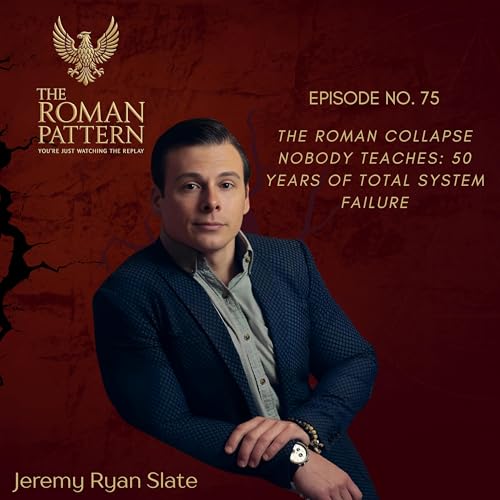
Page de couverture de The Jeremy Ryan Slate Show

The Jeremy Ryan Slate Show

The Jeremy Ryan Slate Show

Auteur(s): Jeremy Ryan Slate
Écouter gratuitement

À propos de cet audio

The Jeremy Ryan Slate Show is a bi-weekly investigation into how power really works—across history, empires, and the modern world.


Each episode draws on two core lenses:


Hidden forces behind history—royal murders, lost colonies, financial systems, modern elites, NGOs, propaganda, and the quiet mechanisms that shape events long before they reach the headlines.


And the Roman pattern—the idea that today’s crises aren’t new. Currency collapse, political division, border chaos, military overreach—Rome faced them all first. The Roman Empire spent centuries making every mistake a civilization can make, and left behind a playbook we’re following again, page by page.


Through expert conversations with historians, researchers, and serious thinkers—and deep dives into primary sources, documents, and records—this show connects ancient history to modern power with evidence, not opinion.


You’ll learn to:

• Recognize collapse signals before they’re obvious

• Understand modern crises through ancient parallels

• See how empires actually rise, decay, and fall

• Spot the patterns shaping what comes next


From medieval conspiracies to modern cover-ups, from Augustus to Constantine, from ancient


Rome to today’s global order—this is history as investigation.


No spin. No narratives. Just receipts.


New episodes twice a week.

Jeremy Ryan Slate
Monde Sciences sociales
Épisodes
  • The Medici Blueprint: How a Banking Family Quietly Captured Europe
    Jan 21 2026

    The Medici are remembered as enlightened patrons of art—the family behind Michelangelo, Botticelli, and the Renaissance itself.


    That version of history is incomplete.


    In this episode of Hidden Forces in History, we strip away the marble and mythology to examine Medici family as they actually were: a private banking dynasty that embedded itself inside moral authority, captured a republic without abolishing it, and rewrote its legacy through art, architecture, and storytelling.


    We follow the money—from Florentine ledgers to the Vatican—showing how the Medici:


    • Plugged into Church finance to gain leverage across Europe

    • Used patronage as a form of long-term propaganda

    • Helped trigger the Reformation through indulgence financing

    • Lost their bank—but preserved their legend


    This isn’t just a Renaissance story.


    It’s a repeatable playbook—one still used by modern elites, foundations, and institutions today.


    Same system.

    Different century.


    👇 If modern power feels familiar, you’re seeing an old script.

    Voir plus Voir moins
    15 min
  • 6 Emperors in 1 Year: Total System Collapse
    Jan 19 2026

    In a single year, Rome went through six emperors.


    Not candidates. Not dynasties.

    Six men who actually wore the purple—and by the end of 238 AD, four were dead.


    This wasn’t just a bad year. It was the moment Rome learned a terrifying truth:


    Once an army learns it can make and unmake emperors, the empire belongs to whoever holds the swords—not the laws.


    In this episode of The Roman Pattern, we break down the Year of Six Emperors:


    The assassination that turned succession into an auction


    Maximinus Thrax: the military strongman who squeezed the provinces


    The African tax revolt that lit the match


    The Senate’s desperate gamble (and why it failed fast)


    The Praetorian Guard’s palace coup in the capital


    Gordian III: the teenage “compromise” emperor—aka a puppet


    And the real takeaway: 238 didn’t destroy Rome overnight… it normalized chaos.

    After this, succession wasn’t law, tradition, or dynasty. It was speed, violence, and who could move troops first.


    Rome is falling right now—you’re just watching the replay.


    👇 Comment: What’s the real tipping point—when rules break, or when everyone starts acting like they’ll never return?

    Voir plus Voir moins
    9 min
  • The Fall of Constantinople: Europe's Greatest Failure
    Jan 14 2026

    On May 29th, 1453, Constantinople fell—and with it, the last continuation of Rome.


    But the real story isn’t just Ottoman cannons and overwhelming numbers.

    It’s the cold mathematics of power: betrayal, sabotage, and profit-driven neutrality.


    In this episode of Hidden Forces in History, we follow the receipts behind one of the most pivotal days in world history:


    why the city was still defensible (if help had come)


    how Genoa’s colony of Galata stayed “neutral” while Ottoman ships passed


    why Venice negotiated safe passage instead of fighting


    how Western Europe sent prayers instead of armies


    and why the fall wasn’t inevitable—it was a series of choices


    Because the most disturbing truth is this:

    Constantinople didn’t fall because it was weak. It fell because powerful allies decided it was convenient to let it fall.


    If you want history as investigation—documents, incentives, and the people who benefited—subscribe for weekly deep dives into the hidden forces behind the official story.


    Question for you: Was this “inevitable”… or a calculated sacrifice?

    Voir plus Voir moins
    30 min
Pas encore de commentaire