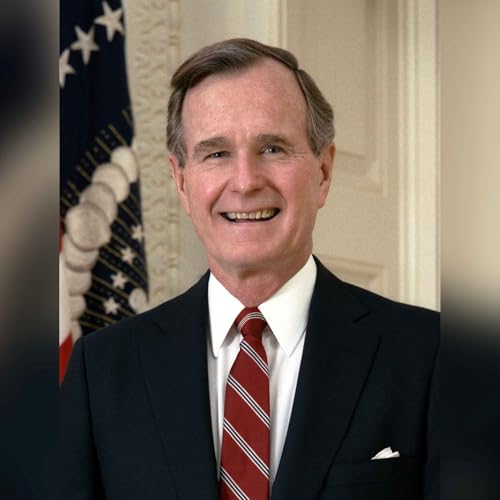
In his 1990 State of the Union Address, President George H.W. Bush reflects on the monumental changes of 1989, particularly the fall of communism in Eastern Europe, and outlines his vision for America's future in a rapidly changing world.
Key Topics:
- The Changing World Order
- Domestic Policy Goals
- Economic Investments
- Education
- Environmental Stewardship
- International Relations
Summary:
President Bush begins by highlighting the transformative events of 1989, characterizing them as revolutionary changes that mark a new era. He references the restoration of democracy in Panama, the rise of Solidarity in Poland, and the fall of the Berlin Wall as examples of freedom's triumph over oppression. He emphasizes that these events validate America's long-standing commitment to freedom and positions the nation at the center of a widening circle of liberty.
The President shifts to domestic priorities, outlining a vision for a better America characterized by opportunity, equality, and progress. He envisions a nation where everyone who wants a job can find one, where women have access to quality childcare, where environmental and economic needs are balanced, and where American-made products are synonymous with quality. He stresses the importance of including disabled citizens in the mainstream of society, addressing homelessness, improving schools, and ensuring a drug-free environment for children.
To meet the challenges and opportunities of the global market, President Bush calls for strategic investments in America's future. He highlights the need to encourage the creation of physical, intellectual, and human capital. He introduces the Family Savings Plan to encourage savings, proposes a cut in the capital gains tax to stimulate risk-taking and job creation, and pledges to increase funding for research and development, housing initiatives, drug prevention programs, space exploration, and education.
President Bush then focuses on education, announcing America's education goals developed in cooperation with the nation's governors. These goals include ensuring that every child starts school ready to learn, increasing the high school graduation rate to 90%, assessing student performance in core subjects, making U.S. students first in the world in math and science achievement, ensuring that every adult is a skilled and literate worker, fostering disciplined learning environments, and creating drug-free schools.
Acknowledging the importance of environmental stewardship, President Bush announces plans to elevate the Environmental Protection Agency to cabinet rank and proposes over $2 billion in new spending to protect the environment. This includes funding for global change research, expanding national parks and wildlife preserves, improving recreational facilities, and planting a billion trees a year. He urges Congress to act on key issues such as clean air, child care, education, crime and drugs, and offers his hand in cooperation. He reaffirms the government's commitment to Social Security and calls for careful consideration of health care reform.
President Bush emphasizes the importance of maintaining democratic decency and condemns racism, anti-Semitism, bigotry, and hate. He encourages Americans to help their neighbors, address community problems, and be "points of light" to those in need. He shares a letter from a soldier who died in Panama, underscoring the values of service, freedom, and sacrifice. He concludes by addressing the changes taking place in the Sovie


 Dec 4 202512 min
 Nov 14 202546 min
 21 min
 Aug 13 202544 min
 Aug 13 202555 min
 1 min
1 min 21 min
 36 min