Épisodes

  • Longing for Hope - Advent Meditation (Week 1)
    Nov 30 2025
    https://youtu.be/FYCPLepj1kU Welcome to the 2025 Advent Meditation Journey. If you are longing for a more meaningful Advent season, we invite you to join us in setting aside time each week to reflect, pray, and re-center. Advent is a season of preparation—a sacred invitation to slow down and open ourselves to the coming of Christ. This is the first week of our Advent Meditation Journey. In this season of sacred waiting, we pause to reflect on longing and hope. Whether you’re feeling grounded or weary, hopeful or uncertain, you are welcome here. This brief meditation is an invitation to slow down, tune into your heart, and open yourself to the quiet stirrings of hope. Find a comfortable place, take a deep breath, and join me as we begin this Advent journey together—with honesty, stillness, and expectation. Check out our blog - First Sunday of Advent: Hope. https://thethrivecenter.org/first-sunday-of-advent-hope/ To receive all four meditations, visit https://thethrivecenter.org/ and sign up for our newsletter https://mailchi.mp/fuller.edu/sm-practices-for-spiritual-health-part2 We at the Thrive Center wish you a season filled with the hope, peace, joy, and love of Christ. About the Thrive Center Learn more at thethrivecenter.org. Follow us on Instagram @thrivecenter Follow us on X @thrivecenter Follow us on LinkedIn @thethrivecenter About Dr. Pam King Dr. Pam King is Executive Director the Thrive Center and is Peter L. Benson Professor of Applied Developmental Science at Fuller School of Psychology & Marriage and Family Therapy. Follow her @drpamking. About With & For Host: Pam King Senior Director and Producer: Jill Westbrook Operations Manager: Lauren Kim Social Media Graphic Designer: Wren Juergensen Special thanks to the team at Fuller Studio and the Fuller School of Psychology & Marriage and Family Therapy.
    Voir plus Voir moins
    8 min
  • What is Thriving? – Season 2 Wrap Up with Dr. Pam King
    Jul 21 2025
    Help inspire the future of With & For! Click here to take our short survey! The first five respondents will receive exclusive swag from the Thrive Center! Thriving is a relational journey that involves being deeply connected to others and the community. The importance of a "true north" and discerning what is most sacred to orient one's life. Understanding thriving as accepting a truer story of yourself, others, and the world. Engaging in mindset and behavior changes for flourishing, with self-compassion. Thriving as having resources built up in various domains (personal, family, social) to buffer from crisis. The concept of thriving begins with the love of God and love of neighbor. The alignment of purpose and practice is central to thriving, regardless of changes over time. Recognizing ourselves as "God's masterpiece" and finding joy and contentment in that. Thriving as a dynamic, meaningful engagement in purposeful living, adapting to changing contexts. The idea that one can be struggling or even mentally ill and still be thriving is a "both/and" process. Thriving as an internal state and relational reality marked by an open heart and meaningful relationships, even on a stressful day. The journey of thriving involves self-discovery and healing, acknowledging both strengths and weaknesses. Being "habituated to doing good" and demonstrating one's "best self" in relationships. Dr. Pam King’s Key Takeaways Thriving is relational and happens when we are deeply connected to other people, whether that be through our intimate relationships or our broader community. Thriving involves telling a truer story about life, that there is both beauty and brokenness. Thriving involves understanding who we are as God's masterpieces, that we all have strengths, and we all can thrive and find life in our weaknesses. Thriving involves discovering and pursuing what gets you up in the morning – your true north, what is most sacred to you. Thriving involves self-discovery and healing, which might mean being softer with ourselves so that we can find internal ease. About the Thrive Center Learn more at thethrivecenter.org. Follow us on Instagram @thrivecenter Follow us on X @thrivecenter Follow us on LinkedIn @thethrivecenter About Dr. Pam King Dr. Pam King is Executive Director the Thrive Center and is Peter L. Benson Professor of Applied Developmental Science at Fuller School of Psychology & Marriage and Family Therapy. Follow her @drpamking. About With & For Host: Pam King Senior Director and Producer: Jill Westbrook Operations Manager: Lauren Kim Social Media Graphic Designer: Wren Juergensen Special thanks to the team at Fuller Studio and the Fuller School of Psychology & Marriage and Family Therapy.
    Voir plus Voir moins
    14 min
  • The Unexpected Benefits of Play, with Dr. Tina Payne Bryson
    Jul 7 2025
    Episode Highlights "When we laugh, when we are sitting in delight, it expands–It not only keeps us in our window of tolerance, but it expands our window of tolerance." "We also know that play is just a huge protective factor. It allows people to process their experiences, but also build skills for the future." "Play is really about doing something for the enjoyment of it, for no other reason, but for the enjoyment." "The more stress you have, the more play you need." "To hold multiple emotions that more than one thing was true... gives us tremendous capacity to be resilient and have more mental and cognitive, flexibility as well as emotional flexibility." Helpful Links and Resources Books by Dr. Tina Bryson The Way of Play (Tina’s latest book!) The Whole-Brain Child No-Drama Discipline The Yes Brain The Power of Showing Up Follow Tina Bryson: TinaBryson.com Instagram X The Center for Connection Show Notes The importance of play for human development across the lifespan, noting that even mammals engage in it. How play keeps us in receptive, thriving states and expands our window of tolerance for frustration and discomfort. The crucial relationship between stress and play: the more stress in our lives, the more we need play to counterbalance it. The distinction between free unstructured play for children and dyadic, child-led relational play. Addressing common parental challenges with play, such as not knowing how, finding it boring, or children's resistance. Introduction to Tina's new book, “The Way of Play,” co-authored with Georgie Wisen-Vincent, which offers seven strategies for parents to engage in child-led play for brain integration and relationship building. Defining play for adults: doing something purely for enjoyment, not productivity (e.g., pickleball, running, decorating, thrifting, watching "trashy TV"). The significance of being playful in our manner – adding silliness, lightness, and sharing funny videos for shared laughter and connection. How play serves as a powerful tool for emotional regulation and processing, allowing individuals to "try on" difficult emotions in a safe, controlled context. The capacity to hold multiple emotions simultaneously (e.g., discomfort and fun), fostering resilience and mental/emotional flexibility. The impact of even "little moments" of play in creating significant connections, especially after separations. The concept of mutual delight in play and the importance of following what lights up both individuals. Tina's personal insights into her own playful activities, including her love for organizing and systematic approaches. Dr. Jill Westbrook’s Key Takeaways Play is important throughout our life spans because the positive emotions it elicits expand what Tina calls our window of tolerance. We get better at avoiding the rigidity and chaos that can plague our relationships. The more stressful our lives are, the more we need to play. Having playfulness in life is as important as actually playing. So, adding play to your life doesn't mean that you have to schedule any particular time for play. Laughing, sharing funny videos, lightening things up a bit are all part of play. Playing with children is vital for their development, and for those of us with young people in our lives, finding time to do something fun with them helps us all thrive. Tina's new book “The Way of Play” offers practical advice and teaches strategies so that all of us can get more comfortable playing. About the Thrive Center Learn more at thethrivecenter.org. Follow us on Instagram @thrivecenter Follow us on X @thrivecenter Follow us on LinkedIn @thethrivecenter About Dr. Pam King Dr. Pam King is Executive Director the Thrive Center and is Peter L. Benson Professor of Applied Developmental Science at Fuller School of Psychology & Marriage and Family Therapy. Follow her @drpamking. About With & For Host: Pam King Senior Director and Producer: Jill Westbrook Operations Manager: Lauren Kim Social Media Graphic Designer: Wren Juergensen Special thanks to the team at Fuller Studio and the Fuller School of Psychology & Marriage and Family Therapy.
    Voir plus Voir moins
    26 min
  • Self-Actualization and Living Your Potential, with Dr. Scott Barry Kaufman
    Jun 23 2025
    How can we grow into our full potential?—living up to what we know is the best version of ourselves, actualizing our goals, and expressing our deepest purpose in a life of impact and love? Grounded in cognitive science and psychology, best-selling author, podcaster, educator and researcher Scott Barry Kaufman believes that we need to redefine our understanding of greatness and excellence to include our whole selves—our emotions, dreams, failures, and gifts—all to live a life that is fully human, fully yourself. In this conversation with Scott Barry Kaufman, we discuss: Education and formation for the whole person, not just our intellect but our bodies, emotions, and spirituality Maslow’s hierarchy of needs and the journey that leads to self-actualization The difference it makes to see the world through growth rather than our deficiencies What it means to thrive even in the midst of mental illness The horizontal dimensions of transcendence And how to connect and align with your deepest values Episode Highlights “You can be mentally ill and thriving.” “Self-actualization is bringing your whole self to the table—not just one part of you.” “Real transcendence is about becoming one with the world—not being more enlightened than others.” “People are far more likely to demand respect than to give it.” “Only you can walk the path.” Helpful Links and Resources Visit scottbarrykaufman.com The Psychology Podcast with Scott Barry Kaufman Choose Growth Workbook by Kaufman & Feingold *Transcend: The New Science of Self-Actualization,* by Scott Barry Kaufman Scientific American: Spiritual Narcissism The Lights Triad Personality Test Sensitive Men Rising Documentary Maslow’s Hierarchy of Needs Reimagined – Big Think Corey Mascara Podcast on Values Show Notes Origin Story and Human Complexity Scott shares his journey from being labeled “ungifted” with an auditory disability to becoming a cognitive scientist. A pivotal teacher asked, “What are you still doing here?”—sparking self-belief and ambition. “I was a champion for the quirky kids from the start.” His work has shifted from an early obsession with greatness to a lifelong pursuit of self-actualization. “Greatness is tied up in power and status. Self-actualization is about bringing your whole self.” Reimagining Maslow & The Sailboat Metaphor Kaufman replaces the hierarchy of needs with a dynamic sailboat metaphor. The boat represents safety (security, connection, self-esteem); the sail represents growth and transcendence. “Unless we open our sail and become vulnerable to the wind, we can't move toward what matters.” Adds collective dimension: “There are other boats in the sea. Some people forget that.” Contrasts “horizontal transcendence” (connection) with “spiritual narcissism” (superiority). Mental Illness, Creativity, and Thriving Challenges the binary between wellness and illness: “You can be mentally ill and thriving.” Cites research showing creative strengths in children of those with mental illness. “They get the goodies without the baddies—the imagination without the psychosis.” Dismantles false dichotomies in psychiatry: labels vs. lived experience. Encourages integration rather than repression of neurodivergence and emotion. Alignment, Identity, and Individual Growth Alignment—not perfection—is the goal of self-actualization. “Self-actualization coaching isn’t about judgment. It’s about helping people align with their values.” Different people prioritize different values: connection, power, freedom, meaning. Encourages reflection: What roles do you cherish most? What do you say yes and no to? “Ask: What’s my reason for being? What legacy do I want to leave?” Moral Psychology and Mattering Discusses mattering and the perils of performative self-importance. “Some people matter too much… they take up so much space, there’s no room for others.” Proposes a “mattering ecology” for shared dignity and contribution. On moral flexibility: “People who scream loudest often don’t like themselves.” Calls for emotional regulation, reflection, and collective moral grounding in a polarized world. Relationships, Whole Love, and Spirituality Introduces the concept of “whole love”—where all parts of the self are seen, accepted, and growing together. “It's as simple and as hard as that.” Critiques spiritual narcissism and “dark empaths” who use others for ego validation. Real empathy requires asking: “Am I helping this person for their sake—or because I need to be needed?” “Good character doesn’t need an excuse.” Practical Takeaways & Coaching Tools Directs listeners to Choose Growth, a practical workbook co-authored with Dr. Jordan Feingold. Reflection prompts: What am I proud of? What do I wish to change? What’s my legacy? Encourages clarity around values and meaningful roles. Offers self-coaching questions to foster personal ...
    Voir plus Voir moins
    45 min
  • The Gift of Mutual Relationships, with Dr. Jessica ChenFeng
    Jun 9 2025
    Meaningful relationships are mutual. Balanced with give and take, equal influence between partners, and a vibrant dance of loving responsiveness and caring attention. Marriage and Family Therapist and professor Dr. Jessica ChenFeng is calling us toward a more justice-oriented approach to relationships and to mental health and well-being, She invites us to open-hearted and empathic perspective taking, and seeking an integrated wholeness that incorporates all of who we are—highlighting the gift of mutuality in our most intimate relationships in marriage and family life. In this conversation with Jessica ChenFeng, we discuss: The importance of integrated and whole experience of ourselves—allowing racial, gender, and cultural identities to weave together in our sense of vocation and contribution to the world The importance of mutuality in relationships—but particularly in marriage and family systems. The ways emotional power flows in a relationship and impacts marriage and family dynamics The difference between partners focusing on meeting their individual needs and caring for the health of an intimate relationship And she offers a guided practical exercise to help us lovingly notice and accept our inner experience with a heart open to justice, vulnerability, and the reminder that we are beloved in the eyes of God. Episode Highlights "Systems of power harm everyone—and to live life to the full, we have to see each other fully." "I believe our move toward life to the full requires us to see the world through a third-order lens: not just family systems, but the racial, gender, and societal systems they exist within." "Mutuality means not just expressing our needs but being willing to be changed by the needs of others." "If we're not attuned to the pleasant sensations in our bodies, we miss the invitations to thrive." "Cultural norms are not God-given realities; they are social constructs we are invited to discern and transform." "Knowledge without authentic relationship keeps us from truly seeing the embodied experiences of others." Helpful Links and Resources Check out the programs in Marriage & Family Therapy at Fuller School of Psychology www.fuller.edu/school-of-psychology/ Fuller Asian American Center aac.fuller.edu/ Socio-Emotional Relationship Therapy (SERT) Overview Circle of Care Model Explained Positive Psychology and Emotions Jeanne Tsai's Research on Culture and Emotion Asian American Values Scale Reference Race and Trauma Resources Jeanne Tsai’s research on culture and emotion – Stanford SPARQ John and Julie Gottman Relationship Research Asian American Values Scale – Paniagua & Yamada (Academic resource) Show Notes Jessica ChenFeng shares her "yes and" identity as a second-generation Taiwanese American grounded in both math and creativity. How earthy aesthetics and connection to nature shape Jessica's professional and personal flourishing. The integration of Christian faith with clinical work at Fuller Seminary. "Seeing systems of systems" — why thriving requires understanding how race, gender, and cultural forces shape individuals and families. Introduction to socio-emotional relationship therapy (SERT) and the value of mutuality in relationships. Defining mutuality: mutual attunement, mutual influence, mutual vulnerability, and mutual relational responsibility. "Mutuality asks: Are both people tending to the relationship itself?" Practical signs of mutual and non-mutual relationships, including emotional attunement and willingness to be influenced. The importance of humility and relational awareness in building mutual relationships. The Circle of Care model: cultivating healthy relational dynamics through attunement and responsiveness. Discerning relational power dynamics in marriages, friendships, and work relationships. "Thriving is an open heart, even on a stressful day." How emotional self-control in Asian American cultures is often rooted in relational ethics, not personal repression. The risk and gift of navigating cross-generational emotional communication in immigrant families. Differentiated selfhood: balancing authenticity with cultural respect in relational dynamics. Race, culture, and relational healing: why systems of privilege harm everyone. "Love your neighbor as yourself" as an ethic for mutual flourishing across racial and cultural difference. Building trust by leaning into discomfort and courageous conversations. The need for embodied encounters with real people beyond theories of race and difference. Mindfulness practice: Jessica leads a guided exercise in attuning to pleasant sensations in the body. The transformational power of positive emotions and embodiment for creativity and resilience. The relational impact of systemic racialization and why "colorblindness" fails to honor real lived experience. Final reflections: How knowing who we are through systemic and relational lenses allows deeper thriving. Pam King’s Key Takeaways Each of us in the human ...
    Voir plus Voir moins
    1 h et 8 min
  • How to Restore a Relationship, with Dr. Terry Hargrave
    May 26 2025
    Romantic relationships are sacred, powerful, and life-giving. But I don’t have to tell you how difficult it is to love and let yourself be loved. Marriage and family therapist Dr. Terry Hargrave has been helping couples in crisis restore broken relationships for decades, teaching them how to get unstuck, improve communication, and move beyond destructive coping mechanisms—to find reciprocity, self-affirming confidence, emotional regulation, and a joyful, lasting love. In a world marked by loneliness, disconnection, and emotional dysregulation, Hargrave offers powerful insights on the human need for identity, safety, and belonging—and how we can heal the wounds that keep us stuck. Drawing on decades of therapeutic experience and deep personal reflection, Hargrave explains how coping mechanisms like blame, shame, control, and escape can damage relationships—and how the peace cycle of nurture, self-valuing, balanced give-and-take, and connection can restore wholeness. He discusses his unique approach to the healing and restorative power of relationships, which lifts us up to our potential, encouraging us toward a nurturing, self-valuing, non-controlling reciprocity, and true connection. In this conversation with Terry Hargrave, we discuss: How to turn around a relationship in crisis and get off the emotional rollercoaster How to build security and trust in order to improve or repair a marriage or long-term relationship Coping mechanisms of blame, shame, control, and escape Practical steps to learn emotional self-regulation What to do when only one partner is working on a relationship The role of the brain and neuroplasticity in relational repair And the spiritual underpinnings of Terry’s approach to restoration therapy Episode Highlights "It don't mean a thing if you ain't got that swing—until you claim your belovedness for yourself, nothing will change." "Relationships are a mirror—we discover who we are through how others see us." "Blame, shame, control, and escape—nothing good comes from these coping mechanisms." "Understanding doesn’t produce change. Doing produces change." "When we nurture, self-value, connect, and cooperate, unleashed joy happens." "Thriving is doing more of your best self, not learning something new." Helpful Links and Resources Restoration Therapy Training Resources The Mindful Marriage by Ron Deal and Nan Deal (with Terry and Sharon Hargrave) Five Days to a New Self by Terry Hargrave Emotionally Focused Therapy and Sue Johnson's Legacy Show Notes Introduction to Terry Hargrave and the importance of Restoration Therapy today "We are still the same humans, but with a bigger pipe of problems and fewer emotional connections." Emotional dysregulation linked to identity and safety threats Relationships as a mirror to the self and necessary for human thriving "For there to be a me, there has to be a thou." Why relationships are difficult: imperfection, wounding, and unmet needs How family of origin wounds influence coping styles "Families don't mean to screw each other up, but somehow they manage to." Introduction of the four major unhealthy coping mechanisms: blame, shame, control, and escape How overachievement, perfectionism, and withdrawal are survival strategies from early wounding "Your greatest strength might actually be an old coping habit getting in the way of intimacy." The relational signs that coping mechanisms are damaging relationships Healing through self-regulation: speaking truth to yourself with love "Put your hand on your heart and remind yourself of who you really are." The difference between co-regulation and self-regulation in emotional healing Restoration Therapy’s peace cycle: nurture, self-value, balance, connection "Nothing good comes from blame, shame, control, or escape." The role of practice and neuroplasticity in forming new relational habits "Doing, not just understanding, is what rewires the brain." How thriving relationships move from neediness to adventurous partnership Intimacy as knowing yourself more fully through connection, not just need satisfaction Cooperative growth and mutual flourishing as hallmarks of thriving Application of restoration principles to broader societal healing and reconciliation "Unleashed joy happens when we choose nurture and connection, even with adversaries." The critical role of faith in affirming belovedness and ultimate identity "Everyone else and even God can tell you you're beloved—but you have to claim it for yourself." Practical advice for knowing when to seek therapy Where to find Restoration Therapy-trained therapists Resources for learning more: Mindful Marriage and other Restoration Therapy books The key takeaways that I will carry with me from this conversation are the following: You can change. Your relationship can change. But it takes a daily practice of hard work to create lasting change. And though you might fail, there is hope that you can begin again. Our coping mechanisms are not ...
    Voir plus Voir moins
    1 h et 8 min
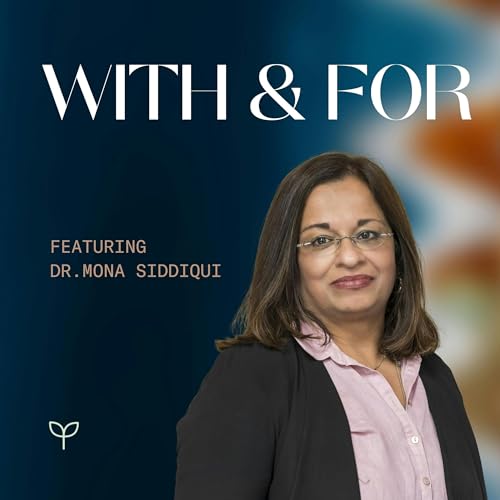
  • Why Morality Matters: Gratitude, Loyalty, and Hope, with Dr. Mona Siddiqui
    May 12 2025
    You can’t be moral on your own. That’s a radical idea in this time of moral outrage, but thriving in public life requires a sense of mutual accountability, belonging, and hospitality for each other. Mona Siddiqui is a professor of religion and society, an author, commentator, and public intellectual, and she suggests that the virtues of loyalty, gratitude, hospitality, and hope can lead us through the common struggle of being human together, living forward into a thriving life of public faith and renewed moral imagination. As Professor of Islamic and Interreligious Studies, Assistant Principal for Religion and Society, and Dean international for the Middle-East at the University of Edinburgh, she is an international beacon of hope that we might find restoration, hospitality, and flourishing in our world of struggle. Working through questions of loyalty, responsibility, belonging, gratitude, robust faith, and what we owe each other, we can find abundant resources for thriving and spiritual health. In this conversation with Mona Siddiqui, we discuss: What is a moral life? The connection between faith, spirituality, and living a moral life of responsibility and integrity The difference between cultivating virtuous character and doing justice How to thrive in a pluralistic society marked by constant struggle and conflict The promise of gratitude and hospitality in a life of thriving And how to pursue a hopeful, forward-looking approach to restoration in the wake of harm, loss, pain, and suffering. Episode Highlights "Our moral life only becomes alive when we are in a relationship—you can't be moral on your own." "Life is all about searching. Life is all about introspection. Life is all about reflection." "The good life is hard; it's not about ease, but about living with accountability and responsibility." "Hospitality isn't just welcoming—it's negotiating belonging, loyalty, and a sense of shared life." "Gratitude can liberate, but it can also create hierarchies and transactional indebtedness." "Hope is not naive optimism—without hope, how do you live, build relationships, or carry forward at all?" Helpful Links and Resources Follow Mona on X (Twitter) at @monasiddiqui7 *Christians, Muslims, and Jesus,* by Mona Siddiqui Human Struggle, Christian and Muslim Perspectives, by Mona Siddiqui A Theology of Gratitude: Christian and Muslim Perspectives, by Mona Siddiqui My Way: A Muslim Woman’s Journey by Mona Siddiqui The Moral Maze, BBC Radio 4 Show Notes Mona Siddiqui’s personal background in Islamic jurisprudence and public theology “I got into Islamic jurisprudence because of personal connection and intellectual curiosity.” Navigating public discourse post-9/11 as a non-white, non-Christian scholar Importance of pluralism and living within diverse identities "I need to create a space that appeals to a wider audience—not just about what I think." Growing up with intellectual freedom in a traditional Islamic household How faith upbringing seeds lifelong moral introspection "You are always answering to yourself—you know when you have not lived rightly." Developing comparative theology through seminars with Christian scholars Overlapping themes between Islamic and Christian thought on the good life The significance of accountability over blanket forgiveness "Belonging is crucial to being a good citizen—you can’t flourish alone." Exploration of loyalty: loyalty to people vs loyalty to principles Civic loyalty and critical engagement with the state “Because I feel loyal to my country, I should also be its critic.” The role of prayer in cultivating internal moral awareness Reflection on virtues: gratitude, loyalty, hope The dark sides of gratitude and loyalty in institutions Parenting with a focus on integrity, accountability, and faithfulness “Live so that whatever you say in public, you can say at home—and vice versa.” Emphasis on public engagement: speaking clearly, making complex ideas accessible "Radio became a gift—people want complex ideas made simple and meaningful." Remaining hopeful despite the culture of outrage and cynicism Young people’s resilience and persistent hopefulness Hospitality as a fundamental ethic for creating trust and belonging Struggle as a normative, transformative experience that shapes flourishing "Thriving is not just freedom—it’s centering, writing, speaking, and deep human connection." The importance of relationships in thriving and flourishing “Most of us realize—relationships are the hardest, but the most rewarding.” Redefining gratitude: avoiding transactional gratitude, cultivating authentic gratefulness Struggle cultivates introspection, resilience, creativity, and a deeper moral life Pam King’s Key Takeaways I can’t be moral on my own. But my decisions are my own. In the end, living with integrity means living with virtue. Personal and public flourishing are deeply connected to our lives of faith and spirituality; and all ...
    Voir plus Voir moins
    1 h et 2 min
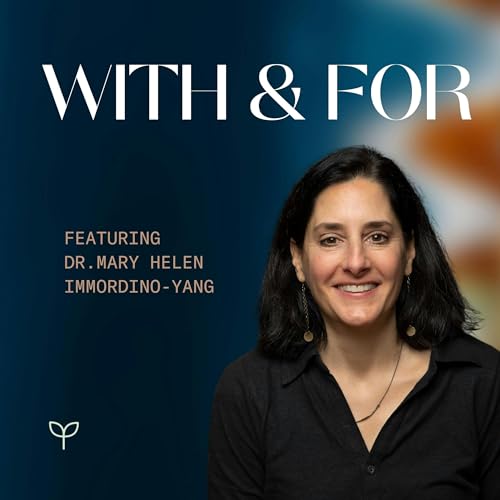
  • Live Like You Mean It: Emotional and Cognitive Wellness, with Dr. Mary Helen Immordino-Yang
    Apr 28 2025
    Applying neuroscience and psychology to education and formation, pioneering researcher Dr. Mary Helen Immordino-Yang draws connections between emotions, relationships, brains, stories, meaning, and purpose to shed light on how we learn, grow, and thrive. Her research on the brain shows how we’re woven together in an intricate and glorious network of life, and when we synthesize the neurological, the psychological, the physical, and the social, we’re able to come to a deeper and more impactful understanding of human development and flourishing. From the intricacies of adolescent brain development to the emotional and spiritual scaffolding of a meaningful life, she explains how transcendent thinking, story, and emotional engagement fuel identity formation and long-term flourishing. Drawing from cutting-edge research and humanistic insight, she explores how young people co-create their worlds and how adults can support them in becoming adaptive, wise, and agentic. In this conversation with Mary Helen Immordino-Yang, we discuss: The value of integrating neuroscience with educational, emotional, and moral development The strange and glorious case of the adolescent brain—how we mature, learn how to think, feel, and exercise our agency, and strive to become wise The emotional and relational nature of education and moral development—expressed in nurturing conversation between caring adults and youth The importance of agency, intentionality, and transcendent thinking in human thriving Neural plasticity and the capacity to change our brains throughout our lifespan And, the big picture of thriving, that brings together our mental life, neurobiology, and other physical processes—with relationships, community, and society at large. Episode Highlights "Thriving is really about living like you mean it." "We co-construct one another’s lived experiences by the virtue of being there together." "You learn how to have an instinct—it’s not something you’re just born with." "Transcendent thinking literally grows the adolescent brain." "Meaning-making is an abstraction, a transcendent story we construct to bring coherence to our lives." Show Notes Thriving as dynamic, purposeful engagement Emotional experiences shaping brain development Co-construction of identity in social relationships Adolescence as a time of neurodevelopmental remodeling How transcendent thinking fosters brain growth over time Adolescents’ drive for deeper moral and ethical narratives Meaning-making as a tool for personal and societal transformation Linking personal experience with historical and social narratives Default mode network and its role in reflection and creativity From instinct to insight—how the brain learns to feel The relationship between emotional health and physical well-being Gut-brain connection, serotonin, and embodied cognition Transcendence as a cognitive-emotional developmental milestone Influence of media, anxiety, and political division on adolescent minds Brain-based evidence of narrative engagement growing identity Learning to align present feelings with long-term purpose Brain science dismantling the myth of "subjective = unimportant" Agency, presence, and intentionality in thriving Integration of neuroscience with humanistic and applied methods Role of narrative in therapy, art, education, and spirituality How adolescents learn to feel, not just what to think Culturally-rooted belief systems shaping neural responses The importance of reflection, introspection, and deep conversation Adolescents’ innate capacity for moral concern and big-picture thinking Learning through story: case studies in adolescent empathy Reclaiming agency from external cultural and tech influences Identity as a lifelong, evolving narrative—not a fixed outcome Growth as intentional reflection, not cognitive acceleration Spiritual wellness as iterative construction of meaning and values Parenting and mentoring for deep reflective growth Adaptive wisdom: balancing immediacy with long-term vision Signs of flourishing: self-liking, relationship quality, agency Importance of diverse experiences and safe, supportive relationships Adults thriving through neuroplasticity and meaning-making The lifelong role of story and belief in shaping purpose Cognitive engagement and values-based direction over passive success Emotional safety and time as prerequisites for transcendence Listening, asking why, and welcoming the unknown as virtues of thriving Pam King’s Key Takeaways Brain science isn’t better or worse than other perspectives on human life, but it offers incredible insight for how we grow and thrive. Stories and narratives are the essential threads that hold our lives together; how you think and the story you’re telling yourself matters for your thriving. Education isn’t just a cognitive process. Our emotions and our bodies and our sense of connection and safety in relationships play a central role in learning. Spiritual health...
    Voir plus Voir moins
    1 h et 5 min