

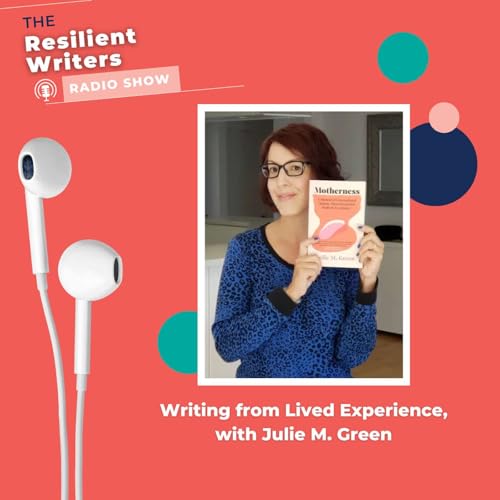
Writing from Lived Experience, with Julie M. Green
Échec de l'ajout au panier.
Échec de l'ajout à la liste d'envies.
Échec de la suppression de la liste d’envies.
Échec du suivi du balado
Ne plus suivre le balado a échoué

Writing from Lived Experience, with Julie M. Green
-
Narrateur(s):
-
Auteur(s):
À propos de cet audio
Send us a text! We'd love to hear your thoughts on the show.
If you’ve ever had a moment where something about your life suddenly made sense—and at the same time opened up a whole new set of questions—this conversation is for you.
In this episode of The Resilient Writers Radio Show, I’m joined by writer and memoirist Julie Green, author of Motherness: A Memoir of Generational Autism, Parenthood and Radical Acceptance. Julie shares the long, layered journey that led her to this book, beginning with her son’s autism diagnosis and eventually leading to her own, years later, in midlife.
Julie talks about what it’s like to be diagnosed later in life—and how that diagnosis sends you back through your memories: childhood, adolescence, early adulthood. It can be clarifying, emotional, and surprisingly tender, as long-held beliefs about who you are (and why certain things felt so hard) begin to shift.
We also talk craft, because Motherness didn’t come together by accident. Julie shares how she found what she calls the “container” for the story: a structure that allowed her to weave together parenting scenes, personal history, and research on autism without losing the heart of the memoir.
Each chapter explores a different aspect of the autistic experience—sensory differences, giftedness, eating and food, gender, special interests—layering her son’s experiences alongside her own, and showing both overlap and difference across generations.
A central theme of this conversation is radical acceptance. Julie reflects on how autism is often portrayed in extremes—either as tragedy or superpower—and why neither of those stories feels true to lived experience. Autism, she says, simply is. Some days are genuinely hard, especially in a world that isn’t built for neurodivergent people.
And there can also be humor, joy, and deep connection. Julie was intentional about holding the full truth of that on the page.
We also dig into how she integrates research in a way that supports the reader without overwhelming the story—moving from scene to context and back again—so the book stays grounded in lived experience.
Julie shares what her publishing journey looked like with ECW Press, including the courage it took to revise and resubmit after an initial “almost,” and what she’s working on now.
This is a thoughtful conversation about writing from lived experience, trusting stories that take time, and learning—again and again—to meet ourselves with more compassion.