Page de couverture de Uncharted Lancaster

Uncharted Lancaster

Uncharted Lancaster

Auteur(s): Adam Zurn
Écouter gratuitement

À propos de cet audio

Uncharted Lancaster reveals the county’s most fascinating stories—local history with odd twists, forgotten places, and the occasional brush with the supernatural. Each episode explores the hidden histories and long-buried secrets of Lancaster County, where legend, landscape, and local lore collide.

© 2025 Uncharted Lancaster
Épisodes
  • The Lancaster Bathtub That Started a Revolution
    Dec 18 2025

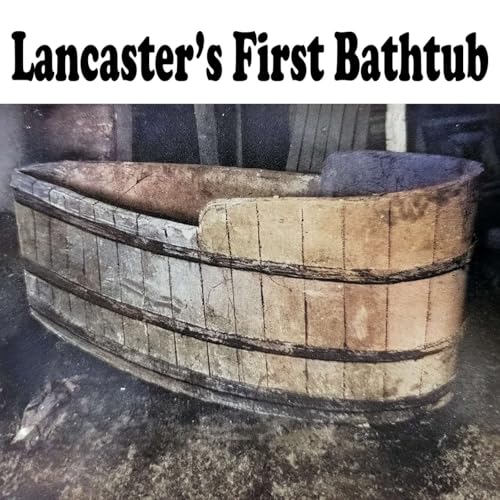
    Lancaster's Bathtub Revolution: How America’s First Tub Made a Splash

    Did you know Lancaster, PA, was home to America’s first bathtub? In 1839, Jacob Demuth installed this trailblazing tub at 116 East King Street, marking the start of a hygiene revolution. Crafted from heavy wood and reinforced with iron bands, the tub resembled a modern bathtub in shape but was filled the old-fashioned way—with water heated in a tea kettle and poured by hand.

    At the time, bathing was a luxury, and the city charged a $3 annual fee for each tub’s water supply—about $102 in today’s money. By year’s end, Lancaster boasted a grand total of nine bathtubs. Scandalous, right?

    While Lancaster’s records don’t mention anti-bathing laws, other cities weren’t as open-minded. Philadelphia banned more than one bath a week, and Boston fined offenders for "excessive" cleanliness. Imagine being hauled into court for simply taking a bath!

    Though the Demuth tub was retired in 1890, its impact on hygiene practices lives on. It may not have survived to the present day, but Lancaster’s role in this small yet vital revolution is undeniable.

    Curious to learn more about the quirks, controversies, and mysteries of the Demuth bathtub? To learn more, visit UnchartedLancaster.com.

    Learn about other unique people and places like this when you step off the beaten path with Uncharted Lancaster: Field Guide to the Strange, Storied, and Hidden Places of Lancaster County, Pennsylvania by Adam Zurn. This one-of-a-kind 239-page guidebook uncovers 56 fascinating sites, from the county’s very own fountain of youth to the oldest continuously operating short-line railroad in the western hemisphere. Order your copy here.

    Voir plus Voir moins
    32 min
  • Lancaster Crematorium: The Country’s First Public Crematorium
    Dec 15 2025

    America’s First Public Crematorium Was in Lancaster!

    Tucked away behind a line of trees in Greenwood Cemetery stands a crumbling red-brick building that changed the course of American funerary practice. Built in 1884, the Lancaster Crematorium was the first public crematorium in the United States—a bold and controversial innovation at a time when cremation was seen as sacrilegious and scandalous.

    Spearheaded by the Lancaster Cremation and Funeral Reform Society—made up of doctors, scientists, and civic leaders like J.P. McCaskey and A.J. Steinman—the facility was designed to combat overcrowded cemeteries and the spread of disease. Its Gothic architecture still stands, with boarded-up cathedral-style windows and a marble slab labeled simply “crematorium.” Look closely, and you’ll see the year 1884 carved above the central arch.

    The first person cremated here was Christiana Beseler, a woman whose family waited months for the facility to open so her final wishes could be honored. The furnace, designed by Dr. Miles Davis, used a smokeless flue system so clean that clergy described the process as “quiet” and “gently melting away.”

    Despite fierce public opposition—including sermons warning of pagan practices—the crematorium operated for two decades, ushering in a new era of funerary reform. After its closure in 1904, the building sat silent and forgotten for decades—its windows broken, its history buried in archives and half-truths. It wasn’t until the 1980s that preservation efforts secured its place on the National Register of Historic Places.

    Today, it stands boarded and unmarked, a haunting yet powerful reminder of Lancaster’s trailblazing role in reshaping how Americans say goodbye. Click here to read more.

    Voir plus Voir moins
    26 min
Pas encore de commentaire