Obtenez 3 mois à 0,99 $/mois

OFFRE D'UNE DURÉE LIMITÉE
Page de couverture de Teach, Lead, and Inspire: Teaching to Students Who Have Given Up On Learning

Teach, Lead, and Inspire: Teaching to Students Who Have Given Up On Learning

Teach, Lead, and Inspire: Teaching to Students Who Have Given Up On Learning

Auteur(s): Jordan B Smith Jr. Ed.D.
Écouter gratuitement

À propos de cet audio

Get ready to tantalize your teaching senses and ignite the spark of inspiration in your classroom! In the debut episode of "Teach, Lead, and Inspire: Empowering Educators for Transformative Change," host Dr. Jordan B Smith Jr. takes you on a mouth-watering journey through the art of rekindling the love for learning, even in the most challenging students. Ever wondered how to breathe life into mathematics or any subject for students who seem to have lost interest? Dr. Smith Jr., renowned educator and author of "11 Effective Strategies for Teaching Math to Students Who Have Given Up on Learning" and "Annapolis Creed: Why Teacher Leaders Like Me Matter," invites you to join him as he unveils the secrets to reigniting that educational flame. Prepare to be captivated as Dr. Smith Jr. sets the stage for transformative teaching, leadership, and inspiration in education. Drawing from his groundbreaking books, he shares invaluable insights that serve as guiding beacons for educators ready to make a meaningful impact in their classrooms and communities. Whether you're a seasoned educator or just starting your teaching journey, this podcast promises to leave your taste buds craving for more. Tune in, and let's embark on this deliciously empowering adventure together. Get ready to Teach, Lead, and Inspire!2024 Gestion et leadership Économie
Épisodes
  • S2:Episode 24 -Protecting Your Family From Germs
    Dec 3 2025
    This transcript features Dr. Jordan Smith discussing his experience with Melaleuca products and the company's business model, emphasizing personal wellness, financial savings, and an opportunity for residual income, particularly aimed at educators. Here's a summary of the key points: I. Main Topic & Thesis: Dr. Jordan Smith advocates for Melaleuca as a comprehensive solution for improving personal health and financial well-being. He shares his personal journey of health improvements using Melaleuca products and outlines a business model centered on customer loyalty, product education, and referring "power shoppers" to generate significant residual income, with a specific mission to help teachers pay off student loan debt. II. Key Arguments & Ideas: Melaleuca's "Learn to Earn" Program: The company offers a "learning library" with short videos that educate customers on wellness topics. Watching these videos earns "loyalty shopping dollars" and coupons, encouraging customers to learn about and purchase products. Dr. Smith claims to have saved $41 in one session by watching videos and claiming coupons. Personal Health Transformations with Melaleuca Products: Allergies & SoluGuard: As a Gulf War veteran with sinusitis and rhinitis, Dr. Smith uses SoluGuard botanical disinfectants, which do not flare up his allergies like conventional cleaners containing chlorine, bleach, or quaternary disinfectants. He highlights that traditional disinfectants can irritate skin, eyes, lungs, reduce lung capacity, and trigger asthma. SoluGuard uses natural ingredients like thymol (from thyme) and citric acid. Skincare & Sei Bella: He shares his experience with SayBella skincare, noting the importance of choosing products based on skin type. He found a cost-effective "charcoal" line suitable for his oily skin and received compliments on his "glowy" face after incorporating a regimen including vitamin C, hyaluronic acid, and night/neck creams. His wife's consistent skincare regimen is also cited as an example of maintaining youthful appearance. Peak Performance Pack & Overall Health: He highlights the "Freiburg study" which demonstrated the pack's effectiveness in reducing free radicals and inflammation. The study showed significant improvements in cholesterol (total, HDL, LDL), triglycerides, blood pressure, heart rate, nitric oxide levels, blood sugar spikes, and insulin response. Dr. Smith personally uses the Peak Performance Pack and notes its role in his overall health. Vigor FT & Testosterone: He personally attests to using Vigor FT, a natural testosterone-supporting supplement, and shares his medical results showing a 39.9% increase in testosterone levels after one month. The product uses botanical extracts like fenugreek, Longjack, and horny goat weed. Prostavan & Cancer Battle: Having battled prostate cancer and undergone radiation, Dr. Smith attributes the significant drop in his PSA levels (from 10 to 0.1) to taking Melaleuca's Prostavine supplement, combined with exercise and a wellness lifestyle. Cholesterol Management: He notes that his cholesterol (down to 122 from 250) and triglyceride levels have improved, allowing him to discontinue statin medication. Hydration & R3 Program: He emphasizes consistent water intake using a timed water bottle and mentions Melaleuca's R3 weight loss program. Vitamin D3: He highlights the need for D3, suggesting supplements as a safer alternative to sun exposure which carries skin cancer risks. Understanding Free Radicals: A video explains that inflammation and free radicals devastate health, causing aging and degenerative conditions (heart disease, Alzheimer's, cancer, diabetes). Free radicals are constantly produced by metabolism, acting like tiny, cumulative damage (compared to raindrops on a mountain). Antioxidants significantly curb free radical activity. Melaleuca's patented "oligo process" makes minerals more absorbable and reduces free radical activity in supplements. Melaleuca's Financial Benefits & Business Model: Credit Card Rewards: The Melaleuca credit card offers 6% cashback on Melaleuca purchases, 4% on gas/electric/grocery/dining, and 2% on all other purchases. Cashback is applied as loyalty dollars to reduce future Melaleuca costs. Shipping Rewards: Orders over 44 points receive shipping costs back in loyalty shopping dollars. Customer Satisfaction: 100% money-back guarantee within 90 days, even on empty bottles, eliminating risk. Referral Program for Residual Income: Dr. Smith focuses on "attraction marketing," providing value and information rather than chasing sales. He aims to attract "power shoppers" (spending 300+ points/month) who are serious about health and financial well-being. His goal is a "million-dollar a year income" by developing a system to help 10 other people make $100,000 annually. A personal "calculator" tool is being developed to help individuals project their potential savings and residual income based on ...
    Voir plus Voir moins
    1 h et 16 min
  • S2:Episode 23- Why I Was Afraid to Go To Sleep At Night: PTSD, Nightmares, and the Fight for Rest
    Dec 1 2025
    Dr. Jordan Smith, a veteran and educator, shares a deeply personal account of his severe sleep disturbances, which he ultimately identified as stemming from undiagnosed Post-Traumatic Stress Disorder (PTSD). He outlines his journey from debilitating fear and ineffective solutions to discovering a comprehensive, system-based protocol that restored his sleep. He then extrapolates this "system thinking" to address another pervasive issue: the overwhelming student debt faced by teachers, nurses, and veterans. The Sleep Crisis: A Personal Nightmare Symptoms: Dr. Smith experienced intense nightmares, yelling, talking, cursing, kicking, and thrashing in his sleep, often waking disoriented and ashamed. These episodes terrified him more than past combat or cancer. Impact on His Wife: His wife, Carolyn, sacrificed her own sleep, constantly on guard to "tap" or wake him when he was trapped in a nightmare. Initially, she refused to sleep separately due to fear of what might happen to him if she wasn't present, demonstrating profound love and sacrifice, reminiscent of his caregiving for his late wife. Personal Fears: He feared he was losing his mind or experiencing early dementia, a deep-seated anxiety given his love for intellectual pursuits and problem-solving. Ineffective Solutions: Melatonin: Unbeknownst to him, his 5mg nightly dose was exacerbating the problem, intensifying REM sleep and emotional dream content, which is detrimental for trauma survivors. Therapy: A licensed therapist suggested affirmations and journaling, but these didn't address the root cause, and his affirmation method (describing unwanted dreams) was counterproductive. Lifestyle Changes: He tried CBD, sleep noises, Nyquil, special pillows, adjusting room temperature, and significantly reducing alcohol intake (after accidentally hitting his wife in his sleep, leading him to discard all alcohol). Sleeping Arrangement: He bought a king-size bed for more space, fearing he might inadvertently harm his wife, but this only heightened his anxiety. Key Discovery: Through a casual comment from his wife and subsequent research, he realized that sleeping on his back, which he did 95% of the time, was the worst position for someone with PTSD. It left him feeling exposed, vulnerable, and hyper-alert, keeping his nervous system in "Marine Corps watch mode." The Breakthrough: AI-Assisted System Design ChatGPT as a Tool: Leveraging his background as a technology innovator, Dr. Smith turned to ChatGPT. He provided his medical history and symptoms, seeking logical pattern recognition rather than magic. Identifying Root Causes: ChatGPT helped him identify the multifaceted causes of his sleep issues: PTSD hyperarousal, nervous system dysregulation, magnesium deficiency, REM overactivation, trauma memory wiring, fragmented sleep cycles, back sleeping, and melatonin overdose. Crucially, this wasn't dementia or aging but a treatable nervous system imbalance. The PTSD-Informed Sleep Protocol (The System) Dr. Smith's protocol, a "PTSD-informed sleep framework," consists of several synergistic components: L-Theanine: A "PTSD sleep game-changer," it increases alpha brain waves (like deep meditation), signaling the amygdala to "stand down." This reduced shouting, talking, nightmares, night fight responses, lowered adrenaline, and stabilized sleep cycles without side effects or dependency. Magnesium Glycinate: Addresses magnesium deficiency common in PTSD. It calms the body and nervous system, blocks stress hormones, relaxes muscles, prevents nighttime jerks/thrashing, and supports deep, non-REM restorative sleep. Mellow Out (Proprietary B6 + Magnesium Formula): This specific supplement (not available on Amazon) regulates natural melatonin production, avoiding the overload caused by external melatonin. It smooths dream intensity, reduces REM chaos, supports serotonin, and prevents micro-awakenings. Weighted Blanket: Acts as "body armor for the nervous system." It lowers adrenaline, activates deep pressure receptors, signals safety to the trauma brain, and physically reduces jerks and thrashing. Side Sleeping: The "safety position." It protects the chest, reduces vulnerability and adrenaline, prevents loud vocalizations, and keeps the nervous system calm, directly counteracting the negative effects of back sleeping for PTSD. Immediate Results and Broader Implications The results were immediate: calm on the first night, deeper sleep by the second, and peaceful sleep for his wife by the third. With the weighted blanket, sleep talking vanished entirely. This transformation was attributed to physiology and trauma-informed sleep science—a systematic approach. Applying System Thinking to Debt: Dr. Smith realized that the "system thinking" he employed to solve his sleep issues could be applied to other systemic problems. He highlights the "nightmare" of student loan debt, particularly for teachers, nurses, and veterans, whose public service often leaves...
    Voir plus Voir moins
    35 min
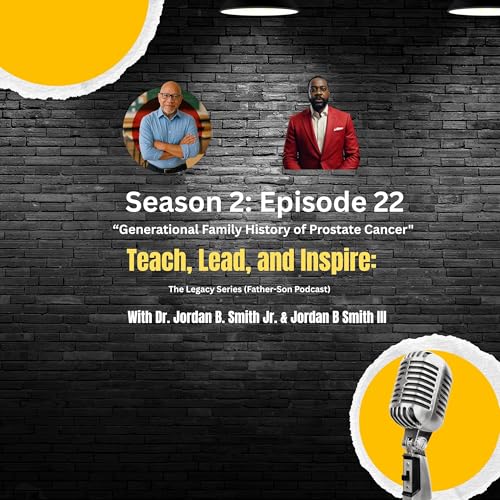
  • S2:Episode 22 Generational Family History of Prostate Cancer
    Nov 29 2025
    Dr. Jordan Smith, host of the "Teach Lead and Expire" podcast, shares a deeply personal and candid account of his decades-long battle with prostate cancer, using his experience to highlight the critical importance of proactive screening and lifestyle changes, especially for men with a family history of the disease. Main Topic: Dr. Smith's journey through prostate cancer, from early abnormal PSA levels to diagnosis, treatment, and recovery, serves as a powerful call to action for men to prioritize their prostate health and get screened regularly. Key Arguments and Events: Generational Risk: Dr. Smith was diagnosed with prostate cancer in 2023 at age 68 (nearly 69). He realized his father, brother, and maternal grandfather all had prostate cancer, with his father and grandfather dying from it, indicating a strong family predisposition he initially ignored. Early PSA and Biopsy Experiences: Began PSA testing at age 50, with consistently elevated (above 3.2, often 6-10) but "normal" PSA for 15 years, often dismissed or attributed to other factors like sexual activity. Underwent his first prostate biopsy early in his teaching career (around age 50/51). He described the procedure as extremely painful and embarrassing, involving 12 tissue samples. Suffered significant post-biopsy bleeding (urine, semen) for 4-5 weeks, which created psychological stress and logistical challenges in a shared public high school bathroom. The initial biopsy results were "abnormal" but not cancerous, leading to a false sense of security and a lack of proactive discussion with doctors about prevention. Prioritizing Work Over Health: Due to financial needs (supporting extended family, master's degree for teaching qualification under "No Child Left Behind") and professional commitment, Dr. Smith repeatedly delayed addressing his health issues. He scheduled subsequent biopsies (six total over 15 years) during school breaks to avoid missing work, enduring pain and embarrassment. Compounding Health Issues & Caregiving: Stress from work, family responsibilities, and financial pressures led to increased alcohol consumption, weight gain, high blood pressure, high cholesterol, and unexplained numbness in his legs and hands. He also became a full-time caregiver for his wife, who was diagnosed with stage four lung cancer (2017-2019), leading to extreme sleep deprivation and witnessing the devastating effects of metastasized cancer. Cancer Diagnosis and Treatment Decision: His persistent leg numbness prompted him to demand an MRI, which finally revealed a lesion on his prostate. An ultrasound-guided biopsy confirmed Stage 1 prostate cancer with a Gleason score of six. Presented with options (prostatectomy, radiation beads, external radiation), he initially chose "watchful waiting" again, driven by his dedication to his students. A turning point occurred when a community friend was diagnosed with metastasized prostate cancer, triggering memories of his wife's illness. This spurred him to choose external radiation therapy. Radiation involved a painful procedure to implant markers for targeted treatment and was conducted secretly during the summer. Post-Treatment Complications and Additional Surgery: Radiation successfully lowered his PSA, but he later developed severe urinary issues, including splitting urine streams and passing hundreds of uric acid "pebbles" from his bladder. Emergency consultation with a new urologist led to a CT scan and eventually a cystoscopy, which revealed his bladder was filled with uric acid stones, requiring surgery. He underwent a laser procedure to break up the stones and a TURP (transurethral resection of the prostate) procedure to relieve pressure on his urethra due to an enlarged prostate. Recovery from this surgery was also painful, involving a catheter and prolonged bleeding, forcing him to take emergency leave. Transformative Lifestyle Changes and Current Health: Inspired by his experiences, Dr. Smith retired from teaching and committed to radical lifestyle changes: daily cardio and strength training, increased water intake (72 oz/day), improved diet, and a regimen of nutritional supplements (Melaleuca Peak Performance Pack, Prostavan for prostate, Vigor for testosterone). These changes have led to remarkable health improvements: PSA down to 0.1, blood pressure 115/64, resting heart rate 55. He also prioritizes skin care and general well-being. Urgent Call to Action: Dr. Smith passionately urges all men, especially those with a family history of prostate cancer, to get annual PSA tests, starting before age 40 if there's a history. He emphasizes that testing can be affordable ($50-60) even without full insurance, and can prevent years of pain, suffering, and potential loss of life. He specifically addresses his sons and grandsons, urging them to get tested. Future Discussions: He hints at upcoming episodes focusing on his journey with PTSD and strategies for achieving better sleep,...
    Voir plus Voir moins
    1 h et 6 min
Pas encore de commentaire