Épisodes

  • Rethinking Waste Management With Shane Harker
    Jan 15 2026

    In this conversation, Shane Harker, founder of Rethink Resource, shares his journey from humble beginnings to creating an innovative waste diversion company. He discusses the importance of sustainability, the challenges of starting a business with family responsibilities, and the innovative solutions Rethink Resource provides in waste management. Shane emphasizes the significance of carbon accounting and the future of composting in achieving a circular economy. He also highlights the importance of excellent service and the need for businesses to rethink their waste management strategies.

    takeaways

    • Shane's mission is to divert a billion tons of waste from landfills.
    • He started his journey in waste management from a garage experiment.
    • Rethink Resource focuses on providing excellent service to clients.
    • Carbon accounting is crucial for understanding waste management impact.
    • The company aims to create high-quality compost from organic waste.
    • Shane emphasizes the importance of partnerships in waste management.
    • Innovative solutions are needed to address complex waste streams.
    • The business model includes both hauling services and value recovery.
    • Shane's journey reflects the challenges of entrepreneurship with family responsibilities.
    • The future of waste management lies in composting and circular economy practices.

    Chapters

    00:00
    Introduction to Rethink Resource and Shane Harker

    04:49
    Shane's Journey: From Garage Experiments to Waste Management

    10:53
    Transitioning to Rethink Resource: The Business Model

    16:37
    Taking Risks: Starting a Business with Family Responsibilities

    BEYOND Circular helps brands achieve resilience and improved sustainability through waste reduction, alternative material sourcing and circular systems strategies.

    https://www.linkedin.com/company/beyond-circular-solutions/www.linkedin.com/in/justincarven

    Voir plus Voir moins
    19 min
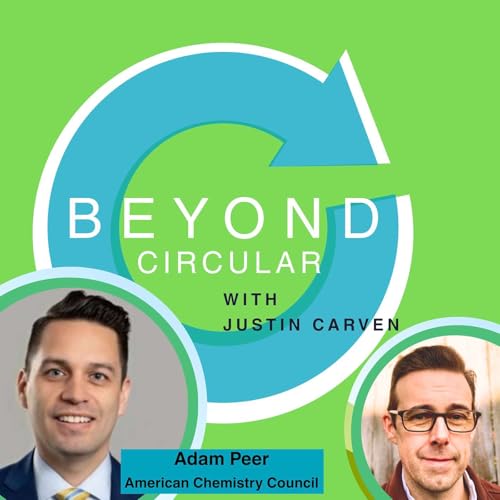
  • EPR and Circular Plastic Packaging with Adam Peer
    Dec 31 2025

    The conversation explores the growing emphasis on the circular economy, highlighting the political and corporate shifts towards sustainability. Adam Peer, Senior Director of Plastics Sustainability at the American Chemistry Council, discusses the legislative efforts to enhance recycling and the long-term strategies companies are adopting to ensure their resilience and positive impact on the environment.

    takeaways

    • There's a very intense political focus on the circular economy.
    • Many states are passing laws to increase recycling and recovery.
    • Companies are taking a much longer view of their impact.
    • Long-term thinking in sustainability is becoming more prevalent.
    • Foundational policies for sustainability are being created now.
    • Being part of this foundational policy creation is exciting.
    • The shift towards sustainability is not just a trend but a necessity.
    • Increased recycling content rates are becoming a standard.
    • Corporate responsibility is evolving with these new policies.
    • The future of business is intertwined with environmental sustainability.

    Topics covered: circular economy, sustainability, recycling, corporate responsibility, extended producer responsibility (EPR), environmental policy

    BEYOND Circular helps brands achieve resilience and improved sustainability through waste reduction, alternative material sourcing and circular systems strategies.

    https://www.linkedin.com/company/beyond-circular-solutions/www.linkedin.com/in/justincarven

    Voir plus Voir moins
    39 min
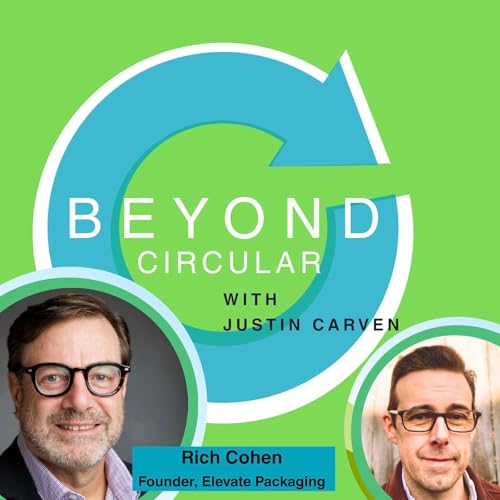
  • Closing the Loop with Compostables - Rich Cohen, founder of Elevate Packaging
    Dec 12 2025

    summary
    This conversation with Rich Cohen of Elevate Packaging delves into the misconceptions surrounding recyclable and compostable packaging, highlighting the gap between consumer expectations and actual recycling rates. It emphasizes the need for effective solutions that not only offer recyclable options but also ensure that these materials are actually collected to be recycled or composted.

    takeaways

    • Nobody wants recyclable packaging.
    • Recycling rates are, you know, 5%.
    • They want things that get recycled.
    • They want packaging that gets composted.
    • Consumer expectations are not being met.
    • The focus should be on actual recycling rates.
    • Compostable packaging is not enough.
    • Sustainable packaging needs to be effective.
    • Environmental impact is a priority for consumers.
    • The industry needs to adapt to consumer demands.

    Learn more by visiting:

    https://elevatepackaging.com

    https://compoststewardship.org/

    https://www.linkedin.com/in/rich-cohen-sustainable/

    BEYOND Circular helps brands achieve resilience and improved sustainability through waste reduction, alternative material sourcing and circular systems strategies.

    https://www.linkedin.com/company/beyond-circular-solutions/www.linkedin.com/in/justincarven

    Voir plus Voir moins
    46 min
  • Unpacking Extended Producer Responsibility (EPR)
    Dec 5 2025

    Introduction: In the ever-evolving landscape of sustainable packaging and recycling, Extended Producer Responsibility (EPR) has emerged as a crucial element shaping how businesses address packaging design and waste streams. In this insightful episode of Beyond Circular, host Justin Carven engages with Jason Bergquist, CEO of RecycleMe, to explore the intricacies of EPR and its implications for advancing a circular economy for packaging. Their discussion sheds light on the challenges and opportunities presented by EPR regulations, especially as they gain traction across North America.

    Main Content:
    1. Understanding Extended Producer Responsibility (EPR)
    EPR is a policy approach that holds producers accountable for the entire lifecycle of their products, particularly at the end of their use. Jason Bergquist highlights that while EPR has been a common practice in Europe, it is now gaining momentum in North America, with various states implementing their own EPR laws. This shift is essential for addressing the growing challenges in waste management and recycling.

    2. Jason's Journey in the Recycling Industry
    Jason brings nearly 40 years of experience in the recycling and manufacturing sectors. His diverse background includes working with major companies such as Waste Management and consulting on environmental law. Jason's firsthand experience with the evolving recycling infrastructure has equipped him with valuable insights into the urgent need for effective recycling solutions.

    3. The Current State of EPR Implementation
    As of this year, multiple states have introduced EPR for packaging laws, with Oregon, Colorado, and California leading the way. However, the implementation varies significantly from state to state, creating compliance challenges for producers. For example, Oregon's EPR program encompasses both business-to-business and business-to-consumer packaging, whereas other states may have different scopes and targets.

    4. The Role of Infrastructure in EPR Success
    A significant challenge highlighted by Jason is the recycling infrastructure itself. Many communities across the U.S. are experiencing a decline in curbside recycling programs due to funding and infrastructure issues. EPR aims to address these gaps by educating consumers and providing financial support for recycling initiatives. However, the lack of harmonization among state programs complicates compliance for businesses.

    5. Opportunities for Harmonization and Collaboration
    Despite the challenges, there are signs of progress. States are beginning to collaborate, sharing best practices and learning from one another. Jason mentions initiatives where states like Maine and Minnesota are working together to create unified definitions and regulations. These collaborations are vital for streamlining EPR processes and ensuring that producers can adapt more easily to the changing landscape.

    Conclusion: Key Takeaways
    The conversation between Justin Carven and Jason Bergquist underscores the transformative potential of Extended Producer Responsibility in shaping a sustainable future. As EPR laws continue to evolve across North America, businesses must stay informed and adapt their strategies to comply with diverse regulations. By fostering collaboration among states and investing in infrastructure, we can move towards a more effective and harmonious recycling system.

    Episode covers: Extended Producer Responsibility, EPR, recycling, sustainability, circular economy, waste management, packaging waste, environmental policy, recycling infrastructure, collaboration in recycling.

    BEYOND Circular helps brands achieve resilience and improved sustainability through waste reduction, alternative material sourcing and circular systems strategies.

    https://www.linkedin.com/company/beyond-circular-solutions/www.linkedin.com/in/justincarven

    Voir plus Voir moins
    53 min
adbl_web_global_use_to_activate_DT_webcro_1694_expandible_banner_T1