Épisodes

  • 155: Baby Don't Hurt Me | What To Do When a Donor Gift Harms More Than Helps
    Jan 8 2026
    You're getting donations for a nonprofit – and that's great! But sometimes generosity comes with strings you never expected. In this episode, Meghan and I dig into the wild world of donor gifts and why nonprofits need clear guardrails to protect themselves from gifts that actually hurt the nonprofit. Real Listener Question: "We have a donation button on our website where people can give online and set up recurring donations for monthly contributions. A few weeks ago, someone set up a daily 50 cent donation. Our accountant looked into it and is saying that it's not fraud or anything like that, but it just seems really silly. Our payment processor takes $0.30 out per transaction plus a merchant fee, so we're getting next to nothing on these donations. What do I do?" This tiny daily gift opens the door to a much bigger conversation about gift acceptance policies and the hidden costs of donations. Meghan and I talk through the drawbacks, the admin time, the donor relationship dynamics, and the surprising ways well-intentioned gifts can actually drain your resources. We also break down how to set minimums, how to talk to donors with compassion, and how to avoid getting stuck with gifts that cost more than they give back. What You'll Learn: Why every nonprofit needs a gift acceptance policyHow to know when a gift creates more harm than helpsThe hidden administrative costs behind every single donationWays to set smart donation minimumsHow to redirect donors without damaging the relationshipWhy saying no is actually part of stewardshipHow to prepare for unusual gifts before they show up Bottom line: Not every gift is a positive thing for a nonprofit. Sometimes you need to say no and guiding donors toward giving that truly supports your mission. Resources from this Episode Generate a Gift Acceptance Policy here: https://birkenlaw.com/mg-document-app/gift-acceptance-policy/For the others who aren't Gen-Xers, Night at the Roxbury: https://youtu.be/HwVh8pmOot4?si=2v3D5MAKXDFGteT_Previous Episode: What is a Nonprofit Audit with Hannah Hugen: https://birkenlaw.com/charity-therapy-podcast/ct154-nonprofit-audit-hannah-hugen/Episode Transcript: https://birkenlaw.com/wp-content/uploads/2025/12/CT155_Transcript.pdf Connect with Us Jess Birken: https://www.linkedin.com/in/jessbirken/Meghan Heitkamp: https://www.linkedin.com/in/meghan-heitkamp-829254115/ Listen & Engage Listen on Apple Podcasts | Spotify | YouTube | Amazon MusicRate & Review on Apple Podcasts: Click "Ratings and Reviews" then "Write a Review"Send us your nonprofit questions: https://birkenlaw.com/podcast/#podcast-story Stay Connected Sign up for the Birken Law Email list: https://birkenlaw.com/signup/ Follow us on Facebook, Instagram, Twitter
    Voir plus Voir moins
    17 min
  • 154: It's Gravy, Baby! | What is a Nonprofit Audit? with Hannah Hugen
    Dec 24 2025
    Think an audit is something to fear for your nonprofit? I get it! But what if it's actually a powerful tool for growth? In this episode, I sit down with nonprofit auditor Hannah Hugen from Abdo to unpack what an audit really is and why it's not nearly as scary as it sounds. Real Listener Question: "We filed the 1023-EZ and said we'd stay under $50K… but now a funding opportunity would push us past that. Will the IRS audit us? Should we say no to the money?" Hannah and I dig into what an audit actually involves, what the IRS does (and doesn't) care about, and how nonprofits can prepare for growth without panicking. We also talk through the "scary myths" that float around new organizations and the real steps you can take now to avoid future chaos. If you've ever wondered what auditors look for, how to document properly, or what GAAP even means, this conversation breaks it down in plain English. What You'll Learn: What a nonprofit audit actually isWhen the IRS might look at your organization and why it's not as dramatic as rumors implyHow to show good-faith financial projections from your 1023-EZWhy documentation habits will save your future selfThe difference between cash and accrual accountingPractical steps to get audit-ready even if you're small Bottom line: You don't need to fear audits — you just need systems, clarity, and good habits. Your nonprofit deserves room to grow, and the right preparation makes that growth possible without being overwhelmed. Resources from this Episode Understanding Cash vs. Accrual Accounting: https://youtu.be/5tSI1IPBVWkInternal Controls 101: https://birkenlaw.com/blog/internal-controls-101/Connect with Hannah on LinkedIn: https://www.linkedin.com/in/hannah-hugen-b0045a1b5/Learn about Abdo: https://abdosolutions.com/Previous Episode: How to Fix the Culture of Overwork at Your Nonprofit with Rachel Platt https://birkenlaw.com/charity-therapy-podcast/ct153/Episode Transcript: https://birkenlaw.com/wp-content/uploads/2025/12/CT154HH_Transcript.pdf Connect with Us Jess Birken: https://www.linkedin.com/in/jessbirken/ Listen & Engage Listen on Apple Podcasts | Spotify | YouTube | Amazon MusicRate & Review on Apple Podcasts: Click "Ratings and Reviews" then "Write a Review"Send us your nonprofit questions: https://birkenlaw.com/podcast/#podcast-st Stay Connected Sign up for the Birken Law Email list: https://birkenlaw.com/signup/ Follow us on Facebory ook, Instagram, Twitter
    Voir plus Voir moins
    18 min
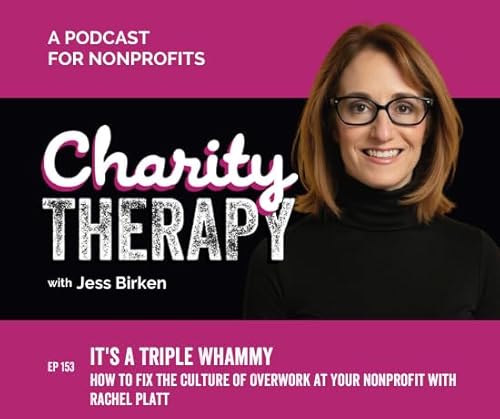
  • 153: It's a Triple Whammy | How to Fix the Culture of Overwork at Your Nonprofit with Rachel Platt
    Dec 11 2025
    If your team is exhausted, overwhelmed, and constantly working nights and weekends, you might be dealing with more than a scheduling issue. You might be dealing with a culture problem that is hurting your mission. In this episode, I invited my friend and people strategy expert Rachel Platt of Plattinum Consulting to talk with me about the hidden issues inside nonprofit overwork and what it really takes to build a sustainable organizational culture. Real Listener Question: I'm a new staff member, and everyone at this nonprofit works tons of overtime without being paid (as hourly employees). The ED works all the time, and the team is drowning under an unspoken expectation to always be on. How do we fix it?? In this conversation, Rachel and I dig into what overwork actually signals inside a nonprofit, why compliance and culture go hand in hand, and how leaders can unintentionally create burnout without ever meaning to. We also talk about the uncomfortable truth that many nonprofits have normalized unhealthy habits in the name of "the mission," and why that approach backfires every time. We share practical ways to reset expectations, open the right conversations, and rebuild trust without blame. You might hear some things that feel familiar, because almost everyone in the sector has lived some version of this. What You'll Learn: The first steps to take when your team is chronically overworkingHow leadership habits shape culture more than policiesWhy "mission passion" cannot replace fair compensation or boundariesWhat you can and cannot ask hourly staff to doSimple tools that help reset norms around urgency and availabilityHow to start culture change when you're the new person on the teamWhy clarity, consistency, and modeling healthy behavior matter Bottom line: Your people are how your mission gets done. If they are burning out, you are losing capacity, trust, and impact. A healthier culture is possible, but it starts with honest conversations and leadership modeling the behavior they want to see. Resources from this Episode Learn more about Platinum Consulting: https://www.plattinumconsulting.com/Reach out to Rachel Platt here: rplatt@plattinumconsulting.comPrevious Episode: When an Entrepreneur has a "Really Good" Nonprofit Idea https://birkenlaw.com/charity-therapy-podcast/ct152/ Episode Transcript: https://birkenlaw.com/wp-content/uploads/2025/10/CT153_Transcript.pdf Connect with Us Jess Birken: https://www.linkedin.com/in/jessbirken/Rachel Platt: https://www.linkedin.com/in/rachelplatt/ Listen & Engage Listen on Apple Podcasts | Spotify | YouTube | Amazon MusicRate & Review on Apple Podcasts: Click "Ratings and Reviews" then "Write a Review"Send us your nonprofit questions: https://birkenlaw.com/podcast/#podcast-story Stay Connected Sign up for the Birken Law Email list: https://birkenlaw.com/signup/ Follow us on Facebook, Instagram, Twitter
    Voir plus Voir moins
    24 min
  • 152: That's Called Tax Fraud! | When an Entrepreneur has a "Really Good" Nonprofit Idea
    Nov 27 2025

    You've got a great business idea, people want to donate to help, and you're thinking… "What if I just start a nonprofit?" Hold up — let's talk about it.

    In this episode, Meghan and I tackle one of the most common (and most frustrating) misconceptions out there — when entrepreneurs try to mix business ventures with nonprofit structures.

    Real Listener Question: "I'm coaching a small business owner who wants to restore a historic hotel, turn it into an Airbnb, and start a nonprofit to collect donations for the renovation. He says it's a win-win — is that legal?"

    This one had me fired up. We get into why turning your business dream into a "nonprofit project" is usually a fast track to tax fraud, how to tell when an idea crosses the line, and what to do instead. From historic preservation loopholes to optics in small towns, we unpack all the ways good intentions can turn into bad legal problems. If you've ever thought about forming a nonprofit to fund your own idea — listen to this first.

    What You'll Learn:

    • Why the IRS cares about your "exempt purpose" more than your passion project
    • How "good ideas" can become tax fraud with one wrong move
    • What happens when your nonprofit owns your business asset
    • Why perception matters just as much as legality
    • Smarter, legal alternatives like crowdfunding and business partnerships
    • How to know when a project is charitable — and when it's just creative entrepreneurship

    Bottom line: Not every good idea is a nonprofit idea. If your goal is to make money, serve customers, or grow your business, that's awesome — it just means you need a for-profit model, not a charitable one.

    • Learn more about IRS exempt purposes: https://www.irs.gov/charities-non-profits/charitable-organizations/exempt-purposes-internal-revenue-code-section-501c3
    • Previous Episode: Can You Convert a Failing Business Into a Nonprofit? https://birkenlaw.com/charity-therapy-podcast/ct149/
    • Episode Transcript: https://birkenlaw.com/wp-content/uploads/2025/10/CT152_Transcript.pdf

    Connect with Us

    • Jess Birken: https://www.linkedin.com/in/jessbirken/
    • Meghan Heitkamp: https://www.linkedin.com/in/meghan-heitkamp-829254115/

    Listen & Engage

    • Listen on Apple Podcasts | Spotify | YouTube | Amazon Music
    • Rate & Review on Apple Podcasts: Click "Ratings and Reviews" then "Write a Review"
    • Send us your nonprofit questions: https://birkenlaw.com/podcast/#podcast-story

    Stay Connected

    • Sign up for the Birken Law Email list: https://birkenlaw.com/signup/
    • Follow us on Facebook, Instagram, Twitter
    Voir plus Voir moins
    20 min
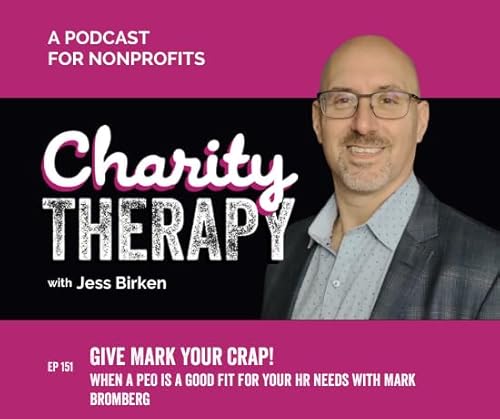
  • 151: Give Mark Your Crap! | When a PEO is a Good Fit for Your HR Needs with Mark Bromberg
    Nov 13 2025

    Nonprofit HR can be messy — but it doesn't have to be. Let's talk about when it's time to call in reinforcements (and what "reinforcements" actually look like).

    I sat down with Mark Bromberg, a Business Performance Advisor at Insperity and one of my favorite people to send clients to when HR headaches start taking over. We dug into what PEOs (Professional Employer Organizations) really do — and when they make sense for nonprofits.

    Real Listener Question: "Our professional association has seven employees. We're losing our CEO soon, and our board wants to consider alternatives. When does it make sense to have a PEO instead of a CEO or in-house HR support?"

    This is one of those big-picture nonprofit management questions that hits close to home for a lot of leaders. In this episode, Mark and I unpack what a PEO actually is (spoiler: not just payroll!), what a true co-employment model looks like, and why choosing the right PEO is more than a price comparison — it's a relationship.

    We also talk about how post-pandemic remote work complicates HR, why private equity moving into the PEO space should give nonprofits pause, and what "due diligence" really means before signing a PEO contract.

    What You'll Learn:

    • What a PEO is — and what it isn't
    • When outsourcing HR actually helps your nonprofit
    • How remote teams across multiple states complicate compliance
    • Why private equity's growing interest in PEOs matters
    • What to ask before choosing a PEO (hint: "Who owns you?" is fair game)
    • Why HR pros and PEOs can actually be a dream team
    • How to make sure your PEO relationship is an ethical, cultural fit

    Bottom line: Nonprofits don't exist to manage payroll, benefits, or compliance — you exist to change the world. The right PEO can help you do that, but only if you choose wisely and partner with someone who truly understands your mission.

    Resources from this Episode

    • Learn about Insperity: https://www.insperity.com/
    • Connect with Mark on LinkedIn: https://www.linkedin.com/in/markbromberg/
    • Previous Episode: GoFundMe Creates 1.4M Nonprofit Donation Pages Without Consent with Ephraim Gopin https://birkenlaw.com/charity-therapy-podcast/ct150/
    • Episode Transcript: https://birkenlaw.com/wp-content/uploads/2025/11/CT151_Transcript.pdf

    Connect with Us

    • Jess Birken: https://www.linkedin.com/in/jessbirken/

    Listen & Engage

    • Listen on Apple Podcasts | Spotify | YouTube | Amazon Music
    • Rate & Review on Apple Podcasts: Click "Ratings and Reviews" then "Write a Review"
    • Send us your nonprofit questions: https://birkenlaw.com/podcast/#podcast-story

    Stay Connected

    • Sign up for the Birken Law Email list: https://birkenlaw.com/signup/
    • Follow us on Facebook, Instagram, Twitter
    Voir plus Voir moins
    25 min
  • 150: All Press is Good Press? | GoFundMe Creates 1.4M Nonprofit Donation Pages Without Consent with Ephraim Gopin
    Oct 30 2025
    What happens when a for-profit giant "helps" nonprofits without asking first? Spoiler: chaos, confusion, and a lot of angry fundraisers. In this episode, I sat down with my good friend and fundraising pro, Ephraim Gopin of 1832 Communications, to unpack the wild story of GoFundMe auto-creating donation pages for 1.4 million nonprofits — without their consent. Real Listener Question: "What do we do if our nonprofit suddenly has a GoFundMe page we didn't create? Is that even legal?" When news broke that GoFundMe scraped IRS data to create "official" donation pages for nonprofits, my inbox blew up. In this episode, Ephraim and I dig into what this means for your organization — from donor confusion to legal implications — and why this so-called "help" might do more harm than good. We cover everything from the basics of what a good donation page should look like, to why this move could affect your nonprofit's SEO, compliance status, and even your donor relationships. What You'll Learn: What a solid, conversion-ready donation page really needsWhy GoFundMe's "auto-created" nonprofit pages are a huge problemHow this affects your branding, donor data, and trustWhy accepting those donations could mess with your state fundraising complianceWhether you should claim your page, delete it, or ignore it entirelyHow big platforms exploit "helping nonprofits" to make a profitAnd what to do right now if your org was affected Bottom line: Just because something is legal doesn't mean it's ethical. Nonprofits deserve respect — not to be treated like SEO bait. Whether you're claiming or deleting your GoFundMe page, make sure the donations that come in are on your terms. Resources from this Episode Read GoFundMe's statement about the nonprofit pages here: https://www.linkedin.com/posts/gofundme-pro_at-gofundme-our-mission-has-always-been-activity-7387176830908407808-3AXY?Connect with Ephraim Gopin: https://www.linkedin.com/in/ephraimgopin/Listen to our episode with Ephraim about Giving Tuesday: https://birkenlaw.com/charity-therapy-podcast/ct126/Previous Episode: How Many Times Should a Nonprofit Board of Directors Meet? https://birkenlaw.com/charity-therapy-podcast/ct149/Episode Transcript: https://birkenlaw.com/wp-content/uploads/2025/10/CT150_Transcript.pdf Connect with Us Jess Birken: https://www.linkedin.com/in/jessbirken/ Listen & Engage Listen on Apple Podcasts | Spotify | YouTube | Amazon MusicRate & Review on Apple Podcasts: Click "Ratings and Reviews" then "Write a Review"Send us your nonprofit questions: https://birkenlaw.com/podcast/#podcast-story Stay Connected Sign up for the Birken Law Email list: https://birkenlaw.com/signup/ Follow us on Facebook, Instagram, Twitter
    Voir plus Voir moins
    28 min
  • 149: Um, Actually... | How Many Times Should a Nonprofit Board of Directors Meet?
    Oct 16 2025

    If your board hasn't met in ten months, that's not just awkward — it's a big problem.

    In this episode, Meghan and I dive into a basic (but often overlooked) part of nonprofit governance: how often a board needs to meet, and what happens when it doesn't.

    Real Listener Question: "My wife joined the board of a small arts nonprofit, but they haven't met once in ten months. The executive director sends quarterly updates by email — that's it. Is that legal?"

    A board that never meets isn't really a board — it's a liability. Meghan and I talk about what state laws and bylaws actually require, what fiduciary duties board members are neglecting when they don't meet, and how to raise the issue without making enemies. We also unpack what counts as a real "meeting," why email updates don't cut it, and what to do if you're stuck on a board that's asleep at the wheel.

    What You'll Learn:

    • The bare minimum number of meetings a board should have each year
    • Why your bylaws matter more than you think
    • What fiduciary duties mean — and how ignoring them puts you at risk
    • Why a one-way email is not a valid board meeting
    • How to raise governance concerns without burning bridges
    • When (and how) to walk away from a dysfunctional board

    Bottom line: If your board isn't meeting, it's not leading. You can't fulfill your fiduciary duties by inbox — and sometimes, the bravest move is to speak up or step out.

    Resources from this Episode

    • Learn about fiduciary duties here: https://birkenlaw.com/cornerstone-content/what-does-it-mean-to-be-nonprofit-board-member/
    • Previous Episode: When Nonprofits Should (Or Shouldn't!) Use PEOs for Their HR with Jess Holst: https://birkenlaw.com/charity-therapy-podcast/ct148/
    • Episode Transcript: https://birkenlaw.com/wp-content/uploads/2025/10/CT149_Trasncript.pdf

    Connect with Us

    • Jess Birken: https://www.linkedin.com/in/jessbirken/
    • Meghan Heitkamp: https://www.linkedin.com/in/meghan-heitkamp-829254115/

    Listen & Engage

    • Listen on Apple Podcasts | Spotify | YouTube | Amazon Music
    • Rate & Review on Apple Podcasts: Click "Ratings and Reviews" then "Write a Review"
    • Send us your nonprofit questions: https://birkenlaw.com/podcast/#podcast-story

    Stay Connected

    • Sign up for the Birken Law Email list: https://birkenlaw.com/signup/
    • Follow us on Facebook, Instagram, Twitter
    Voir plus Voir moins
    18 min
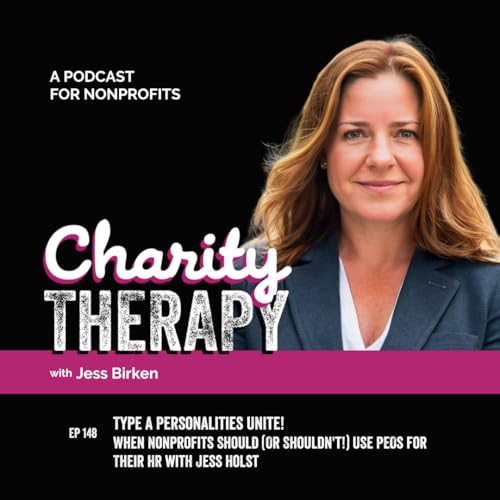
  • 148: Type A Personalities Unite! | When Nonprofits Should (Or Shouldn't!) Use PEOs for Their HR with Jess Holst
    Oct 2 2025

    Think a PEO will solve all your nonprofit's HR headaches? Not so fast — the fine print might surprise you.

    In this episode, I'm joined by HR consultant Jess Holst from Aligned HRC to answer a listener's question about whether a professional employer organization (PEO) is the right solution for their growing nonprofit.

    Real Listener Question: "We've grown from four employees to nearly twelve. I've been handling payroll and HR myself, but it's becoming too much. A board member suggested a PEO, but it feels too good to be true. Should we do it?"

    PEOs get sold as a one-stop HR solution, but the reality is more complicated. Jess Holst and I unpack the promises versus the pitfalls: from hidden compliance traps, to the limits of what PEOs actually cover, to the unexpected costs that nonprofits often don't see coming. We also explore alternatives like fractional HR support and how to make smarter choices about employee benefits.

    What You'll Learn:

    • What a PEO actually does — and what it doesn't
    • The real reason many nonprofits consider a PEO (hint: health insurance)
    • Why compliance gaps and hidden costs can make PEOs risky
    • How pairing a PEO with fractional HR could be a smarter move
    • Why shopping with a benefits broker might save you more than a PEO
    • How to know when your nonprofit is ready for outside HR help

    Bottom line: A PEO isn't a magic HR fix. For some nonprofits, it might be a tool. For many, it's a costly distraction. What matters most is building a strong HR foundation — whether that's with fractional HR support, a trusted benefits broker, or a thoughtful plan for growth.

    Resources from this Episode

    • Learn more Jess and Aligned HRC: https://alignedhrc.com/
    • Previous Episode: Are Nonprofit DEI Initiatives Illegal? with Megan: https://birkenlaw.com/charity-therapy-podcast/ct147/
    • Episode Transcript: https://birkenlaw.com/wp-content/uploads/2025/09/CT148_Transcript.pdf

    Connect with Us

    • Jess Birken: https://www.linkedin.com/in/jessbirken/

    Listen & Engage

    • Listen on Apple Podcasts | Spotify | YouTube | Amazon Music
    • Rate & Review on Apple Podcasts: Click "Ratings and Reviews" then "Write a Review"
    • Send us your nonprofit questions: https://birkenlaw.com/podcast/#podcast-story

    Stay Connected

    • Sign up for the Birken Law Email list: https://birkenlaw.com/signup/
    • Follow us on Facebook, Instagram, Twitter
    Voir plus Voir moins
    20 min
adbl_web_global_use_to_activate_DT_webcro_1694_expandible_banner_T1