Épisodes

  • #385 Inside ACMG 2026: How AI and New Tools Enhance Genome Sequencing and Equity
    Mar 14 2026
    To recap the vibrant American College of Medical Genetics (ACMG) held in Baltimore, host Kira Dineen is joined by presenters to capture what they spoke about at the conference! We explore the latest advancements in whole genomic sequencing (WGS) including the integration of newer tools like optical genome mapping (OGM), long-read sequencing and RNA sequencing. Then we learn about how AI is helping to sift through all the data provided by WGS by prioritizing variants so genomic analysts can find the causative variant faster. We wrap up by talking about how all these tools can be ethically used to advance equity in genomic testing. Our episode is broken into three segments… Baylor Genetics’ announce their Enhanced Whole Genome Sequencing with their Chief Medical Officer and Chief Quality Officer, Dr. Christine Eng and their Chief Growth Officer Chris SandsIllumina teaches us about their variant interpretation software that utilizes AI with a staff product marketing manager, Talia Silver and a senior staff medical science liaison, Dr. Livia LoureiroAmbry Genetics discusses advancing equity in genomic testing with a Clinical Strategy Manager in Medical Affairs, Carrie Horton, and their Translational Genomics Director for Rare Diseases, Dr. Seth Berger Relevant Resources: Baylor Genetics Segment Resources: Baylor Genetics Announces Enhanced Whole Genome Sequencing TestBaylor Genetics’ Enhanced Whole Genome Sequencing Technologies AAP Guidelines: Genetic Evaluation of the Child With Intellectual Disability or Global Developmental Delay Illumina Segment Resources: Genomewide Sequencing Ontario Project Illumina’s Emedgene variant interpretation software Illumina’s Grand Rounds in Genomic Medicine Genome Aggregation Database (gnomAD) Ambry Genetics Segment Resources: Ambry Genetics’ Patient for Life website and white paperAmbry Genetics’ Announcing Their One Millionth Test Leveraging RNA to Improve Diagnostic Accuracy and Yield Dr. Seth Berger’s publication last week on “Identification of de novo variants from parent-proband duos via long-read sequencing” in the American Journal of Human Genetics Ambry Genetics’ publication in January 2026 on “Ten years of exome sequencing and reanalysis among racial, ethnic, and ancestral groups: The importance of equitable reanalysis access” Relevant DNA Today Podcast Episode: #182 Eric Green on the Complete Human Genome Project #231 ChatGPT and AI In Genetics with Daniel Uribe #285 AI To Enhance Variant Curation with Daniel Uribe #297 Exome Reanalysis with Ambry Genetics #303 RNA Analysis with Ambry Genetics #325 Revolutionizing Variant Curation with MAVEs #334 ACMG 2025 Recap #358 AGBT Precision Health 2025 Meeting Recaps and Reflections #384 Beyond DNA: How RNAseq Resolves VUS and Shortens the Diagnostic Odyssey Upcoming Conferences: In November, we will be back in Baltimore for the 2026 National Society of Genetic Counselors (NSGC) annual conference, but before that we have a few other conferences on the books. Check out our conference schedule so far for 2026… Advances in Genome Biology and Technology (AGBT) Precision Health in September in San Diego Podcast Movement in September in New York City American Society of Human Genetics (ASHG) in October in MontrealNational Society of Genetic Counselors (NSGC) in November in Baltimore Connect With Us: Luckily you don’t have to wait long for a brand-new episode of DNA Today, we drop episodes every Friday! Except when a conference ends on a weekend ;) Until then, why not dive into our library of over 385 episodes? Binge them all on Apple Podcasts, Spotify, our website, or wherever you love to listen, just search “DNA Today.” Prefer watching? We’ve got you covered! For the past four years, we’ve been recording episodes with video, including some filmed at the iconic NBC Universal Stamford Studios. Check them out on our YouTube channel! DNA Today is hosted and produced by Kira Dineen, MS, LCGC, CG(ASCP)CM . Our Social Media Lead Liv Davidson. And our logo Graphic Designer is Ashlyn Enokian, MS, CGC. See what else we are up to on Instagram, X (Twitter), BluSky, Threads, LinkedIn, Facebook, YouTube and our website, DNAToday.com. Questions/inquiries can be sent to info@DNAtoday.com.
    Voir plus Voir moins
    45 min
  • #384 Beyond DNA: How RNAseq Resolves VUS and Shortens the Diagnostic Odyssey
    Mar 6 2026
    Despite our podcast name, we’re going beyond DNA in this episode and into the next frontier of genetic diagnostics: RNA sequencing and multi-omics. While DNA sequencing often reveals variants of uncertain significance (VUS), RNA sequencing provides functional evidence that can resolve uncertainty, uncover splicing abnormalities, and ultimately shorten the diagnostic odyssey for patients with rare diseases. Joining for this in-person podcast episode is Dr. Christine Eng, Chief Medical Officer and Chief Quality Officer at Baylor Genetics, and Vice Chair for Diagnostic Laboratory Affairs at Baylor College of Medicine. Dr. Eng has been a pioneer in implementing genomics into clinical practice, and her work is shining a light on how RNAseq and multi-omic approaches are transforming the way we diagnose and care for patients. Topics Covered in This Episode: RNAseq 101: What RNA sequencing is and how it complements DNA sequencing.Splicing Abnormalities: What RNAseq can reveal that DNA sequencing may miss.Clinical Impact: Real-world examples, including a case where RNAseq reclassified a VUS and changed patient care.Diagnostic Yield: How often Baylor Genetics sees clinical benefit from RNAseq.Workflow Questions: Should RNAseq be a reflex after WES/WGS fails to identify a pathogenic variant?Technical Realities: Key challenges including tissue type, RNA quality, and turnaround time.When Results Are Inconclusive: How to handle unexpected or unclear RNA findings.Beyond RNAseq: How multi-omics (including transcriptomics and metabolomics) are beginning to integrate into clinical practice.Implementation Barriers: Challenges to scaling multi-omic testing in routine labs.Future of Clinical Genomics: Dr. Eng’s predictions for RNAseq and multi-omics adoption over the next decade. Resources & Links: Learn more about Baylor Genetics hereBaylor Genetics Webinar: From Symptoms to Sequencing: Diagnostic Insights from 3 Pediatric Genome Sequencing CasesAAP’s Genetic Evaluation of the Child With Intellectual Disability or Global Developmental Delay: Clinical ReportBaylor Genetics Applauds New Guidance from American Academy of Pediatrics for Genome and Exome Sequencing to be used as First-Tier Tests for Children with Certain Developmental DelaysDr. Christine Eng’s Presentation “How Whole Genome Sequencing Can Lead to Early Diagnosis and Intervention”Zhao S, Macakova K, Sinson JC, Dai H, Rosenfeld J, Zapata GE, Li S, Ward PA, Wang C, Qu C, Maywald B; Undiagnosed Diseases Network; Lee B, Eng C, Liu P. Clinical validation of RNA sequencing for Mendelian disorder diagnostics. Am J Hum Genet. 2025 Apr 3;112(4):779-792. doi: 10.1016/j.ajhg.2025.02.006. Epub 2025 Mar 4. PMID: 40043707; PMCID: PMC12081282.Undiagnosed Disease Network Relevant DNA Today Podcast Episode: #358 AGBT Precision Health 2025 Meeting Recaps and Reflections Connect With Us: Get ready, genetic nerds—another brand-new episode of DNA Today drops this Friday! You can always count on us to deliver fresh content every Friday. While you wait, why not dive into our library of over 380 episodes? Binge them all on Apple Podcasts, Spotify, our website, or wherever you love to listen—just search “DNA Today.” Prefer watching? We’ve got you covered! For the past four years, we’ve been recording episodes with video, including some filmed at the iconic NBC Universal Stamford Studios. Check them out on our YouTube channel! DNA Today is hosted and produced by Kira Dineen, MS, LCGC, CG(ASCP)CM . Our Social Media Lead Liv Davidson. And our logo Graphic Designer is Ashlyn Enokian, MS, CGC. See what else we are up to on Instagram, X (Twitter), BluSky, Threads, LinkedIn, Facebook, YouTube and our website, DNAToday.com. Questions/inquiries can be sent to info@DNAtoday.com.
    Voir plus Voir moins
    26 min
  • #383 Inside the Brazilian Rare Genomes Project
    Feb 27 2026
    As Rare Disease Month comes to a close and Rare Disease Day approaches, we are turning our focus beyond the United States to explore what rare disease care looks like in Brazil, and how genomics is reshaping the diagnostic journey. In this episode, we take a deep dive into the rare disease landscape in Brazil, including how patients access genetic testing within a public healthcare system, the barriers families face compared to those in the U.S., and how whole genome sequencing (WGS) is accelerating diagnoses that once took years or even decades. Joining us is Dr. João Bosco de Oliveira Filho, a physician-scientist who helped lead Brazil’s national rare disease genomics initiative, Genomas Raros, and now continues this work through his laboratory, NeoGenomica. We’re also joined by Victor Camillo from MGI, who shares a global technology perspective on how large-scale sequencing efforts can expand access to rare disease diagnostics, especially in middle-income countries. Together, we discuss: How rare disease care in Brazil compares to the U.S.Why whole genome sequencing is a game changer for undiagnosed patientsLessons learned from national-scale genomics initiativesThe role of public–private partnerships in sustaining innovationWhat the future holds for rare disease diagnostics worldwide Relevant Resources: MGI TechMGI’s Sequencing Platforms NeoGenomicaNeoGenomica implements the world's most powerful genetic test, focusing on accuracy and speed in diagnoses.100,000 Genomes Project by Genomics EnglandCoelho, A. V. C., Mascaro-Cordeiro, B., Lucon, D. R., Nóbrega, M. S., de Souza Reis, R., Bertollo de Alexandre, R., Moura, L. M. S., Oliveira, G. S., Guedes, R. L. M., Caraciolo, M. P., Zurro, N. B., Cervato, M. C., & Oliveira, J. B. (2022). The Brazilian Rare Genomes Project: Validation of Whole Genome Sequencing for Rare Diseases Diagnosis. Frontiers in Molecular Biosciences, 9, Article 821582. https://doi.org/10.3389/fmolb.2022.821582Wojcik MH, Lemire G, Berger E, Zaki MS, Wissmann M, Win W, White SM, Weisburd B, Wieczorek D, Waddell LB, Verboon JM, VanNoy GE, Töpf A, Tan TY, Syrbe S, Strehlow V, Straub V, Stenton SL, Snow H, Singer-Berk M, Silver J, Shril S, Seaby EG, Schneider R, Sankaran VG, Sanchis-Juan A, Russell KA, Reinson K, Ravenscroft G, Radtke M, Popp D, Polster T, Platzer K, Pierce EA, Place EM, Pajusalu S, Pais L, Õunap K, Osei-Owusu I, Opperman H, Okur V, Oja KT, O'Leary M, O'Heir E, Morel CF, Merkenschlager A, Marchant RG, Mangilog BE, Madden JA, MacArthur D, Lovgren A, Lerner-Ellis JP, Lin J, Laing N, Hildebrandt F, Hentschel J, Groopman E, Goodrich J, Gleeson JG, Ghaoui R, Genetti CA, Gburek-Augustat J, Gazda HT, Ganesh VS, Ganapathi M, Gallacher L, Fu JM, Evangelista E, England E, Donkervoort S, DiTroia S, Cooper ST, Chung WK, Christodoulou J, Chao KR, Cato LD, Bujakowska KM, Bryen SJ, Brand H, Bönnemann CG, Beggs AH, Baxter SM, Bartolomaeus T, Agrawal PB, Talkowski M, Austin-Tse C, Abou Jamra R, Rehm HL, O'Donnell-Luria A. Genome Sequencing for Diagnosing Rare Diseases. N Engl J Med. 2024 Jun 6;390(21):1985-1997. doi: 10.1056/NEJMoa2314761. PMID: 38838312; PMCID: PMC11350637. Relevant DNA Today Podcast Episode: #285 AI To Enhance Variant Curation with Daniel Uribe #355 How Genomics Is Transforming Rare Disease Diagnosis in Turkey with MGI Tech #364 Breast Cancer Genetic Testing in Italy: A Curated Gene Panel with MGI #379 Global Cancer Diagnostics: Building High-Quality Cancer Genomic Testing with MGI Connect With Us: Luckily you don’t have to wait long for a brand-new episode of DNA Today, we drop episodes every Friday! Until then, why not dive into our library of over 380 episodes? Binge them all on Apple Podcasts, Spotify, our website, or wherever you love to listen, just search “DNA Today.” Prefer watching? We’ve got you covered! For the past four years, we’ve been recording episodes with video, including some filmed at the iconic NBC Universal Stamford Studios. Check them out on our YouTube channel! DNA Today is hosted and produced by Kira Dineen, MS, LCGC, CG(ASCP)CM . Our Social Media Lead Liv Davidson. And our logo Graphic Designer is Ashlyn Enokian, MS, CGC. See what else we are up to on Instagram, X (Twitter), BluSky, Threads, LinkedIn, Facebook, YouTube and our website, DNAToday.com. Questions/inquiries can be sent to info@DNAtoday.com.
    Voir plus Voir moins
    32 min
  • #382 “The Persistence Lab” Episode 1 — Can We Find Cures Faster?
    Feb 20 2026

    We are ecstatic to finally share that our host Kira Dineen is also hosting a brand new podcast that just launched, The Persistence Lab.

    This podcast, sponsored by AbbVie, pulls back the curtain on the hard, human work of health care innovation. Each episode dives into a real problem in medicine or health care and follows the people who are working to develop solutions. With immersive sound design and a three-act structure that puts story first, this series showcases the fresh thinking, bold ideas, and the unexpected paths that help turn optimism into outcomes. For U.S. audiences only.

    To celebrate the launch we are sharing the first episode with you here on DNA Today, but be sure you are following The Persistence Lab on your favorite podcast platform using this link! Don’t miss all the episodes this season!

    In this first episode of “The Persistence Lab,” we set out to answer, can we find cures faster?

    Our health and well-being impact every element of our lives. For patients with some of the most difficult-to-treat medical conditions, a cure is what they’re hoping for. How can we accelerate drug development to spur progress and turn bold ideas into real breakthroughs? The Persistence Lab launches with this episode to look at how AbbVie is empowering scientists to boldly rethink what it means to cure disease and accelerate care for patients. Please note that this episode is intended for U.S. audiences only.

    Episode Discussion Topics:

    • The importance of clear definitions: functional vs. complete cures
    • Why developing universal medical cures is incredibly complex
    • The role of clinical trials in developing potential medical cures
    • How AbbVie’s Pathway to Cures program fosters collaboration and innovation
    • The transformative impact of precision medicine and reverse translation
    • How AI, machine learning, and digital tools are helping scientists in the discovery and development of potential therapies
    • The emotional and practical significance of potential medical cures for patients and scientists

    Relevant Resources:

    • Listen to The Persistence Lab
    • AbbVie: Pathway to Cures
    • AbbVie: Can We Find Cures Faster Article
    • AbbVie: AI & Data Convergence

    Don’t forget to follow The Persistence Lab on your favorite podcast platform using this link!

    Voir plus Voir moins
    23 min
  • #381 Charles Darwin’s Legacy: What He Got Right & What Science Learned Next
    Feb 13 2026
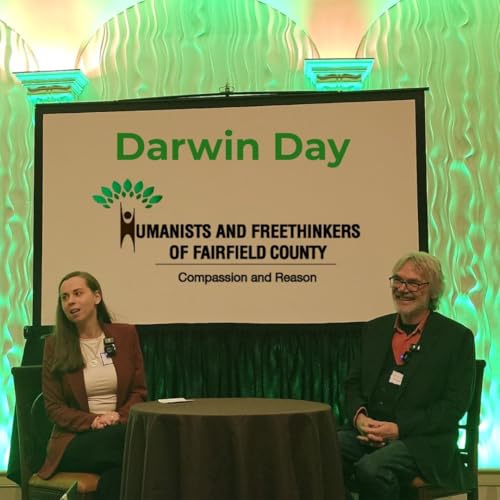
    In celebration of Charles Darwin’s birthday on February 12th, we participated in Humanists and Freethinkers of Fairfield County’s (HFFC) of Connecticut’s Darwin Day event! HFFC brought together science nerds to learn about evolution. In this special live episode of DNA Today, we’re sharing highlights from HFFC’s 18th Annual Darwin Day Dinner in Connecticut, a celebration of curiosity, science, and scientists held the Saturday before Darwin’s birthday on February 12th. Our host Kira Dineen led a live fireside chat with the keynote speaker from the distinguished evolutionary biologist Dr. Johan Peter Gogarten. She also introduced Senator Richard Blumenthal who gave a speech about the importance of science now more than ever. Dr. Gogarten, a Board of Trustees Distinguished Professor of Molecular and Cell Biology at the University of Connecticut, is known for his groundbreaking work on the early evolution of life, horizontal gene transfer, and rooting the Tree of Life. His research has transformed how scientists understand microbial evolution and the complex genetic relationships that connect all living organisms. This episode captures select moments from the live Darwin Day program, where we explore how Charles Darwin’s famous concept of the “entangled bank” still shapes modern evolutionary biology, and where today’s science has gone far beyond what Darwin could have imagined. Together, Kira Dineen and Dr. J Peter Gogarten discuss what Darwin got right about natural selection, what modern genomics has revealed about rapid evolutionary change, and why horizontal gene transfer continues to reshape our understanding of how life evolves. The conversation also touches on real-world applications, from antibiotic resistance to emerging genetic technologies, and how curiosity drives scientific discovery across generations. The evening also featured reflections on the importance of science, humanism, and evidence-based thinking, highlighting the enduring relevance of Darwin’s ideas in today’s world. Topics Discussed In This Episode: An introduction to Darwin’s life, his voyage on the HMS Beagle, and the creation of On the Origin of SpeciesExploration of natural selection and Darwin’s enduring influence on modern biologyHow the understanding of genetics, from Mendel to genomics, expands Darwin’s theoriesThe role of horizontal gene transfer in microbial evolution and its significanceHighlights from Connecticut’s 2026 Darwin Day celebrationCharles Darwin’s “entangled bank” and its relevance todayWhat Darwin got right—and what modern science has updatedNatural selection at the gene level vs. organism levelWhy evolution isn’t always gradual: rapid change and hybridizationHorizontal vs. vertical gene transfer explainedHow viruses, bacteria, and other mechanisms move genes across speciesThe role of horizontal gene transfer in microbial evolutionReal-world implications for medicine, antibiotic resistance, and biotechnologyHow curiosity and early inspiration shape scientific careersThe importance of science communication and public engagement About Our Guest: Dr. Johan Peter Gogarten is a Board of Trustees Distinguished Professor of Molecular and Cell Biology at the University of Connecticut. His research focuses on the early evolution of life, horizontal gene transfer, and selfish genetic elements. Dr. Gogarten is widely recognized for rooting the Tree of Life and for identifying horizontal gene transfer as a major force in microbial evolution. His work has been funded by the National Science Foundation, NASA’s Exobiology Program, and the Israel-U.S. Binational Science Foundation. He is a fellow of the American Academy of Microbiology and a member of the Connecticut Academy of Science and Engineering. About the Event: This episode was recorded live at HFFC's 18th Annual Darwin Day Dinner, held February 7th, 2026. The event celebrated Charles Darwin’s legacy through science, discussion, and community, featuring a keynote presentation by Dr. Johan Peter Gogarten on evolution within Darwin’s “tangled bank” and the complex genetic relationships that connect life on Earth. Please join us at next year’s event which will be held in February 2027 in Connecticut. Stay tuned for more details through the show, or directly on the Connecticut Darwin Day website. Relevant Resources: Gogarten Lab at The University of ConnecticutDr. Johann Peter Gogarten’s LinkedIn Page“Charles Darwin: History’s Most Famous Biologist” via Natural History Museum International Darwin Day Foundation The Connecticut Darwin Day websiteEvent Host: Humanists and Freethinkers of Fairfield County (HFFC) in ConnecticutHFFC’s Podcast, Humanism Today Relevant DNA Today Podcast Episode: #100 Carl Zimmer on Human Heredity #134 Dr. Kat Arney on Cancer Evolution#335 Neanderthals, Denisovans, and Us: How DNA Reveals Evolution Gene Pool Media: The Science Podcast Network: DNA Today ...
    Voir plus Voir moins
    28 min
  • #380 “Rare Rebels”: When Parents Drive Science, The Story of MPS I
    Feb 6 2026
    To kick off Rare Disease Month we are thrilled to share the pilot of the newest podcast in our Gene Pool Media science podcast network, Rare Rebels. The Rare Rebels™ Podcast shares raw, unscripted conversations with patients, caregivers, researchers, and advocates who are changing the future of rare disease. Through these real voices, Rare Rebels builds understanding, inspires action, and drives change. The host Melody Joy Paine is a thought provoking and empathic interview. It is not surprising that she has won multiple awards for her storytelling and advocacy work. In this episode, a rare disease dad and advocate, Mark Dant, tells the story of his son, Ryan, being diagnosed with Mucopolysaccharidosis Type I, and the scientist Dr. Emil Kakkis whose persistence changed their lives. In This Episode: Mark Dant’s personal journey as a parent advocate after his son Ryan’s diagnosis with MPS IBeing told “nothing can be done” and choosing to challenge that narrativeNavigating rare disease advocacy before the internet, social media, or established drug development pathwaysTeaching himself medical and scientific concepts without formal trainingEarly advocacy tactics: medical dictionaries, libraries, conferences, and cold outreachBuilding a nonprofit organization from the ground up to support research and familiesThe fragmented healthcare and research system rare disease families faced in the 1990sThe critical role of relationships in advancing rare disease researchMark’s partnership with physician-scientist Dr. Emil Kakkis and how trust fueled progressBridging families, clinicians, and researchers to accelerate treatment developmentThe path to developing the first treatment for MPS IHow one family’s advocacy changed outcomes for future patientsParents as drivers of innovation in rare diseasePersistence, collaboration, and problem-solving in the absence of clear systemsEnduring lessons for today’s rare disease community and advocates Gene Pool Media: The Science Podcast Network: Rare Rebels is the newest show on science podcast network Gene Pool Media. Thanks to everyone who has supported the network by following us @GenePoolMedia on social. Shoutout to all the podcasts in our network, you should check them via the links below! RealPharmaBeyond The Thesis with Papa PhDDNA DialoguesIt Happened To MeAll Access DNA#ThroughTheGenesDemystifying GeneticsPhenoTips Speaker Series Parálisis Cerebral RespuestasHumanism TodayGods and Genes If you have a science podcast and are interested in joining the network, go to GenePoolMedia.com and click the “Apply” tab at the top right. Or just email us directly at info@genepoolmedia.com. We’d love to chat with you about the benefits of joining the network. Here and there we have been sharing episodes from other podcasts in the Gene Pool Media network right here on DNA Today. Relevant Resources: Rare Rebels Website Rare Rebels on Spotify Rare Rebels on Apple Podcasts MedlinePlus’ Mucopolysaccharidosis type I (Hurler Syndrome) Page Genetic Rare Disease Information Center: Mucopolysaccharidosis Type 1 Page Gene Reviews’ Mucopolysaccharidosis Type I Page Dr. Emil Kakkis Developing Enzyme Replacement Therapy for MPS I The Orphan Drug Act 1983 strongly influenced by The National Organization for Rare Disorders (NORD) National Organization For Rare Disorders (NORD) EveryLife Foundation For Rare Diseases Relevant DNA Today Podcast Episode: #171 Farber Disease with Aceragen (also a lysosomal storage disorder) #292 TALEN® Gene Editing Technology with Cellectis (MPS type I Research) #372 Fighting for Time: Hunter Syndrome (MPS Type II), Gene Therapy & Urgent Advocacy #371 Growing Old Too Fast: A Mother’s Fight for Cockayne Syndrome Advocacy #376 Why Females with Fabry Disease Aren’t “Just Carriers” (Also a lysosomal storage disorder) #378 Why This Week’s NIH Funding Vote Matters for Rare Disease Patients Connect With Us: Luckily you don’t have to wait long for a brand-new episode of DNA Today, we drop episodes every Friday! Until then, why not dive into our library of over 380 episodes? Binge them all on Apple Podcasts, Spotify, our website, or wherever you love to listen, just search “DNA Today.” Prefer watching? We’ve got you covered! For the past four years, we’ve been recording episodes with video, including some filmed at the iconic NBC Universal Stamford Studios. Check them out on our YouTube channel! DNA Today is hosted and produced by Kira Dineen, MS, LCGC, CG(ASCP)CM . Our Social Media Lead Liv Davidson. And our logo Graphic Designer is Ashlyn Enokian, MS, CGC. See what else we are up to on Instagram, X (Twitter), BluSky, Threads, LinkedIn, Facebook, YouTube and our website, DNAToday.com. Questions/inquiries can be sent to info@DNAtoday.com.
    Voir plus Voir moins
    1 h et 5 min
  • #379 Global Cancer Diagnostics: Building High-Quality Cancer Genomic Testing
    Jan 30 2026
    As we approach World Cancer Day on February 4th, this episode of DNA Today takes a global look at how cancer diagnostics are evolving, not just in research settings, but in real-world clinical laboratories where innovation must meet reliability, scalability, and patient impact. In this conversation, we bring together three experts from around the world working at the intersection of oncology diagnostics, sequencing technology, and clinical implementation. Joining us from Portugal is Dr. Jorge Lima of IPATIMUP, one of Europe’s leading oncology centers known for its research-driven diagnostic mission. From Italy, Bernard Okere joins us as a Field Application Scientist at MGI Tech, a company providing a full spectrum of sequencing platforms and automation solutions for life science and clinical laboratories worldwide. And from China, we’re joined by Nancy Yang, International Senior Business Development Manager at Gene+, a genetic testing and precision oncology company behind one of the largest oncology gene panels currently in clinical use. Together, we explore how IPATIMUP has implemented large-scale DNA and RNA sequencing, including Gene+’s 1,021-gene DNA panel and RNA sequencing, to expand diagnostic confidence while maintaining rigorous clinical standards. This episode dives into validation, automation, workflow design, and cross-company partnerships, offering a behind-the-scenes look at how modern oncology labs grow without compromising quality. In This Episode, We Discuss Setting the Stage: IPATIMUP’s Role in Oncology How IPATIMUP fits into Europe’s oncology landscapeWhy a research-driven approach is central to its diagnostic mission From Research to Routine Diagnostics Translating research findings into clinical workflowsBalancing innovation with responsibility in patient-facing diagnostics Choosing the Right Technology Partner Why IPATIMUP selected MGI sequencing platformsWhat differentiates MGI’s technology in oncology applicationsThe importance of flexibility across DNA and RNA testingWhy long-term technical collaboration matters beyond installation Large Gene Panels in Clinical Practice How Gene+ selected the 1,021 genes included in its oncology panelReal-world experience using large DNA and RNA panels in routine diagnosticsWhy the Gene+ panel pairs effectively with MGI’s sequencing platformsWhat it takes to move from validation to clinical implementation RNA Sequencing as a Diagnostic Advantage How RNA sequencing complements DNA-based testing in oncologyWhen RNA sequencing provides the most clinical valueHow RNA data can increase diagnostic confidence in complex cases Automation, Scale, and Quality Why automation is essential for high-throughput oncology labsReducing hands-on time and minimizing human errorPractical advice for labs looking to scale while maintaining consistency and quality Relevant Resources: IPATIMUPMGI TechMGI’s Sequencing Platforms Gene+ (Website currently under construction) Relevant DNA Today Podcast Episode: #355 How Genomics Is Transforming Rare Disease Diagnosis in Turkey with MGI Tech #360 Hereditary Breast Cancer on the Big Screen with “Love, Danielle” #364 Breast Cancer Genetic Testing in Italy: A Curated Gene Panel Connect With Us: Luckily you don’t have to wait long for a brand-new episode of DNA Today, we drop episodes every Friday! Until then, why not dive into our library of over 375 episodes? Binge them all on Apple Podcasts, Spotify, our website, or wherever you love to listen, just search “DNA Today.” Prefer watching? We’ve got you covered! For the past five years, we’ve been recording episodes with video, including some filmed at the iconic NBC Universal Stamford Studios. Check them out on our YouTube channel! DNA Today is hosted and produced by Kira Dineen, MS, LCGC, CG(ASCP)CM . Our Social Media Lead Liv Davidson. And our logo Graphic Designer is Ashlyn Enokian, MS, CGC. See what else we are up to on Instagram, X (Twitter), BluSky, Threads, LinkedIn, Facebook, YouTube and our website, DNAToday.com. Questions/inquiries can be sent to info@DNAtoday.com.
    Voir plus Voir moins
    34 min
  • #378 Why This Week’s NIH Funding Vote Matters for Rare Disease Patients
    Jan 24 2026
    February 3rd, 2026 Update: The U.S. House of Representatives passed it! Now, the bill heads to the President’s desk, where we expect him to sign it into law. This means the NIH is scheduled to receive $48.7 billion in funding (a 1% or $415 million increase over 2025). Therefore the 40% budget cut of NIH was rejected, and instead there will be a 1% increase in funding (as long as the President signs it). January 30th, 2026 Update: Another wonderful update, the U.S. Senate passed legislation that advances top priorities for the rare disease community, including strong medical research funding for the National Institutes of Health (NIH) and across the federal government. The next step for the bill is to go back the U.S. House of Representatives for final passage. Urge your representatives to pass this legislation, MDA made it easy to do so here. January 24th, 2026 Update: Great news, the House of Representatives passed legislation providing strong funding for medical research at the National Institutes of Health (NIH). The next step is for the Senate to pass this legislation, the vote is scheduled for the week of January 26th. Urge your senators to pass this legislation, MDA made it easy to do so here. Our host Kira Dineen already reached out to her congressmen in Connecticut, Senators Chris Murphy and Richard Blumenthal, to support the vote scheduled to happen the week of January 26th, 2026. After you reach out to your senators, post it on social, and tag us (@DNATodayPodcast) and MDA (@mdaorg) so we can repost you! ------------------------------------------------------------------------------ What happens to rare disease families when federal research funding slows down, or gets cut? In this breaking news, bonus episode of DNA Today, we’re digging into what NIH funding cuts mean in real terms: delayed clinical trials, fewer research dollars for ultra-rare conditions, and a slower path from discovery to treatment. We’re joined by Paul Melmeyer, who serves as the Executive Vice President, Public Policy and Advocacy, at the Muscular Dystrophy Association (MDA). In this role, Paul leads MDA’s policy and advocacy initiatives pertaining to public health, therapeutic development, access to care, and disabilities. Prior to joining MDA, Paul spent over six years with the National Organization for Rare Disorders (NORD). At NORD, Paul led the Federal policy operations in developing and advocating for the enactment and implementation of pro-rare disease patient policy. Paul also holds a Master of Public Policy (MPP) from the George Washington University. We unpack what’s happening in Washington DC in late January 2026, what it could mean for neuromuscular disease research, and more generally the rare disease community, and what we can do about it. In This Episode, We Discuss What’s Actually Happening With NIH Funding Why the phrase “NIH cuts” understates the real-world impact on patients and familiesWhat proposed reductions for Fiscal Year 2026 could mean for rare disease researchHow grant freezes, terminations, and delayed renewals disrupt active studies and clinical trials Why Rare Disease Research Is Especially at Risk Why rare disease programs are more sensitive to funding instability than common conditionsThe difference between slowed progress and permanent loss for progressive neuromuscular diseasesHow NIH funding supports the entire pipeline—from basic science and natural history studies to biomarkers and trialsWhat happens when labs lose funding: loss of expertise, momentum, and institutional knowledge Neuromuscular Disease Research in 2026 Where neuromuscular research stands today and what breakthroughs are closest to patientsWhich types of studies are most vulnerable to funding cutsHow NIH investment influences industry confidence and pharmaceutical partnerships in ultra-rare diseases Policy Realities & Misconceptions How to explain to policymakers that cutting research now increases long-term healthcare costs laterCommon misconceptions about NIH funding and why rare disease research can’t simply “pause and restart” Advocacy: What You Can Do Right Now The most effective actions for advocates engaging Capitol Hill todayWhat makes a patient or family story resonate with lawmakers and staffersHow collective advocacy protects not just future discoveries, but lives happening right now Relevant Resources: Click here to urge you senators to pass legislation this week to support the NIH (mda.org/supportNIH). The bill now moves to the Senate for consideration the week of January 26th, 2026. MDA Advocacy Landing PageMDA Advocacy Action CenterDonate to MDAMDA's X PageMDA's Instagram PageRequest MDA Services We Work For Health Relevant DNA Today Podcast Episode: #306 NIH’s Dr. Francis Collins’ Leadership in the Human Genome Project and COVID-19#327 How Patient Advocacy is Changing Rare Disease Research#356 From Statehouse to Capitol Hill: A...
    Voir plus Voir moins
    33 min