Obtenez 3 mois à 0,99 $/mois

OFFRE D'UNE DURÉE LIMITÉE
Page de couverture de ISLAMIC FINANCE RESEARCH

ISLAMIC FINANCE RESEARCH

ISLAMIC FINANCE RESEARCH

Auteur(s): Zayd Haji
Écouter gratuitement

À propos de cet audio

I’m Zayd Haji, host of the Islamic Finance Research podcast on Spotify. I break down Islamic finance and equity markets using a top-to-bottom analysis approach. In business research, I analyze 4,000+ companies’ annual reports, linking macro trends with micro insights to reveal actionable strategies. In Islamic Finance, my Zayd’s Rules – Halal Economy series explains 150+ Shariah-compliant concepts, showing finance as justice, transparency, and amanah. Disclaimer: Based on NSE, BSE, RBI data, company reports, and screener. Not investment advice. https://g.co/kgs/bf9b1XZayd Haji Finances personnelles Économie
Épisodes
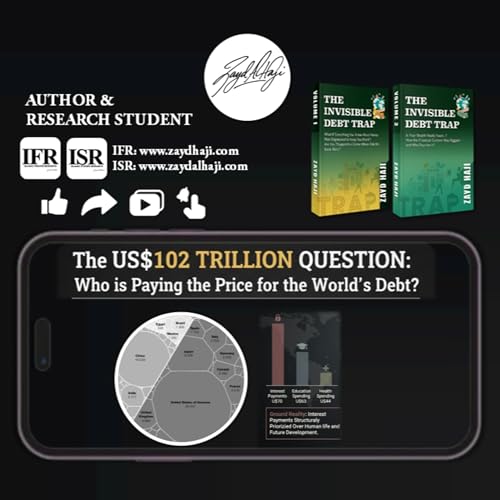
  • Global Debt Crisis 2025: Who Pays the Price? Deep Dive into US Debt, India Debt, China Debt & Global Financial Risks Impacting Everyday Lives Amid Rising Public & Private Debt | ZAYD HAJI | IFR
    Nov 16 2025

    Global Debt Crisis 2025: Who Pays the Price? Deep Dive into US Debt, India Debt, China Debt & Global Financial Risks Impacting Everyday Lives Amid Rising Public & Private Debt


    Explore the critical global debt landscape of 2025, where total public debt has soared to over one hundred trillion US dollars. This comprehensive analysis reveals the staggering figures behind the United States debt, India debt, China debt, and other major economies, showing how debt dynamics are reshaping our world’s financial future. Despite advanced economies like the United States and Japan accounting for nearly seventy percent of global public debt, their low-cost borrowing contrasts sharply with the harsh reality facing developing countries, whose debt is rising twice as fast. These nations, including India, Latin American countries, and African economies, grapple with crushing interest payments that siphon away vital resources needed for healthcare, education, and infrastructure.

    Understanding key metrics such as the US national debt, America public debt, and India debt to GDP ratio uncovers the uneven burden of repayments and their human consequences. For example, developing countries paid over nine hundred billion dollars in interest alone in 2024, often spending more on debt servicing than on critical social services. This hidden cost translates into real suffering — children missing out on schooling, clinics without medicines, and families trapped in cycles of poverty. The US debt clock and China debt to GDP highlight the scale and complexity of the problem, while emerging markets and developing economies face unique vulnerabilities tied to currency volatility, rising interest rates, and nonbank financial institution exposures.

    This deep dive covers how the US debt to GDP ratio and India’s external debt influence global credit risk and liquidity, stressing the interconnectedness of economies. The volatile US dollar and its depreciation in 2025 add another layer of risk, impacting import costs and corporate borrowing worldwide. Moreover, private creditors now hold a majority share of developing countries’ external debt, often demanding commercial rates that exacerbate financial strain and slow debt resolution efforts.

    Key themes include the urgent call for debt reform through inclusive global governance, crisis liquidity measures, effective debt workout mechanisms, and concessional financing to build resilience. Recognizing these forces equips individuals, investors, and policymakers with critical insights to navigate a fragile global financial system under pressure from soaring debt levels.

    This content is essential for anyone seeking to understand the real-world impact of the world’s biggest debts — from the US government debt to India’s national debt challenges — and how these silent economic forces affect our daily lives. From higher mortgage rates and credit card interest to strained public services and slowed economic growth, the consequences of this financial burden extend far beyond balance sheets.

    Stay informed with detailed, clear, and actionable insights derived from credible sources including the International Monetary Fund, World Bank, and United Nations, ensuring you comprehend the depth of the crisis behind the headlines. Learn why knowing about debt to GDP ratios by country, America’s debt to GDP, China’s country debt, and the debt-to-GDP ratio in India is crucial not just for economists, but for every one of us living in an interconnected world.

    The story of the world’s USD 102 trillion debt is not just about numbers — it’s about who pays the price and how we can push for a fairer, more sustainable future for all.

    Resources

    https://drive.google.com/file/d/11Z8DqOixzJpMH-hqTuyPkxHSbzNU5OxZ/view?usp=sharing

    https://drive.google.com/file/d/1omd9Hg-07_Pa1Wl4PrbnOpxsGegozxNI/view?usp=sharing

    Voir plus Voir moins
    30 min
  • Lenskart IPO SWOT Analysis Financial Data & Business Case Study | Industry & Market Research | Zayd Haji Business Model Explained | Company Analysis 2025
    Nov 15 2025

    Lenskart IPO SWOT Analysis Financial Data & Business Case Study | Industry & Market Research | Zayd Haji Business Model Explained | Business Research Case Study | Company Analysis 2025

    Lenskart Solutions, India's eyewear unicorn, is dissected in this detailed IPO SWOT analysis and financial data report. This business case study and industry research provide insights into Lenskart's operational maturity, market positioning, and challenges as it prepares for its highly anticipated IPO in 2025. From its rapid revenue growth to its historical losses, Lenskart's journey illustrates the dynamic nature of scaling an omnichannel retail business in a fragmented eyewear market.

    The comprehensive market research reveals Lenskart operates over 2,700 stores in India and internationally, boasting nearly 10 million customers annually. The company's FY25 revenue crossed ₹7,000 crore, with a net profit of ₹297 crore, marking its first profitable year after years of heavy investments and losses reported in 2022 and 2023. The unique business model integrates technology-driven retail, vertical manufacturing, and efficient supply chain management, creating a competitive moat.

    Zayd Haji's business model analysis explains Lenskart's core strategies, including customer-centric innovations, scalable operations, and aggressive marketing. The report dives into financial data highlighting the company's thin net margins—around 4–5%—and the risks linked with capital intensity and promoter dilution to 17.57%, with foreign institutional investors holding nearly 60% post-IPO.

    This research case study navigates Lenskart’s strengths, like brand trust, technology integration, and market leadership, alongside weaknesses such as uneven tier 2-and-beyond market penetration and heavy marketing expenditure. Opportunities include rising vision care awareness, the fast-growing prescription eyewear segment, and expanding international footprint. Threats encompass strong competitive pressures, volatile consumer behavior, and macroeconomic uncertainties.

    The company analysis underscores challenges in balancing aggressive growth with sustainable profitability, spotlighting cash flow improvements in the latest fiscal year but cautioning investors about dependency on continuous capital inflows. The report also highlights governance considerations stemming from shifting promoter control and the implications for long-term strategic direction.

    This in-depth industry and market research, combined with a carefully structured business case study and SWOT framework, equips investors, analysts, and business professionals with a holistic understanding of Lenskart IPO’s potential and pitfalls. As Lenskart navigates its growth trajectory, this report ensures that stakeholders grasp the real numbers behind the hype, preparing them for informed investment decisions and strategic considerations in the evolving Indian eyewear retail landscape.

    Keywords: Lenskart IPO SWOT Analysis Financial Data & Business Case Study, Industry & Market Research, Zayd Haji Business Model Explained, Business Research Case Study, Company Analysis, Lenskart IPO 2025, Organized Eyewear Retail, Omnichannel Growth, Vision Care Market.

    RESOURCE:

    https://drive.google.com/file/d/1WnAZuWrYbsXPsUcBeKIlNFH4y9H5ly2U/view?usp=sharing

    Voir plus Voir moins
    30 min
  • Haryana Vote Scam Expose: Rahul Gandhi's Proof of 2.5 Million Fake Votes & Election Commission Cover-up | Zayd Haji
    Nov 6 2025

    Haryana Vote Scam Allegations 2025: Rahul Gandhi’s 25 Lakh Fake Votes Exposed | Election Fraud Explained | Zayd Haji

    Explore the detailed allegations raised by Rahul Gandhi regarding the 2025 Haryana elections, where he claims 2.5 million fake votes undermined democracy. This investigation breaks down critical facts, including duplicate voters (521,000), invalid addresses (93,174), bulk registrations (1.9 million), and striking examples like the Brazilian model’s photo appearing multiple times. Understand the systemic failures, election commission’s contested role, and the broader implications for India's democratic process. Stay engaged as we dissect the evidence, numbers, and political dynamics shaping these explosive claims. This analysis is essential for anyone invested in electoral transparency, voter rights, and the future of Indian democracy. Join the discussion and empower yourself with facts you deserve to know.

    Voir plus Voir moins
    19 min
Pas encore de commentaire