Épisodes

  • Reclaiming Your Time with Boundary-setting
    Feb 3 2026
    In this solo episode, Brian Thompson outlines practical steps for business owners to take back their time, including auditing their calendars, defining a 'hell yes' filter for opportunities, using scripts to say no gracefully, and starting small with boundary-setting. He stresses that reclaiming time is an ongoing practice that requires accountability, energy tracking, and celebrating small wins. By protecting their time, entrepreneurs can create space for joy, clarity, and purpose in their lives and businesses. Why do boundaries around time management matter Time is your most valuable resource. You can always make more money, but you can't make more time. And when you waste your time or give it away without thinking, you're robbing yourself of energy, creativity, and alignment. Also, busy does not equal productive. Entrepreneurs often confuse packed schedules with being effective, but being intentional with your time is what leads to real impact. In addition, burnout is real. When you say yes to everything, you eventually hit a wall. Your body knows, your creativity dries up, and your business suffers. Intentional time equals aligned action. When you reclaim your time, you make space for work that lights you up, moves your mission, and actually grows your business. 4 ways to take back your time as a business owner Here are four ways to start taking your time back, starting this week. Audit your calendar. Pull up last month's calendar and look at every meeting, task, or obligation. Highlight what you want more of and flag what needs to go. Define your hell yes filter. Hell yes may be easy to define in some circumstances, but with most things in life, there's a lot of gray. When a new opportunity comes in, check: does it support one of my values or goals? If not, it's a no, or at least a not right now. Use scripts to say no. You don't have to ghost people or be rude. You don't owe anyone an explanation, justification, or apology. Not wanting to is reason enough. You're allowed to protect your time because it matters to you, period. Scripts can be helpful training wheels, but over time, your no will stand on its own. Start small. If saying no feels scary, start with something low stakes, decline in casual coffee, shorten a meeting by 15 minutes, or block one morning a week to focus on work. Small wins build your boundary-setting muscle. How to stay on track with protecting your time Making this commitment is nothing without accountability. Reclaiming your time isn't a one-and-done move. It's a practice. Do a weekly time check. What drained me this week? What felt aligned and energizing? What do I want to do differently next week? Journaling or voice noting works wonders here. Track energy, not just time. Rate how you feel after each meeting or task. Patterns will emerge and they'll guide your decisions. Get an accountability buddy. Whether it's a business coach, friend, or mastermind group, share your hell yes commitment with somebody. Have them check in with you monthly. Celebrate every win. Each time you say no to something that's not aligned, pause and celebrate. You protected your time and your peace. I'll leave you with this. You are the steward of your time, not your clients, not your email box, not your calendar, you. The more you protect your time, the more space you create for joy, clarity, and purpose. Your mission deserves that, and you deserve that. Your action step to setting boundaries and taking back your time Schedule a 30-minute calendar audit this week. Look at what's a hell yes and what's not, then make one change. That's all it takes to begin. Resources + Links Newsletter Sign Up Follow Brian Thompson Online: Instagram, Facebook, LinkedIn, X, Forbes Follow & review the podcast: on Spotify and Apple Podcasts About Brian and the Mission Driven Business Podcast Brian Thompson, JD/CFP®, is a tax attorney and Certified Financial Planner® who specializes in providing comprehensive financial planning to LGBTQ+ entrepreneurs who run mission-driven businesses. The Mission Driven Business podcast was born out of his passion for helping social entrepreneurs create businesses with purpose and profit. On the podcast, Brian talks with diverse entrepreneurs and the people who support them. Listeners hear stories of experiences, strength, and hope and get practical advice to help them build businesses that might just change the world, too.
    Voir plus Voir moins
    6 min
  • Close The Books, Open The New Year
    Dec 23 2025

    In this solo episode, Brian breaks down one of the most overlooked but essential parts of running a mission-driven business: year-end bookkeeping. You'll learn a simple, practical framework for cleaning up your books, organizing your finances, and setting up systems that actually support you and your business. If you've ever felt overwhelmed by accounting software, unclear categories, or messy receipts, this episode will help you start the new year with clarity and confidence.

    Episode Highlights Why year-end bookkeeping is a big deal

    The way you close this year directly affects how you start the next one. Clean books make tax season easier, help you avoid missed deductions, and give you a real-time view into how your business is doing.

    3 steps to get your books in order

    There are three, key steps to get your books in order before the end of the year:

    1. Clean up the basics: Dig deeper into the fundamentals, including double checking your business and personal expenses are separate, removing overwhelm from your chart of accounts, reconciling your accounts, organizing your receipts and documentation, removing old or inactive accounts, and making payroll corrections.

    2. Review your financial reports: Analyze your Profit & Loss (Income Statement) report, Balance Sheet, and Reconciliation report for accuracy, red flags, and wins.

    3. Prep for tax season and next year: Review your accounting method, confirm expense categories, talk to your tax professional, plan upgrades, and schedule monthly processes.

    Take action now

    Don't delay on getting your books in order. If you manage your own books, block 60-minutes on your calendar this week for a year-end bookkeeping session to work through the 3-step process, and if you work with a professional, schedule time for a year-end review. Even if you only complete one task, that's progress.

    Resources + Links
    • Accounting Software: QuickBooks, Xero, Wave

    • Newsletter Sign Up

    • Follow Brian Thompson Online: Instagram, Facebook, LinkedIn, X, Forbes

    About Brian and the Mission Driven Business Podcast

    Brian Thompson, JD/CFP®, is a tax attorney and Certified Financial Planner® who specializes in providing comprehensive financial planning to LGBTQ+ entrepreneurs who run mission-driven businesses. The Mission Driven Business podcast was born out of his passion for helping social entrepreneurs create businesses with purpose and profit.

    On the podcast, Brian talks with diverse entrepreneurs and the people who support them. Listeners hear stories of experiences, strength, and hope and get practical advice to help them build businesses that might just change the world, too.

    Voir plus Voir moins
    8 min
  • How To Define Your Niche with Theresa Pablos
    Dec 9 2025
    Brian Thompson chats with Theresa Pablos, CFP®, about the early-stage realities of building a business. A former journalist and freelance marketer, Theresa transitioned careers to financial planning in 2023 and ultimately earned the CFP® certification mark in 2025. She recently joined Equalis Financial as an Associate Financial Advisor and is just starting to build her client base. In this episode, Theresa and Brian discuss the excitement, fear, and the uncomfortable but necessary work of defining a niche. You'll get practical tips for finding your target audience, learn how to provide real value, and get reflection tools to help you grow and scale your own business. Episode Highlights Defining your niche starts with understanding your "why." Choosing a niche allows business owners to serve clients more deeply, efficiently, and sustainably. Before you figure out who you want to serve, you need to identify why you want to build a business and what you like to do. Theresa knew she wanted a people-oriented career that made complex data easy to understand and improved people's lives. After some deep reflection, she discovered values-based financial planning as a career that could help her and others use their resources to create more freedom in their lives. "I want to build my book of business because I want freedom and because I want to be an expert on a topic," Theresa said. Identify your target customers and provide them with value. Once you've defined your why, you need to identify the type of person that you want to serve. While Theresa is still figuring it out, she's thinking about focusing on being a financial planner for creative solopreneurs or a financial planner for tech employees and other professionals who earn equity compensation. However, knowing who you want to serve is only half of the equation. It's equally important to ensure the services you offer solve a real pain point for your target audience. "A lot of my clients seems to fall into this creative solopreneur category, and something I've been reflecting on is that if you're a creative solopreneur, you have a need for financial planning in a way that justifies you going out and actually hiring me or someone else," Theresa said. "While I enjoy working with stock options, a lot of tech employees are DIYers and aren't actively seeking advice unless something big happens to trigger the need." Don't let fear of making the wrong decision stop you. After you know how you want to serve your target customers, it's time to test out your solutions. One way to do that is by having 100 conversations, as recommended by LeSean Smith in Episode 69. And if you're nervous, like Theresa, then you just have to do it scared. "My takeaway is that I just need to trust myself and that being nervous is part of the process," she said. "Fortunately, my journalism background very well prepared me to get a lot of 'Nos' from people, and that's okay because you have to get the 'Nos' to get the 'Yeses.'" Resources + Links Episode 69: Building A Business For Financial Independence with LaSean Smith Why Choose a CFP® Professional Equalis Financial: Website, Instagram, Facebook Theresa Pablos, CFP®: Website, LinkedIn, Instagram Follow Brian Thompson Online: Instagram, Facebook, LinkedIn, X, Forbes About Brian and the Mission Driven Business Podcast Brian Thompson, JD/CFP®, is a tax attorney and Certified Financial Planner® who specializes in providing comprehensive financial planning to LGBTQ+ entrepreneurs who run mission-driven businesses. The Mission Driven Business podcast was born out of his passion for helping social entrepreneurs create businesses with purpose and profit. On the podcast, Brian talks with diverse entrepreneurs and the people who support them. Listeners hear stories of experiences, strength, and hope and get practical advice to help them build businesses that might just change the world, too.
    Voir plus Voir moins
    40 min
  • You Can't Change What You Don't Track
    Nov 25 2025
    Brian Thompson loves a good spreadsheet, and in this episode, he's sharing some of his best tips for tracking metrics in a manageable, mission-aligned way. You'll learn how intentional tracking can help mission-driven entrepreneurs gain clarity, celebrate progress, and make better decisions. Drawing inspiration from investor and writer Sahil Bloom's Five Types of Wealth, Brian offers practical tools to help you track progress without it becoming a full-time job. Episode Highlights Tracking creates accountability Tracking transforms assumptions into awareness. If you're not measuring something, it's easy to tell yourself stories — I think I'm doing okay, or I feel behind. But those stories may or may not be true. Tracking brings reality into focus, creating accountability, strategy, and visible progress, shifting from emotional decision-making to data-informed clarity. Five types of wealth to track for mission-driven entrepreneurs Sahil Bloom is an investor, writer, and entrepreneur whose framework for thinking of wealth in five key domains — time, physical, mental, social, and financial wealth — can also be adapted for entrepreneurs building mission-driven businesses. Tracking across all areas of wealth can give you a holistic picture of your business and your life. Time Wealth: How intentionally do you use your time? Are you working on your business or just in it? Social Wealth: Who are you connecting with? Do your clients, colleagues, or communities energize you or make you cringe? Mental Wealth: Are your decisions aligned with your purpose? Do you set time aside for a regular check-in on your mental well-being? Physical Wealth: Are you prioritizing rest, nourishment, and movement? Are you moving throughout the day? Financial Wealth: Do your finances support your ability to stay mission-driven and resilient? Are you able to meet all of your obligations? Start small and make it yours Tracking doesn't have to be complicated. To prevent overwhelm, pick one area to focus on first and use simple tools such as journaling, scorecards, spreadsheets, or apps to help you track your progress. Remember: The key is consistency, not perfection. Designate a specific day and time to review your data and choose a cadence you can stick to. Build your own Wealth Dashboard As a bonus, consider building a simple "Wealth Dashboard" to visualize your progress. Using tools like Google Sheets or Notion, log weekly or monthly metrics for each wealth category and spot imbalances before they become problems. Resources + Links "The 5 Types of Wealth: A Transformative Guide to Design Your Dream Life" by Sahil Bloom Notion dashboards "Profit First: Transform Your Business from a Cash-Eating Monster to a Money-Making Machine" by Mike Michalowicz Toggl time tracker Brian Thompson Financial: Website, Newsletter, Podcast Follow Brian Thompson Online: Instagram, Facebook, LinkedIn, X, Forbes About Brian and the Mission Driven Business Podcast Brian Thompson, JD/CFP, is a tax attorney and Certified Financial Planner® who specializes in providing comprehensive financial planning to LGBTQ+ entrepreneurs who run mission-driven businesses. The Mission Driven Business podcast was born out of his passion for helping social entrepreneurs create businesses with purpose and profit. On the podcast, Brian talks with diverse entrepreneurs and the people who support them. Listeners hear stories of experiences, strength, and hope and get practical advice to help them build businesses that might just change the world, too.
    Voir plus Voir moins
    10 min
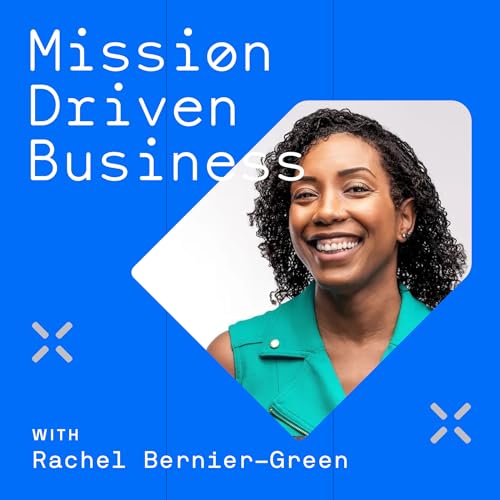
  • Building Businesses with Purpose and Profit with Rachel Bernier-Green
    Nov 11 2025
    Brian Thompson chats with Rachel Bernier-Green, founder and CEO of the Economic Justice Consortium, a Chicago-based firm that helps mission-driven businesses sustain and amplify their impact through financial and operational excellence. A recovering public accountant turned social entrepreneur, Rachel has dedicated her career to closing the racial wealth gap and redefining what it means to lead with purpose and profit. In this episode, Rachel shares her journey from climbing the corporate ladder in public accounting, to running a social enterprise bakery that partnered with Whole Foods and Starbucks, and now guiding other entrepreneurs in building sustainable, values-driven businesses. She opens up about burnout, courage, and the lessons learned from failure, as well as how she helps clients reject hustle culture and build wealth for their communities. Episode Highlights Mission-driven businesses focus on impact and income. Rachel defines a mission-driven business as one that "has a focus other than profit maximization." Whether seeking to improve the environment, society, or treatment of employees, mission-driven businesses aim to make a positive net impact. "People think if they have a greater purpose, they also don't need to focus on profit," Rachel said. "If you lose that focus on profit, your mission ceases to exist." Turn loss into leadership. Rachel's first entrepreneurial endeavor came when she left a toxic corporate environment and turned to baking as a stress outlet. Her bakery partnered with regenerative farms and hired previously incarcerated individuals, creating jobs that reduced recidivism in her Chicago community. Nine years after starting her first company, a combination of a tragic ceiling collapse and the COVID-19 pandemic ultimately led to the business's closure. While it felt like a failure at the time, the experience led her to a bigger purpose — founding the Economic Justice Consortium to help other mission-driven businesses build sustainable success. "There are some things you can only learn by going through a business that ends," she said. "I do think that business needed to come to an end for me to do the work that I'm doing now, which will have a much more significant impact on the world." Track your Objectives and Key Results (OKRs). Economic Justice Consortium offers fractional CFO services and consulting services for operational systems and big-picture strategy. The firm also relies heavily on the Objectives and Key Results (OKRs) strategic framework, which breaks down specific objectives based on the larger company mission and vision. "We actually utilize our task management tool to track those objectives," she said. "It incorporates a level of accountability. There's an internal dashboard that the entire team has access to in real time, and they can see whether we're on track or not on track with any of our OKRs." Rebuke hustle culture. Rachel recommended the book "Laziness Does Not Exist" by Chicago professor Devin Price, which challenges the culture of overwork and redefines productivity. The book explores how the American work culture is misaligned with data science on productivity and has transformed how Rachel approaches her work and her expectations for her team. "Hustle culture is very damaging on so many levels," she said. "The book challenged me so much I had to sit down and come back to it because I had always prided myself on my work ethic and putting in the hours." Resources + Links Xero accounting software "Profit First: Transform Your Business from a Cash-Eating Monster to a Money-Making Machine" by Mike Michalowicz "The Great Game of Business, Expanded and Updated: The Only Sensible Way to Run a Company" by Jack Stack and Bo Burlingham "Laziness Does Not Exist" by Devon Price Ph.D. Rachel Bernier-Green: LinkedIn Economic Justice Consortium: Website, Instagram, Facebook, LinkedIn, X, TikTok The Purpose Profit Shift Podcast: Apple Podcasts, Spotify, RSS Feed Brian Thompson Financial: Website, Newsletter, Podcast Follow Brian Thompson Online: Instagram, Facebook, LinkedIn, X, Forbes About Brian and the Mission Driven Business Podcast Brian Thompson, JD/CFP, is a tax attorney and Certified Financial Planner® who specializes in providing comprehensive financial planning to LGBTQ+ entrepreneurs who run mission-driven businesses. The Mission Driven Business podcast was born out of his passion for helping social entrepreneurs create businesses with purpose and profit. On the podcast, Brian talks with diverse entrepreneurs and the people who support them. Listeners hear stories of experiences, strength, and hope and get practical advice to help them build businesses that might just change the world, too.
    Voir plus Voir moins
    36 min
  • The Power of Clarity
    Oct 28 2025

    Brian Thompson takes a deep dive into one of the most important tenets for mission-driven business owners: clarity. Clarity may sound simple, but it's not easy. If done well, clarity can be the foundation for building a business that truly supports your mission and your life. Once you find clarity, everything else becomes easier, and this episode gives you tips on how to do just that.

    Episode Highlights Clarity enables mission-driven entrepreneurs to build their business around their life.

    Building a business — particularly a mission-driven one — is filled with ambiguity. There's no single blueprint or one-size-fits-all formula. Without clarity, decisions feel overwhelming. But with clarity, decisions become faster and more intentional. You build a business that fits your life, instead of trying to fit your life around your business.

    The Discovery process cultivates clarity.

    In Brian's financial planning business, the first phase is the Discovery process, which includes three key meetings: the Get Organized meeting, the Vision meeting, and the Knowledge meeting. Rather than creating a rigid five-year plan, entrepreneurs design a framework that allows for flexibility, growth, and evolution.

    Clarity isn't a luxury. It's a necessity.

    Without clarity, you're stuck in reactive mode, chasing whatever opportunity lands in your inbox and making decisions based on fear. Intentional planning brings clarity, and clarity empowers action. If you're feeling pulled in too many directions, ask yourself: Do I know what I want? Do I have a plan that aligns with my values? Am I building a business that supports your life, or one that consumes it.

    Resources + Links
    • Identifying Your Values exercise

    • Kinder Three Questions For Business Owners

    • Brian Thompson Financial: Website, Newsletter, Podcast

    • Follow Brian Thompson Online: Instagram, Facebook, LinkedIn, X, Forbes

    About Brian and the Mission Driven Business Podcast

    Brian Thompson, JD/CFP, is a tax attorney and Certified Financial Planner® who specializes in providing comprehensive financial planning to LGBTQ+ entrepreneurs who run mission-driven businesses. The Mission Driven Business podcast was born out of his passion for helping social entrepreneurs create businesses with purpose and profit.

    On the podcast, Brian talks with diverse entrepreneurs and the people who support them. Listeners hear stories of experiences, strength, and hope and get practical advice to help them build businesses that might just change the world, too.

    Voir plus Voir moins
    13 min
  • 101 Sketches To Start Meaningful Conversations with Carl Richards
    Oct 14 2025
    Brian Thompson chats with Carl Richards — Certified Financial Planner™, creator of The New York Times "Sketch Guy" column, and bestselling author of "The Behavior Gap" and "The One-Page Financial Plan." Carl's simple Sharpie sketches have transformed how millions of people think and talk about money. In his latest book, "Your Money: Reimagining Wealth in Simple Sketches", he shares 101 drawings and essays designed to spark deeper conversations about money, values, and what matters most. In this conversation, Brian and Carl dive into the emotional side of money and debate whether money actually can buy happiness. Episode Highlights A good sketch can start a conversation. Carl said the impetus behind his new book is simple: we're not talking about money in the right way. Instead of focusing on financial "noise" like markets and TV pundits, he wanted to give people tools to have conversations that align money with their values. "Really good financial decisions happen when we make a little bit of meaning out of money," Carl said. "We're getting clear about our purpose." Money = feelings. Carl's first sketch in the book, and arguably the most powerful, is simply, "Money = Feelings." He emphasized that money evokes an emotional response, whether that's anxiety, freedom, or joy. "We're not talking about spreadsheets and calculators," Carl said. Order can be powerful. Bringing order to chaos can provide a sense of control when life feels overwhelming. Whether it's finally sorting through a pile of unopened mail or cleaning the garage, creating a sense of order can help ease anxiety and overwhelm. "There are so many global things going on that are out of our control," Carl said. "If you feel nervous or scared, go clean the garage, do the dishes, do something that gives you a sense of control and order." Money can buy happiness — if you spend it right. Can money buy happiness? Carl believes the answer is yes — if you know how to spend it. Money spent on meaningful experiences with loved ones or exerting more freedom over your time is money well spent. "Nobody wants more money," he said. "They want what they think money will give them, and if you don't do the work to figure out the difference, then more money won't buy you happiness." Resources + Links Carl's newest book: "Your Money: Reimagining Wealth in Simple Sketches" Bulk order "Your Money: Reimagining Wealth in Simple Sketches" and save an additional 5% by using the code YourMoney5 at checkout Carl's other books: The Behavior Gap and The One-Page Financial Plan Episode 40: Making Complex Ideas Simple with Carl Richards Carl's podcast: Behavior Gap Radio The Society of Advice online community of financial planners Carl's New York Times column Follow Carl Richards Online: Website, Instagram, X, LinkedIn Brian Thompson Financial: Website, Newsletter, Podcast Follow Brian Thompson Online: Instagram, Facebook, LinkedIn, X, Forbes About Brian and the Mission Driven Business Podcast Brian Thompson, JD/CFP, is a tax attorney and Certified Financial Planner® who specializes in providing comprehensive financial planning to LGBTQ+ entrepreneurs who run mission-driven businesses. The Mission Driven Business podcast was born out of his passion for helping social entrepreneurs create businesses with purpose and profit. On the podcast, Brian talks with diverse entrepreneurs and the people who support them. Listeners hear stories of experiences, strength, and hope and get practical advice to help them build businesses that might just change the world, too.
    Voir plus Voir moins
    35 min
  • 10 Conversations That Changed My Business And My Life
    Sep 16 2025
    Brian Thompson marks a major milestone with Episode 100 of the Mission Driven Business podcast! In this special retrospective, Brian reflects on 10 standout episodes that made a lasting impact and continue to resonate in his business and life. Whether you're new to the podcast or a long-term listener, Episode 100 captures the heart of the conversations that Mission Driven Business is all about. Episode Highlights 1. Mike Michalowicz put profit first In Episode 7, Mike Michalowicz flipped the traditional profit formula, redefining how business owners can approach cash flow. Mike's episode gave language and structure for something many business owners struggle with. 2. Brian Thompson opened up on the mic In Episode 8, Brian got personal about how and why he started his own firm, Brian Thompson Financial. It was the first time he allowed himself to really be open on the mic, talking about fear, imposter system, and the drive to create something meaningful. 3. George Kinder asked the right questions In Episode 14, George Kinder's thoughtful and grounded presence shone through as he advocated for life planning, which connects a financial plan to an individual's most meaningful goals. His three Kinder Questions have helped many people get clear about what they want their lives to look like. 4. River Nice led with empathy In Episode 20, River spoke so clearly about how marginalized communities -- especially the LGBTQ+ community -- experience guilt or shame around money. The episode is a powerful reminder that empathy can be a superpower. 5. Anjali Jariwala wrote a new entrepreneurial story In Episode 42, Anjali Jariwala shared how she built a thriving financial planning firm, only to turn around and write a children's book that broke sales records. It's a powerful reminder you can build whatever business you want -- and that your business can evolve with your creativity. 6. Krish Himmatramka proposed using profit for good In Episode 57, Shark Tank alum Krish Himmatramka proved you can build a business for-profit and for-impact. His ethical engagement ring company commits to its values every step of the way. 7. LaSean Smith talked to 100 customers In Episode 69, LaSean Smith advised new entrepreneurs to have 100 conversations in order to build a business that people actually want to use. If you're early in your business, LaSean's advice is clear, tactical, and values-based. 8. Hugo E. Gomez looked before he leaped In Episode 79, Hugo E. Gomez tested his business idea and built a proof of concept before making the leap to full-time entrepreneurship.Now his business is thriving by serving a market overlooked by mainstream brands. 9. Channyn Lynne Parker taught philosophy In Episode 83, Channyn Lynne Parker got poetic, talking about purpose, letting your path unfold, and trusting yourself even when it's hard. But Channyn really stands out for turning the children's song "Row, row, row your boat," into a life philosophy. 10. Masami Sato showed that small actions make a big impact In Episode 93, Masami Sato shared how she started her company with a toddler in her kitchen and built it into a global force for good. Her company, B1G1, is built on the idea that small actions, done consistently, can change the world. Resources + Links Episode 7: Being Profit First with Mike Michalowicz Episode 8: Why I Started My Mission-Driven Business Episode 14: Living Your Passion with George Kinder Episode 20: Defining Your Niche with River Nice Episode 42: Creating The Products You Want with Anjali Jariwala Episode 57: Going from Startup to Shark Tank with Krish Himmatramka Episode 69: Building A Business For Financial Independence with LaSean Smith Episode 79: Niching Down with Hugo E. Gomez Episode 83: Braving Discomfort to Live Your Purpose with Channyn Lynne Parker Episode 93: Harnessing The Power Of Small To Create Global Impact With Masami Sato Brian Thompson Financial: Website, Newsletter, Podcast Follow Brian Thompson Online: Instagram, Facebook, LinkedIn, X, Forbes About Brian and the Mission Driven Business Podcast Brian Thompson, JD/CFP, is a tax attorney and Certified Financial Planner® who specializes in providing comprehensive financial planning to LGBTQ+ entrepreneurs who run mission-driven businesses. The Mission Driven Business podcast was born out of his passion for helping social entrepreneurs create businesses with purpose and profit. On the podcast, Brian talks with diverse entrepreneurs and the people who support them. Listeners hear stories of experiences, strength, and hope and get practical advice to help them build businesses that might just change the world, too.
    Voir plus Voir moins
    18 min