Épisodes

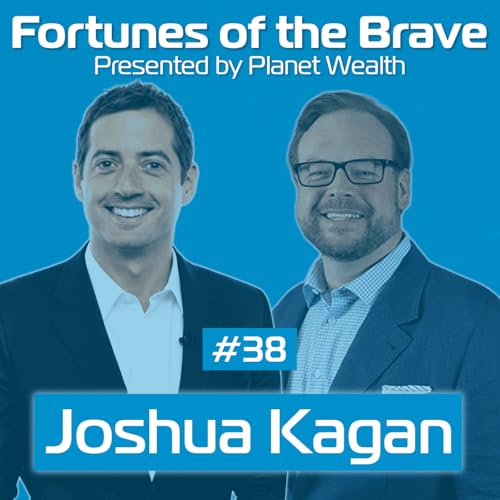
  • E38: Joshua Kagan: Locked Out of Real Estate? Why Land Is a Smart First Step to Owning Real Assets
    Jan 20 2026
    Joshua Kagan is a real estate and fintech builder focused on expanding access to ownership for everyday people. He is the co-founder of Bonfire and the founder of Friendly Acres, a land-focused venture designed to help people exit stranded land assets while creating affordable pathways into real asset ownership. In this episode of Fortunes of the Brave, Joshua shares how his journey from fix-and-flip investor to fintech founder reshaped his views on democratized access to real estate. Drawing on lessons from launching Bonfire during a volatile regulatory moment, he explains why land has emerged as one of the most practical and overlooked entry points for people who feel locked out of traditional real estate investing. Joshua breaks down why rising home prices, higher interest rates, and student debt have turned the American Dream of ownership into what he calls an "American myth." He explains how regulatory structures like Reg D offerings restrict non-accredited investors from accessing private real assets, and why that imbalance has accelerated wealth concentration over the last two decades. The conversation dives deep into Friendly Acres and Smart Land Investors, where Joshua is tackling the problem from both sides of the market. For sellers, land often becomes a stranded asset that generates taxes but little liquidity. For buyers, land can serve as a lower-cost, lower-maintenance starting point for real asset ownership, often with seller financing and significantly reduced upfront capital requirements. Beyond platforms and capital structures, Joshua emphasizes education as the real unlock. He shares first principles for evaluating land, including population growth, geography, slope, flood zones, and the long-term power of compound growth. The episode closes with a powerful reflection on curiosity, imposter syndrome, and why doing the work matters more than having the "perfect" background. If you care about real assets, inclusive ownership, and building long-term wealth without gimmicks, this conversation offers a grounded and honest framework for thinking differently about land and access. Key Takeaways: Reframe land as a viable first step into real asset ownership Understand how regulation limits access to private investments Recognize why stranded land assets create opportunity on both sides of the market Apply first-principle thinking when evaluating land deals Embrace action over perfection when building in capital-intensive spaces Chapters: 00:00 – Introduction and guest background 02:35 – From first fix-and-flip to real estate builder 04:45 – Lessons learned from building Bonfire 07:33 – Why land is an overlooked entry point to ownership 09:57 – The problem with accredited-only investment access 13:00 – Solving stranded land assets with Friendly Acres 15:31 – Lowering barriers to entry and seller financing 18:19 – First principles of land investing 20:51 – Democratizing access to real estate 25:48 – Advice for builders facing imposter syndrome 30:50 – A life-changing story from Nepal 33:12 – Final reflections on belief, work, and ownership Resources Mentioned: Friendly Acres Smart Land Investors Bonfire Connect with Joshua: Website: Friendly Acres LinkedIn: Joshua Kagan Follow Planet Wealth: Instagram | TikTok | Facebook | LinkedIn | YouTube planetwealth.com
    Voir plus Voir moins
    26 min
  • E37: Lisa Phillips: Your 9–5 Can Be Fuel: Using Your Job to Fund Real Estate
    Jan 12 2026
    In this episode of Fortunes of the Brave, host Mary Kathryn Johnson sits down with Lisa Phillips, founder of Affordable Real Estate Investments, to unpack how she went from foreclosure to financial independence using affordable rental properties. Lisa is known for helping overlooked investors, especially Black professionals, build profitable real estate portfolios in working class and minority neighborhoods using low cost, high cash flow strategies. Lisa shares how she realized corporate America was not her long term path and reframed her engineering job as a paycheck to fund her real business: affordable real estate investing. She walks through buying an overpriced Las Vegas property at the top of the 2006 market, losing it to foreclosure, and then rebuilding by targeting sub 30k and 30k to 60k homes in lower income but stable areas. Instead of chasing luxury flips, she focused on out of state real estate investing, long distance rentals, and using time as her ally to renovate and stabilize properties on a modest budget. From her first 13k Baltimore house to assembling a portfolio across multiple cities, Lisa explains how investors without generational wealth can start small, live on less, and use each corporate paycheck to buy freedom. She breaks down the mindset shifts required to let go of ego, status, and the belief that your first deal has to be 50k or bigger. One house every 18 to 24 months, in the right market, can change a family's financial trajectory. Lisa also opens the door to global real estate investing, sharing how she now lives part time in France, uses her home as a primary residence and short term rental, and why getting a local property manager is essential when investing across cultures and continents. If you have ever felt "overlooked" by traditional wealth advice, this conversation will show you a practical path into rental properties, no matter your starting point. Listen to this episode of Fortunes of the Brave to learn how to use small, strategic moves to build big, long term freedom. Key Takeaways: • Reframe your day job as a paycheck to fund your real business or investments • Start with low cost rentals in the 30k to 60k range instead of waiting for a perfect big deal • Use time as your advantage by renovating slowly and avoiding rushed, high risk projects • Drop ego and status so you can use "layaway" style strategies and modest steps to build wealth • Apply long distance investing systems to both out of state and international real estate Chapters: • 00:00 - Welcome to Fortunes of the Brave with Lisa Phillips • 00:41 - From corporate burnout to a 40 by 28 retirement goal • 02:51 - Corporate America as a paycheck to your real business • 03:43 - Growing up low income and doing "whatever it took" • 06:29 - The first 13k house and rebuilding after foreclosure • 08:31 - Being forced to invest outside your city on a modest budget • 11:17 - Overlooked investors and why traditional advice misses them • 14:20 - Layaway, Klarna, and dropping ego to start small • 17:23 - Designing a plan for one house every 18 to 24 months • 20:40 - Taking the strategy global and investing while living in France • 23:43 - Short term rentals, property managers, and European market realities • 28:42 - Systems for long distance and out of country investing Resources Mentioned: • Book - The Millionaire Next Door • Book - Millionaire By 30 • Affordable Real Estate Investments (Lisa's company) • Concepts - Layaway, Klarna and modest step investing • Lisa's upcoming book on long distance investing (states and global) Connect with Lisa: • LinkedIn: Lisa Phillips • Other: Instagram, Twitter and YouTube under "Affordable Real Estate Investments" or "Affordablerei" • Follow Planet Wealth: Instagram | TikTok | Facebook | LinkedIn | YouTube planetwealth.com
    Voir plus Voir moins
    39 min
  • E36: Pamela Cytron: Wealth Isn't Just for the Rich: How Fintech Is Changing Who Gets a Shot
    Jan 5 2026
    Pamela Cytron, founder of The Founders Arena WealthTech accelerator in Arlington, Texas, has spent more than three decades at the center of fintech, wealth management and enterprise sales. In this episode of Fortunes of the Brave, Pam and host Lance Woodson dig into how wealth is really created, who gets access to it, and why the current system leaves so many founders and everyday investors on the sidelines. They unpack the broken incentives inside venture capital, the realities of raising capital in fintech, and why sales is still a contact sport even in an AI driven world. Pam explains how The Founders Arena selects WealthTech companies that already have real revenue but need help breaking into large institutions and enterprise contracts. Instead of chasing demo days and pitch contests, her boutique accelerator pairs founders directly with decision makers at firms like Goldman Sachs, Schwab and Morningstar, focusing on revenue growth, strategic balance sheet capital and sustainable business models. The conversation goes far beyond cap tables. Pam challenges traditional wealth management to serve the next generation, from college athletes and creators to solo entrepreneurs, and highlights the role credit unions and community focused funds may play in the next phase of wealth innovation. She shares why most founders are under taught in sales, why free POCs quietly kill startups, and how performance based equity could realign incentives between capital and value creation. On a personal level, Pam opens up about resilience, sobriety, beating cancer and building a global career while staying grounded in service. She leaves founders and investors with a simple lens for the future of wealth creation and generational wealth transfer. If you care about fintech innovation, community capital and building wealth on your own terms, this Fortunes of the Brave episode is a masterclass in both money and mindset. Key Takeaways: Redefine wealth as a personal, values driven target instead of a number in a bank accountBuild fintech and WealthTech products that serve real people, not just elite clients and legacy institutionsPrioritize revenue and sales discipline so you are not codependent on venture capitalDesign funding paths that include strategic balance sheet capital, community capital and retail investorsInvest in resilience, self awareness and daily reflection to lead teams through uncertainty Chapters: 00:00 – Behind the scenes and Pam's track record in fintech and exits07:00 – Dallas, Texas and the rise of a new financial services corridor14:00 – Why B2C fintech is so hard and the shift to B2B WealthTech18:30 – Credit unions, community focus and the future of wealth management20:30 – How The Founders Arena selects founders and companies26:30 – Rethinking venture capital, performance based equity and "all money is not good money"36:00 – Broken enterprise sales cycles and why free POCs hurt startups49:40 – Redefining wealth and why it is not just for the rich54:30 – Gen Z, gaming, trading and missing financial literacy guardrails1:10:40 – Sales as a contact sport and teaching founders to sell1:48:30 – Resilience, sobriety, cancer and how adversity shapes leadership Resources Mentioned: The Founders Arena WealthTech AcceleratorCU Wealth (credit union focused fund)AlgoPair behavioral finance platform for students and athletesTexas Stock Exchange initiativeRobinhood, Chime and neo banks in consumer fintech Connect with Pamela: Website: The Founders Arena Follow Planet Wealth: Instagram | TikTok | Facebook | LinkedIn | YouTube planetwealth.com
    Voir plus Voir moins
    1 h et 11 min
  • E35: Bridging the Wealth Gap: Founder and Investor Lessons from 2025
    Dec 29 2025

    2025 closes by revisiting the most practical lessons shared by founders, investors, and community builders across this year's Fortunes of the Brave conversations. This recap threads together a single theme: better decisions happen when your mindset, strategy, and community support are aligned.

    First, we return to a mental framework for entrepreneurs and investors who feel the pressure of constant uncertainty. A five-step system called PEACE outlines how positive thinking, embracing challenge, appreciation, certainty, and empathy can reduce fear-based reactions and improve decision quality. The takeaway is simple: you cannot make your best capital-raising or investing decisions from a place of panic.

    Next, we revisit what actually drives a venture capital decision. "Impact" matters, but it is rarely the only factor. Founders still need a clear thesis, a credible business model, and a return narrative that matches what a specific fund is built to do. This segment is essential for anyone navigating entrepreneur funding, venture capital, or capital raising conversations.

    From there, the episode highlights the lived discipline required to stay in the game: choosing your hard, holding your standard, and refusing to hand your destiny back to someone else. That discipline connects directly to how you differentiate in a crowded market, especially in a "trust recession" where AI-generated marketing makes everyone sound the same. The answer is not louder branding. It is real presence, real community, and a category-of-one voice.

    Finally, we zoom out to community investing and real estate investing lessons: policy and partnerships matter, accredited investor rules shape access, and markets move in cycles. The strongest investors build relationships and surround themselves with people who have lived through multiple market rhythms. Watch the full episode of Fortunes of the Brave to revisit these 2025 highlights and apply the ideas to your next decision.

    Key Takeaways:
    • Adopt a calm-first mindset to improve investing and capital decisions
    • Clarify your thesis to match the right venture capital partners
    • Separate impact language from return expectations in fundraising conversations
    • Differentiate by being real and visible in a trust recession
    • Build community to navigate market cycles with better perspective

    Chapters:
    • 00:00 – The PEACE framework: stress less, decide better
    • 01:34 – Positive thinking and "you make your own luck"
    • 03:39 – What VCs actually look for in a check
    • 05:24 – Discipline, "never again," and choosing your hard
    • 07:55 – Start with why, then choose the asset and strategy
    • 10:15 – The trust recession and category-of-one marketing
    • 12:21 – One deal can shift a community's momentum
    • 12:56 – Policy, partnerships, and accredited investor access
    • 15:47 – Market cycles and the value of experience
    • 17:29 – Lone wolf speed vs community stability

    Resources Mentioned:
    • Stress Less and Prosper More (book)
    • The PEACE framework (Positive thinking, Embracing challenge, Appreciation, Certainty, Empathy)
    • Accredited investor concept (context: participation and access)

    Follow Planet Wealth:

    Instagram | TikTok | Facebook | LinkedIn | YouTube
    planetwealth.com

    Voir plus Voir moins
    18 min
  • E34: Michael Scarpati: Rethinking Retirement For The Rest Of Us
    Dec 22 2025
    For too long, retirement planning and independent fiduciary financial advice have felt reserved for the top 1 to 2 percent. In this episode of Fortunes of the Brave, Mary Kathryn Johnson sits down with Michael Scarpati, CEO and co founder of Retire.us, to unpack how technology and true fiduciary financial planning can finally open the doors for everyday Americans. Michael shares how his platform connects people with independent fiduciary financial advisors who focus on holistic retirement planning, not just selling products. They dig into the mindset barriers that keep people with 50,000 to 150,000 dollars in savings from seeking help, and why believing "advice is only for millionaires" quietly sabotages financial freedom. Michael explains what fiduciary really means in the eyes of the law, how it differs from product driven advice, and why roughly 85 to 90 percent of licensed professionals are not required to put your best interest first. From his early days driving a squeaky Chevy to client meetings to leading a tech enabled retirement platform, Michael reveals how perception, trust, and accessibility shape who gets high quality retirement advice and who gets left out. He also breaks down how to calculate and revisit your personal "retirement number" every year so you can stop flying blind and align your saving, investing, and risk with your real life goals. Finally, Mary and Michael explore how AI and human advisors can work together, why Retire.us offers free education and their Rethinking Retirement workshop series, and how you can start getting fiduciary level guidance without massive asset minimums or high retainers. If you have meaningful savings but no clear plan, this conversation will help you rethink what is possible. Listen to Fortunes of the Brave to start building your own path to financial freedom. Key Takeaways: Break the "only for millionaires" myth and claim your right to fiduciary advice Understand what a fiduciary is in legal terms and why most advisors do not qualify Learn how technology plus human advisors can make retirement planning more accessible Use a simple yearly habit to track your retirement number and course correct early See how Retire.us is redesigning trust, pricing, and access for middle class investors Chapters: 00:00: Meet Michael Scarpati, CEO and co founder of Retire.us 01:47: From independent planner to building a new kind of platform 03:55: The mindset gap that keeps everyday investors on the sidelines 12:04: Why 50,000 to 150,000 dollars still deserves high quality advice 14:39: AI, emotions, and why human guidance still matters 16:36: Fiduciary explained in plain English and why it is so rare 19:32: The squeaky Chevy story and the power of perception 27:45: Designing Retire.us around trust, simplicity, and accessibility 30:51: How independent fiduciaries really get paid and why they move up market 39:45: The one annual habit that can change your retirement trajectory 42:14: Inside the Rethinking Retirement workshop series and free tools 44:06: Shared missions, future fundraising, and democratizing financial freedom Resources Mentioned: Retire.us platform and free mindfulness tier Rethinking Retirement workshop series for pre retirees and retirees Free retirement planning tools and education inside Retire.us Connect with Michael: Website: retire.us LinkedIn: Michael Scarpati Other: Rethinking Retirement workshop series via retire.us Follow Planet Wealth: Instagram | TikTok | Facebook | LinkedIn | YouTube planetwealth.com
    Voir plus Voir moins
    36 min
  • E33: Dan Egan: The Behavior That Builds Wealth
    Dec 15 2025
    Mary Katherine Johnson sits down with Dan Egan, VP of Behavioral Finance & Investing at Betterment, to decode how our habits, narratives, and timing drive financial outcomes more than hot tips ever will. Dan explains why success comes from matching risk to time horizon, building automatic systems that spare your willpower, using tax-aware prompts (hello, long- vs short-term gains), and reframing money from a scarce enemy to a tool you can wield responsibly, and often with your community. We dig into teachable moments that stick, how to design routines that "pay yourself first," why an emergency fund is an entrepreneurial launchpad, and when debt can be a power tool rather than a trap. Dan also shares practical ways to stay calm in chaos, compartmentalize stress, rest deliberately, reduce worst-case scenarios, so you can be brave precisely when opportunities are biggest. Close the tab on hype; open the door to behavioral clarity that compounds. Subscribe to Fortunes of the Bravefor bold, credible, visionary conversations that help you take the next right step. Key Takeaways: • Match risk to time horizon; patience is a strategy, not a slogan. • Automate good behavior, save first, spend what's left; protect willpower. • Use tax-aware nudges to avoid costly "surprise" decisions. • Build an emergency fund to buy optionality, calm, and entrepreneurial freedom. • Reframe money as a tool; avoid high-interest debt but use smart financing when it creates value. • Education works best at the moment of action; context beats one-off classes. • In volatility, compartmentalize, rest, and pre-plan the downside so you can act. Chapters: • 00:00 – Welcome + the "behavioral" in behavioral finance • 00:59 – Dan's path: from high-net-worth advice to Betterment's design-led investing • 03:31 – Why we study what we're bad at: calibrating "worth it" • 06:02 – Time horizon, risk, and the patience problem • 09:53 – Teachable moments: tax nudges and long- vs short-term gains • 12:52 – Why traditional money classes miss; learning when you actually care (and AI caveats) • 17:20 – Habit design: automate, pay yourself first, avoid willpower drain • 19:42 – Emergency funds as the springboard to bold moves • 22:55 – Money narratives: scarcity vs tool; debt as instrument vs trap • 27:37 – Community financing > faceless bank? (Reg CF mindset + the bakery slicer) • 31:54 – Staying calm in chaos: compartmentalize, recover, reduce worst cases • 35:19 – "Is anyone going to die?" and other sanity checks • 36:49 – Parting advice: money is a tool—use it to build a better life Resources Mentioned: • Betterment — behavioral product design & investing tools • Long- vs short-term capital gains (principles) • Regulation Crowdfunding (concept) and community debt instruments • "The best way to predict the future is to build it" (attributed to Lincoln) Connect with Dan: • Company: Betterment • Role: VP of Behavioral Finance & Investing • Search: "Dan Egan Betterment" for articles & talks Follow Planet Wealth: Instagram | TikTok | Facebook | LinkedIn | YouTube planetwealth.com
    Voir plus Voir moins
    37 min
  • E32: Nick Malouin: From Chaos to Clarity: How Innovators Turn Uncertainty Into Action
    Dec 8 2025
    Mary Katherine Johnson welcomes Nick Malouin, Senior Strategy Director at Electric Innovation, to unpack how innovation strategy turns ambiguity into action. From Capgemini to Electric, Nick has spent a decade taking ideas from insight to in-market—bridging hard data with human truth so teams can build products people actually want. He breaks down why the best work starts with the consumer journey, not the org chart; how to separate signal from noise with out-of-category insights; and why "possible futures" beat single-line forecasts. If you care about product development, consumer insights, behavioral economics, category design, and getting prototypes into the wild, this one's for you. Nick explains Electric's niche between classic strategy firms (anchored in what's proven) and pure design shops (anchored in what's possible). Their mantra, de-risking bravery, means chasing bold ideas while pressure-testing feasibility, business model, and adoption risk early. We dig into methods that move the needle: defining a sharp tension/insight before jumping to features, using ethnography to observe real behavior (not just self-report), stress-testing concepts with fast "Instagram prop" ads to gauge click intent, and shaping education that inspires novices (think visual, not academic) so they stay engaged after the first setback. You'll hear a post-pandemic gardening case where growth stalled despite strong data trends; the fix came from understanding beginners' fragility and redesigning inspiration and reassurance, proof that buyer-focused journeys beat static funnels. Nick also shares a Vanguard example translating an intangible future into a tangible target number + savings rate, turning "I'll invest tomorrow" into action today. We close with the real talk: getting from Post-it to shelf is nonlinear; commit long-term, stay flexible, and solve one job at a time. Subscribe to Fortunes of the Brave for bold, credible, visionary conversations that help you take the next right step. Key Takeaways: • Start with tension → insight → solution; the best concepts "reveal themselves." • Blend data + human truth; watch behavior, don't just record opinions. • Prototype demand fast (e.g., ad tests) to validate value props before you build. • Design buyer journeys, not one-shot funnels; inspire novices with visuals. • Commit to the long game; be brave and adapt when the world changes. Chapters: • 00:00 – Welcome + "electric, strategy, innovation" • 00:43 – Nick's path: Capgemini → innovation consulting • 02:51 – Mindset shift: comfort with uncertainty • 05:10 – Why Electric: merging proven data with possibility (de-risking bravery) • 08:01 – Start with the consumer: research, ethnography, human truths • 10:03 – "Category" defined; core vs adjacencies • 11:37 – Long-term truths vs trend noise • 13:40 – Possible futures, not predictions; avoiding hype curves • 17:11 – Data ≠ answer; innovation is where lines deviate • 17:39 – Case study: gardening stall → inspire & reassure beginners • 20:38 – Make education visual, not academic; buyer-focused journeys • 25:57 – Insight first; Vanguard: make the future tangible • 31:26 – From Post-it to product: solve one job; get feedback early • 33:54 – "Instagram props" to test click interest in real time • 35:29 – Final advice: long-term commitment with flexibility Resources Mentioned: • Electric Innovation (strategy, innovation & design consultancy) • Capgemini; Fahrenheit 212 (innovation consultancy reference) • Vanguard (behavior-driven planning example) • "Instagram props" for rapid concept testing (ad-based pretotyping) Connect with Nick: • Company: Electric Innovation • Search: "Nick Malouin Electric Innovation" for talks & articles Follow Planet Wealth: Instagram | TikTok | Facebook | LinkedIn | YouTube planetwealth.com
    Voir plus Voir moins
    37 min
  • E31: Janice Shade: How Community Capital Moves Money from Wall Street to Main Street
    Dec 1 2025
    Community capital, crowdfunding, and local investing take center stage in this episode of Fortunes of the Brave. Systems entrepreneur and financial innovator Janice Shade, co-founder of Milk Money Vermont and founder of Capital Innovation Lab and Fundamenta, joins host Lance Woodson to unpack how everyday people can invest in the small businesses that define their hometowns. From her early days at Seventh Generation questioning the "green premium" to designing new models for Main Street investing, Janice shows why traditional capital markets leave most founders and communities behind. She shares the moment an attorney chuckled at her "million moms" funding idea and how that dismissal pushed her to pioneer legal, practical paths for citizen investors long before crowdfunding was a buzzword. You'll hear the inside story of Milk Money Vermont, including the maple syrup startup whose founder burst into tears when a complete stranger invested in her business online. Janice explains why most successful equity crowdfunding campaigns still rely heavily on founders' own networks, and why investor education is the missing link to scaling community capital. Janice and Lance dig into why small business funding is so hard, what keeps women and underrepresented founders from seeking capital, and how tools like her Money Map help entrepreneurs choose the right pathway instead of defaulting to banks or "finding a sugar daddy" investor. They wrestle with the tension between making money and making meaning, asking how much is enough and what true community wealth looks like when investors and founders sit on the same side of the table. If you care about impact investing, local economies, or finally moving your portfolio off Wall Street and into Main Street, this conversation is a masterclass in what's possible right now, and what still needs to change. Listen to this episode of Fortunes of the Brave to see how your money can start serving your community, not the other way around. Key Takeaways: Challenge the assumption that banks and venture capital are the only viable sources of small business funding. Discover how intrastate crowdfunding and state-level regulations opened the door for local investing. Learn why most crowdfunding campaigns still raise 90–95% of capital from the founder's own warm market. Understand how financial literacy and "Money Map" thinking can give entrepreneurs real power at the capital table. Reimagine wealth as a shared community outcome, not just an individual net-worth number. Chapters: 00:00 – Why this conversation on community capital matters now 01:38 – From Seventh Generation to questioning the "green premium" 03:57 – Getting laughed at and inventing new paths to capital 06:51 – Ben & Jerry's, intrastate crowdfunding, and Vermont's law change 09:43 – Milk Money Vermont and "neighbors investing in neighbors" 14:30 – Why crowdfunding is still harder than it should be 17:50 – Moving money off Wall Street and onto Main Street 23:09 – The Money Map: redesigning the entrepreneur's capital journey 25:55 – Women founders, fear of finance, and under-capitalized communities 28:30 – Nonprofit fundraising fatigue and the leap to Fundamenta 31:53 – Redefining wealth, enoughness, and community outcomes 36:21 – New tools for finance: beyond the master's house and tools 38:08 – CDFIs, local loan funds, and cities as funding engines 44:16 – Starting your first company at 42 with two kids 46:11 – Closing thoughts and Fortunes of the Brave CTA Resources Mentioned: Milk Money Vermont Capital Innovation Lab Fundamenta (community capital platform) Vermont Evaporator Company Vermont Community Loan Fund (CDFI) Community Development Financial Institutions (CDFIs) Seventh Generation Ben & Jerry's early intrastate offering JOBS Act and early Regulation Crowdfunding "Moving Money" (book mentioned in the episode) Connect with Janice: Website: https://www.janiceshade.com LinkedIn Other: Capital Innovation Lab – https://innovatecapital.org Follow Planet Wealth: Instagram | TikTok | Facebook | LinkedIn | YouTube Website: planetwealth.com
    Voir plus Voir moins
    44 min