Épisodes

  • Why Astronomers Are Excited About Comet 3I/Atlas’ Close Approach
    Dec 19 2025

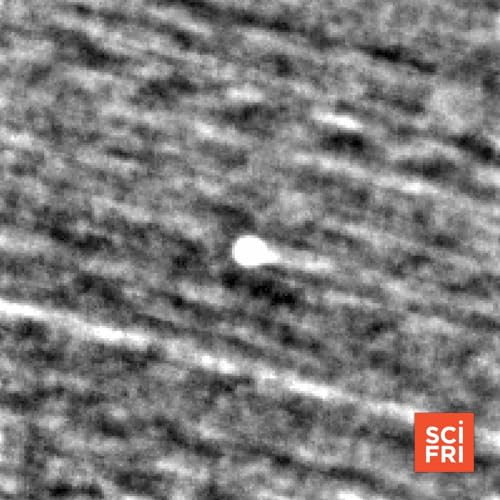
    This year, comet 3I/Atlas broke into our solar system, but also the zeitgeist. This dirty snowball is a visitor from another solar system, and it’s only the third interstellar object we’ve ever spotted. And today, it's closer to us than ever before—just 170 million miles away.

    Astronomy experts Stefanie Milam and Hakeem Oluseyi join Host Flora Lichtman to dish about 3I/ATLAS and how it captured the spotlight in a way that maybe no other big hunk of rock ever has.

    Plus, the sun is setting on the ISS, and the plan is to eventually crash it into the ocean. But wouldn’t it be cooler to send it into deep space instead? A listener pleads his case.

    Guests: Dr. Stefanie Milam is an astrochemist at NASA and a project scientist for the James Webb Space Telescope. She studies comets and interstellar objects.

    Dr. Hakeem Oluseyi is an astrophysicist and CEO of the Astronomical Society of the Pacific.

    Transcripts for each episode are available within 1-3 days at sciencefriday.com.

    Subscribe to this podcast. Plus, to stay updated on all things science, sign up for Science Friday's newsletters.

    Voir plus Voir moins
    19 min
  • ‘Fire Amoeba’ Likes It Hot, And A Faraway Lava Planet
    Dec 18 2025

    While on a sampling trip in California’s Lassen Volcanic National Park, researchers stopped to sample a rather boring stream on their hike to Boiling Springs Lake. But when they incubated that water sample back in the lab, they discovered an amoeba that could still move and divide at 145 F, a new record for a eukaryotic cell. Microbiologist Angela Oliverio joins Host Flora Lichtman to describe the “fire amoeba,” Incendiamoeba cascadensis.

    Plus, planetary scientist Johanna Teske takes us to exoplanet TOI-561b, a far-off “wet lava ball” which was recently observed by the James Webb Space Telescope. Researchers believe that the planet has the strongest evidence yet of an atmosphere on a rocky planet outside our solar system.

    Guests:
    Dr. Angela Oliverio is an assistant professor in the department of biology at Syracuse University.
    Dr. Johanna Teske is a staff scientist at Carnegie Science Earth and Planets Laboratory in Washington, D.C.

    Transcripts for each episode are available within 1-3 days at sciencefriday.com.

    Subscribe to this podcast. Plus, to stay updated on all things science, sign up for Science Friday's newsletters.

    Voir plus Voir moins
    18 min
  • What’s The Reality Behind The Humanoid Robot Hype?
    Dec 17 2025

    Videos of humanoid robots dancing, doing cartwheels, putting clothes in a washing machine, and serving drinks are all over social media. And tech CEOs are telling us to prepare for the forthcoming humanoid army that’s going to totally change our lives for the better.

    But what’s real? Where are we with this technology? Are these humanoids robots ready to take washing the dishes off our plates, or work beside us in warehouses?

    Tech journalist James Vincent became an expert on the subject when he toured humanoid robot factories and rubbed shoulders with robots themselves for a feature story he wrote for Harper’s Magazine. He joins Host Flora Lichtman with perspective on the hype.

    Guest: James Vincent is a journalist who’s written for The Verge and The Guardian, and author of the book Beyond Measure: The Hidden History of Measurement.

    Transcripts for each episode are available within 1-3 days at sciencefriday.com.

    Subscribe to this podcast. Plus, to stay updated on all things science, sign up for Science Friday's newsletters.

    Voir plus Voir moins
    12 min
  • 'Just' A Blue Jay? Don't Overlook These Magnificent Common Birds
    Dec 16 2025

    It’s that time of year: the Christmas Bird Count, when birders go out in flocks to record all the birds they see in a single day. The data collected during this annual tradition gets compiled by the National Audubon Society, and helps scientists understand bird population trends across the Americas.

    If you participate in the bird count, chances are you’ll see a lot of the same birds you’d see any other day of the year—think sparrows, blue jays, blackbirds, cardinals. But that doesn’t make them any less special. So this year we’re turning our binoculars on a few (wrongfully) overlooked common birds.

    Producer Kathleen Davis talks with two of our favorite birders, author and illustrator Rosemary Mosco, and conservation scientist Corina Newsome, to share some surprising facts about birds that don’t often make it to the top of pecking order.

    Guests:
    Rosemary Mosco is an author, illustrator, and speaker whose work connects people with the natural world.
    Corina Newsome is a birder and conservation scientist at the National Wildlife Federation, based in Atlanta, Georgia.

    Transcripts for each episode are available within 1-3 days at sciencefriday.com.

    Subscribe to this podcast. Plus, to stay updated on all things science, sign up for Science Friday's newsletters.

    Voir plus Voir moins
    18 min
  • Can We Just Throw Our Plastic Garbage Into A Volcano?
    Dec 15 2025

    It’s winter, and the SciFri team is already dreaming of warmer weather. How about a mind vacation to one of the hottest places on earth, an erupting volcano? Tamsin Mather has trekked to volcanoes in Chile, Guatemala, Italy, and beyond to learn their secrets. She joins Host Flora Lichtman to field your burning volcano questions, like what’s the deal with glass shards that look like hairballs?

    Guest: Dr. Tamsin Mather is a professor of Earth sciences at the University of Oxford in the UK.

    Transcripts for each episode are available within 1-3 days at sciencefriday.com.

    Subscribe to this podcast. Plus, to stay updated on all things science, sign up for Science Friday's newsletters.

    Voir plus Voir moins
    17 min
  • How Did Ancient Humans Use The Acoustics Of Spaces Like Caves?
    Dec 12 2025

    The sound of a choir performing in a cathedral is iconic for a reason. It’s this beautiful human experience: being side-by-side with other people, feeling the sound vibrate through you, reverberating around the space.

    But how long has that been a part of our culture? And what role did sound play in the lives of people who lived during the Ice Age or the Stone Age? That’s the focus of a growing field of archaeology called archaeoacoustics, where researchers use the scientific tools of today to investigate the role of sound and music in the past.

    To learn more, Host Flora Lichtman is joined by Margarita Díaz-Andreu, principal investigator of the Art Soundscapes project, and Rupert Till, head of the department of humanities at the University of Huddersfield in the UK.

    Guests: Dr. Margarita Díaz-Andreu is an ICREA professor at the University of Barcelona in Spain and principal investigator of the Art Soundscapes project.
    Dr. Rupert Till is a professor of music and head of the department humanities at the University of Huddersfield in the UK.

    Transcripts for each episode are available within 1-3 days at sciencefriday.com.

    Subscribe to this podcast. Plus, to stay updated on all things science, sign up for Science Friday's newsletters.

    Voir plus Voir moins
    19 min
  • What The Sounds Of Melting Glaciers Can Tell Us
    Dec 11 2025

    As the planet warms, the world’s glaciers are melting faster than snow can replenish the ice. That has implications for sea level rise, ocean currents, and global weather patterns. But collecting data at the edge of a melting glacier can be risky.

    Glaciologist Erin Pettit and her colleagues are listening to the sounds melting glaciers make—from the sizzling of trapped air bubbles bursting, to the deep rumbles of underwater calving of icebergs. She joins Host Flora Lichtman to share some glacial sounds, and describe the multi-stage robot tools she uses to monitor melting ice.

    Guest: Dr. Erin Pettit is a professor of geophysics and glaciology at Oregon State University.

    Transcripts for each episode are available within 1-3 days at sciencefriday.com.

    Subscribe to this podcast. Plus, to stay updated on all things science, sign up for Science Friday's newsletters.

    Voir plus Voir moins
    18 min
  • How A Fringe Idea Led To Lifesaving Cancer Treatments
    Dec 10 2025

    In cancer research, the “seed and soil” hypothesis posits that the tumor is like a seed of misbehaving cells taking root in the body. Whether it grows—and where it grows—depends on the conditions, or soil. Since this hypothesis was proposed more than 100 years ago, most research and treatments have focused on the seed, or tumor.

    For nearly 50 years, Rakesh Jain has been studying the soil. But in a seed-focused field, his work was seen as wasteful and radical. Now, that very same research has led to seven FDA-approved treatments for diseases including lung and liver cancer, and earned him a National Medal of Science in 2016. Host Flora Lichtman talks with Jain about how his fringe idea led to lifesaving cancer treatments.

    Guest: Dr. Rakesh K. Jain studies the biology of tumors at Harvard Medical School and Massachusetts General Hospital as a professor of radiation oncology.

    Transcripts for each episode are available within 1-3 days at sciencefriday.com.

    Subscribe to this podcast. Plus, to stay updated on all things science, sign up for Science Friday's newsletters.

    Voir plus Voir moins
    30 min