Épisodes

  • From Lab Reject To Climate Hero: Marselan
    Mar 12 2026

    Send a Text Message to The Kosher Terroir

    What if the grape built for our warming world was created in a French lab in 1961, forgotten for decades, then reborn as a Mediterranean powerhouse? We follow Marcellan’s improbable arc—from a small-berry “failure” to a climate-ready red redefining terroir across continents—and taste why winemakers now swear by its color, balance, and velvet tannins.

    We start with the origin story at INRA in Languedoc, where Cabernet Sauvignon met Grenache on purpose. The result slept through the age of high-yield table wine, only to shine in the 1990s shift toward concentration and site expression. Late budding, heat and drought tolerance, loose clusters, and disease resistance turned heads as extreme seasons became the norm. Even Bordeaux, guardian of tradition, opened its rulebook in 2021 to allow limited plantings and blends of Marselan.

    From there, the journey widens. In humid Brazil and Uruguay, Marcellan’s thick skins shrug off rot; in Arizona and warm pockets of California, it holds freshness where others fade. China emerges as a breakout: high-altitude Ningxia coaxes glossy, aromatic, medal-winning Marselans that sidestep the green edges often seen in Cabernet. Then we head home to Israel, where the altitude in the Upper Galilee and Golan Heights cools the nights, locks in acidity, and lets basalt and limestone speak. Recanati’s pioneering single-varietal bottlings and blending prowess help set a new kosher benchmark, with major wineries and boutique producers now exploring site-driven expressions from Judean Hills to the Negev.

    We guide a sensory walk-through—inky color with a vivid magenta rim, blackcurrant and cassis meeting red cherry and spice, supple tannins that frame rather than fight—and share why Marselan excels solo, in rosé, and as the mid-palate “glue” in Mediterranean blends. Finally, we pair it at the table: slow-roasted lamb with rosemary, charred ribeye, Shabbat cholent, roasted eggplant with tahini, wild mushroom ragù, and aged kosher cheeses that polish the finish.

    Ready to taste the future of Mediterranean wine? Subscribe, share this episode with a wine-loving friend, and leave a review telling us which Marselan you’ll open next.

    Support the show

    www.TheKosherTerroir.com
    +972-58-731-1567
    +1212-999-4444
    TheKosherTerroir@gmail.com
    Link to Join “The Kosher Terroir” WhatsApp Chat
    https://chat.whatsapp.com/EHmgm2u5lQW9VMzhnoM7C9
    Thursdays 6:30pm Eastern Time on the NSN Network and the NSN App

    Voir plus Voir moins
    33 min
  • 1st Time Tasting Olive Oil with Elk
    Mar 5 2026

    Send a Text Message to The Kosher Terroir

    We sat down with our friend Elk and Yossi Polak, CEO of Meshik Achiya, to explore how Shiloh’s ancient limestone hills shape extra virgin olive oil just as clearly as terroir shapes wine. With a tasting flight on the table, we learned the craft from the inside out—why you warm a blue cup in your palm, how stripaggio unlocks aroma, and what that peppery cough really means about polyphenols, freshness, and quality.

    Yossi walked us through five distinct expressions, from Picual’s fresh-cut herb profile to the bolder Souri and a chef-driven blend that balances fruitiness, bitterness, and pungency. Along the way, we talked pairings that make weeknights sing—delicate oils finishing fish, greener styles brightening roasted vegetables, peppery oils lifting lentils and steak—and why green apple, not bread, is the palate cleanser that keeps flavors honest. If you love wine vocabulary, you’ll feel right at home here: acidity, balance, structure, and length all show up in oil, too.

    Beyond tasting notes, this conversation is rooted in place and people. Shiloh’s high elevation, rocky limestone soils, and mountain winds have nurtured vines and olives for millennia, and that history flows into modern presses and award-winning bottles. Yossi shares how the latest harvest collided with war, how one farmer saved the crop while others served, and why their 600-ton annual production still stays mostly in Israel. We also spotlight a chef who built a restaurant around Picual, sending diners home with a small tin of Shiloh’s liquid gold.

    Come learn a new skill, rethink your pantry, and taste a landscape. If this journey sharpened your appetite, tap follow, share with a friend who loves good oil, and leave a quick review telling us your favorite variety and how you use it at home.

    Support the show

    www.TheKosherTerroir.com
    +972-58-731-1567
    +1212-999-4444
    TheKosherTerroir@gmail.com
    Link to Join “The Kosher Terroir” WhatsApp Chat
    https://chat.whatsapp.com/EHmgm2u5lQW9VMzhnoM7C9
    Thursdays 6:30pm Eastern Time on the NSN Network and the NSN App

    Voir plus Voir moins
    30 min
  • V'Nahafoch Hu Purim 2026
    Feb 26 2026

    Send a Text Message to The Kosher Terroir

    From Jerusalem on the cusp of Purim, we share a clear, no-nonsense guide to celebrating responsibly—hydration, food, real rest, and zero driving—then follow the holiday’s deeper current: turning fear into courage and surface into substance.

    Our tour begins with wines that delight in misdirection to reveal a truer center. Eli Shiran blends Carignan, Petite Sirah, and Petit Verdot from distant Israeli terroirs, a floral nose opening into dark spice—a hidden map of the land in a single bottle. The Pinto family rewrites Negev dogma with a GSM that tastes like a breeze, not a furnace, leveraging desert nights to preserve lift and energy. Winemaker Yaakov Auryah pulls off a quiet miracle with Light from Darkness: pale juice pressed from red skins that drinks like a savory, structured red, proof that essence can shine through the shell.

    Across the ocean, Ernie Weir of Hagafen invites us over a bridge he built decades ago, when “kosher” meant sweet in most minds. Rosso Hagafen looks Napa-bold yet dances with Sangiovese bite, a Super Tuscan spirit in California dress—adaptable on the surface, anchored within. We close in Shiloh with Adino, a warrior wine that pours black as armor and moves like silk, reminding us that true strength is refined and humane.

    Threaded through these stories is a living Purim: missiles on maps, stillness between sirens, and a people choosing to plant, ferment, and share. Drinking becomes an act of future-making, a vow that vineyards outlast threats. If this journey moved you, tap follow, share with a friend who loves wine with a story, and leave a review with the bottle that surprised you most.

    Support the show

    www.TheKosherTerroir.com
    +972-58-731-1567
    +1212-999-4444
    TheKosherTerroir@gmail.com
    Link to Join “The Kosher Terroir” WhatsApp Chat
    https://chat.whatsapp.com/EHmgm2u5lQW9VMzhnoM7C9
    Thursdays 6:30pm Eastern Time on the NSN Network and the NSN App

    Voir plus Voir moins
    27 min
  • Practical Guide To Real Wine Tasting- Part Two
    Feb 19 2026

    Send a Text Message to The Kosher Terroir

    We take you on a fast, flavorful tour of terroir—where soil, climate, and human choices turn grapes into recordings of place and time—and show you how to hear the song each wine is singing. Along the way, we decode labels, separate grape character from winemaking technique, and build a practical tasting vocabulary you can use the next time you open a bottle.

    We start with whites and clear the fog around Chardonnay, contrasting Chablis’ steel and oyster-shell bite with buttery, oak-kissed styles shaped by malolactic fermentation. Then we sharpen our senses with Sauvignon Blanc’s green pyrazines—gooseberry, jalapeño, flint—and give Riesling its due, from razor-dry citrus to that coveted petrol note. Rosé gets a serious treatment too: direct press from Provence for pale, saline refreshment versus richer, tannic saignée built to handle real food.

    On the red side, we map the two poles: Burgundy’s Pinot Noir, delicate in color yet fierce in acidity and earth, and Bordeaux’s Cabernet Sauvignon, all tannic architecture, blackcurrant, and graphite, with Merlot adding plush mid-palate flesh. Warm-climate champions step in—Syrah toggling between jammy chocolate and savory smoke, Grenache with strawberry candy and white pepper, Mourvèdre’s leathery depth, and old-vine Carignan’s surprising high acid and herbal bite. Through guided white and red flights, we teach you to read color, track aroma, locate tannins, and feel texture from skim milk to heavy cream.

    Then the bubbles. We compare tank-method freshness to traditional-method depth, explain how lees aging creates brioche and hazelnut, and reveal why late disgorgement can taste paradoxically younger. We close on dessert wines with a new lens: noble rot’s saffron and honey, ice wine’s pure apricot beam, late-harvest balance, and Israeli innovation, where skin contact gives sweet wines a tannic grip that pairs with savory dishes.

    Ready to train your palate and trust your own nose? Hit play, pour something new, and taste the story. If you enjoy the show, subscribe, share with a friend, and leave a quick review—what flavor surprised you most?

    Support the show

    www.TheKosherTerroir.com
    +972-58-731-1567
    +1212-999-4444
    TheKosherTerroir@gmail.com
    Link to Join “The Kosher Terroir” WhatsApp Chat
    https://chat.whatsapp.com/EHmgm2u5lQW9VMzhnoM7C9
    Thursdays 6:30pm Eastern Time on the NSN Network and the NSN App

    Voir plus Voir moins
    42 min
  • Practical Guide To Real Wine Tasting- Part One
    Feb 12 2026

    Send a Text Message to The Kosher Terroir

    Ever wonder why the same wine tastes flat one night and thrilling the next? We slow the pace, strip out the snobbery, and show how small choices—rim thickness, bowl shape, headspace, and temperature—unlock a bottle’s soul. From the first quiet nose to the final echo of the finish, we walk through a clear, repeatable method that turns drinking into true tasting.

    Then we correct serving myths. Fridge-cold whites go numb; let them wake at 50°F. Modern “room temperature” cooks reds; a short chill to 60–65°F tightens tannins and brightens fruit. We demo a clean foil cut below the drip ring, the silent cork pull that preserves aromatics, and the ah-so save for fragile, decades-old corks.

    Scent leads taste, so we map it. Log a first nose, swirl to release esters. Then read the layers—primary fruit and flowers, secondary notes from yeast and oak, and tertiary complexity from age. In the mouth, we separate fruitiness from sweetness, use the jawline “drool test” for acidity, feel tannin as texture, gauge body from skim to cream, and time the finish for quality.

    We show that ritual isn’t pretension, it’s attention. Give the wine space, air, and patience, and it will tell you where it’s from and what the season gave. If this helped you taste with clarity, please subscribe, share it with a friend who loves wine, and leave a quick review to help others find the show. What part of your ritual will you change first?

    Support the show

    www.TheKosherTerroir.com
    +972-58-731-1567
    +1212-999-4444
    TheKosherTerroir@gmail.com
    Link to Join “The Kosher Terroir” WhatsApp Chat
    https://chat.whatsapp.com/EHmgm2u5lQW9VMzhnoM7C9
    Thursdays 6:30pm Eastern Time on the NSN Network and the NSN App

    Voir plus Voir moins
    31 min
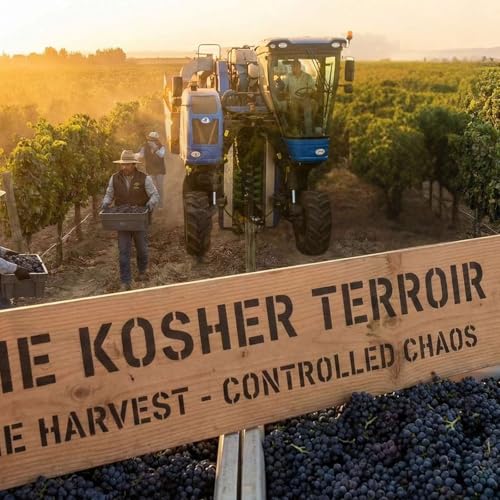
  • The Harvest - Controlled Chaos
    Feb 5 2026

    Send a Text Message to The Kosher Terroir

    Four words change everything: “The seeds are brown.” From that moment, we trade weather apps and pruning shears for clipboards, tank maps, and a race against heat, rot, and the calendar. We walk you through the split-second calls that can turn a year of work into greatness or disappointment, and why kosher winemaking adds a layer of choreography few outside the cellar ever see.

    We start at veraison, when grapes shift from camouflage to sugar magnets, and the whole world wants a bite—boars smashing fences, jackals chewing irrigation, and starlings pecking holes that invite yellow jackets and acetic bacteria. With pre-harvest intervals blocking sprays, the only defenses left are timing and tough choices. Lab numbers guide us, but they don’t outrun psychological immaturity, so we lean on sensory skills: pulp release, skin chew, and seed lignification. When the data and the palate finally align, the call goes out, and the vineyard becomes a night city of headlamps, shears, and humming harvesters.

    Then comes the crush pad gauntlet: holiday shutdowns stacking trucks down the road, hot fruit accelerating oxidation and wild ferment, and triage that prioritizes fragile whites. We pull back the curtain on cold rooms, flash chilling, and the precise dance that begins once juice appears and kosher law hands control to Jewish operators.

    Every bottle holds this tension: science and intuition, speed and patience. If you’ve ever wondered how timing, temperature, and faith shape what’s in your glass, subscribe, share with a wine lover, and leave a review.

    Support the show

    www.TheKosherTerroir.com
    +972-58-731-1567
    +1212-999-4444
    TheKosherTerroir@gmail.com
    Link to Join “The Kosher Terroir” WhatsApp Chat
    https://chat.whatsapp.com/EHmgm2u5lQW9VMzhnoM7C9
    Thursdays 6:30pm Eastern Time on the NSN Network and the NSN App

    Voir plus Voir moins
    30 min
  • Blueprint of a Vineyard - Step by Step Part 2
    Jan 29 2026

    Send a Text Message to The Kosher Terroir

    Welcome back to The Kosher Terroir –Vineyard Creation Step by Step Part 2

    Last week we stood on a bare, scrubby hillside. There was nothing here but potential and risk. Now? Look around.

    • We analyzed the Macro-Terroir, hunting for that perfect intersection of altitude and latitude where the nights are cool enough to save the acid.
    • We dug into the Soil, choosing the drainage of gravel or the muscle of clay, understanding that we aren't just planting in dirt—we are planting in a chemical pantry.
    • We engineered the Genetics, welding the engine of a drought-resistant rootstock to the chassis of a specific Cabernet clone, creating a biological machine designed for this exact hill.
    • We built the Skeleton, twisting the trellis to hide the fruit from the blistering afternoon sun while catching the gentle morning rays.

    The Vineyard is built. The vines are growing. Now, the game changes. We move on from Architecture to Management.

    We take you from canopy surgery that strips leaves on the cool east side to protective shade on the scorching west, cutting disease risk and burning off green, vegetal notes. Then we defend the ripening fruit: clever decoys, thunderous propane cannons, and the elegant terror of falconry.

    Water becomes strategy, not charity. We talk root training for resilience and regulated deficit irrigation that nudges vines from leafy comfort into focused ripening. With NDVI drone maps, variable rate irrigation, sap flow sensors, and dendrometers, the vineyard turns into a living dashboard. But data is only as good as the judgment behind it, which is where the real drama lives: the agronomist who wants health, the grower who needs tonnage, and the winemaker who chases intensity. Their standoff peaks at green harvest—cutting half the fruit to raise the rest—until aligned contracts and a decade of block‑by‑block archives turn conflict into craft.

    We also open a window into kosher viticulture through Orla, the three‑year wait that forces patience and humility. Hearing how fruit is cut and left to return to the soil reframes ownership and time. When year four arrives, the berries tell a new story—browned seeds, firm skins, blackcurrant and spice—signaling that the blueprint has come alive and harvest can begin. This journey blends vineyard management, precision agriculture, and faith into one clear takeaway: great wine is born where light, water, protection, and people finally agree.

    If this deep dive into canopy management, bird control, smart irrigation, and the human side of winemaking resonates, follow the show, share it with a friend, and leave a quick review so more wine lovers can find us.

    For more Information:
    ANAVA VINEYARDS
    Nadav & Moriah Jesselson
    Address: 7 Hacharuv St. Nechusah, 9988300 Israel
    Email: info@anavavineyards.com
    Questions or to Visit: Racheli Arieli +972(0)50-717-5479

    Support the show

    www.TheKosherTerroir.com
    +972-58-731-1567
    +1212-999-4444
    TheKosherTerroir@gmail.com
    Link to Join “The Kosher Terroir” WhatsApp Chat
    https://chat.whatsapp.com/EHmgm2u5lQW9VMzhnoM7C9
    Thursdays 6:30pm Eastern Time on the NSN Network and the NSN App

    Voir plus Voir moins
    30 min
  • Blueprint of a Vineyard - Step by Step Part 1
    Jan 22 2026

    Send a Text Message to The Kosher Terroir

    Start with a blank hillside and imagine building flavor from the ground up. That’s our approach as we step into the vineyard and treat terroir like architecture—every choice about climate, soil, genetics, and geometry locked in for decades, with no cellar fix to save a bad foundation. With the added weight of Orla delaying fruit for years, kosher wine demands that we get the blueprint right before a single root touches the soil.

    We zoom out to Macro Terroir and translate climate into chemistry using growing degree days, altitude, and the diurnal swing that preserves acidity. Then we let the landscape do its work: slopes for drainage and airflow, aspects that dial power or finesse, and coastal influence and wind that can both protect and stress. From there, the ground beneath our boots becomes a toolkit. Soil physics drives deep rooting and concentration; soil chemistry fine-tunes metabolism. Limestone’s calcium preserves brightness by blocking potassium uptake. Clay lays down muscle and tannin. Volcanic substrates drain fast and often yield savory tension and a hint of salinity.

    Genetics turn the site into a tailored machine. Rootstocks become our transmission: 1103P for drought, 41B for active limestone, SO4 to restrain wild vigor. Scion clones shape voice and texture. We’re blending in the field long before we blend in the cellar. Finally, we set north–south rows for even light, tight or wide spacing to manage competition and mechanization, and trellis decisions that create microclimates.

    By the end, you’ll see why great wine is engineered, not simply grown. If you’re a wine lover, student, or just a curious drinker, this is a masterclass in how altitude, aspect, soil, rootstock, and trellis design shape acidity, tannin, aromatics, and longevity—especially vital for kosher wineries operating under unique timelines and constraints. Enjoy the blueprint, then join us next week as we manage the canopy and fine-tune the skin.

    If this deep dive gave you a new way to see the vineyard, subscribe, share the show with a wine-loving friend, and leave a review telling us which vineyard choice you’d optimize first.

    Support the show

    www.TheKosherTerroir.com
    +972-58-731-1567
    +1212-999-4444
    TheKosherTerroir@gmail.com
    Link to Join “The Kosher Terroir” WhatsApp Chat
    https://chat.whatsapp.com/EHmgm2u5lQW9VMzhnoM7C9
    Thursdays 6:30pm Eastern Time on the NSN Network and the NSN App

    Voir plus Voir moins
    32 min