Épisodes

  • Escaping B2B SaaS Dashboard Hell with Ray Rike & Dave Kellogg - Ep 70
    Dec 8 2025
    If you feel like your pipeline is broken, your CAC is bloated, and your dashboards are lying to you… you’re FAR from the only one. Joining the show are the Metrics Brothers, Ray Rike and Dave Kellogg! Ray is the Founder & Chief Evangelism Officer of Benchmarkit, Host of Metrics That Measure Up, a Founding Member of the SaaS Metrics Standards Board, and is an LP at Stage 2 Capital.Dave co-hosts The Metrics Brothers Podcast, writes the incomparable ‘Kellblog’, and is an EIR at Balderton Capital.Dave and Ray join co-hosts Matt Amundson and Craig Rosenberg to discuss the importance of brand investment in the AI age, overcoming the pipeline generation crisis in B2B SaaS, and how GTM leaders can drain the “metrics swamp.”Plus, Dave divulges which SaaS metrics he finds loathsome and Ray shares his unique method for calculating Marketing CAC.Also, Craig airs an ambrosia-related grievance, Matt unveils an old school tactic he’s still using, and Producer Sam falsely announces an exclusive scoop on The Transaction. Critical TakeawaysTreat answer engine optimization (AEO) as a real channel, not a buzzword. As answer engines and generative AI search tools aggregate from dozens of sources but surface only a few. Meaning that you either show up in the top 2-3 responses or you effectively disappear. Teams should build use-case-level content, distribute it widely, and make it novel enough that answer engines want to quote it, while also building their own audience (newsletter, podcast, communities) so they’re not fully dependent on Google’s (or ChatGPT’s) algorithm.Inbound hand-raisers are a much better primary brand KPI than ‘share of voice’ measurements. Watch what percent of qualified pipeline and new ARR comes from inbound hand-raisers. GTM leaders should explicitly target a higher share of pipeline from inbound, track its close rates and ACVs versus outbound, and use that to justify continued brand and content investment.Focus more on the number of opportunities and cost per opportunity, not just total pipe. Revenue teams should watch both volume and dollars by source, so they can see, for example, whether brand-driven inbound is generating fewer but much better-quality opportunities and adjust their mix and SLAs accordingly.If you want overall efficiency, use Marketing CAC (sales + marketing over new ARR); if you want to compare programs, use pipeline generated divided by demand-gen program spend only. GTM leaders should keep CAC reserved for the full go-to-market machine, then use pipe-to-spend for campaign and channel decisions, excluding fixed headcount so they understand the ROI of the next incremental dollar.Sales and marketing leaders must acknowledge the current “pipeline crisis” in B2B SaaS, characterized by insufficient pipeline coverage and declining efficiency. Teams should track both the volume and cost of pipeline generated, and forecast pipeline coverage across all sources (marketing, SDRs, alliances, PLG, etc.) early and often.Aligning on metrics is a long-term, iterative process that requires persistence and cross-functional buy-in. Chapters00:00 Episode Preview01:48 Introducing Ray Rike and Dave Kellogg, The Metrics Brothers05:40 How GTM Leaders can Escape from their ‘Dashboard Hell’11:08 Which Metrics Matter to Your Board18:37 Overcoming The B2B SaaS Pipeline Crisis24:38 The Difference Between Search Engine Optimization & Answer Engine Optimization29:52 Why Brand Still Matters in the age of AI & How to Measure Brand45:21 Why B2B Marketers Need to Measure both Opportunity Count & Cost Per Opportunity47:38 Why Pipeline Coverage Ratio is so Critical for B2B SaaS Startups51:21 Examining Tantalus & The Cultural Impact of Ambrosia in All of Its FormsJoin our Newsletter to get bonus content & never miss an episode: https://thetransaction.substack.com/Epic Quotes“The faster growing companies actually are spending more on brand than on demand.” - Ray Rike“ My least favorite SaaS metric? Rolling four-quarter pipeline.” - Dave Kellogg“ Branding is marketing without a call to action.” - Dave KelloggConnect with Ray & DaveRay’s LinkedIn: https://www.linkedin.com/in/rayrike/ Dave’s LinkedIn: https://www.linkedin.com/in/kelloggdave/ The Metrics Brother Podcast: https://podcasts.apple.com/us/podcast/the-metrics-brothers-fka-saas-talk/id1687214133 Metrics that Measure Up Podcast: https://podcasts.apple.com/us/podcast/metrics-that-measure-up/id1525571613 Benchmarkit Website: https://www.benchmarkit.ai/ Dave’s Blog: https://kellblog.com/ Balderton Capital: https://www.balderton.com/ ShoutoutsRay’s first Episode on The Transaction: https://open.substack.com/pub/thetransaction/p/harnessing-the-magic-of-metrics-with Avinash Kaushik: https://www.linkedin.com/in/akaushik/ Avinash’s Newsletter: https://www.kaushik.net/avinash/marketing-analytics-intersect-newsletter/ Avinash’s SEO vs AEO article: https://www.kaushik.net/avinash/...
    Voir plus Voir moins
    56 min
  • Account Management is Your Startup’s Growth Department with Alex Raymond, Founder of AMplify - Ep 69
    Nov 18 2025
    With so much attention within the go-to-market world paid to marketing and sales, account management, which is arguably just as important, rarely gets its due.Alex Raymond is the Founder of AMplify and Host of the Account Management Secrets podcast. Alex joins co-hosts Matt Amundson and Craig Rosenberg for the first major discussion on the podcast of account management and its crucial role in growing revenue and overall company value for SaaS vendors. Plus, Alex breaks down how CROs should organize their team, what types of people make for the best account managers, and why in-depth stakeholder mapping of customer accounts is so critical to growing revenue. Also, Craig mixes up country singers, Matt discovers a great path, and Producer Sam compares someone’s comment to military ordinance. Critical TakeawaysAccount management should be positioned as the "growth department" of your company, responsible for driving profitable revenue from existing customers. Shift the mindset from reactive support to proactive growth, ensuring account managers are empowered and resourced to expand accounts, not just retain them.Start building account management capabilities early, even before you hit $10M in revenue, so you can learn from customers, reduce churn, and set the foundation for compounding growth. Don’t wait until churn or customer growth becomes a problem you’re hearing about in your board meetings.Ambiguity about who owns customer growth leads to missed opportunities. Great account managers are creative problem solvers with strong business sense, often with consulting backgrounds. They should be able to see the big picture, ask insightful questions, and build long-term relationships, rather than just focusing on renewals or incremental expansions. PS: former consultants make for great AMs.Build Robust Stakeholder Maps and Engage at Multiple Levels.Vendors need to actually do QBRs (Quarterly Business Reviews). Go talk to your darn customers.Chapters00:00 - Episode Preview01:00 - Trouble with Tickets03:44 - Introducing Alex Raymond, Founder of AMplify05:59 - The Role of Account Management in The Growth of B2B Startups12:27 - The Power of Exponential Thinking for Entrepreneurs16:01 - A Quick Sidebar about Business Events and Dining in Boulder19:31 - Why Account Management is a Revenue Function & When Your Startup Needs Account Managers29:15 - Where Account Management Should Fit in Your Revenue Team’s Organizational Design 36:26 - What To Look for When Hiring Great Account Managers42:03 - When Account Managers Should Be Brought into New Deals49:13 - Developing Complex Stakeholder Maps for Customer AccountsJoin our Newsletter to never miss an episode & get bonus content: https://thetransaction.substack.com/Epic Quotes“ The CRO should be managing the entirety of their revenue cycle, not just some slice of it.” - Alex Raymond“ Land and expand has never been more important than it is right now.” - Alex Raymond“ I just never, ever want to be a CEO.” - Matt AmundsonConnect with AlexLinkedIn: https://www.linkedin.com/in/afraymond/ Website: https://www.amplifyam.com/ Podcast: https://www.amplifyam.com/podcast ShoutoutsCraig’s Episode on Alex’s Podcast: https://www.amplifyam.com/account-management-secrets/why-post-sale-is-still-broken-and-what-to-do-about-it-craig-rosenberg Mike Rapp: https://www.linkedin.com/in/michaelrapp-intelepeer/ Alex’s Episode with Mike Rapp: https://www.amplifyam.com/account-management-secrets/serve-retain-sell-how-account-management-builds-revenue-leaders-mike-rapp Dr. Benjamin Hardy: https://www.linkedin.com/in/drbenjaminhardy/ Conscious Entrepreneur Summit: https://consciousentrepreneur.us/ The Science of Scaling by Dr. Benjamin Hardy & Blake Erickson: https://a.co/d/eTUlHeV 10x is Easier Than 2x by Dan Sullivan & Dr. Benjamin Hardy: https://a.co/d/1kf8tSe Love the show? Give us a shoutout on LinkedIn and tell us what you loved!
    Voir plus Voir moins
    59 min
  • Agentic AI VS ABM & AI Pricing Explained with Gabe Larsen, Chief Revenue Officer of Signals - Ep 68
    Oct 31 2025

    The immense hype around AI agents is positively palpable, but is there value in adopting an army of AI minions today or is the promise of agentic AI still fictitious pulp?


    Here to help illuminate and elucidate the role of AI agents is Gabe Larsen, the Chief Revenue Officer at Signals and the former Chief Marketing Officer of Kustomer.


    Gabe joins co-hosts Matt Amundson and Craig Rosenberg for a deep dive into how agentic AI coupled with signal-based marketing succeeds in go to market where Account-Based Marketing failed in its execution. We get into whether startups should build or buy the tools they need, which new metrics your board might be looking for, and what customers really want to hear about from vendors.


    Plus, Gabe bids goodbye to the age of software tools while welcoming in the AI-powered teammate economy.


    Also, Craig vehemently denies accusations of scowling, Matt shares his preferences on the intricacies of the English language, and Producer Sam asks a dumb question.


    Critical Takeaways

    • Agentic AI tools need to provide omni-channel execution in order to offer real value and impact to sales and marketing teams.
    • The combination of Signals + Agents outperforms Account-Based Marketing in the way it has been traditionally deployed. However, the core ideas of ABM, such as Ideal Customer Profiles, Target Accounts, Personalization, etc., still hold true. In fact, the advances in AI-powered martech have now made the original promise and vision of ABM possible.
    • In the build vs buy debate, much of what has been built and is being built in-house is far too brittle to accommodate the regular use of a revenue team. You don’t want your whole custom-built workflow to break every time someone makes a minor change to something as small as an email subject line. However, the solutions that are going to succeed and ultimately be bought must be capable of handling the custom needs and workflows of the users. If the available tools are too rigid for customers, then they will look to build their own workarounds, solutions, and eventually, replacement tools.
    • As the “customization economy” takes hold, go-to-market teams should seek vendors that offer flexible, customizable solutions rather than rigid, templatized products. From the vendor side, take note that buyers are gravitating toward platforms that allow them to tailor workflows to their unique needs, and if you fail to provide this flexibility, you will be left behind.
    • Customers crave real guidance from vendors, not just hype about the new features you added. The most successful vendors will be those who offer clear, prescriptive playbooks and best practices (Think HubSpot or Marketo).

    Chapters

    00:00 - Episode Preview

    02:16 - Introducing Gabe Larsen, the Chief Revenue Officer of Signals

    04:53 - Learning The Costly Difference between Michael and Michelle

    09:23 - Catastrophic Sales Kickoff Stories

    14:26 - The Dim Sum Disaster

    17:29 - Why Signals-based Marketing + AI Agents are outperforming Traditional Account-Based Marketing

    26:15 - Builders versus Buyers & Why Tools are Out and Teammates are In

    31:56 - The Role of AI in Modern B2B Marketing

    45:01 - The Future of AI-Powered Workforces

    48:14 - An AI Vendor's Perspective on Pricing for AI Tools & AI Agents


    Sign up for our Newsletter: https://thetransaction.substack.com/


    Epic Quotes

    • “The market’s separating into builders and buyers and I think we’re establishing more buyers.” - Gabe Larsen
    • “ Tools are gone, teammates are in.” - Gabe Larsen
    • “This is the customization economy” - Craig Rosenberg


    Connect with Gabe

    • LinkedIn: https://www.linkedin.com/in/gabelarsen/
    • Signals Website: https://getsignals.ai/


    Shoutouts

    • David Boskovic: https://www.linkedin.com/in/dboskovic/
    • David’s Boskovic’s episode: https://open.substack.com/pub/thetransaction/p/building-an-ai-first-go-to-market


    Love the show? Give us a shoutout on LinkedIn and tell us what you loved!

    Voir plus Voir moins
    56 min
  • Re-Examining Account-Based Marketing in the AI-Powered Era with Davis Potter, CEO of ForgeX - Ep 67
    Oct 17 2025
    The vast majority of companies that think they are running ABM (Account-Based Marketing) are not actually running ABM. Not only that, they wouldn’t recognize a real ABM strategy if one came up and slapped them in the face with a stack of direct mailers.Davis Potter is the CEO & Co-Founder of ForgeX, a research and advisory firm that helps B2B companies modernize their Account-Based Go To Market and AI strategies. Davis joins co-hosts Matt Amundson and Craig Rosenberg for an exploration of the current state of ABM (Account-Based Marketing), what it takes to drive impact of using AI in GTM Execution, and how to right-size the B2B marketing tactics to each account. Also, Craig uses a ‘Matt-ism’, Matt distinguishes cuddling from canoodling, and Producer Sam fixes a problem with his face. Critical TakeawaysThere are three core account-based marketing models: Enterprise ABM (1:1 and 1:few), Growth ABM (1:many at scale), and Deal Acceleration (targeted support for individual opps).Shift from short, one-off marketing campaigns to holistic, always-on programs that run continuously throughout the year. Build a playbook of ABM tactics (e.g., webinars, executive dinners, personalized landing pages, LinkedIn ads) and deploy them based on account tier and industry segment. This enables ongoing engagement and better adapts to complex B2B buying cycles.Select and tier accounts based on informed revenue potential, not just logo desirability or gut feel. Analyze first, second, and third-party signals, as well as customer LTV and microsegments, to prioritize accounts for deeper personalization and resource allocation. For example, reserve direct mail and executive engagement for tier one, while using scalable digital tactics for lower tiers.Unify your target account lists across sales, marketing, and customer success to drive alignment and efficiency. Instead of each function working from separate lists, create a single Go-To-Market account portfolio informed by revenue potential and engagement signals. AI can dramatically accelerate research, content personalization, and account list building, but only if you have a clear strategy first. Many companies are underutilizing AI or using it without a defined goal, leading to mediocre results.Chapters00:00 - Introducing Davis Potter, Founder of ForgeX08:00 - Quick Coldplay Concert Conundrum Recap10:00 - Davis’ first ABM Webinar horror story16:00 - Redefining Account-Based Marketing: Beyond the traditional pyramid18:00 - A new ABM segmentation model24:00 - The case for a unified Go-To-Market account portfolio27:00 - Growth ABM tactics that actually scale31:00 - Where AI fits into an ABM strategy (and where it doesn’t)39:00 - How shadow AI is reshaping GTM45:00 - Reporting, the board deck problem, and the MQL hangover49:00 - What your Revenue Team needs to measure in modern ABM53:00 - Replacing the Market Qualified Lead industrial complexJoin our Newsletter to never miss an episode & get bonus content: https://thetransaction.substack.com/Epic Quotes“One practitioner can't cover 50 accounts and actually leverage one-to-one.” - Davis PotterConnect with DavisLinkedIn: https://www.linkedin.com/in/davispotter62/ ForgeX Website: https://www.forgex.ai/ Revenue Xchange: https://open.spotify.com/show/7v2449do8UGuLAbilezi29?si=1a56c9a9a18d4550 ShoutoutsDemandbaseSangram Vajre: https://www.linkedin.com/in/sangramvajre/Sam McKenna: https://www.linkedin.com/in/samsalesli/ Sam McKenna’s Episode: https://open.substack.com/pub/thetransaction/p/social-selling-secrets-to-supercharge Dan Gottlieb: https://www.linkedin.com/in/danielpgottlieb/ Dan Gottlieb’s Episode: https://open.substack.com/pub/thetransaction/p/triple-t-pov-with-dan-gottlieb?r=3iae7z&utm_campaign=post&utm_medium=web&showWelcomeOnShare=false Kerry Cunningham: https://www.linkedin.com/in/kerrycunningham/ Jon Miller: https://www.linkedin.com/in/jonmiller2/ Jon Miller’s Episode: https://open.substack.com/pub/thetransaction/p/building-trust-and-reputation-in
    Voir plus Voir moins
    55 min
  • The Full Analyst Relations Playbook for SaaS Startups with Rachel Dines - Ep 66
    Sep 30 2025
    Rachel Dines is a B2B Marketing expert and advisor to multiple SaaS platforms, where she provides her specialty in deep tech companies with sales-led go-to-market motions. Rachel also writes a SubStack newsletter called Tech Dropout. Previously, Rachel was VP of Product and Technical Marketing at Chronosphere and a Forrester industry analyst turned product marketing leader. Rachel joins co-hosts Craig Rosenberg and Matt Amundson for a raucous romp through the world of building analyst relationships as a new SaaS vendor, the problem with startups having too many use cases, and why your B2B startup’s first marketing hire should really be a product marketer.Plus, Rachel reveals what happened when she gave a friend some less-than-amazing career advice.Also, Craig reveals his fondness for a certain slightly disparaging epithet, Matt releases his pent-up rage, and Producer Sam vows to make certain edits to the episode. Critical TakeawaysBuilding relationships with industry analysts at research firms, such as Gartner or Forrester, is only getting more important for B2B startups and scale ups. By the way, ‘building a relationship’ in this context is not code for just paying to play; we mean actually fostering real human connections with individual analysts, even before you think about paying a dime for a subscription for their firm.If you want your SaaS startup to show up in things like industry analyst reports and ‘magic quadrants’, start by finding and reviewing the evaluation criteria for those reports, which are publicly available. Bonus tip: try to get involved early when criteria are being set. For the ‘self scout’ of your product against the analyst’s criteria, bring in a few PMs (Product Managers) and SEs (Sales Engineers) to help you do a brutally honest self‑assessment, find weak spots, and see what shifts can be made. SEs are great resources to bring in because they are hyper aware of the critical issues with their own product and can provide clear-eyed insights.Pick one use case, one ICP (Ideal Customer Profile), and one persona to focus your go-to-market strategy on. Trying to be all things to all customers from day one is a recipe for dilution of your brand and burnout. Choosing one target (even if it feels narrow or imperfect) lets you focus your go-to-market resources, refine messaging, and build momentum for your company.Your first marketing hire should be a Product Marketer, not a demand gen specialist. Startups need someone who can define and refine messaging, narrative, positioning, not just pushing leads to sales. Without a clean story, demand gen spends often under‑deliver.With analysts, frequent light engagements, such as updates about new clients, features, saas founders turning over data, build familiarity and trust. Much of what shows up later in evaluations or quotes starts with these small, consistent touchpoints.Chapters00:00 - Episode Preview00:50 - Endearing Terms for The Wonderful People from Massachusetts03:27 - Introducing Rachel Dines, Author & Go-To-Market Advisor (Plus, Former Forrester Analyst)07:24 - A Quick Convo about Data Centers & The Mission Impossible Film Franchise10:24 - Giving Your First Solo Presentation as an Analyst with a Heads Up16:18 - Why Startups Need To Engage The Industry Analysts Early On20:22 - How Startups Should Approach Their Initial Analyst Relations Strategy29:35 - Matt Admits What Grinds His Gears31:23 - What Early Stage Startups Can do to Become Number One in the Magic Quadrant34:08 - Startups Should Start with One Segment, User, and Use Case46:51 - Why Your First Marketing Hire Should be a Product Marketer52:21 - Some not so great B2B Marketing career adviceJoin our Newsletter to never miss an episode & get bonus content: https://thetransaction.substack.com/Epic Quotes“Focus, in the Go-To-Market side especially, is always the greatest Achilles heel of so many startups” - Rachel Dines“Pick a lane and win” - Matt Amundson“I can be bought for tiramisu” - Rachel DinesConnect with RachelLinkedIn: https://www.linkedin.com/in/rdines/ Substack: https://racheldines.substack.com/ Website: https://www.racheldines.com/ How I Hacked the Moon: https://a.co/d/eSYYRWG ShoutoutsScott Mersy: https://www.linkedin.com/in/smersy/ Sam McKenna: https://www.linkedin.com/in/samsalesli/ Sam McKenna’s Episode: https://open.substack.com/pub/thetransaction/p/social-selling-secrets-to-supercharge Mission: Impossible - Rogue Nation (Christopher McQuarrie, 2015)The Studio (Apple TV+)Last Week in AWS (Newsletter): https://www.lastweekinaws.com/ Corey Quinn: https://www.linkedin.com/in/coquinn/ CursorWindsurfLovableChris Degnan: https://www.linkedin.com/in/chris-degnan-524470/ SnowflakeDenise Persson: https://www.linkedin.com/in/denisepersson/ Love the show? Give us a shoutout on LinkedIn and tell us what you loved!
    Voir plus Voir moins
    1 h
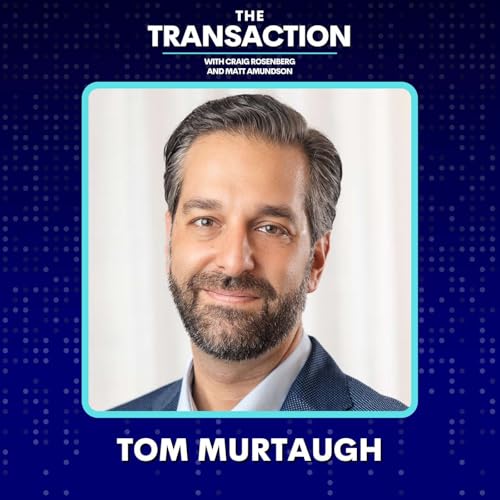
  • Enabling Excellent B2B Sales Teams in the AI Era with Tom Murtaugh, Portfolio Operations Director at Nordic Capital - Ep 65
    Sep 10 2025
    Even with all the newest, shiniest AI tools out there, successful, sustainable B2B sales growth is still built on nailing the basic sales skills.To provide a refresher on those basic B2B sales skills and more, we’re thrilled to introduce Tom Murtaugh, the Portfolio Operations Director at Nordic Capital, a leading sector-specialist private equity firm. Tom joins co-hosts Craig Rosenberg and Matt Amundson to discuss the importance of maintaining deal control, why revenue leaders need to understand the key activities that drive outcomes, and how to get your sales managers up to speed as they become more valuable with the implementation of AI.Plus, Tom helps Craig and Matt perform an autopsy on the failure of the sales enablement movement.Also, Craig once again references TOPO and Matt gets envious of a warm male embrace while also imparting the joys of parenthood.Critical TakeawaysWhat are the handful of activities that have a real impact on moving a deal forward for your company? While most organizations cannot empirically state which activities drive revenue, using modern data tools and call analysis, sales leaders can and should run correlation analyses to pinpoint and scale what top performers do.Sales leaders should be directly involved in late-stage enterprise deals, ensuring there is a clear, actionable joint execution plan for each opportunity. Top-down focus and hands-on deal reviews with sales leaders is critical to exceeding targets, even when the forecast looks grim. This level of engagement cannot be delegated or replaced by process alone.AI can accelerate analysis and experimentation, but it cannot define your core GTM motions or fix broken processes. If you haven’t figured out what works, AI will only amplify confusion. Go-To-Market leaders must first establish and validate the key behaviors and activities that move the needle before layering on automation or analytics. Sustainable revenue growth comes from robust GTM infrastructure, such as processes, platforms, and RevOps, that persist beyond any single CRO or sales leader.Sales enablement programs often fail when led by people without quota-carrying experience, devolving into classroom-style training that sellers reject. Shift to “sales excellence” roles, where former sales leaders who coach reps in the field, ride along on calls, and provide practical, trusted guidance. The most powerful enablement tools are those that let reps learn directly from top performers, such as reviewing Gong calls or shadowing high achievers. Tom shared that new reps who proactively sought out and emulated top sellers ramped faster and performed better. Make it easy for your team to access and learn from real sales conversations, not just static content.Chapters00:00 - Episode Preview03:51 - Introducing Tom Murtaugh, Portfolio Operations Director at Nordic Capital10:09 - How Improving Deal Control Turned Around a Terrible Quarter for Collibra21:02 - Understanding the Key Activities that Really Drive Outcomes in B2B Sales28:21 - Why Training First Line Sales Managers Needs to be a Priority for B2B GTM Leaders42:29 - Why the Sales Enablement Movement Ultimately Failed in Improving B2B Sales Orgs51:21 - The Role of RevOps in Building a Sustainable Infrastructure for the Revenue OrganizationSign up for our Newsletter: https://thetransaction.substack.com/Epic Quotes“Any type of conversational analytics tool is the most powerful enablement tool that's out there right now, and people just need to use it.” - Tom Murtaugh“ Your sales manager is be going to become incredibly, even more important than they are today, because they're going to be the ones that even with a little bit of change, are going to have a lot of leverage over a lot of people.” - Tom MurtaughConnect with TomLinkedIn: https://www.linkedin.com/in/tom-murtaugh-1729b09/ Nordic Capital Website: https://www.nordiccapital.com/ ShoutoutsAmanda Murtaugh: https://www.linkedin.com/in/amandabuck143/ Ralph Barsi: https://www.linkedin.com/in/ralphbarsi/ Philip CardiNeil Harrington: https://www.linkedin.com/in/neildharrington/ Scott Albro: https://www.linkedin.com/in/scottalbro/ Jeff Goree: https://www.linkedin.com/in/jeffgoree/ Andy Byrne: https://www.linkedin.com/in/byrneandy/ Michael Hargis: https://www.linkedin.com/in/mhargis/ Pablo Dominguez: https://www.linkedin.com/in/pabtexas/ Echo Valley on Apple TV+ Starring Sydney Sweeney & Julianne Moore (Only rated a 6.3/10 on IMDb)Love the show? Give us a shoutout on LinkedIn and tell us what you loved!
    Voir plus Voir moins
    57 min
  • Solving the Go-To-Market Skills Crisis in B2B Sales with Chris Orlob, CEO of pclub - Ep 64
    Aug 28 2025

    B2B sellers and sales leaders find themselves in the midst of an unprecedented Go-To-Market skills crisis at a time when budgets are shrinking and selling is getting harder.
    Joining the show once again is the inimitable Chris Orlob, CEO at pclub.io, the #1 Skill Transformation Platform for Revenue Teams. Chris joins Co-Hosts Matt Amundson and Craig Rosenberg to dig into where the current sales skills crisis came from, what sales leaders can do to help improve their sales reps’ skill capacity, and why sales reps should start with getting a concrete understanding of a proper discovery process.
    Plus, Chris discusses why B2B sales leaders should implement a skill transformation loop into how they train their sales teams.
    Also, Craig addresses an elephant in the room, Matt bemoans the illegality of ‘hacking darts’ in Foster City, and Sam the Producer laughs at Craig.


    Critical Takeaways

    • Investing only in Sales Process is not enough to help sellers hit their targets, because process only covers what to do. Whereas, Skill capacity doesn't stop at what to do. Skill capacity is what to do, why to do it, and how to do it so that you're building judgment. This way, reps can have audible-ready, rich business conversations that create value for both buyers and customers.
    • When training sales reps on new skills, it’s best to make sure they master one skill before they move on to learning another. This builds skill depth, rather than very shallow skill breadth. Without ensuring competency in one skill before moving on, all you achieve is motion without accomplishment.
    • The first, foundational skill that reps should train on is sales discovery. Having a strong grasp on discovery will help sales reps build stronger additional skillsets. It’s harder to build the other sales skills without having a solid understanding of sales discovery.
    • As companies’ go-to-market motions become increasingly complex, if they don’t address the low skill capacity of their sales team, they incur a growing ‘skill deficit’, which if left unchecked will lead to catastrophic results down the line.


    Chapters

    00:00 - Episode Preview

    02:21 - Introducing Chris Orlob, CEO of pclub.io

    03:33 - An Instructive B2B Sales Story: How to Interact with Procurement Leaders

    08:06 - Craig & The Case of The Bloody-Eyed Business Meeting

    12:19 - The State of the B2B Sales Skills Crisis in Go-To-Market Today

    25:40 - Discovery is the Fundamental Sales Skills Reps Need to Learn

    33:24 - How B2B Companies Should be Approaching Discovery and the Buying Process in Today's Market

    44:25 - Why B2B Sales Leaders Need to Implement a Skill Transformation Loop Into Their Teams' Training


    Join our Newsletter: https://thetransaction.substack.com/


    Epic Quotes

    • “We are in an era of a Go-To-Market skills crisis.” - Chris Orlob
    • “Reps and sellers are drowning in technology, but starving for skills and skill capacity.” - Chris Orlob
    • “AI is not the solution to the skill gap.” - Craig Rosenberg
    • “If they can't build a case for me of how they're going to solve my problem, I don't really want to buy it.” - Matt Amundson


    Connect with Chris

    • LinkedIn: https://www.linkedin.com/in/chrisorlob/
    • pclub.io Website: https://www.pclub.io/
    • Twitter: https://twitter.com/Chris_Orlob


    Shoutouts

    • Chris’s Last Episode on The Transaction: https://thetransactionpod.com/episodes/to-gate-or-not-to-gate-content-with-chris-orlob-the-transaction-ep-005
    • Scott Albro: https://www.linkedin.com/in/scottalbro/
    • Paul Rosenberg: https://www.linkedin.com/in/paul-rosenberg-0970421/
    • Ryan Tibbetts: https://www.linkedin.com/in/ryantibbetts/


    Love the show? Give us a shoutout on LinkedIn and tell us what you loved!


    Voir plus Voir moins
    51 min
  • 10x Pipeline Using The New AI-First Go-To-Market Playbook with David Boskovic, CEO & Founder of Flatfile - Ep 63
    Aug 18 2025
    The old go-to-market playbook is broken, but in this episode we have a B2B SaaS founder who has actually figured out the new GTM playbook to grow in the current market.This SaaS savant is none other than the one and only David Boskovic, the CEO and Founder of Flatfile, which is the AI-powered data migration solution trusted by enterprise customers like ClickUp, HubSpot, Amazon, ADP, and Toast. David joins co-hosts Matt Amundson and Craig Rosenberg to outline how he and the GTM team at Flatfile developed their new AI-first go-to-market strategy, which is handling ten times the capacity of their previous GTM motions.David shares which of the 3 ways AI is being deployed works best, why you need to hire for individual contributors based on a candidate’s tastes, and why every Rev Ops team needs to hire an AI Engineer in order to stay ahead of the curve.Plus, David regales Matt and Craig with potentially the greatest story that’s ever been told on The Transaction, perhaps even better than ‘Maggots on a Plane.’Also, Craig threatens someone with having to wear a raccoon costume, Matt reveals the secret of what makes Craig great, and Sam the Producer experiments with some AI artwork.Critical TakeawaysWhen segmenting your ICP, segment into micro-verticals of 100–500 accounts, so you can then build tailored value propositions, demos, and collateral for each. AI allows this “luxury” level of personalization, which was once reserved for top accounts, to be applied to all targets. This dramatically improves first-call resonance, increases conversion rates, and differentiates your solution in competitive enterprise sales cycles.AI now allows you to turn things like costly enterprise-grade research into a commodity. Using tools like ChatGPT’s Deep Research or Perplexity you can produce insightful 40+ page market and account reports in hours instead of weeks. Validate quality by testing it with actual prospects. This “luxury” level of diligence, previously reserved for only top-tier accounts, can now be applied to every target at low cost.Having a CRM isn’t good enough. You should use AI to index every past customer/prospect interaction and extract key insights (budgets, pain points, workflows). Make this context instantly available to reps so every future conversation builds on a rich historical foundation.Every RevOps team, regardless of size, needs an AI Engineer to rapidly prototype and operationalize AI tools internally. If you want to remain ahead of the curve, you can’t be beholden to the slow development and innovation of tools from other SaaS companies.Operationalize everything in the company like a product. Treat your revenue org like a software system, debug bottlenecks, design orchestrations, and continuously iterate. The faster your GTM processes can be updated, the faster you can capitalize on new AI capabilities as they emerge.There are three main ways AI is deployed, Automation/Replacement, Augmentation, and Amplification. Amplification gives you the largest potential outcomes. To use the Amplification approach, deconstruct every GTM role into component tasks, give repetitive or low-value ones to AI, and keep humans focused on peaks of expertise like judgment, taste, and relationships.Chapters00:00 - Episode Preview01:32 - Introducing David Boskovic, The CEO & Founder of Flatfile02:49 - The Crazy, Raccoon-Filled Story Behind David Starting His First Company11:35 - Building an AI-First Go-To-Market Engine Internally from Scratch 15:07 - AI Lets You Do The ‘Unscalable’ At Scale with Quality and Affordability22:02 - Why Segmenting Prospects into Micro-Verticals Increases Your ABM Strategy’s Effectiveness33:26 - What it Takes to Spin Up an AI-First GTM Strategy & Why RevOps Teams Need an AI Engineer39:57 - Where is Software Going & Which of The 3 Ways to Implement AI Works Best47:12 - Why You Should Be Hiring Individual Contributors Based on Their Judgement51:34 - Sam Debuts Some Interesting AI Artwork of DavidSign up for our Newsletter: https://thetransaction.substack.com/Epic QuotesIt is incredibly hard to be optimistic enough about what’s possible” - David Boskovic“Dream your wildest dreams and see if you can make them happen. And if not, put them on the shelf, not for a year, but for a few weeks.” - David Boskovic“Part of what makes Craig great is his curiosity. He’s a lifetime learner.” - Matt AmundsonConnect with DavidLinkedIn: https://www.linkedin.com/in/dboskovic/ Website: https://flatfile.com/ ShoutoutsRory O'Driscoll: https://www.linkedin.com/in/roryodriscoll/ Scott Albro: https://www.linkedin.com/in/scottalbro/ Endgame: https://www.endgame.io/ Love the show? Give us a shoutout on LinkedIn and tell us what you loved!
    Voir plus Voir moins
    53 min