Épisodes

  • Inside Asia’s Biggest Protection Gap Opportunity
    Dec 9 2025
    In this episode, we sit down with Rob Schimek, Group CEO of bolttech, to unpack one of Asia’s most ambitious insurtech scale-up stories—and why the world’s protection gap is now a multi-trillion-dollar opportunity hiding in plain sight.Rob has spent decades at the intersection of finance, risk, and technology. From leading a major global insurer to building one of the fastest-growing embedded-insurance platforms on the planet, his journey shows how insurance is becoming an essential digital-economy layer—as fundamental as payments, identity, or logistics.We dig into the big structural questions:Why is insurance still so underpenetrated across Asia?How do you build trust with regulators, distribution partners, and millions of customers?And what does it take to create a digital insurance exchange across markets with wildly different rules, expectations, and levels of financial maturity?Hosted by Miro Lu, this conversation goes deep into leadership, ecosystem design, and the future of embedded protection worldwide.💡 What You’ll Learn* The global protection gap—and why it’s still widening* Why Asia is the most interesting insurance market today* How embedded insurance is reshaping distribution and product design* Building a cross-market exchange: data, partners, regulation* Why incumbents struggle with speed, experimentation, and UX* Underwriting in a digital context—and why trust is a product* How bolttech scales across Asia, the US, and Europe* Customer expectations in 2025: real-time, contextual, frictionless* Leadership lessons from transforming legacy insurers* Attracting talent to an industry many overlook* The future: from selling policies to enabling ecosystems⏱️ Chapters00:00 – Opening & Rob’s early lens on risk and leadership01:02 – The global protection gap: a multi-trillion-dollar problem02:15 – Founding bolttech at 5304:20 – Why embedded insurance matters now06:55 – Understanding the customer journey in insurance08:50 – How bolttech achieved 0→1 // What bolttech actually solves10:40 – Translating vision into real product11:25 – Why Asia?13:45 – How regulations shape innovation across markets15:02 – The 2018–2020 incubation story17:10 – Early experiments (what worked, what didn’t)18:43 – Building a global team22:05 – Culture, discipline & high-performance execution24:30 – How bolttech partners with ecosystems27:40 – Scaling across Asia, the US & Europe31:50 – Risk, underwriting & data: building trust at scale35:10 – The funding winter38:20 – Investor expectations in shifting markets41:17 – Corporate vs. startup: what really changes44:40 – Operating with speed vs. certainty46:45 – The Ironman mindset50:10 – What endurance sports teach about leadership53:27 – What Rob wishes he knew earlier55:00 – Frustrations, regrets, disappointments56:35 – What keeps Rob optimistic58:10 – The next five years01:01:45 – Closing reflections & advice for operators📚 References (Mentioned in the Episode)PeopleRob Schimek—https://www.linkedin.com/in/rob-schimek-59b37a1/Miro Lu—https://www.linkedin.com/in/miroluCompanies & Organisationsbolttech—https://www.bolttech.ioLiberty Mutual—https://www.libertymutual.comAIG—https://www.aig.comPacific Century Group (PCG)—https://www.pcg-group.comFosun International—https://www.fosun.comLeapFrog Investments—https://www.leapfroginvest.comEQT Group—https://eqtgroup.comMetLife—https://www.metlife.comAXA—https://www.axa.comTokio Marine—https://www.tokiomarine.comPrudential—https://www.prudential.com.sgSwiss Re—https://www.swissre.comConcepts & FrameworksSwiss Re Protection Gap Research—https://www.swissre.com/instituteEmbedded Insurance (McKinsey)—https://www.mckinsey.com/industries/financial-services/our-insights/embedded-insuranceInsurtech Landscape (EY)—https://www.ey.com/en_gl/insurance/how-insurtechs-are-reshaping-insuranceGlobal Insurance Regulation—https://www.iaisweb.orgDigital Underwriting Models—https://www.actuaries.orgRegulatorsMAS—https://www.mas.gov.sgHong Kong Insurance Authority—https://www.ia.org.hkNAIC—https://www.naic.orgEIOPA—https://www.eiopa.europa.euReportsSwiss Re Sigma—https://www.sigma-explorer.comMcKinsey Global Insurance Report—https://www.mckinsey.comDeloitte Insurance Outlook—https://www2.deloitte.comBain APAC Insurance & Bancassurance Insights—https://www.bain.comBooks / MindsetSimon Sinek—Start with WhyBen Horowitz—The Hard Thing About Hard ThingsAngela Duckworth—GritDavid Goggins—Can’t Hurt MeSports & EnduranceIronman—https://www.ironman.comTraining Peaks—https://www.trainingpeaks.com🎙️ About Asia Tech LensProduced by Perspective Media (Singapore), Asia Tech Lens explores the technology, trends, and people shaping Asia’s innovation landscape — and its global impact.For enquiries about:* Sponsorships & partnerships: partnerships@asiatechlens.com* Media & permissions: editor@asiatechlens.com...
    Voir plus Voir moins
    1 h et 5 min
  • Why This Fintech Veteran Is Betting on Stablecoins | Conversation with Eric Barbier
    Dec 2 2025
    In this episode, we sit down with serial entrepreneur Eric Barbier, who lives by a simple rule: “Where there is a problem, there is a business.”Eric has lived several chapters of the fintech story. He built a mobile-messaging startup, enabled international prepaid top-ups, and supported mobile-wallet remittances across regions from Southeast Asia to Africa. Throughout those chapters, the same operational issues kept appearing—pre-funding requirements, weekend and holiday settlement delays, failed payments, fraud exposure, and chargeback risk.Those long-standing inefficiencies eventually shaped his latest venture: Triple-A.io - a regulated payments institution that lets businesses accept and send stablecoins instantly, without ever handling crypto themselves. In this conversation, Eric breaks down what stablecoins actually solve. They move in real time, operate 24/7, eliminate chargebacks, and are already used by hundreds of millions of people worldwide—addressing the exact bottlenecks he previously had to engineer around.💡What You’ll Learn* How Eric built a mobile messaging network and turned it into an interconnect business.* Why international prepaid top-ups became a growth engine across emerging markets.* How mobile-wallet remittances expanded through local partnerships and on-the-ground sales insights.* What entrepreneurs rarely talk about: investor pressure, misaligned incentives, and lessons from a $400M exit.* How pre-funding, weekend delays, FX frictions, and chargebacks repeatedly surfaced in his cross-border ventures.* Why Eric concluded that stablecoins fix the same operational issues he battled for decades.* What stablecoin settlement actually looks like for merchants—speed, finality, and no chargebacks.* Why enterprise clients are increasingly requesting blockchain-based settlement rails.* How market adoption varies between Asia, Europe, and the U.S. FinTech landscape.* What practical leadership looks like inside a distributed, multi-market payments company.* How founder mindset evolves after multiple exits—and why Eric keeps building.⏱️ In This Episode00:00 - Introduction01:20 - Origins04:24 - The Asia Pivot07:15 - First Exit Reflections12:45 - Business Model Overview13:56 - Why TransferTo Was Acquired15:12 - Post-Exit Decisions16:38 - Tackling the US Market17:46 - Talking Directly with Clients is Key18:16 - The SFO Experience20:37 - Where Did the Idea for Triple-A.io Come From?23:19 - Why Stablecoins Matter for Global Merchants25:26 - Stablecoins vs Traditional Payment Networks27:46 - The Broader Blockchain Era28:41 - Stablecoin Adoption Trends35:35 - Regulation, Licencing, Merchant Adoption39:42 - Biggest Lessons and Mistakes as an Entrepreneur41:45 - Understanding VC Expectations42:00 - Differences Between East and West44:46 - Managing Global Teams50:34 - Leisure and Life55:52 - Advice to Your Younger Self59:07 - “If there’s a problem, there’s a business”59:24 - “What I really love is proving my point”📚 ReferencesPeople & Founders* Eric Barbier, CEO, Triple-A.io - https://www.linkedin.com/in/ericbarbier/Companies, Platforms & Ventures* Triple-A.io - https://triple-a.io* DT One - https://www.dtone.com* TransferTo / Thunes - https://www.thunes.com/news/fintech-connect-live-interview-transferto-ceo-eric-barbier-on-mobile-money/* Trip.com - https://www.trip.comMobile Wallets, Telcos & Crypto* GCash (Philippines) - https://www.gcash.com* PayMaya / Maya (Philippines) - https://www.maya.ph* M-Pesa (Kenya) - https://www.safaricom.co.ke/personal/m-pesa* bKash (Bangladesh) - https://www.bkash.com* Singtel (Singapore) - https://www.singtel.com* Maxis (Malaysia) - https://www.maxis.com.my* Bitcoin - https://bitcoin.orgRegulators, Licenses & Jurisdictions* MAS – Monetary Authority of Singapore - https://www.mas.gov.sgMovies* ‘The Great Dictator’ by Charlie Chaplin - https://www.imdb.com/title/tt0032553/🎙️ About Asia Tech LensProduced by Perspective Media (Singapore), Asia Tech Lens explores the technology, trends, and people shaping Asia’s innovation landscape — and its global impact.For enquiries about:* sponsorships or collaboration: partnerships@asiatechlens.com* media or permissions: editor@asiatechlens.com This is a public episode. If you would like to discuss this with other subscribers or get access to bonus episodes, visit www.asiatechlens.com
    Voir plus Voir moins
    1 h et 1 min
  • The Hard Truths Most Fintech Founders Learn Too Late | Conversation with Kelvin Teo
    Nov 25 2025
    This week on Asia Tech Lens, we unpack one of Southeast Asia’s most instructive fintech stories: how Kelvin Teo built Funding Societies | Modalku into the region’s largest SME digital lender — and the painful lessons most founders only learn the hard way.The spark was unexpected. During his time at Harvard Business School, Kelvin heard Peter Thiel argue that Asia didn’t need “more innovation,” it needed better execution. That provocation pushed Kelvin and his co-founder, Reynold Wijaya, to confront a structural financing gap no one wanted to touch.What followed was a decade of difficult, often unglamorous work: building credit models with barely any data, engaging regulators before frameworks existed, surviving liquidity crunches and layoffs, expanding across markets with wildly different risk profiles, and learning how founder alignment becomes the decisive ingredient for long-term resilience.Hosted by Miro Lu, this episode goes deep into what it actually takes to build a regional fintech serving millions of SMEs — not the glossy narrative, but the real operational, cultural, and emotional load behind the scenes.💡What You’ll Learn* How “execution over innovation” became the founding insight* Why SME financing in SEA was chronically underserved* Building credit models in data-scarce environments* Surviving early shocks: liquidity crunches, layoffs, and tough calls* How founder alignment shapes resilience* Expanding across SG, ID, MY, TH, VN — the real operational cost* Balancing aggressive scaling with responsible risk management* Navigating regulators and investors across multiple jurisdictions* What fintech founders consistently underestimate in SEA* What the next decade of SME financing looks like⏱️ In This Episode00:00 – Opening provocation & Peter Thiel’s comment00:34 – Why they aligned early as founders01:41 – Entering the origin story02:19 – The comment that sparked Funding Societies03:10 – Studying US innovation models & scanning opportunities04:09 – Narrowing down the fintech ideas07:49 – Kevin’s early career and what shaped him09:41 – Forming the co-founder relationship11:49 – Harvard as a launching pad12:54 – Running a startup from Boston13:58 – Sequoia’s early engagement & the term-sheet saga17:34 – Building credit models with limited data21:22 – Hyper-local risk, experimentation & mitigations22:27 – How microloans were pioneered25:59 – Microloans, property-backed lending and product evolution28:10 – First major shocks: bank partnerships & credibility29:47 – Surviving the early bank relationship winter31:24 – How the fintech landscape matured33:11 – Profitability by country33:43 – Lessons from M&A through CardUp acquisition37:50 – Regional expansions: Singapore, Indonesia and Beyond40:55 – Balancing group discipline with local autonomy41:32 – Mission, vision & preventing Southeast Asia’s “middle-income trap”42:45 – Surviving early shocks and hard lessons47:25 – Retaining sanity & emotional management49:21 – How Southeast Asian founders build support infrastructure50:33 – Scaling responsibly vs scaling fast52:38 – The AI frenzy & distinguishing real from “fake AI”54:19 – Looking ahead: the next decade of SME financing58:48 – Leadership, culture and founder resilience01:02:21 – Advice to his younger self01:03:48 – If Kelvin weren’t building FS01:05:08 – The future of SME financing in Southeast Asia01:06:58 – IPO vs trade sale01:08:14 – Outside of work01:09:20 – Book recommendation01:10:15 – Closing📚 ReferencesPeople & Founders* Kelvin Teo — Co-Founder & Group CEO, Funding Societies | Modalku — https://www.linkedin.com/in/tkelvin/* Reynold Wijaya — Co-Founder, Funding Societies | Modalku — https://www.linkedin.com/in/reynoldwijaya/* Peter Thiel — Entrepreneur & investor; HBS talk that sparked the “execution over innovation” idea — https://thielfoundation.org* Aaron Tan — Co-Founder & CEO, Carro — https://www.linkedin.com/in/aarontan/* Piyush Gupta — CEO, DBS Bank — https://www.linkedin.com/in/piyushguptasingapore/Companies, Platforms & Brands* Funding Societies | Modalku — Southeast Asia’s largest SME digital finance platform — https://fundingsocieties.com* Carro — Online used-car marketplace in Southeast Asia — https://carro.co* ShopBack — Rewards & cashback platform founded by NUS Overseas Colleges alumni — https://www.shopback.com* Lego — Global toy company; referenced via an SME distributor client — https://www.lego.comConsulting, Finance & Tech Firms (Kelvin’s Background & M&A)* Accenture — https://www.accenture.com* McKinsey & Company — https://www.mckinsey.com* KKR (incl. KKR Capstone) — https://www.kkr.comUniversities & Entrepreneurship Programs* Harvard Business School — https://www.hbs.edu* National University of Singapore (NUS) — https://www.nus.edu.sg* NUS Overseas Colleges (NOC) — Entrepreneurship ...
    Voir plus Voir moins
    1 h et 11 min
  • Why Superhexa Is Rethinking AI Glasses
    Nov 18 2025
    In this episode of Asia Tech Lens: Founder Stories, we sit down with Guo Jun, Co-Founder of Superhexa — a Beijing-based startup taking one of the boldest approaches in China’s AI hardware boom.Superhexa is betting on an idea most of the industry got wrong.More than 100 Chinese companies have rushed to launch AI glasses in the past 18 months — but most of those devices are too heavy, too hot, have weak battery life, or rely on AI features that don’t match how people actually use glasses.Guo Jun argues the problem isn’t AI at all.The real problem is the glasses.Instead of starting with AI hype, Superhexa spent years perfecting the fundamentals: comfort, weight, all-day battery life, and audio quality. Only once the hardware felt natural — something people could actually wear all day — did they bring AI into the product.And they had to do all of this while navigating China’s most unforgiving consumer market: the Xiaomi ecosystem’s expectations, ODM economics, brutal price competition, creator-driven demand on Douyin and Xiaohongshu, and the constant pressure of competing with giants like OPPO, Vivo, and Huawei.Hosted by Miro Lu, this conversation explores what it takes to survive as a hardware startup in China — where burn rates spike quickly, margins disappear overnight, and one wrong product decision can end the company.💡What You’ll Hear About* Why most AI glasses fail — and why users won’t wear them* Superhexa’s “subtraction strategy” and audio-first approach* Navigating Xiaomi’s ecosystem, approvals, and expectations* Building 11–12 hours of real battery life* Domestic LLMs vs ChatGPT (and how Superhexa stays model-agnostic)* Why phones still beat glasses for most “AI scenarios”* Competing in China’s hyper-competitive electronics market* Lessons from ODM work, branding battles, and supply-chain realities* High R&D spend, cash pressure, and near-failure moments* The long-term vision for AI wearables — beyond glasses⏱️ In This Episode00:00 – “Wrong decision”: the painful origin01:00 – Entering the Xiaomi ecosystem01:42 – What is Superhexa?02:00 – ODM for Xiaomi vs building Jiehuan03:40 – 100+ companies chasing AI glasses04:20 – Why most AI glasses fail05:30 – The subtraction strategy06:24 – Streamlining the Product: Feature Reductions as Strategy07:30 – Domestic LLMs vs ChatGPT09:40 – Why phones still win11:50 – Achieving all-day battery life14:00 – The bigger AI wearables vision15:30 – Hardware economics for startups17:00 – Competing with giants20:40 – China’s consumer electronics intensity22:28 – Global Expansion and China’s Supply Chain Advantage24:20 – Kickstarter / Indiegogo25:30 – Douyin & Xiaohongshu marketing27:00 – Bilibili for tech credibility31:40 – Branding vs product32:02 – Decision Making in Startup Culture34:40 – Surviving as a small team36:00 – Why they skipped visual AR37:47 – Your journey from Xiaomi to Superhexa39:10 – Investor landscape42:12 – Superhexa’s Financing Journey46:00 – What founders underestimate in hardware47:47 – 996, 007 and Juan Culture in Chinese Business47:47 – Attracting and Keeping Talents56:00 – What’s next for Superhexa📚 References🎧 Companies / BrandsSuperhexa – https://www.superhexa.comJiehuan (Superhexa’s in-house brand)Xiaomi – https://www.mi.comOPPO – https://www.oppo.comVivo – https://www.vivo.comHuawei – https://www.huawei.comLuxshare Precision – https://www.luxshare-ict.comZeiss – https://www.zeiss.comThunderbird Innovation – https://rayneo.cn/Ray-Ban Meta – https://www.meta.com/ai-glasses/ray-ban/🥽 Products / CategoriesAI Glasses – https://www.meta.com/ai-glasses/Audio Glasses – https://www.superhexa.comVision Pro – https://www.apple.com/apple-vision-proTWS Earbuds / VR–AR Glasses / AI Wearables🤖 AI Models & PlatformsXiao Ai – https://www.mi.comChatGPT – https://openai.com/chatgptDomestic Chinese LLMs🛍️ CrowdfundingKickstarter – https://www.kickstarter.comIndiegogo – https://www.indiegogo.com🌐 Content & Socialbilibili – https://www.bilibili.comDouyin – https://www.douyin.comXiaohongshu – https://www.xiaohongshu.com💰 InvestorsZhenFund – https://www.zhenfund.comYunqi Partners – https://www.yunqi.vcQiming – https://www.qimingvc.comCCV – https://www.ccvcap.comChuangshi Partners – https://tracxn.com/d/venture-capital/china-creation-ventures🎙️ About Asia Tech LensProduced by Perspective Media (Singapore), Asia Tech Lens explores the technology, trends, and people shaping Asia’s innovation landscape — and its global impact.For enquiries about:* sponsorships or collaboration: partnerships@asiatechlens.com* media or permissions: editor@asiatechlens.comThis episode was recorded in Mandarin. The video version includes full English subtitles.#AIGlasses #WearableAI #AIWearables #SmartGlasses #AudioGlasses #ChinaTech #HardwareStartups #XiaomiEcosystem #...
    Voir plus Voir moins
    57 min
  • Human + AI: Rethinking How Children Learn
    Nov 11 2025
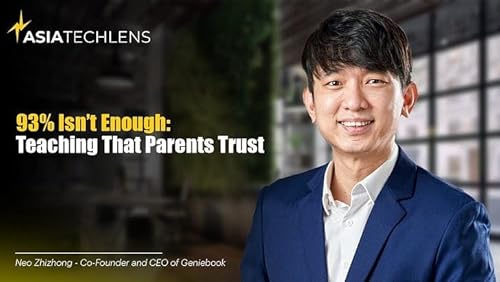
    In this episode of Asia Tech Lens: Founder Stories, we sit down with Neo Zhizhong, Co-Founder and CEO of Geniebook — a Singapore-based edtech company using human + AI to personalize how children learn at scale.Geniebook didn’t start as a tech platform. It began as a small tuition centre, teaching students face-to-face. But Neo and his team noticed a pattern: every student learned differently, and every parent needed reassurance that progress was real. Personalisation mattered — but teachers were stretched.Instead of opening more centres, Neo took a leap early: build AI that could adapt to each student, question by question.Today, Geniebook serves 200,000 students across Singapore and Southeast Asia. And Neo believes the future of education isn’t AI replacing teachers — it’s AI giving teachers superpowers.Hosted by Miro Lu, this conversation explores what it takes to build trust in education — where 93% accuracy isn’t good enough, results shape identity, and parents demand evidence, not promises.💡What You’ll Hear About* Choosing AI over blockchain — and how early conviction defined Geniebook’s roadmap.* Human + AI teaching — why AI handles pace, but teachers handle meaning.* The trust threshold — why parents require 98–99% accuracy, not “close enough.”* The midnight question — when to give a student the answer, and when to guide instead.* Tiger moms and learning cultures — why Singapore and Vietnam shaped Geniebook’s approach.* The 2023–2024 reset — restructuring for sustainability, not hype.* Scaling across Southeast Asia — adapting curriculum and expectations country-by-country.* Leadership and discipline — turning down investor money to stay mission-aligned.⏱️ In This Episode00:00 – 93% isn’t enough00:20 – High-stakes exams and Geniebook’s origin01:24 – Why AI, not blockchain02:45 – What is AI education?04:10 – Human + AI teachers: GenieASK and personalized hints06:40 – Accuracy, feedback loops & trusting AI07:47 – Convincing parents08:01 – When to give the answer vs when to teach10:29 – Measuring learning outcomes11:47 – Building long-term trust14:46 – Turning physical into digital15:17 – From centres to platform17:10 – Will AI replace teachers?18:17 – The humans behind the AI19:12 – Expanding into the global market21:12 – Tiger moms & learning cultures27:36 – Inequality and access to AI tools31:10 – “Study companion,” not tutor33:04 – Leadership style & values39:32 – Biggest regret41:29 – Advice to younger self43:48 – What’s next for Geniebook📚 ReferencesGeniebook – Personalized AI learning platformhttps://www.geniebook.comNeo Zhizhong (Neo) on LinkedInhttps://www.linkedin.com/in/zzneo/PSLE (Singapore National Exam)https://www.moe.gov.sg/microsites/psle-fsbb/psle/main.htmlSingapore Educationhttps://www.moe.gov.sg/education-in-sg/educationsystemCambridge International Curriculumhttps://www.cambridgeinternational.org/IB Programme (International Baccalaureate)https://www.ibo.org/GPT / ChatGPThttps://openai.com/chatgptVietnam Ministry of Education & Traininghttps://en.moet.gov.vn/Asia Tech Lens Newsletterhttps://www.asiatechlens.comPerspective Mediahttps://perspectivemedia.asia🎙️ About Asia Tech LensProduced by Perspective Media (Singapore), Asia Tech Lens explores the technology, trends, and people shaping Asia’s innovation landscape — and its global impact.For enquiries about:* sponsorships or collaboration: partnerships@asiatechlens.com* media or permissions: editor@asiatechlens.com#AIinHealthcare #PreventiveAI #DigitalHealth #Mediwhale #KoreaTech #FounderStories #DeepLearning #HealthcareInnovation #StartupJourney #AsiaTechLens This is a public episode. If you would like to discuss this with other subscribers or get access to bonus episodes, visit www.asiatechlens.com
    Voir plus Voir moins
    46 min
  • Lost Vision, Found Mission: How Mediwhale’s AI Sees Disease Before Doctors Can
    Nov 4 2025
    In this episode of Asia Tech Lens: Founder Stories, we sit down with Kevin Choi, Co-Founder and CEO of Mediwhale — a Korean healthtech startup using AI to see what doctors can’t.At just 26, Kevin lost half his vision to glaucoma — a silent, asymptomatic disease. Instead of retreating, he turned that diagnosis into a mission: to build an AI system that could prevent others from going through the same. Together with his doctor, he founded Mediwhale, developing deep-learning models that can predict cardiovascular and metabolic risks from a single image of the eye.From publishing in The Lancet Digital Health to persuading skeptical doctors and investors, Kevin’s story is one of persistence, humility, and purpose — a reminder that innovation often starts from personal pain.Hosted by Miro Lu, this conversation explores the human side of AI in medicine: what it means to build trust in a field where precision can save lives.💡What You’ll Hear About* Losing sight — and finding purpose: how glaucoma inspired Mediwhale’s founding.* Turning the eye into a diagnostic window for heart and metabolic diseases.* Winning doctors’ trust: from rejection to The Lancet Digital Health breakthrough.* “Money is cold”: what Kevin learned from raising US $22 million in tough markets.* Global expansion: why Mediwhale chose the U.S. as its next big leap.* AI beyond ChatGPT: when deep learning sees what humans can’t.* Saving lives in Korea and Dubai — the stories that keep the mission alive.* Leadership lessons: humility, hiring mistakes, and the price of vision.⏱️ In This Episode00:00 – The Eye That Started It All01:12 – Your Journey to Mediwhale02:30 – Losing Vision Without Knowing It04:33 – Building a Mission to Prevent “Another Kevin”05:16 – 0 to 1: What Was the Tipping Point?07:50 – From Rejection to Recognition: Publishing in The Lancet10:30 – “Money is Cold”: Raising Capital with Purpose12:32 – Every Market Is Similar? U.S. Expansion and IPO15:16 – The AI Hype18:20 – Healthcare Stakeholders19:41 – Company Culture and Leadership22:31 – East vs West: Business Leadership26:30 – Life-Saving Stories That Prove the Mission28:49 – Your Biggest Mistake?📚 ReferencesMediwhale – AI retinal diagnostics for cardiovascular and metabolic health.Kevin Choi on LinkedInThe Lancet Digital Health – Peer-reviewed journal publishing Mediwhale’s early findings.Glaucoma — Mayo Clinic OverviewRetinal Imaging (Fundus Photography) — Cleveland ClinicCardiovascular Disease (CVD) — WHO Fact SheetAmerican Society for Preventive Cardiology (ASPC)Perspective MediaAsia Tech Lens Newsletter🎙️ About Asia Tech LensProduced by Perspective Media (Singapore), Asia Tech Lens explores the technology, trends, and people shaping Asia’s innovation landscape — and its global impact.For enquiries about:* sponsorships or collaboration: partnerships@asiatechlens.com* media or permissions: editor@asiatechlens.com#AIinHealthcare #PreventiveAI #DigitalHealth #Mediwhale #KoreaTech #FounderStories #DeepLearning #HealthcareInnovation #StartupJourney #AsiaTechLens This is a public episode. If you would like to discuss this with other subscribers or get access to bonus episodes, visit www.asiatechlens.com
    Voir plus Voir moins
    33 min
  • How Squirrel Ai Survived China’s Tutoring Ban | Podcast with Joleen Liang
    Oct 28 2025
    In this episode, Dr. Joleen Liang, Co-Founder of Squirrel Ai and CEO of SAI North America, shares how the Shanghai-based edtech went from near-collapse to a global relaunch. From losing almost all revenue to paying off every dollar of debt within two years, hers is a story of persistence, community, and the power of adaptive AI to keep learning alive.Hosted by Miro Lu, this conversation dives deep into what it takes to rebuild under pressure, from redefining “addiction” in education to leading a company as its only female executive.🔍 Highlights & Key Moments11:07 - Turning “bad kids” into confident learners14:49 - Redefining “addicted”: the power of focused learning17:09 - Rising from the ashes after China’s 2021 crackdown18:42 - When no one knew AI: winning over parents & teachersBrought To You By:Perspective Media Studios - From broadcast to branded storytelling across Asia.Asia Tech Lens - Independent insights at the intersection of tech, policy & society.💡What You’ll Hear About* Rising from the ashes: how Squirrel Ai paid off ¥900 million in debt after China’s tutoring ban.* Scaling smart: 3,000+ centers built through a parent-franchise model and why it worked.* Beyond LLMs: what a Large Adaptive Model is and why it beats generative AI in education.* Going global: localizing adaptive learning for the U.S. and Southeast Asia.* Data over intuition: why personalized, adaptive learning outperforms teacher-led instruction.* Leadership under fire: Joleen’s lessons on crisis, trust, and gender balance in tech.⏱️ In This Episode0:00 – Meet Squirrel Ai: China’s Edtech Disruptor01:31 – Joleen Liang’s Student Days & Origin Story03:27 – Joining Squirrel Ai & the Leap into AI Education06:29 – Believing in Co-Founder Derek Li’s Vision07:48 – Why “Squirrel” Ai and what it symbolizes08:38 – Scaling Up Through Franchise Power14:49 – The “Addicted” Effect: Kids, AI & Learning16:48 – China’s Regulatory Earthquake & the Pivot25:33 – Going Global: Cracking the U.S. Market30:55 – Standing Out in a Crowded Edtech Arena33:07 – Leadership, Teamwork & Self-Reliance42:02 – Choose the Right Way, Even if it is the Hard Way!📚 ReferencesDr Joleen LiangDerek Haoyang LiSquirrel Ai LearningDark Horse UniversityChina Tutoring BanKumonDeepSeekChatGPTLLMShanghai Municipal GovernmentMinistry of Education of the People’s Republic of ChinaGenerative AI in EducationSoutheast Asia Education Market OverviewPerspective MediaAsia Tech Lens NewsletterChinese Phrases* 学霸 (Xúe Bà)Refers to someone who is academically talented, studious and gets excellent grades in exams.* 双减 (shuāng jiǎn)Policy introduced in 2021 banning after-school tutoring to reduce pressure on primary and secondary school students. This is a public episode. If you would like to discuss this with other subscribers or get access to bonus episodes, visit www.asiatechlens.com
    Voir plus Voir moins
    44 min
  • People think AI is the answer…it’s a tool, it’s data!
    Oct 24 2025
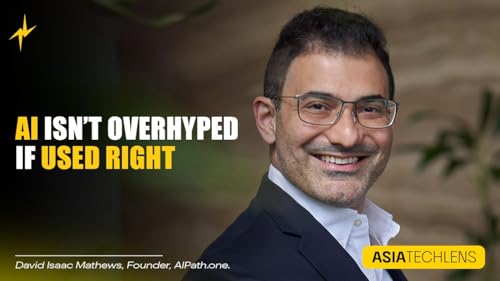
    Miro Lu sits down with David Isaac Mathews (Founder, AIPath.one) to unpack how an AI-native strategy engine models customers and competitors using a digital-twin approach, runs large-scale strategy simulations to pre-test ideas, and helps teams avoid shipping “busywork.”Check Out The Best Parts:06:11 - Good Ideas don’t pay the bills20:43 - AI isn’t overhyped24:19 - How trust in tech evolves26:24 - The eternal tech optimist36:04 - Qualities of a start up founderBrought to you by:Perspective Media Studios - From broadcast to branded storytelling across Asia.Asia Tech Lens - Independent insights at the intersection of tech, policy & society.What You’ll Hear About* AI ≠ magic wand: Why AI multiplies whatever your HR/process already is.* From research to revenue: Connecting customer/competitor insight to build order and ROI.* Simulation at scale: Exploring up to millions of scenarios before committing cash.* Continuous customer discovery: Expectations shift, your strategy must, too.* Asia’s early-stage reality check: Investor caution, market size constraints, and where deeptech fits.* Consulting, reimagined: Service-as-software and lowering the cost of strategy.* Agents in B2B: Clear workflows → delightful automations (and where general agents still struggle).* Trust & privacy drift: Why people already “trust tech over family” and what that means.In this Episode0:00 - Introducing AIPath.one03:04 - The “Unemployable” moment that sparked AIPath.one06:03 - The core problem AIPath.one is trying to solve06:52 - Why research falls behind: Customers change, competitors improve12:53 - Negative perceptions of consultants15:51 - Digital Twins, demystified: customers + competitors in one view20:32 - Is AI overhyped? Not when used right24:19 - Trust in technology evolves over time26:24 - AI is just another type of really useful data29:37 - Fifth Generation Singaporean?31:14 - What stakeholders want to see in SEA33:08 - Inside the start up ecosystem in Singapore35:46 - Founder traits that matter: Humble, Adaptable, Always Updating40:22 - What AIPath.one Needs NextReferencesAIPath.oneDavid Isaac MathewsBlock 71 SingaporeNUS EnterpriseIMDAEY-ParthenonSamsungGoogleOpenAIDeepSeekMicrosoftPerspective MediaAsia Tech Lens Newsletter This is a public episode. If you would like to discuss this with other subscribers or get access to bonus episodes, visit www.asiatechlens.com
    Voir plus Voir moins
    42 min