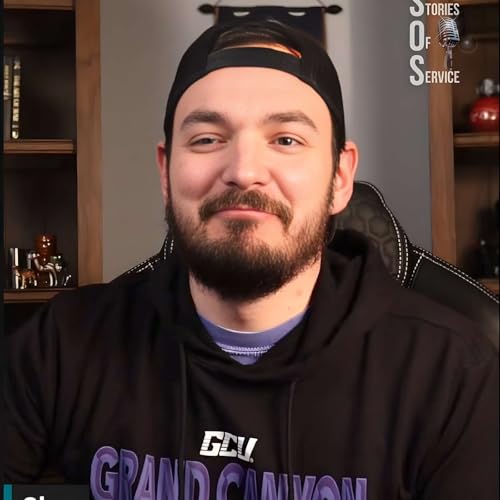
• The Military History USMA Never Taught… and Tried to Bury | S.O.S. #245
    Dec 15 2025

    Send us a text

    A forgotten reformer changed how we think about military education, then got written out of the story. We dig into Alden Partridge’s bold vision for the citizen-soldier, why his mastery-based model threatened entrenched interests, and how his practical ideas—shorter paths for proven mastery, rigorous field training, and decentralized leadership—can still fix what’s broken in today’s force.

    Franklin Annis walks us through Partridge’s rise at West Point during the War of 1812, the political crossfire that led to his court-martial, and his pivot to building militia-focused academies that influenced Norwich and VMI. We connect the dots to modern pain points: time-in-seat schooling that bores high performers, career assembly lines that miss real talent, and a headquarters culture that mistakes long hours for results. You’ll hear how competency-based progression, pretesting, and mission command can restore merit, accelerate excellence, and respect the only irreplaceable resource—time.

    We also ground the conversation in philosophy and practice. Stoicism offers a leader’s toolkit for fair discipline, self-accountability, and resilience under pressure. A constitutional view of defense argues for a lean active force backed by a trained, capable militia—an approach that can lower costs and improve readiness by leveraging real-world civilian skills found across the Guard and Reserve. And we wrestle candidly with standards and inclusion: equal dignity, equal rules, transparent consequences, and selection by performance.

    If you care about military education, talent management, or building better leaders faster, this conversation gives you a roadmap rooted in history and tested by experience. Subscribe, share with a teammate, and leave a review with the one change you’d make first—what would you accelerate, and what would you cut?

    Stories of Service presents guests’ stories and opinions in their own words, reflecting their personal experiences and perspectives. While shared respectfully and authentically, the podcast does not independently verify all statements. Views expressed are those of the guests and do not necessarily reflect the host, producers, government agencies, or podcast affiliates.

    Support the show

    Visit my website: https://thehello.llc/THERESACARPENTER
    Read my writings on my blog: https://www.theresatapestries.com/
    Listen to other episodes on my podcast: https://storiesofservice.buzzsprout.com
    Watch episodes of my podcast:
    https://www.youtube.com/c/TheresaCarpenter76


    Voir plus Voir moins
    1 h et 3 min
  • Killing Busywork and Reclaiming Your Brainpower | Juliet Funt - S.O.S. #244
    Dec 12 2025

    Send us a text

    Imagine trading a wall of meetings for a calendar with white stripes where thinking, planning, and decisive action actually happen. That’s the shift we explore with Juliet Funt—keynote speaker, author, and founder of the Juliet Funt Group—whose work helps teams cut busy work and create the bandwidth to do their best thinking.

    We dig into why white space isn’t idleness; it’s a performance tool. Juliet shows how modern work confuses motion with progress, burying judgment under email, back-to-back calls, and task churn. She shares simple, sticky tools that change behavior fast: the wedge (short breaks between commitments that let you digest and decide), the yellow list (batching non-urgent asks to slash message sprawl), and the re-entry day (protecting the first day back from leave so real disconnection is possible). The throughline is practical: waste less, think more, and reinvest saved time into the work that moves the mission.

    We also examine a striking divide in the military: absolute precision outside the office versus sprawling inefficiency inside it. Juliet connects the dots between sleep, judgment, and readiness, arguing that saved hours only matter when they’re translated into training, rehearsal, and strategic thought. She makes a case for intact-unit change, embedding skills in PME and ROTC, and building norms that outlast leadership rotations. The goal isn’t fewer meetings for their own sake; it’s better decisions, stronger teams, and outcomes people are proud to ship.

    If you’ve ever felt trapped by your calendar, this conversation offers a way out—and a way forward. Listen, steal a tool, and start small. Then tell us: which meeting will you shorten, and what will you do with the time you win back? Subscribe, share with a teammate who needs breathing room, and leave a review to help others find the show.

    The stories and opinions shared on Stories of Service are told in each guest’s own words. They reflect personal experiences, memories, and perspectives. While every effort is made to present these stories respectfully and authentically, Stories of Service does not verify the accuracy or completeness of every statement. The views expressed do not necessarily represent those of the host, producers, or affiliates.

    Support the show

    Visit my website: https://thehello.llc/THERESACARPENTER
    Read my writings on my blog: https://www.theresatapestries.com/
    Listen to other episodes on my podcast: https://storiesofservice.buzzsprout.com
    Watch episodes of my podcast:
    https://www.youtube.com/c/TheresaCarpenter76


    Voir plus Voir moins
    45 min
  • From Kicked Out to Cleared of 19 Federal Charges with Forrest Mize | S.O.S. #243
    Dec 11 2025

    Send us a text

    What does it really cost to lead with integrity when the system leans the other way? We sit down with Forrest, a former naval flight officer and mission commander, whose career bends from high school dropout to strike planner for Kosovo—and later into the crosshairs after he refused to hide a serious security breach on a remote island base. The stories move fast: carrier decks and air tasking orders, isolated duty stations that no one wanted, and the everyday creativity required to keep crews motivated and safe.

    Forrest opens up about the moment a civilian smuggled a pistol and ammo onto San Nicolas Island to kill feral cats, how his CO ordered him to bury the report, and why he said no. That choice triggered nineteen charges, an NCIS probe, a revoked clearance, and threats of prison and pension loss. With a sharp JAG at his side and a website full of documents, he fought back, demanded a court-martial, and watched the case crumble. Along the way, we talk Desert Storm’s waning days, the grind of multinational targeting in Kosovo, and the hard truth that institutions can honor your work on Monday and disown you by Friday.

    Beyond the uniform, Forrest built a thriving charter operation in California, rescued people at sea, and eventually traded the coast for Idaho, where a wolf encounter became a courtroom headline. The through line is steady: tell the truth, document everything, and keep showing up for the people who count on you. If you care about military leadership, whistleblower courage, and practical strategies for advocacy when the process turns against you, you’ll find real tools here—plus candid advice on writing a memorable military memoir that sticks to facts and reads like lived experience.

    If this conversation resonates, follow the show, share it with a friend who needs a lift, and leave a quick review so more listeners can find these stories. Your support helps us bring forward voices that remind us why service, courage, and clarity still matter.

    The stories and opinions shared on Stories of Service are told in each guest’s own words. They reflect personal experiences, memories, and perspectives. While every effort is made to present these stories respectfully and authentically, Stories of Service does not verify the accuracy or completenes

    Support the show

    Visit my website: https://thehello.llc/THERESACARPENTER
    Read my writings on my blog: https://www.theresatapestries.com/
    Listen to other episodes on my podcast: https://storiesofservice.buzzsprout.com
    Watch episodes of my podcast:
    https://www.youtube.com/c/TheresaCarpenter76


    Voir plus Voir moins
    38 min
  • Inside the Army’s SHARP Meltdown with Jeff Gorres | S.O.S. #242
    Dec 11 2025

    Send us a text

    Power reveals character, and nowhere is that more visible than inside military sexual assault response. We sit down with Jeff Goris—career aviator, senior SHARP advocate at Fort Hood, and later a Department of the Army civilian—to unpack how a program meant to protect survivors gets kneecapped by backlogs, weak command emphasis, and investigations run by the very people with skin in the game. From the McQueen scandal to the wake-up after Vanessa Guillén, Jeff traces the specific mechanisms that fail victims and also crush the falsely accused: preliminary inquiries used to pre-shape outcomes, administrative actions that sidestep due process, and clearance removals that quietly end careers.

    Across an unflinching conversation, Jeff explains the ethics of real advocacy: know the policies cold, focus on the victim’s needs, and document every step. He shares hard-won tactics for anyone at risk of retaliation—professional liability insurance, early legal counsel, and meticulous records—while making the case that true reform depends on independent investigations outside command influence. We talk about culture honestly: why achievement often trumps character at senior levels, how retaliation silences truth-tellers, and why the “court of public opinion” sometimes becomes the only path to accountability when internal systems stall.

    This episode offers a practical roadmap and a challenge. If leaders want safer formations, they must separate adjudication from command interests, empower IGs to investigate retaliation, and give both accusers and accused the right to present evidence and witnesses. Until then, advocates and allies can still win small, meaningful battles—supporting survivors, protecting whistleblowers, and telling verified stories that make indifference costly. Listen, share, and help push for due process, independent investigations, and culture that rewards courage over convenience. If this resonates, subscribe, leave a review, and tell us: what reform would you mandate first?

    The stories and opinions shared on Stories of Service are told in each guest’s own words. They reflect personal experiences, memories, and perspectives. While every effort is made to present these stories respectfully and authentically, Stories of Service does not verify the accuracy o

    Support the show

    Visit my website: https://thehello.llc/THERESACARPENTER
    Read my writings on my blog: https://www.theresatapestries.com/
    Listen to other episodes on my podcast: https://storiesofservice.buzzsprout.com
    Watch episodes of my podcast:
    https://www.youtube.com/c/TheresaCarpenter76


    Voir plus Voir moins
    1 h et 7 min
  • 62 Miles of Grit: Honoring a Navy SEAL Through the Ultimate Adventure Race - S.O.S. #241
    Dec 9 2025

    Send us a text

    A 62-mile race that lets you sleep at night and still pushes you to your edge? We’re bringing a new kind of endurance event to the Colorado backcountry to honor Navy SEAL Ryan Larkin and fund life-changing sleep recovery through 62 Romeo. Over three days from Montrose to Telluride, ten fire teams face rugged terrain, military-style navigation, and surprise challenges that reward strategy and teamwork—not just speed.

    Rob Sweetman, a former SEAL and founder of 62 Romeo, shares how Ryan’s legacy fueled nearly a decade of work in sleep science and why sleep performance sits at the core of mental health, hormones, energy, relationships, and long-term success. We walk through the race format—bronze, silver, and gold medals for day-by-day finishes and a platinum winner crowned by points—plus a design choice that flips the endurance script: planned overnight rest to model healthy recovery while still testing grit. It’s built to be hard, safe, and meaningful.

    We also dig into the technology bringing the story to life. Our media team engineered custom LoRaWAN trackers and 3D maps so friends and family can follow teams in real time, watch live check-ins from aid stations, and experience the landscape from afar. With up to 80 volunteer roles—from registration and gear issue to camp operations and hydration points—there are countless ways to join the mission. Prefer to compete? Applications open for four-person fire teams and solo candidates who want to be placed, with a fair, safety-minded selection process.

    More than a race, this is a movement that turns grief into action, connects people through the outdoors, and funds sleep scholarships and nature retreats at Happy Canyon Ranch. If you believe in the power of nature, teamwork, and real rest to heal, you’ll feel at home here.

    Subscribe, share with a friend who needs a purpose-filled challenge, and leave a review to help more listeners find the mission. Ready to volunteer, watch live, or apply to race? Your move.

    Race details - https://www.rliar.org/

    Support the show

    Visit my website: https://thehello.llc/THERESACARPENTER
    Read my writings on my blog: https://www.theresatapestries.com/
    Listen to other episodes on my podcast: https://storiesofservice.buzzsprout.com
    Watch episodes of my podcast:
    https://www.youtube.com/c/TheresaCarpenter76


    Voir plus Voir moins
    23 min
  • Are Veterans Getting too much Disability with Clay Simms | S.O.S. #240
    Dec 5 2025

    Send us a text

    Headlines say the VA system is broken and rife with abuse. Our conversation with Marine veteran Clayton Sims tells a different story—one grounded in lived experience, policy fluency, and a community-first approach to getting claims right without fear or costly consultants.

    Clayton shares how a rough transition and a hurried VSO visit pushed him to learn the language of 38 CFR and the evidence behind service connection. We unpack the realities of infantry life—miles in boots under load, daily wear that wrecks feet, ankles, and backs—and why conditions like flat feet and sleep apnea aren’t punchlines, they’re predictable outcomes. We also go deeper than combat. MST, toxic command climates, uneven medical boards, and administrative limbo can all drive mental health injuries that are real and compensable when documented properly.

    We cut through the noise about “rampant fraud” with data: far fewer veterans file than most assume, and only a portion reach 100 percent. The bigger problem is confusion. Clayton maps the routes that actually win—direct, secondary, aggravation, presumptive, MUCMI—and the kinds of evidence that matter: deployment health assessments, awards narratives, buddy statements, specialty opinions, and clear medical links. He explains how CivDiv helps veterans self-advocate or meet VSOs prepared, flipping the script on an industry that profits from complexity.

    If you’ve felt overwhelmed by forms and jargon, you’ll walk away with a clearer path and a stronger mindset. And beyond claims, Clayton leaves a vital reminder: don’t isolate. Find your circle—online, at a VFW, through church, or with a few trusted friends—because community can save time, money, and lives.

    If this resonated, follow the show, share it with a veteran who needs it, and leave a review with your biggest question about VA claims. Your story might guide our next episode.

    The stories and opinions shared on Stories of Service are told in each guest’s own words. They reflect personal experiences, memories, and perspectives. While every effort is made to present these stories respectfully and authentically, Stories of Service does not verify the accuracy or completeness of every statement. The views expressed do not necessarily represent those of the host, producers, or

    Support the show

    Visit my website: https://thehello.llc/THERESACARPENTER
    Read my writings on my blog: https://www.theresatapestries.com/
    Listen to other episodes on my podcast: https://storiesofservice.buzzsprout.com
    Watch episodes of my podcast:
    https://www.youtube.com/c/TheresaCarpenter76


    Voir plus Voir moins
    1 h et 7 min
  • Flordia Tech, DEI and Rick Addante’s Fight | S.O.S. #239
    Dec 1 2025

    Send us a text

    A university president tells faculty to “keep doing what you’re doing” on DEI and critical race theory—just don’t get caught. That’s the moment Dr. Rick Adante, a cognitive neuroscientist and NASA analog mission lead, decided to blow the whistle. What follows is a rare, unvarnished look at how policy theatre and word swaps can allegedly shield millions in federal and state funds while undermining the very laws and standards meant to protect students, researchers, and the public.

    We walk through Rick’s path from a turbulent childhood to leading-edge work with NASA’s HERA and NEEMO missions, where merit and team performance are non-negotiable. He explains how DEI shifted from stopping discrimination to empowering it, why “diversity of what?” is the only honest starting point, and how institutions can weaponize language—changing course titles and catalogs—while preserving the same outcomes in practice. With Supreme Court rulings narrowing race-based admissions and executive orders tying compliance to funding, the stakes are no longer theoretical. They are legal, operational, and ethical.

    You’ll hear the mechanics of an alleged “comply in secret” plan, the risks of decoupling selection from merit, and the downstream impact on defense research, GI Bill dollars, and military training. Rick describes refusing hush money, losing his tenured position, and gaining momentum as donors, journalists, and policymakers take notice. His message is blunt and hopeful: enforce the law, audit for real compliance, define diversity in terms that improve performance, and reward excellence with transparency. Courage is a muscle; use it daily so it’s strong when it counts.

    If this conversation challenged you—or clarified the stakes—share it with a colleague, leave a review, and subscribe for more candid, evidence-driven episodes. Your voice helps bring sunlight to the places that need it most.

    The stories and opinions shared on Stories of Service are told in each guest’s own words. They reflect personal experiences, memories, and perspectives. While every effort is made to present these stories respectfully and authentically, Stories of Service does not verify the accuracy or completeness of every statement. The views expressed do not necessarily represent those of the host, p

    Support the show

    Visit my website: https://thehello.llc/THERESACARPENTER
    Read my writings on my blog: https://www.theresatapestries.com/
    Listen to other episodes on my podcast: https://storiesofservice.buzzsprout.com
    Watch episodes of my podcast:
    https://www.youtube.com/c/TheresaCarpenter76


    Voir plus Voir moins
    2 h et 13 min
  • The Cost of Integrity: COL (ret) Tony Bianchi on False Accusations | S.O.S. #238
    Nov 26 2025

    Send us a text

    A decorated field artillery officer and former West Point garrison commander says one strange night derailed 27 years of service—and exposed how fragile due process can be on a military post. Tony Bianchi recounts leading a week of storm recovery, an alumni dinner where a trivial carving-station moment sparked a rumor, and a late drive home later portrayed as a gate run. Hours after he went to bed, senior MPs gathered behind his house and colleagues woke him at 2:45 AM—an entry a DMV judge would later label a Fourth Amendment violation.

    We trace the aftermath: suspension, relief, and a permanently filed GOMOR before any federal charge; no AR 15-6 despite conflicts; and video the government held that undercut its narrative. Tony describes why he refused chemical tests, what happened in the station, and how leaders leaned on “legally sufficient” while ignoring common sense. In court, a jury acquitted him of DWI and disorderly conduct, leaving only a stop-sign violation. A Grade Determination Review Board kept his O6 retirement. His FTCA claim and GOMOR appeal continue.

    This is a candid inside view of military justice shaped by command-level turf fights, MP overreach, and leaders outsourcing judgment to legal advisors. Tony isn’t trying to burn the institution—he’s a West Point grad who loves the Army. He’s asking for better investigations, real accountability, and leaders willing to weigh facts over optics. If a garrison commander can be pulled into a federal case on such thin grounds, what protects everyone else?

    Subscribe for more stories that push for reform with receipts, not rhetoric. If this conversation resonated, share it with a teammate and leave a review with the one change you’d make to strengthen due process on base.

    The stories and opinions shared on Stories of Service are told in each guest’s own words. They reflect personal experiences, memories, and perspectives. While every effort is made to present these stories respectfully and authentically, Stories of Service does not verify the accuracy or completeness of every statement. The views expressed do not necessarily represent those of the host, producers, or affiliates.

    Support the show

    Visit my website: https://thehello.llc/THERESACARPENTER
    Read my writings on my blog: https://www.theresatapestries.com/
    Listen to other episodes on my podcast: https://storiesofservice.buzzsprout.com
    Watch episodes of my podcast:
    https://www.youtube.com/c/TheresaCarpenter76


    Voir plus Voir moins
    2 h et 2 min