Épisodes

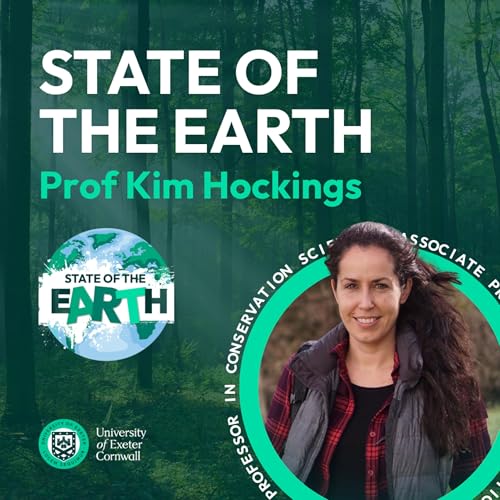
  • Primates and the Future of Conservation: In conversation with Dr Kimberley Hockings
    Dec 12 2025

    In this podcast, Host Sofia Salas Lopez speaks with Dr Kimberley Hockings, Associate Professor in Conservation Science at the University of Exeter. She is an active member of many conservation organisations, such as the Great Ape Section of the IUCN/SSC Primate Specialist Group, and as the co-Director of the Cantanhez Chimpanzee Project

    Dr Kimberley is a conservation biologist, with her work mainly focused on studying and facilitating human-wildlife interactions, especially with great apes. Dr Kimberley has extensive experience with fieldwork across West Africa, working on conservation projects and policy.

    In this conversation, we will learn more about the biggest issues facing primates and how different forms of conservation can shape the future of wildlife by creating a symbiosis between people and nature.

    Highlights:

    • Introduction to Dr Hockings and her journey into conservation

    • The importance of studying primates

    • Threats to primates (Human-wildlife interactions, disease, land loss…)

    • The role of community work in conservation

    • AI and technology in conservation

    • Hopes for the future

    Links to further explore her work: https://experts.exeter.ac.uk/26467-kimberley-hockings/about


    Voir plus Voir moins
    29 min
  • Rethinking nature: How inclusive design can transform our connection to the world
    Nov 25 2025

    In this episode, Sophie is joined by Dr Sarah Bell, Senior Lecturer in Health Geography at the European Centre for Environment and Human Health.

    Sarah is a health and disability geographer whose research explores how wellbeing, social inequality, and disability intersect with our changing environments, from parks, gardens, and coastlines to the weather, seasons, and climate change.

    Our conversation covers how our environments shape who we are and how we live — and what it really means to design a fairer, healthier world for everyone.

    Highlights:

    • How disability, wellbeing, and environment intersect across the life course
    • Lessons from the Sensing Nature project and multisensory access to the outdoors
    • The balance between research, real-world impact, and policy change
    • Short-termism vs long-term investment in health and nature initiatives
    • Staying motivated in the face of climate challenges and systemic barriers

    Shownotes:

    • Sensing Nature program: https://sensing-nature.com
    Voir plus Voir moins
    25 min
  • Navigating Climate Change: A Deep Dive into Glacial Science with Professor Martin Siegert
    Jul 15 2025

    In this episode, Sophie is joined by Professor Martin Siegert, Vice President and Deputy Vice-Chancellor at the University of Exeter Cornwall Campus. Martin is a leading expert in polar science, glaciology, and climate science. With over 30 years of experience, Professor Siegert shares his inspiring, albeit unconventional, journey into academia, demonstrating that a career in science is “for everybody,” no matter your background!

    The conversation dives into the critical issue of global sea level rise and the dramatic changes occurring in the polar regions, particularly Antarctica, one of the fastest warming places on Earth. Professor Siegert explains how melting polar ice sheets are now controlling global sea levels, potentially leading to significant rises measured in metres rather than centimetres. He highlights two key effects: the gravitational impact that raises sea levels in mid-latitudes like the UK, and the albedo effect, where melting ice causes polar regions to absorb heat instead of reflecting it, creating a planetary problem.

    Listeners will discover Professor Siegert's groundbreaking research using radio-echo sounding to map hidden subglacial environments and hundreds of lakes, which is essential for developing accurate ice sheet models to predict future sea level rise. With current CO2 levels far exceeding natural norms, he emphasises that significant sea level rise is inevitable.

    Professor Siegert outlines a feasible decarbonised pathway as the only viable solution, firmly rejecting impractical geoengineering strategies. He concludes with a powerful call to action for individuals, businesses, and institutions, leaving listeners inspired to engage in the fight against climate change. This insightful and optimistic conversation highlights the interconnectedness of human activities and the Earth's polar regions, underscoring the urgent need for collective action.

    Voir plus Voir moins
    54 min
  • The Future of Biodiversity Monitoring: Mapping Biodiversity with Remote Sensing
    May 29 2025

    In this episode of the State of the Earth Podcast, Mark is joined by Bri Pickstone, a PhD researcher at the Environmental Intelligence Centre for Doctoral Training. Together, they explore how remote sensing and machine learning are transforming biodiversity monitoring and shaping the future of Biodiversity Net Gain. Bri shares how her research helps us better understand ecosystems from space and how these insights can guide smarter, more sustainable land management. From policy to practice, this conversation sheds light on the tools and data driving nature recovery in the UK and beyond. Whether you’re curious about tech’s role in conservation or want to understand how big data can support biodiversity, this episode offers a fresh perspective on the intersection of nature and innovation.

    Voir plus Voir moins
    25 min
  • From Everyday Actions to Global Impact: Rethinking Our Role in Climate Change with Professor Catherine Leyshon
    Mar 12 2025

    In this episode of the State of the Earth Podcast, Mark is joined by Catherine Leyshon, a Professor of Human Geography at the University of Exeter, Cornwall. They discuss how to unravel the hidden systems behind our daily routines to make a difference on the climate change impact and how the system itself can be redesigned. Mark and Catherine explore how simple activities like showering, shopping and commuting aren’t just routine but could be powerful practices that shape our planet’s future. Using Elizabeth Shove’s Theory of Enabled Practices helps us discover how shifting these ingrained behaviours can ignite a local revolution for sustainability and learn why every small choice you make matters in the fight against climate change. Whether you’re driven by a desire to make a personal change or eager to be part of a broader movement, this conversation will inspire you to rethink, act, and transform your everyday life for a healthier, greener tomorrow.

    Voir plus Voir moins
    33 min
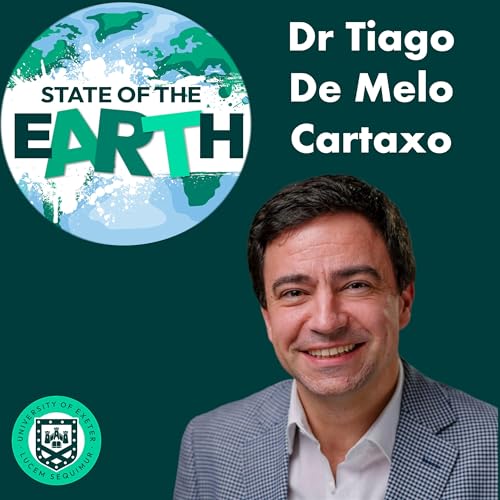
  • UNESCO Biospheres and Cornwall: The path to UNESCO Status with Dr Tiago De Melo Cartaxo
    Feb 14 2025

    In this episode of the State of the Earth podcast, Sophie and Mark are joined by Tiago De Melo Cartaxo, a Senior Lecturer in Environmental Law at the University of Exeter. They discuss Tiago's professional background, the concept of UNESCO biospheres, and the potential for Cornwall and the Isles of Scilly to be designated as such a reserve. The conversation explores the benefits of biosphere status, including improved conservation, economic development, and community engagement. Tiago shares his experiences working on biosphere projects in Portugal and offers insights on the steps required for Cornwall to achieve this designation. The discussion highlights the importance of stakeholder collaboration, cultural heritage conservation, and research in sustaining biodiversity and environmental justice.

    Voir plus Voir moins
    41 min
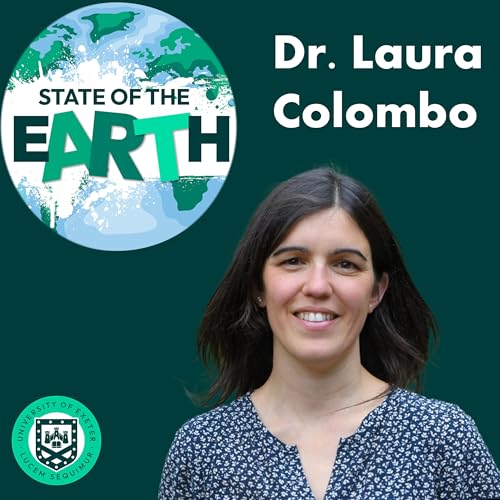
  • Transforming Management Education: Exploring Civic Management and Interdisciplinary Approaches for a Sustainable Future with Dr Laura Colombo
    Jan 15 2025

    Tune in to the latest episode of the State of the Earth podcast. In this episode, Sophie Jackson, an MSc Sustainable Business Management student, is joined by Dr. Laura Colombo, a senior lecturer at the University of Exeter Business School. They delve into the urgent need for transformative change in management education to address pressing environmental and social challenges. Dr. Colombo offers a compelling critique of the current system and provides valuable solutions, advocating for a shift towards civic management education that emphasises cooperation, critical thinking, and interdisciplinary approaches. She highlights the importance of experiential learning and community engagement as means to foster hope and action among students, calling for educators and students to rethink the purpose of higher education and engage with their communities to drive meaningful change.

    Voir plus Voir moins
    37 min
  • Nature and Cities: Can We Make Cities Sustainable?
    Dec 5 2024

    In this episode of the State of the Earth podcast, hosts Mark, a BSc Environmental Science student, and Sophie, an MSc Sustainable Business Management student, sit down with Dr. Maike Hamann, a sustainability scientist. Dr. Hamann explores the intricate relationship between nature and human well-being, delving into how socio-economic inequalities affect people-nature dynamics. With climate change posing increasing challenges, Dr. Hamann highlights the critical benefits urban nature provides to city residents. Tune in for a thought-provoking conversation on creating equitable and resilient urban environments.

    Voir plus Voir moins
    36 min