Épisodes

  • Can You Combine Physiotherapy with a Neuroplastic Approach? - with Jim Prussack Jr. MPT, MMT
    Dec 11 2025

    What if the most powerful lever for chronic pain isn’t in your muscles or joints, but in your brain’s pain system? We sit down with Jim Prussack a physiotherapist who left a strictly structural model behind after diving deep into pain science, mentorship with John Sarno and Howard Schubiner, and years on the front lines of complex cases. The takeaway is both hopeful and concrete.

    We walk through how to tell if symptoms are neuroplastic—looking at timelines, flares tied to stress, inconsistency across activities, and the absence of clear tissue damage. From there, we show why acceptance of the diagnosis is the foundation for every tool that follows, whether it’s graded exposure, cognitive functional therapy, somatic tracking, breathing, or journaling. You’ll hear how reassurance and a trauma-informed approach outperform nocebo-laden scripts like “your core is weak,” and why the best PT sometimes looks like coaching confidence rather than chasing a tight muscle.

    We also get specific about mixing psychotherapy and physical therapy without sending mixed signals. For some, active PT restores trust in movement; for others, psychological work on fear, grief, and old patterns unlocks the nervous system. The unifying thread is coherence: consistent, safety-first messaging that teaches the brain to downshift from threat.

    If you’re navigating persistent pain, pelvic pain, back pain, or other functional symptoms, this conversation offers a practical roadmap built on pain neuroscience, neuroplasticity, and lived clinical wisdom. Subscribe, share with someone who needs a new lens on healing, and leave a review to help others find the show.

    Connect with Jim here:

    Website: https://www.thepainpt.com/

    YouTube Channel: https://www.youtube.com/@thepainpt

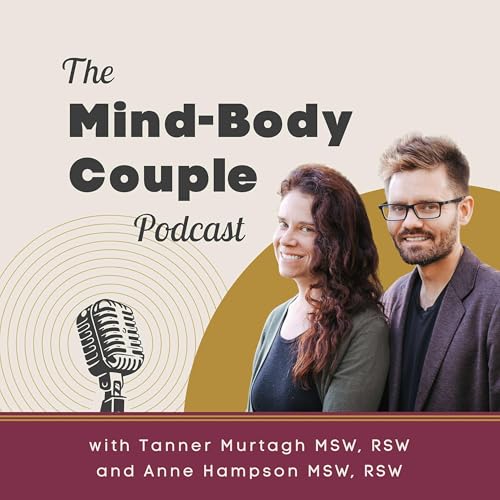
    Tanner Murtagh and Anne Hampson are therapists who treat neuroplastic pain and mind-body symptoms. They are also married! In his 20s, Tanner overcame chronic pain and a fibromyalgia diagnosis by learning his symptoms were occurring due to learned brain pathways and nervous system dysregulation. Post-healing, Tanner and Anne have dedicated their lives to developing effective treatment and education for neuroplastic pain and symptoms. Listen and learn how to assess your own chronic pain and symptoms, gain tools to retrain the brain and nervous system, and make gradual changes in your life and health!


    The Mind-Body Couple podcast is owned by Pain Psychotherapy Canada Inc. This podcast is produced by Alex Klassen, who is one of the wonderful therapists at our agency in Calgary, Alberta. https://www.painpsychotherapy.ca/


    Tanner, Anne, and Alex also run the MBody Community, which is an in-depth online course that provides step-by-step guidance for assessing, treating, and resolving mind-body pain and symptoms. https://www.mbodycommunity.com


    Also check out Tanner's YouTube channel for more free education and practices: https://www.youtube.com/channel/UC-Fl6WaFHnh4ponuexaMbFQ


    And follow us for daily education posts on Instagram: @painpsychotherapy


    Discl...

    Voir plus Voir moins
    36 min
  • Why I Stuck With Tanner Through His Chronic Pain Journey
    Dec 4 2025

    Send your questions to be answered live on the podcast to: info@painpsychotherapy.ca


    Love doesn’t disappear when chronic pain shows up, but it can get buried under appointments, bills, and long stretches of silence. We open up about the years when pain became the only topic in our home, the ways our roles warped into caregiver and patient, and the slow, deliberate choices that helped us find our way back to closeness while symptoms were still present. This is a story about social safety—how relationships can signal danger or safety—and how changing that signal can reduce neuroplastic pain.

    We break down the hidden traps couples fall into: letting pain consume every conversation, organizing the relationship around “fighting the system,” and staying too long in a caregiver role. Then we share what worked. Communication that aims at co‑regulation rather than debate. Partner involvement that supports, not polices. Shared learning about brain-based approaches so skepticism doesn’t sabotage progress. And boundaries that protect the supporter’s identity—because a regulated partner has more to give than a depleted one.

    Expect concrete takeaways you can use right away: weekly “no symptom talk” windows to protect connection, small exposure steps that rebuild everyday life together, one‑sentence appreciations that melt shame, and a clear plan to shift roles back from caregiving to companionship. If chronic pain has narrowed your world, this conversation offers a map to widen it again—without waiting for perfect health to start living. If this resonates, subscribe, share with someone who needs it, and tell us: which step will you try this week?

    Tanner Murtagh and Anne Hampson are therapists who treat neuroplastic pain and mind-body symptoms. They are also married! In his 20s, Tanner overcame chronic pain and a fibromyalgia diagnosis by learning his symptoms were occurring due to learned brain pathways and nervous system dysregulation. Post-healing, Tanner and Anne have dedicated their lives to developing effective treatment and education for neuroplastic pain and symptoms. Listen and learn how to assess your own chronic pain and symptoms, gain tools to retrain the brain and nervous system, and make gradual changes in your life and health!


    The Mind-Body Couple podcast is owned by Pain Psychotherapy Canada Inc. This podcast is produced by Alex Klassen, who is one of the wonderful therapists at our agency in Calgary, Alberta. https://www.painpsychotherapy.ca/


    Tanner, Anne, and Alex also run the MBody Community, which is an in-depth online course that provides step-by-step guidance for assessing, treating, and resolving mind-body pain and symptoms. https://www.mbodycommunity.com


    Also check out Tanner's YouTube channel for more free education and practices: https://www.youtube.com/channel/UC-Fl6WaFHnh4ponuexaMbFQ


    And follow us for daily education posts on Instagram: @painpsychotherapy


    Discl...

    Voir plus Voir moins
    43 min
  • Polyvagal Theory for Chronic Pain & Symptoms
    Nov 27 2025

    We unpack polyvagal theory, starting with neuroception, the body’s below-conscious radar that constantly scans for danger or safety. When that radar gets oversensitive after stress, adversity, or trauma, it misreads harmless cues as threats. The result is chronic dysregulation that fuels neuroplastic pain, fatigue, gut issues, and anxiety—even when your logical mind says, “I’m fine.”

    We walk through the four core states—ventral vagal (safe and social), sympathetic (fight or flight), fawn (people-pleasing and perfectionism), and dorsal vagal (freeze and shutdown)—and connect each to common symptoms and relationship patterns. Instead of chasing a fantasy of being calm 24/7, we focus on flexibility: noticing your current state, understanding what it’s trying to protect, and building the capacity to move through it.

    Planning for the holidays? We share a simple, compassionate game plan: map likely triggers, pre-load regulation breaks, recruit a “safe person,” and choose exits without guilt. Every small rep of shifting from alarm to safety teaches your body a new pattern, and over time, pain often eases as sleep, energy, and joy return. If you’re ready for deeper guidance, our therapy team works across most Canadian provinces and our Somatic Safety Method course is available worldwide with education, practices, and live Q&A. Subscribe, share this with someone who needs it, and tell us: which state feels like your home base—and what helps you find your way back to safety?

    Tanner Murtagh and Anne Hampson are therapists who treat neuroplastic pain and mind-body symptoms. They are also married! In his 20s, Tanner overcame chronic pain and a fibromyalgia diagnosis by learning his symptoms were occurring due to learned brain pathways and nervous system dysregulation. Post-healing, Tanner and Anne have dedicated their lives to developing effective treatment and education for neuroplastic pain and symptoms. Listen and learn how to assess your own chronic pain and symptoms, gain tools to retrain the brain and nervous system, and make gradual changes in your life and health!


    The Mind-Body Couple podcast is owned by Pain Psychotherapy Canada Inc. This podcast is produced by Alex Klassen, who is one of the wonderful therapists at our agency in Calgary, Alberta. https://www.painpsychotherapy.ca/


    Tanner, Anne, and Alex also run the MBody Community, which is an in-depth online course that provides step-by-step guidance for assessing, treating, and resolving mind-body pain and symptoms. https://www.mbodycommunity.com


    Also check out Tanner's YouTube channel for more free education and practices: https://www.youtube.com/channel/UC-Fl6WaFHnh4ponuexaMbFQ


    And follow us for daily education posts on Instagram: @painpsychotherapy


    Discl...
    Voir plus Voir moins
    38 min
  • Try this Free 30-Day Program for Chronic Pain and Illness — See What Happens!
    Nov 13 2025

    PLEASE READ THE DISCLAIMER BELOW BEFORE BEGINNING THIS PROGRAM.

    If you live with chronic pain, fatigue, or illness, you’ve probably tried everything — medications, treatments, diets — and nothing seems to work long-term. That’s because for many people, the real root of chronic symptoms isn’t in the body… it’s in the brain and nervous system.

    This video introduces a free 30-day program designed to help you retrain your brain, calm your nervous system, and begin healing from chronic pain and illness — naturally.

    💡 What You’ll Learn

    ✅ What neuroplastic pain and illness is — and why it’s reversible.
    ✅ How to teach your brain safety signals every day.
    ✅ How to rewire your nervous system using brain retraining and embodiment practices.
    ✅ How to process emotions and reduce nervous system dysregulation that fuels pain.

    🌿 Your Commitment

    For the next 30 days, do three simple practices a day — one Safety Signal, one Brain Retraining, and one Emotion & Nervous System Practice.
    Small steps, done consistently, can completely change how your brain and body respond to pain and stress.

    ✨ Start today, stay consistent, and see what happens when you give your brain 30 days of safety.
    Your brain already knows how to heal — you just need to show it the way.

    🧘‍♀️ The 30-Day Program Practices:

    1️⃣ Safety Signal Practices:

    10-Minute Safety Signal Practice: https://youtu.be/gCMCfPZ7Qr0
    15-Minute Safety Signal Practice: https://youtu.be/6p47n1zvb9U
    Safety Signal Practice: https://youtu.be/qMqOh_s7AqY
    Somatic Movement Practice: https://youtu.be/_YFSDvY6ZoM

    2️⃣ Brain Retraining Practices:

    10-Minute Brain Retraining Practice: https://youtu.be/4G10P5m7FBI
    15-Minute Brain Retraining Practice: https://youtu.be/4uTnyuqA0oY
    20-Minute Brain Retraining Practice: https://youtu.be/HlcUQMa9A54
    10-Minute Brain Retraining Practice: https://youtu.be/xx0UJFUO2SU

    3️⃣ Emotion & Nervous System Practices:

    15-Minute Emotion & Nervous System Practice: https://youtu.be/qJ-dZ1YRFYc
    30-Minute Emotion & Nervous System Practice: https://youtu.be/erFtcNRlSHM
    20-Minute Emotion & Nervous System Practice: https://youtu.be/CC6wTTaWJaY

    ⚠️ Disclaimer

    This video and the free 30-day program are for educational and informational purposes only and are not a substitute for medical advice, diagnosis, or treatment. Always

    Tanner Murtagh and Anne Hampson are therapists who treat neuroplastic pain and mind-body symptoms. They are also married! In his 20s, Tanner overcame chronic pain and a fibromyalgia diagnosis by learning his symptoms were occurring due to learned brain pathways and nervous system dysregulation. Post-healing, Tanner and Anne have dedicated their lives to developing effective treatment and education for neuroplastic pain and symptoms. Listen and learn how to assess your own chronic pain and symptoms, gain tools to retrain the brain and nervous system, and make gradual changes in your life and health!


    The Mind-Body Couple podcast is owned by Pain Psychotherapy Canada Inc. This podcast is produced by Alex Klassen, who is one of the wonderful therapists at our agency in Calgary, Alberta. https://www.painpsychotherapy.ca/


    Tanner, Anne, and Alex also run the MBody Community, which is an in-depth online course that provides step-by-step guidance for assessing, treating, and resolving mind-body pain and symptoms. https://www.mbodycommunity.com


    Also check out Tanner's YouTube channel for more free education and practices: https://www.youtube.com/channel/UC-Fl6WaFHnh4ponuexaMbFQ


    And follow us for daily education posts on Instagram: @painpsychotherapy


    Discl...

    Voir plus Voir moins
    21 min
  • Can Repressing Emotions Cause Chronic Pain and Illness?
    Nov 6 2025

    What if the aches, tension, and fatigue you’ve been fighting are your emotions asking to be felt? We unpack the research on emotional suppression and show how a nervous system stuck in “danger” can translate stress into very real pain/illness—without structural damage. Drawing on studies of suppression and stress reactivity and clinical insights from neuroplastic pain work, we make the science practical, humane, and doable in everyday life.

    We walk through four patterns that keep feelings trapped in the body. Alexithymia makes it hard to notice and name what’s happening inside, so emotions “appear” as symptoms or outbursts. Viewing sensations as dangerous turns normal states like sadness or excitement into alarms you try to outrun. Avoidance behaviors—angry cleaning, overworking, caretaking, doom scrolling, perfectionism, sweets or alcohol—numb for a moment but teach the brain that inner experience is unsafe. Invalidation finishes the loop with self talk like “others have it worse,” which buries signals you need to actually heal. You’ll hear candid stories about misreading sensations, blowing past capacity, and how simple validation can redirect an entire day.

    Then we offer a clear, repeatable healing cycle. Use short embodiment practices to connect with sensations safely. Approach feelings with curiosity and compassion, noticing qualities like tight, buzzy, heavy, or warm. As safety grows, the nervous system downshifts on its own and symptoms desensitize. We talk about working within your window of tolerance, using strategic avoidance when you’re flooded, and choosing small, consistent check ins that build confidence. By learning to surf emotional waves instead of suppressing them, you teach your brain that discomfort isn’t danger—and relief follows.

    If this resonates, press play and try the guided check in with us. Subscribe, share this episode with someone who needs a gentler way to heal, and leave a review telling us which resistance pattern you’re rewriting next.

    Tanner Murtagh and Anne Hampson are therapists who treat neuroplastic pain and mind-body symptoms. They are also married! In his 20s, Tanner overcame chronic pain and a fibromyalgia diagnosis by learning his symptoms were occurring due to learned brain pathways and nervous system dysregulation. Post-healing, Tanner and Anne have dedicated their lives to developing effective treatment and education for neuroplastic pain and symptoms. Listen and learn how to assess your own chronic pain and symptoms, gain tools to retrain the brain and nervous system, and make gradual changes in your life and health!


    The Mind-Body Couple podcast is owned by Pain Psychotherapy Canada Inc. This podcast is produced by Alex Klassen, who is one of the wonderful therapists at our agency in Calgary, Alberta. https://www.painpsychotherapy.ca/


    Tanner, Anne, and Alex also run the MBody Community, which is an in-depth online course that provides step-by-step guidance for assessing, treating, and resolving mind-body pain and symptoms. https://www.mbodycommunity.com


    Also check out Tanner's YouTube channel for more free education and practices: https://www.youtube.com/channel/UC-Fl6WaFHnh4ponuexaMbFQ


    And follow us for daily education posts on Instagram: @painpsychotherapy


    Discl...

    Voir plus Voir moins
    36 min
  • Healing Chronic Pain Is Possible — Here’s How I Did It
    Oct 30 2025

    What if your most stubborn pain isn’t a broken body, but a brilliant brain trying to protect you? We open up about Tanner’s journey from spreading knee, shoulder, and back pain to a full recovery, and how the real turning point came when he reframed pain as a danger signal from the nervous system—not proof of damage. You’ll hear the messy middle too: fear, failed treatments, shrinking routines, and the isolation that follows when life gets small.

    We break down the five pillars that changed everything. First, evidence-based education shifted beliefs using the work of Dr. John Sarno and Dr. Howard Schubiner, plus real-world clues like symptom inconsistency and stress-linked flares. Second, brain retraining and graded exposure taught Tanner to approach sensation with safety and rebuild movement without deadlines. Third, daily nervous system regulation—breathwork, mindfulness, qigong, and somatic practices—created a calmer baseline while building capacity to feel emotions in the body without spiralling. Fourth, trauma processing addressed bullying, addiction history, and the trauma of chronic pain itself, using titrated, body-led methods and, when needed, therapeutic support. Finally, social safety sealed the change: fewer toxic ties, less pressure, clearer boundaries, less people-pleasing, and more play.

    The result isn’t a life without discomfort; it’s a nervous system that bounces back. Flares show up less often and fade faster because the brain has new proof that movement and emotion are safe. If you’ve been told to just live with it, this conversation offers a different path—rooted in neuroscience, practice, and patience. Subscribe, share with someone who needs hope, and leave a review to help others find these tools. What’s the first safety signal or small exposure you’ll try this week?

    Tanner Murtagh and Anne Hampson are therapists who treat neuroplastic pain and mind-body symptoms. They are also married! In his 20s, Tanner overcame chronic pain and a fibromyalgia diagnosis by learning his symptoms were occurring due to learned brain pathways and nervous system dysregulation. Post-healing, Tanner and Anne have dedicated their lives to developing effective treatment and education for neuroplastic pain and symptoms. Listen and learn how to assess your own chronic pain and symptoms, gain tools to retrain the brain and nervous system, and make gradual changes in your life and health!


    The Mind-Body Couple podcast is owned by Pain Psychotherapy Canada Inc. This podcast is produced by Alex Klassen, who is one of the wonderful therapists at our agency in Calgary, Alberta. https://www.painpsychotherapy.ca/


    Tanner, Anne, and Alex also run the MBody Community, which is an in-depth online course that provides step-by-step guidance for assessing, treating, and resolving mind-body pain and symptoms. https://www.mbodycommunity.com


    Also check out Tanner's YouTube channel for more free education and practices: https://www.youtube.com/channel/UC-Fl6WaFHnh4ponuexaMbFQ


    And follow us for daily education posts on Instagram: @painpsychotherapy


    Discl...

    Voir plus Voir moins
    49 min
  • 8 Tips & Tricks for Brain Retraining — Rewiring the Brain Out of Chronic Pain & Illness
    Oct 23 2025

    Your brain can learn safety, and that changes everything about chronic pain and illness. We’re pulling back the curtain on brain retraining—what it is, what it isn’t, and how to use it day to day without turning healing into a pressure-filled project. If you’ve ever tried a practice, felt your pain/symptom drop once, and then chased that result like a pain pill, this conversation will reset your approach in the most helpful way.

    We start by defining brain retraining in clear terms and grounding it in two pillars: safe self-talk and embodiment. You’ll hear how confident, kind language reduces threat while curious attention to sensation teaches your nervous system that your body is safe. From there, we unpack eight practical principles: show and tell (reassure, then gently expose), set a short-term goal of safety and a long-term goal of desensitization, spot dysregulation early, reframe control toward your response, practice curiosity on purpose, start with safety signals, take embodiment into daily life, and stay playful so threat stays low. We also add a bonus: be consistent without turning intensity into a new problem.

    Expect down-to-earth examples you can try today, like tension-and-release breathing, quick drop-ins during daily activities, and using a light touch of humor to soften vigilance. You’ll learn why chasing instant relief backfires, how “healing wins” compound, and what it looks like to build resilience with small, repeated reps instead of white-knuckling your way through symptoms. Whether you’re new to mind-body work or refining your practice, these tools will help you feel safer, calmer, and more connected as your brain unlearns pain and illness.

    If this resonates, subscribe, share with someone who needs hope, and leave a quick review to help others find the show. And if you want guided support, explore consultations at painpsychotherapy.ca and our course at mbodycommunity.com.

    Tanner Murtagh and Anne Hampson are therapists who treat neuroplastic pain and mind-body symptoms. They are also married! In his 20s, Tanner overcame chronic pain and a fibromyalgia diagnosis by learning his symptoms were occurring due to learned brain pathways and nervous system dysregulation. Post-healing, Tanner and Anne have dedicated their lives to developing effective treatment and education for neuroplastic pain and symptoms. Listen and learn how to assess your own chronic pain and symptoms, gain tools to retrain the brain and nervous system, and make gradual changes in your life and health!


    The Mind-Body Couple podcast is owned by Pain Psychotherapy Canada Inc. This podcast is produced by Alex Klassen, who is one of the wonderful therapists at our agency in Calgary, Alberta. https://www.painpsychotherapy.ca/


    Tanner, Anne, and Alex also run the MBody Community, which is an in-depth online course that provides step-by-step guidance for assessing, treating, and resolving mind-body pain and symptoms. https://www.mbodycommunity.com


    Also check out Tanner's YouTube channel for more free education and practices: https://www.youtube.com/channel/UC-Fl6WaFHnh4ponuexaMbFQ


    And follow us for daily education posts on Instagram: @painpsychotherapy


    Discl...

    Voir plus Voir moins
    28 min
  • Healing Trauma Caused by Chronic Pain and Illness
    Oct 16 2025

    The body’s alarm system can get stuck on high when chronic pain and persistent symptoms take over, and we give that pattern a name: sensitization trauma. We unpack how symptoms, scary medical opinions, and hope-disappointment cycles teach the nervous system to brace, avoid, and shut down—and why recognizing this isn’t a setback, it’s a turning point.

    We start by defining sensitization trauma as the trauma caused by the onset, progression, and life impacts of chronic symptoms, then walk through three distinct stages: the frantic “fixing” phase, the spread-and-avoidance phase where anxiety and associations multiply, and the shutdown phase marked by fatigue, collapse, and the belief that “my body is broken.” Along the way, we spotlight medical trauma—conflicting diagnoses, poor communication, invalidation, and procedures that fail to help—and the telltale signs: pre-appointment anxiety, flares after visits, avoidance of care, and fight/flight/freeze in the exam room. If you’ve felt “hoped out,” you’re not alone, and there’s a path forward.

    Our framework rests on four pillars: education that reframes symptoms as neuroplastic and responsive to safety; safety-building practices in everyday life and medical contexts; regulation tools like grounding, orienting, and somatic tracking to calm arousal without glossing over reality; and trauma processing. We also talk sequencing—why some folks need to front-load safety and regulation before brain retraining—and share real-world examples of graded exposure to appointments, movements, and activities.

    If this conversation resonates, follow, share, and leave a review to help others find it—and tell us: which stage are you in, and what’s one small safety step you’ll take this week?

    Tanner Murtagh and Anne Hampson are therapists who treat neuroplastic pain and mind-body symptoms. They are also married! In his 20s, Tanner overcame chronic pain and a fibromyalgia diagnosis by learning his symptoms were occurring due to learned brain pathways and nervous system dysregulation. Post-healing, Tanner and Anne have dedicated their lives to developing effective treatment and education for neuroplastic pain and symptoms. Listen and learn how to assess your own chronic pain and symptoms, gain tools to retrain the brain and nervous system, and make gradual changes in your life and health!


    The Mind-Body Couple podcast is owned by Pain Psychotherapy Canada Inc. This podcast is produced by Alex Klassen, who is one of the wonderful therapists at our agency in Calgary, Alberta. https://www.painpsychotherapy.ca/


    Tanner, Anne, and Alex also run the MBody Community, which is an in-depth online course that provides step-by-step guidance for assessing, treating, and resolving mind-body pain and symptoms. https://www.mbodycommunity.com


    Also check out Tanner's YouTube channel for more free education and practices: https://www.youtube.com/channel/UC-Fl6WaFHnh4ponuexaMbFQ


    And follow us for daily education posts on Instagram: @painpsychotherapy


    Discl...

    Voir plus Voir moins
    32 min