Épisodes

  • 205. Roeland Delrue, Co-Founder of Aikido Security - Why joining the buyer’s journey beats forcing MEDDICC-style sales processes
    Jan 28 2026

    In this episode, we’re joined by Roeland Delrue, Co-founder of Aikido Security, the fast-growing application security platform that just became a unicorn in under 4 years.

    Roeland shares what it really takes to scale a company at breakneck speed, from going 5× year-over-year, to balancing startups and enterprise in one GTM motion, to raising a Series B with a single goal: becoming “unignorable.” We unpack how Aikido uses product-led growth, brutal revenue focus, and buyer-first sales mentality to win in one of the most competitive markets in SaaS.

    We spoke with Roeland about building for continuous wins, why revenue clarity beats buzzwords, and how Aikido joins the buyer’s journey instead of forcing rigid sales methodologies.

    Here are some of the key questions we address:

    • How did Aikido grow from $5M to $20M+ ARR in one year?

    • What does it mean to build an unignorable company?

    • Why brutal focus on revenue simplifies product, hiring, and prioritization decisions

    • Why joining the buyer’s journey beats forcing MEDDICC-style sales processes

    • How product-led trials reduce churn and increase win rates

    • What it takes to scale from unicorn to decacorn (and why $100M ARR is the next real milestone)

    🎧 Tune in to hear how Roeland is building one of Europe’s fastest-scaling security companies and why speed, product, and revenue discipline beat category buzzwords every time.

    Voir plus Voir moins
    55 min
  • 204. Madhav Bhandari - VP Marketing, Storylane - How to Win in a World of 150,000 SaaS Tools: Pattern Interruption is your real mote
    Jan 23 2026

    In this episode, we’re joined by Madhav Bhandari, VP Marketing at Storylane, the demo automation platform helping B2B teams show their product before prospects ever talk to sales. Storylane is a profitable, fully remote SaaS with 50 employees, and a clear path toward $20M+.

    Madhav shares how Storylane broke out of the “race to average” in an insanely crowded martech and sales tech market, not by spending more, but by building a repeatable system for pattern interruption. We unpack how they used unconventional SEO, brand plays, and GTM experiments to grow brand searches from 1,500 to 12,000 per month, drive massive inbound, and turn marketing into a true growth engine.

    We spoke with Madhav about why great products aren’t enough anymore, how to become the first vendor prospects discover, and how to build a marketing portfolio that consistently produces breakout ideas instead of chasing one-hit wonders.

    Here are some of the key questions we address:

    • Why visibility, not budget, is the real advantage in crowded SaaS markets

    • What pattern interruption actually means and how to systematize it

    • How Storylane grew brand searches 8x and created an unfair inbound advantage

    • Why traditional SEO and blog strategies are too slow, and what replaced them

    • How to build a marketing portfolio instead of chasing viral one-offs

    • Where pattern interruption should live and why leadership must own it

    🎧 Tune in to hear how Madhav turned differentiation into a repeatable muscle and why, in a world where products are easy to copy, GTM creativity is the real moat.

    Voir plus Voir moins
    56 min
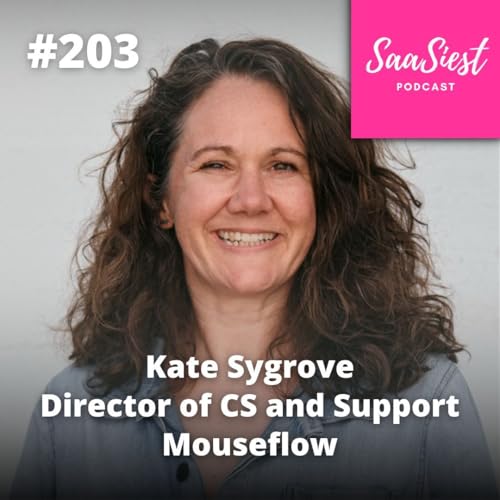
  • 203. Kate Sygrove, Director of CS & Support, Mouseflow - Speak CFO: How CS Leaders Earn an Equal Seat at the Table
    Jan 9 2026

    In this episode, we’re joined by Kate Sygrove, Director of Customer Success at Mouseflow, the SaaS platform for website behavioral analytics. Mouseflow is a $10M+ ARR business with 3,500 customers, 51 employees, and a CS org balancing enterprise white-glove with digital CS at scale.

    Kate shares a practical playbook for one of the biggest CS challenges in SaaS right now: getting heard at the exec table. We unpack what it actually means to “speak the language of the CFO,” how to turn CS insight into predictive numbers the business can plan around, and why CS leaders need to pair hard data + soft data to drive decisions on churn, retention, and roadmap priorities.

    Here are some of the key questions we address:

    • What does it mean to “speak CFO” as a CS leader and, why does prediction matter so much?

    • How do you convert customer sentiment into a forecast model that the exec team can use?

    • Why is hard data + soft data the only reliable way to judge account health?

    • How do you reframe CS initiatives into business outcomes like revenue protected, time-to-value, and scalability?

    • What should CS leaders demand from Sales/Marketing/Product to make collaboration actually work?

    • What changes when you transition from CSM → CS leader, and how do you prepare for the jump?

    🎧 Tune in to hear Kate’s concrete frameworks for making CS visible, measurable, and influential and how to show up in leadership meetings with a clearer business case than ever.

    Voir plus Voir moins
    49 min
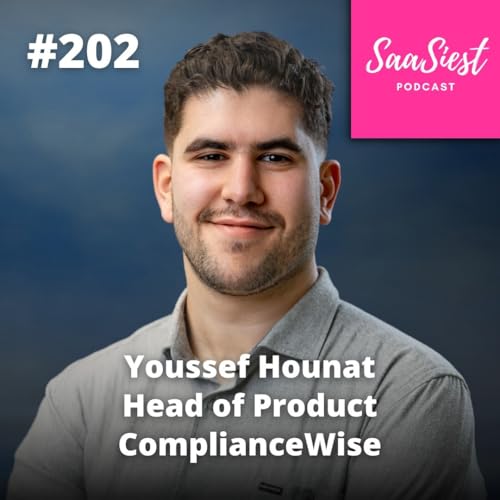
  • 202. Youssef Hounat, Head of Product, ComplianceWise - From Search Tool to Teammate: How Product Teams Should Really Use AI
    Dec 18 2025

    In this episode, we’re joined by Youssef Hounat, product leader, ex-auditor, and (unexpectedly) freestyle-rap-ready builder of tools for accountants. He went from training at Ernst & Young to helping scale DataSnipper into one of the Netherlands’ unicorns, and now he’s building again as Head of Product at ComplianceWise.

    We unpack what’s actually changing inside product teams: AI stops being a rewrite/search tool and becomes a teammate that takes real work off your plate. Youssef shares how the best teams reduce context switching, turn customer research into a habit, and use agentic workflows + MCPs to connect tools like email, Jira, Figma, and docs without becoming a “fleshy meat puppet” copy-pasting between 10 tabs.

    Here are some of the key questions we address:

    • Why do 99% of teams still use AI wrong, and what mindset shift fixes it?
    • How do you turn customer research into a continuous habit using transcripts + automated pipelines?
    • What’s a real example of AI helping product push back on “build this to close the deal” and finding the true request underneath?
    • How do top teams use MCP + coding agents to move from idea → PRD → Jira tickets without leaving the terminal?
    • What’s the difference between a prototype you build to learn vs a product you build to earn — and why vibe-coded output can’t go straight to production?
    • How do you avoid reinventing the wheel and start with small weekly automations that compound?
    • What’s the real risk behind shadow AI usage and how do you get IT onside instead of blocked?

    🎧 Tune in to hear Youssef’s practical playbook for building an AI-enabled product org—where humans do the high-leverage thinking, and the machines handle the busywork. Plus: a freestyle rap that might be the strongest case for accounting tech you’ve ever heard.

    Voir plus Voir moins
    50 min
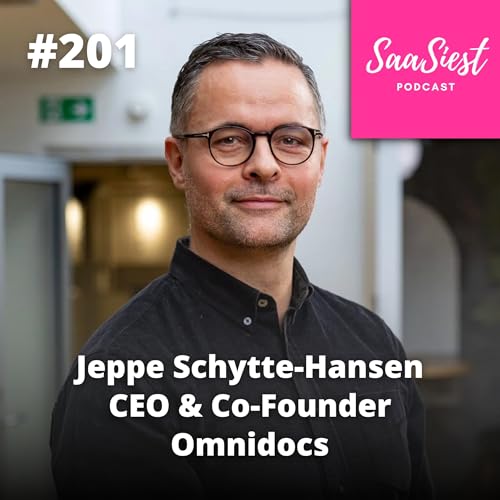
  • 201. Jeppe Schytte-Hansen, CEO, Omnidocs - Why 1+1 = 1.8 in M&A (Until It Suddenly Becomes 3)
    Nov 18 2025

    In this episode, we’re joined by Jeppe Schytte-Hansen, CEO and Co-founder of Omnidocs, a SaaS company that’s moving fast: €22M+ in revenue, 1,500 customers, 155 employees, and four acquisitions in the last 18 months after bringing in private equity for the first time. Jeppe breaks down what it really takes to turn a steady, profitable SaaS into a buy-and-build platform, from product alignment and enablement to the emotional reality of killing someone’s “version 2.0” and managing the slowdown that almost everyone underestimates.

    We spoke with Jeppe about choosing PE over VC, building a 14-point M&A framework, and why one plus one rarely equals two in the first year. He explains the “integration foxtrot” (quick–slow–quick–slow), how to preserve culture across six offices and four countries, and why Omnidocs is betting big on the shift from traditional documents to “fluid formats” in the coming years.

    Here are some of the key questions we address:

    • What is the 14-criteria M&A evaluation framework, and what are the two instant disqualifiers?

    • Why does every buy-and-build strategy start with a slowdown, and how do you shorten it?

    • What makes product alignment the hardest part of M&A, and how do you decide when to kill a nearly-finished product?

    • How do you structure integration squads and seven integration tracks across acquired companies?

    • What does it take to enable sales teams to manage multiple products without slowing down new logo acquisition?

    • How do you avoid overestimating cross-sell potential, especially in the first 12–18 months?

    • Which are key roles and people to drive a successful pre, during and post-acquisition process?

    🎧 Tune in to hear how Jeppe is transforming Omnidocs from a steady SaaS into a multi-product, pan-European platform proving that buy-and-build is far more than a financial strategy; it’s an operational discipline.

    Voir plus Voir moins
    55 min
  • 200. Fabian Q. Veit, CEO, Make - 15× Revenue, 7× Team, 100K+ Paying Users: Inside Make.com’s Hypergrowth!
    Nov 11 2025

    In this episode, we sit down with Fabian Veit, CEO of Make.com, to talk about what it really takes to scale not just one but two hyperscale SaaS companies - first in a classic enterprise sales-led motion, and now in a PLG + AI/automation world.

    Fabian shares how Make has 15x’d revenue and grown from ~50 to nearly 400 people, while racing past 100k+ paying customers and aiming for €100M+ ARR, and why that requires a fundamentally different mindset than selling multi-million euro deals into the Fortune 2000. He contrasts the “one deal can make your quarter” reality of enterprise sales with the high-volume, product-first, self-serve motion of Make, where thousands of users sign up every month and the product has to carry the weight.

    We also dig into what it means to build in the middle of the AI & agentic wave when your platform is literally how people wire AI into their business processes. Fabian explains why most AI projects are actually 80–90% integrations & automation, where AI is the smart layer inside the flow, not the whole show, and how Make is evolving from classic “if-this-then-that” workflows into visual AI agents that power real operations.

    You’ll hear Fabian talk about:

    • PLG vs Sales-Led: What changed when he went from 9–12 month, high-touch enterprise cycles at Celonis to Make’s “sign up free, upgrade yourself” engine.

    • Rebuilding While Scaling: Why everything is always breaking in hypergrowth, and how he decides what to fix for 5× future scale, not just today.

    • Brand & Positioning Pivots: The risky shift from Integromat to Make.com, losing SEO in the short term to win a much bigger global brand in the long term.

    • Culture at Hyperspeed: How they keep their values intact with hundreds of new hires through explicit values & operating principles, and a brutal honesty policy inspired by Radical Candor.

    • The AMA Channel: An internal Ask Me Anything Slack channel where anyone can ask leadership anything (even anonymously), and why Fabian believes answering every question publicly is non-negotiable for trust.

    We wrap up with Fabian’s view on where we are in the AI hype cycle, why he compares this moment more to the industrial revolution than just another tech fad, and what kinds of human skills will matter even more in an AI-driven world.

    Voir plus Voir moins
    58 min
  • 199. Pieter Boon, Co-founder, ImpactPilot - From “Check-Ins” to Impact: How Google’s Playbook Is Transforming CS in B2B SaaS!
    Nov 4 2025

    In this episode, we’re joined by Pieter Boon, Co-founder at ImpactPilot, the customer success intelligence platform built for HubSpot. Pieter shares how he’s helping SaaS companies turn their CS orgs into true growth engines, measuring impact instead of activity through a framework called the Impact Driver Methodology.

    Built on lessons from Google’s 10,000-person post-sales organization, this approach gives CS teams concrete ways to track success before renewal, using impact points tied to real customer outcomes like ROI proof, API adoption, or multi-year deals. It’s about replacing vague check-ins with measurable wins that move both customer and company forward.

    We dive deep into how teams implement and operationalize the system, from designing the right impact drivers to setting incentives, avoiding false positives, and keeping customer value at the center. Pieter also reveals data from Impact Pilot users showing that customers with high impact scores are 7× more likely to renew or expand, and how that changes how you coach, measure, and reward CS teams.

    Here are some of the key questions we address:

    • What is the Impact Driver Methodology, and how does it solve the lagging-indicator problem in CS?

    • How do you define and prioritize impact drivers that actually move the needle for customers?

    • How can CS leaders design incentive models that balance company outcomes with customer value?

    • What KPIs matter between onboarding and renewal, and how do you quantify “impact”?

    • How can you use impact scoring to predict churn and expansion before it happens?

    • What pitfalls to avoid, like rewarding “touches” instead of outcomes or overemphasizing feature use?

    • How can early-stage SaaS teams implement this framework (and even start with a simple spreadsheet)?

    • What’s next for CS as a function, and why Pieter believes it’s becoming the new growth engine for SaaS.

    🎧 Tune in to hear how Pieter is redefining Customer Success for the revenue era where impact, not activity, drives retention, expansion, and long-term customer health.

    Voir plus Voir moins
    42 min
  • 198. Jakob Lilholm, Co-founder & CEO, Formalize - The S-Curve Bet: How to time product #2 before product #1 peaks?
    Oct 28 2025

    In this episode, we’re joined by Jakob Lilholm, Co-founder & CEO at Formalize, the Danish-based compliance SaaS that went from a single-point whistleblowing tool to a multi-product GRC platform used by 8,000+ customers across ~80 countries. Jakob shares how his team timed EU regulatory tailwinds, built whistleblowing software, and then layered products on top, shifting from high-volume transactional sales to a focused, consultative motion for regulated industries.

    Fresh off announcing a €30M Series B, Jakob walks through the internal rewiring it took: carving out an innovation pod with its own OKRs, resisting flattering false positives from the existing base, and proving platform demand with new-logo sales first, going from ~€100k ARR on the platform to >50% of company revenue in a year.

    Here are some of the key questions we address:

    • When do you expand from a point solution to a platform? We discuss the timing model Formalize used (EU roadmap + S-curve “next wave” before the first peaks).

    • What’s the right ICP for a platform? Why did they end up narrowing their ICP and say “not yet” to others?

    • How do you avoid false positives when you already have thousands of customers? Jakob explains why he decided to validate platform fit with new logos first.

    • What org design supports a second act like this?

    • How do you shift GTM, pricing, and messaging? What is the process moving from low ACV sales to higher-ACV, consultative deals without breaking the engine?

    • Which metrics matter in the first year of a platform bet? How do you prove value creation, track conversion quality, and know when to re-inject the core team?

    🎧 Tune in to hear how Jakob and team rewired a fast-growing SaaS from a single product to a multi-product platform play, aligning product, GTM, and finance while keeping the culture hungry enough to chase unicorn status by 2028.

    Voir plus Voir moins
    50 min