


Out of the Fog
Moving from Confusion to Clarity After Narcissistic Abuse
Échec de l'ajout au panier.
Échec de l'ajout à la liste d'envies.
Échec de la suppression de la liste d’envies.
Échec du suivi du balado
Ne plus suivre le balado a échoué
30 jours d'essai gratuit à Audible Standard

Out of the Fog
Acheter pour 21,85 $
-
Narrateur(s):
-
Dana Morningstar
-
Auteur(s):
-
Dana Morningstar
À propos de cet audio
The FOG is an acronym that stands for "Fear, Obligation, and Guilt". These three emotions are often how narcissists, sociopaths, and other types of emotional manipulators go about controlling others.
However, this type of destructive manipulation isn't just limited to narcissists and sociopaths. There is no shortage of people with well-intended bad advice out there who unintentionally fall into the FOG as well and push targets of abuse into keeping the relationship going.
The FOG is one of the main reasons that people stay "stuck" in abusive relationships for so long, why they continue to get involved with abusive people, why they feel they are the problem, and why they tend to feel that the abuse is somehow their fault. When a person is being manipulated, they have a hard time figuring out who has the problem, what is normal, what is problematic, and if their wants, needs, and feelings are valid. The disastrous effects of being lost in the FOG are confusion, crazy-making, people-pleasing, and an erosion of boundaries. What makes this well-intended bad advice so damaging is that, on the surface, it seems like good advice - especially if it's coming from people who seem to have our best interests in mind, such as friends, family, church members, support-group members, or a therapist.
Some examples of this well-intended bad advice that comes from other people is: "Who are you to judge?", "No one is perfect", "You need to forgive them", "She's your mother, you need to have a relationship with her...she's not getting any younger you know", and "Commitment is forever".
This audiobook dives into these and other commonly confused topics such as:
- "Who are you to judge" vs. being discerning
- "You need to forgive them" vs. keeping yourself safe
- A parent vs. a predator
- Commitment vs. codependency
- Self-love vs. selfishness
- A person acting the part vs. a person actually changing
- Gut instincts vs. hypervigilance
- A friend vs. someone being friendly
- Caring vs. caretaking
Vous pourriez aussi aimer...

-
Start Here: A Crash Course in Understanding, Navigating, and Healing From Narcissistic Abuse
- Auteur(s): Dana Morningstar
- Narrateur(s): Dana Morningstar
- Durée: 8 h et 12 min
- Version intégrale
-
Au global9
-
Performance9
-
Histoire9
Confusing. Crazy making. Draining. Does this describe your relationship? Do you wonder if they will ever change? Do you want to know why they lie so much...even when the truth would work better? Have you wondered why they never seem to change - no matter how much you are willing to do for them, or how much love, understanding, rehab, religion, therapy, second (or 22nd) chances you’ve given them? If so, you are not alone and this book is a great place to start.
-
-
Nothing it repeats itself all it is is repeating different sensatio
- Écrit par Sheryl Maley le 2025-12-10
Auteur(s): Dana Morningstar

-
The Covert Passive-Aggressive Narcissist
- Recognizing the Traits and Finding Healing After Hidden Emotional and Psychological Abuse (The Narcissism Series, Book 1)
- Auteur(s): Debbie Mirza
- Narrateur(s): Debbie Mirza
- Durée: 6 h et 42 min
- Version intégrale
-
Au global243
-
Performance206
-
Histoire204
The Covert Passive Aggressive Narcissist: Finding Healing After Hidden Emotional and Psychological Abuse is the most comprehensive and helpful audiobook on the topic of covert narcissism. This type of narcissism is one of the most damaging forms because the abuse is so hidden and so insidious. You can be in a relationship that can last for decades and not realize you are being psychologically and emotionally controlled, manipulated, and abused.
-
-
A Must-Read!
- Écrit par Paola Roberta Leporoni Freeg le 2020-02-22
Auteur(s): Debbie Mirza

-
You're Not the Problem
- The Impact of Narcissism and Emotional Abuse and How to Heal
- Auteur(s): Helen Villiers, Katie McKenna
- Narrateur(s): Helen Villiers, Katie McKenna
- Durée: 7 h et 49 min
- Version intégrale
-
Au global3
-
Performance3
-
Histoire3
Two popular psychotherapists explore narcissism in family of origin, unpacking the fallout from being raised by narcissistic parents, and offering strategies for how to heal. Many emotionally abusive behaviors from parent to child have become socially acceptable because of the way we repeat...
-
-
Must-know-info
- Écrit par margarette rose le 2024-04-12
Auteur(s): Helen Villiers, Autres

-
Traumatic Cognitive Dissonance
- Healing from an Abusive Relationship with a Disordered Personality
- Auteur(s): Peter Salerno PsyD
- Narrateur(s): Peter Salerno
- Durée: 2 h et 45 min
- Version intégrale
-
Au global6
-
Performance6
-
Histoire6
Traumatic Cognitive Dissonance, when understood, can be overcome. And that’s what this book is for—for you to gain the tools and information so that you’ll be able to reunite with your true sense of self and to move forward in your life with a renewed sense of joy. After all you’ve been through, you deserve it.
-
-
If you cannot heal, try this one. This is It. Short and better than Narc Damage Book you are looking for.
- Écrit par Jean le 2026-01-27
Auteur(s): Peter Salerno PsyD

-
Coaching for Performance, 5th Edition
- The Principles and Practice of Coaching and Leadership
- Auteur(s): Sir John Whitmore, John McFarlane - Foreword
- Narrateur(s): Richard Lyddon
- Durée: 8 h et 5 min
- Version intégrale
-
Au global21
-
Performance20
-
Histoire20
Written by Sir John Whitmore, the pioneer of coaching, and Performance Consultants, the global market leaders in performance coaching, this extensively revised and extended edition will revolutionize the traditional approach to organizational culture. Brand-new practical exercises, corporate examples, and coaching dialogues strengthen the learning process, whilst a critical new chapter demonstrates how to measure the benefits of coaching as a return on investment, ensuring this landmark new edition will remain at the forefront of professional coaching and leadership development.
-
-
Stimulate the desire to change...
- Écrit par Rick Bartel le 2021-10-23
Auteur(s): Sir John Whitmore, Autres

-
F*ck No!
- How to Stop Saying Yes When You Can't, You Shouldn't, or You Just Don't Want To
- Auteur(s): Sarah Knight
- Narrateur(s): Sarah Knight
- Durée: 5 h et 37 min
- Version intégrale
-
Au global48
-
Performance37
-
Histoire37
Say no without being an a**hole and save yourself from burnout with "pep talks and sage advice" from the New York Times bestselling author of The Life-Changing Magic of Not Giving a F*ck (HelloGiggles). Are you burnt out from taking on more than you can handle or accepting less than you deserve?...
-
-
Waste of time.
- Écrit par Stephen Boudreau le 2020-01-09
Auteur(s): Sarah Knight
-
Start Here: A Crash Course in Understanding, Navigating, and Healing From Narcissistic Abuse
- Auteur(s): Dana Morningstar
- Narrateur(s): Dana Morningstar
- Durée: 8 h et 12 min
- Version intégrale
-
Au global9
-
Performance9
-
Histoire9
Confusing. Crazy making. Draining. Does this describe your relationship? Do you wonder if they will ever change? Do you want to know why they lie so much...even when the truth would work better? Have you wondered why they never seem to change - no matter how much you are willing to do for them, or how much love, understanding, rehab, religion, therapy, second (or 22nd) chances you’ve given them? If so, you are not alone and this book is a great place to start.
-
-
Nothing it repeats itself all it is is repeating different sensatio
- Écrit par Sheryl Maley le 2025-12-10
Auteur(s): Dana Morningstar
-
The Covert Passive-Aggressive Narcissist
- Recognizing the Traits and Finding Healing After Hidden Emotional and Psychological Abuse (The Narcissism Series, Book 1)
- Auteur(s): Debbie Mirza
- Narrateur(s): Debbie Mirza
- Durée: 6 h et 42 min
- Version intégrale
-
Au global243
-
Performance206
-
Histoire204
The Covert Passive Aggressive Narcissist: Finding Healing After Hidden Emotional and Psychological Abuse is the most comprehensive and helpful audiobook on the topic of covert narcissism. This type of narcissism is one of the most damaging forms because the abuse is so hidden and so insidious. You can be in a relationship that can last for decades and not realize you are being psychologically and emotionally controlled, manipulated, and abused.
-
-
A Must-Read!
- Écrit par Paola Roberta Leporoni Freeg le 2020-02-22
Auteur(s): Debbie Mirza
-
You're Not the Problem
- The Impact of Narcissism and Emotional Abuse and How to Heal
- Auteur(s): Helen Villiers, Katie McKenna
- Narrateur(s): Helen Villiers, Katie McKenna
- Durée: 7 h et 49 min
- Version intégrale
-
Au global3
-
Performance3
-
Histoire3
Two popular psychotherapists explore narcissism in family of origin, unpacking the fallout from being raised by narcissistic parents, and offering strategies for how to heal. Many emotionally abusive behaviors from parent to child have become socially acceptable because of the way we repeat...
-
-
Must-know-info
- Écrit par margarette rose le 2024-04-12
Auteur(s): Helen Villiers, Autres
-
Traumatic Cognitive Dissonance
- Healing from an Abusive Relationship with a Disordered Personality
- Auteur(s): Peter Salerno PsyD
- Narrateur(s): Peter Salerno
- Durée: 2 h et 45 min
- Version intégrale
-
Au global6
-
Performance6
-
Histoire6
Traumatic Cognitive Dissonance, when understood, can be overcome. And that’s what this book is for—for you to gain the tools and information so that you’ll be able to reunite with your true sense of self and to move forward in your life with a renewed sense of joy. After all you’ve been through, you deserve it.
-
-
If you cannot heal, try this one. This is It. Short and better than Narc Damage Book you are looking for.
- Écrit par Jean le 2026-01-27
Auteur(s): Peter Salerno PsyD
-
Coaching for Performance, 5th Edition
- The Principles and Practice of Coaching and Leadership
- Auteur(s): Sir John Whitmore, John McFarlane - Foreword
- Narrateur(s): Richard Lyddon
- Durée: 8 h et 5 min
- Version intégrale
-
Au global21
-
Performance20
-
Histoire20
Written by Sir John Whitmore, the pioneer of coaching, and Performance Consultants, the global market leaders in performance coaching, this extensively revised and extended edition will revolutionize the traditional approach to organizational culture. Brand-new practical exercises, corporate examples, and coaching dialogues strengthen the learning process, whilst a critical new chapter demonstrates how to measure the benefits of coaching as a return on investment, ensuring this landmark new edition will remain at the forefront of professional coaching and leadership development.
-
-
Stimulate the desire to change...
- Écrit par Rick Bartel le 2021-10-23
Auteur(s): Sir John Whitmore, Autres
-
F*ck No!
- How to Stop Saying Yes When You Can't, You Shouldn't, or You Just Don't Want To
- Auteur(s): Sarah Knight
- Narrateur(s): Sarah Knight
- Durée: 5 h et 37 min
- Version intégrale
-
Au global48
-
Performance37
-
Histoire37
Say no without being an a**hole and save yourself from burnout with "pep talks and sage advice" from the New York Times bestselling author of The Life-Changing Magic of Not Giving a F*ck (HelloGiggles). Are you burnt out from taking on more than you can handle or accepting less than you deserve?...
-
-
Waste of time.
- Écrit par Stephen Boudreau le 2020-01-09
Auteur(s): Sarah Knight

-
30 Covert Emotional Manipulation Tactics: How Manipulators Take Control in Personal Relationships
- Auteur(s): Adelyn Birch
- Narrateur(s): Kitty Hendrix
- Durée: 1 h et 48 min
- Version intégrale
-
Au global41
-
Performance26
-
Histoire26
Identifying covert emotional manipulation is tricky. You sense something is wrong, but you can't quite put your finger on the problem. This powerful book will reveal to you if manipulation is at play in your relationships. It will open your eyes. You will learn 30 tactics manipulators use to get what they want. You will also learn to spot the warning signs within yourself that expose covert manipulation is taking place, even if you can't identify the specific tactics being used.
-
-
Pretty good for couple relationships
- Écrit par Jacqueline LaBlonde le 2020-06-10
Auteur(s): Adelyn Birch

-
Internal Family Systems Skills Training Manual
- Trauma-Informed Treatment for Anxiety, Depression, PTSD & Substance Abuse
- Auteur(s): Frank G. Anderson, Richard C. Schwartz
- Narrateur(s): Douglas James
- Durée: 5 h et 55 min
- Version intégrale
-
Au global9
-
Performance7
-
Histoire7
Internal Family Systems Therapy (IFS) provides a revolutionary treatment plan for PTSD, anxiety, depression, substance abuse, eating disorders, and more. Using a non-pathologizing, accelerated approach—rooted in neuroscience—IFS applies inner resources and self-compassion for healing emotional wounding at its core. This new audio manual offers straight-forward explanations and illustrates a wide variety of applications. Easy to listen to and highly practical.
Auteur(s): Frank G. Anderson, Autres

-
Disentangling from Emotionally Immature People
- Avoid Emotional Traps, Stand Up for Your Self, and Transform Your Relationships as an Adult Child of Emotionally Immature Parents
- Auteur(s): Lindsay C. Gibson PsyD
- Narrateur(s): Rachel Perry
- Durée: 9 h et 23 min
- Version intégrale
-
Au global9
-
Performance8
-
Histoire8
If you grew up with an emotionally immature, unavailable, or selfish parent, you may recall your childhood as a time when your emotional needs were not met or dismissed—and you may have lingering feelings of anger, loneliness, betrayal, and abandonment. As an adult, you have fought hard to establish your own sense of self, and heal the wounds caused by your upbringing. But what about other emotionally immature people (EIP) in your life? As an adult child of an emotionally immature parent (ACEIP), you may be particularly vulnerable to EIPs.
-
-
One of the best and most resonant books i have ever read. Highly recommended.
- Écrit par Simon le 2024-12-30
Auteur(s): Lindsay C. Gibson PsyD

-
The Narcissist in Your Life
- Recognizing the Patterns and Learning to Break Free
- Auteur(s): Julie L. Hall
- Narrateur(s): Rosanne Rubino
- Durée: 10 h et 29 min
- Version intégrale
-
Au global18
-
Performance15
-
Histoire15
A highly illuminating examination of narcissistic personality disorder (NPD) and its insidiously traumatic impact on family members and partners. Packed with insight, compassion, and practical strategies for recovery, this is a must-read for survivors and clinicians alike. Narcissistic...
-
-
Very, very enlightening and easy listening.
- Écrit par Karen Olsen le 2022-05-19
Auteur(s): Julie L. Hall

-
Anchored
- How to Befriend Your Nervous System Using Polyvagal Theory
- Auteur(s): Deb Dana, Stephen Porges PhD - Foreword by
- Narrateur(s): Deb Dana
- Durée: 6 h et 22 min
- Version intégrale
-
Au global19
-
Performance16
-
Histoire16
An intense conversation, a spat with a partner, or even an obnoxious tweet - these situations aren't life-or-death, yet we often react as if they are. That's because our bodies treat most perceived threats the same way. Yet one approach has proven to be incredibly effective in training our nervous system to stop overreacting: polyvagal theory. In Anchored, expert teacher Deb Dana shares a down-to-earth presentation of polyvagal theory, then brings the science to life with practical, everyday ways to transform your relationship with your body.
-
-
Anchored is SO needed in our World of Anxiety
- Écrit par Karen Waters le 2022-02-25
Auteur(s): Deb Dana, Autres

-
Believing Me
- Healing from Narcissistic Abuse and Complex Trauma
- Auteur(s): Ingrid Clayton
- Narrateur(s): Ingrid Clayton PhD
- Durée: 7 h et 14 min
- Version intégrale
-
Au global15
-
Performance14
-
Histoire14
What if emotional abuse is so hidden that its effects remain unchallenged for decades, masquerading as personal failings? Believing Me is an emotionally gripping memoir that gives language to the hidden and ineffable nature of childhood trauma and how it can imprint on a person, resulting in fractured self-esteem, addictions, perfectionism, and a string of abusive relationships.
-
-
a beautiful story of healing and hope. thank you
- Écrit par Utilisateur anonyme le 2023-04-04
Auteur(s): Ingrid Clayton

-
Making Friends with Your Mind
- The Key to Contentment
- Auteur(s): Pema Chödrön
- Narrateur(s): Pema Chödrön
- Durée: 4 h et 32 min
- Production originale
-
Au global30
-
Performance28
-
Histoire28
Have you ever found yourself thinking your way into a tangle of fret, frustration, or gloom? And then something small - a few kind words, the sun glancing through the clouds, a warm cup of tea - gave you a welcome pause from all your inner chatter? With Making Friends with Your Mind, that's what Pema Chödrön helps us to do, not by chance but with our full intention: to stop fighting with our thoughts and reopen ourselves to wonder as naturally as we breathe.
-
-
A new path to explore.
- Écrit par Arnella le 2022-09-19
Auteur(s): Pema Chödrön

-
Welcoming the Unwelcome
- Wholehearted Living in a Brokenhearted World
- Auteur(s): Pema Chödrön
- Narrateur(s): Claire Foy
- Durée: 4 h et 35 min
- Version intégrale
-
Au global72
-
Performance51
-
Histoire50
In her first new book of spiritual teachings in over seven years, Pema Chödrön offers a combination of wisdom, heartfelt reflections, and the signature mix of humor and insight that have made her a beloved figure to turn to during times of change. In an increasingly polarized world, Pema shows us how to strengthen our abilities to find common ground, even when we disagree, and influence our environment in positive ways.
-
-
Wonderful
- Écrit par Annette le 2021-05-16
Auteur(s): Pema Chödrön

-
Lost in Trans Nation
- A Child Psychiatrist's Guide Out of the Madness
- Auteur(s): Miriam Grossman MD
- Narrateur(s): Miriam Grossman MD
- Durée: 15 h et 8 min
- Version intégrale
-
Au global13
-
Performance9
-
Histoire9
No child is born in the wrong body, Dr. Grossman reassures us, their bodies are just fine; it’s their emotional lives that need healing. Whether you’re facing a gender identity battle in your home right now, or want to prevent one, you need this book to guide you and your loved ones out of the madness.
-
-
I’m stunned
- Écrit par Nick Hamilton le 2023-09-25
Auteur(s): Miriam Grossman MD

-
The Narcissist's Playbook
- How to Identify, Disarm, and Protect Yourself from Narcissists, Sociopaths, Psychopaths, and Other Types of Manipulative and Abusive People
- Auteur(s): Dana Morningstar
- Narrateur(s): Dana Morningstar
- Durée: 7 h et 7 min
- Version intégrale
-
Au global9
-
Performance7
-
Histoire9
Do you have a narcissist, sociopath, or psychopath in your life, or think that you might? Do you continually feel anxious around someone in your life, but can’t pinpoint why?...Perhaps you know you are being manipulated or abused, but don’t know how to make it stop. The Narcissist’s Playbook can help. You can take back your life.
-
-
100% must read
- Écrit par Andrew Morgan le 2025-01-05
Auteur(s): Dana Morningstar
-
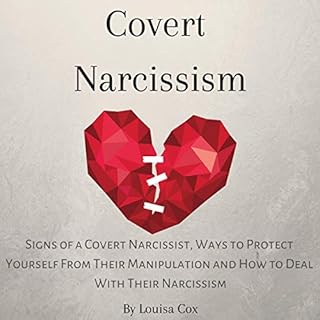
Covert Narcissism
- Signs of a Covert Narcissist, Ways to Protect Yourself from Their Manipulation and How to Deal with Their Narcissism
- Auteur(s): Louisa Cox
- Narrateur(s): Heidi Baker
- Durée: 1 h et 44 min
- Version intégrale
-
Au global13
-
Performance9
-
Histoire9
Covert narcissism is a hidden and concealed form of narcissism, making it all the more difficult for the abuser to be confronted or "outed" for their behavior. Covert narcissism is a passive-aggressive, hostile, and toxic form of abuse that makes victims feel hopeless, unheard, hurt, and confused by the abusers' behavior.
-
-
Trauma bonded
- Écrit par Angela W. le 2022-08-27
Auteur(s): Louisa Cox

-
Somatics
- Reawakening The Mind's Control Of Movement, Flexibility, And Health
- Auteur(s): Thomas Hanna
- Narrateur(s): Chris Kipiniak
- Durée: 6 h et 26 min
- Version intégrale
-
Au global3
-
Performance2
-
Histoire2
Building on the foundation laid by Moshe Feldenkrais, Thomas Hanna's groundbreaking work completely redefines the body's potential for withstanding decline. His gentle program for the mind and body proves once and for all that so many problems we accept as inevitable over time -- chronic...
-
-
Outstanding book on Somatics
- Écrit par Karusia Wroblewski le 2021-03-01
Auteur(s): Thomas Hanna
Thank you, Dana Morningstar for recycling your trauma to the highest good for all!
Eleanor Cowan, Canadian author
Outstanding !
Un problème est survenu. Veuillez réessayer dans quelques minutes.
Much needed clarity
Un problème est survenu. Veuillez réessayer dans quelques minutes.
This book is good if you are someone who has been in a relationship with a narcissist in that it provides examples of how they work, what they can do and how they go about doing it. It also provides decent advice on how you might handle the personal trauma you might experience after having realized what it was you were with. In my case it helped a bit, much of the information I was already aware of and, by the end of the book, I was left with a feeling that there could be a little bit more in depth information provided. Overall, though I would give it a 4.25 rating.
As an Audible book, it was read by the author and she has a wonderful voice and read the content excellently and kept you engaged.
If you need a good primer in to how a Narcissist can and will impact you directly I recommend this work. If, like me, you need something more informative on how to deal with someone who is impacting you through someone else this book is still good as a base but you will need to look elsewhere.
A Good Introduction to Narcissism
Un problème est survenu. Veuillez réessayer dans quelques minutes.
Not for NPD Survivors
Un problème est survenu. Veuillez réessayer dans quelques minutes.