Obtenez 3 mois à 0,99 $/mois

OFFRE D'UNE DURÉE LIMITÉE
Page de couverture de Desirability is the new Margin - from Paris 🇫🇷

Desirability is the new Margin - from Paris 🇫🇷

Desirability is the new Margin - from Paris 🇫🇷

Auteur(s): The Deep Dive Team
Écouter gratuitement

À propos de cet audio

Desirability Is the New Margin is the podcast where luxury, culture, and business strategy converge. Broadcasting from Paris, each episode unpacks the hidden forces shaping global taste, from LVMH and Hermès to Vogue and Nike. Seasoned voices in culture and strategy go beyond quarterly results to explore why desirability, not scale, is the new driver of growth, power, and cultural capital.

With insights drawn from boardrooms, runways and culture, this is essential listening for executives, investors, and decision-makers who want to understand how narrative, myth, storytelling and soft power are redefining business in the 21st century.

Read analysis here: https://marcinparis.substack.com

Art Développement commercial et entrepreneuriat Entrepreneurship Gestion et leadership Économie
Épisodes
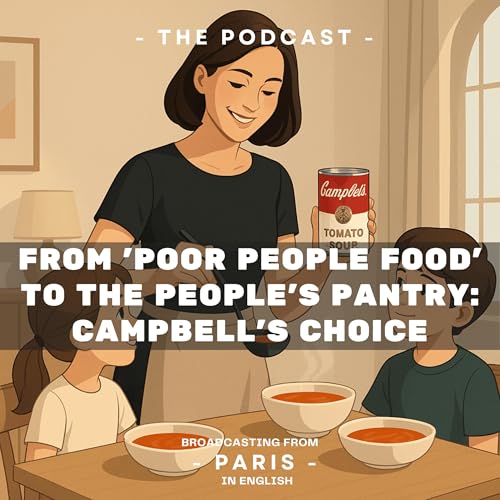
  • From 'Poor People Food' to The People's Pantry: Campbell's Choice. How Campbell's Can Turn a Scandal into a new Social Contract where Dignity Becomes Profit
    Dec 5 2025

    In this episode, we open your pantry and your politics by asking a simple question: what happens when the brand that quietly fed America for 155 years suddenly seems ashamed of the people it feeds? Using the recent Campbell’s VP scandal as our entry point, we treat that infamous “poor people food” comment not as mere PR drama, but as a diagnostic of something deeper: a crisis of dignity in mass-market capitalism.

    Guided by Marc Abergel’s analysis From Poor People Food to The People’s Pantry, we reframe Campbell’s as a “Cultural Nation” – alongside Costco, IKEA, even Hermès – and explore how affordability, when owned with pride, can be as sovereign as any luxury price tag. From Costco’s $1.50 hot dog to IKEA’s democratic design, we build a four-pillar playbook for how Campbell’s could turn shame into sovereignty and rebuild trust with the people who count every dollar.

    If you’ve ever reached for that red-and-white can on a hard night, this conversation is about you, and about why the next great corporate innovation might be engineered, affordable constancy.

    1. “How do you steward dignity when your primary design constraint is affordability?”
    2. “That simple red and white can isn’t about aspiration—it’s about continuity.”
    3. “Campbell’s has functioned as a quiet piece of national infrastructure.”
    4. “For 150 million Americans, Campbell’s isn’t just on the shelf; it’s carried in their emotional memory banks.”
    5. “Campbell’s doesn’t ask you to reach for it, it asks you to rely on it.”
    6. “The problem isn’t the affordability; it’s the shame of the affordability.”
    7. “Costco’s $1.50 hot dog isn’t a loss leader; it’s a social contract written in mustard and bun.”
    8. “Affordability isn’t a failure of design, it’s the ultimate design challenge.”
    9. “The message, whether it’s IKEA or Campbell’s, is: you deserve beauty and comfort, even on a budget.”
    10. “The greatest corporate innovation today may not be new premium products, but engineered, affordable constancy that protects the dignity of the most financially constrained customer.”

    Voir plus Voir moins
    13 min
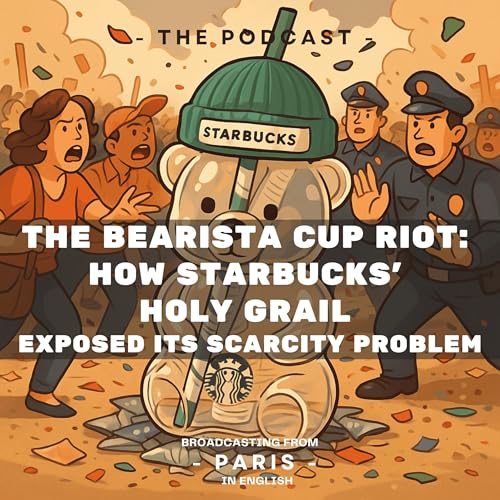
  • The Bearista Cup Riot: How Starbucks’ Holy Grail Exposed Its Scarcity Problem
    Nov 24 2025

    A $30 glass teddy bear mug caused riots, police calls, and a secondary market listing cups for up to $50,000. Drawing on Marc Abergel's analysis, we unpack the Starbucks Bearista Cup launch as a live-fire experiment in modern desirability – and how a mass coffee chain accidentally moved like Hermès, then apologized for it.

    We show how Starbucks behaves less like a coffee shop and more like a “cultural nation”: 75 million rewards members, seasonal rituals like Pumpkin Spice and Red Cup Day and decades of collectible nostalgia.

    We break down the brutal math of the launch – where resellers made more than three times Starbucks’ own revenue – and diagnose the four “sovereignty failures” in access, resale, narrative, and data that turned a coronation into a street fight. Then we flip it: a concrete “desirability playbook” for any brand with a fanbase, from Nike to Trader Joe’s, on how to choreograph access, own the aftermarket, author the story, and reward the people who camp out at 3 a.m. This isn’t just about coffee; it’s about who owns desire in your category.

    Top quotes:

    • “Starbucks proved they have the cultural power of a luxury brand – they just don’t yet have the infrastructure to steward it.”
    • “That 75 million rewards list isn’t a customer file, it’s a constituency.”
    • “The people lining up at 3 a.m. didn’t just want the cup – they wanted to be first. Access equals status.”
    • “You’ve got a $30 glass bear triggering the same behavior as a multimillion-dollar Birkin at auction; the psychology is identical, the difference is control.”
    • “Starbucks did all the work to build the desire, then watched other people walk away with more than three times the profit. That’s the brutal math.”
    • “It was a battlefield, not a ceremony – a luxury brand would never treat its inner circle that way.”
    • "The narrative of the launch was dictated by the TikTok algorithm, not by the brand.”
    Voir plus Voir moins
    14 min
  • Soft Launch: Bezos x Vogue & Condé Nast | Amazon Founder Bezos' Met Gala sponsorship is less philanthropy than a first move to takeover fashion’s Ministry of Culture
    Nov 19 2025

    Jeff Bezos doesn’t just want boxes at your door, he wants the last mile of culture. In this episode, we unpack the persistent rumour, through the analysis of Marc Abergel, a luxury executive based in Paris, that Amazon’s founder is coming for Condé Nast and Vogue, not as a media trophy, but as the ultimate cultural operating system.

    We break down why this would be the biggest power grab in luxury and media in a generation: the king of logistics fusing with fashion’s Ministry of Culture, Anna Wintour as “cultural general” to Bezos’ empire and what it means when taste itself becomes a cloud service optimized for conversion.

    For CEOs, CMOs and creative leaders, this is not about magazines. It’s about who owns desire, who writes the canon of taste and whether LVMH, Chanel, Hermès and Kering can defend their cultural sovereignty in a world where desirability is the new margin.

    Full analysis here: https://marcinparis.substack.com/p/soft-launch-bezos-x-vogue-and-conde

    Selected quotes from episode:

    1. “This isn’t a media deal, it’s the biggest cultural power grab of the decade.”
    2. “Bezos has already conquered the last mile of commerce; now he wants the last mile of culture.”
    3. “Amazon knows what you buy. Vogue knows what you aspire to buy. This is the vertical integration of influence.”
    4. “To own Vogue is to own the compass that orients aspiration for the entire industry.”
    5. “If Bezos becomes Caesar, Anna Wintour is his cultural general, his infrastructure, her authority.”
    6. “Under Bezos, Vogue could become a cultural AWS: taste on demand, provisioned at scale, rented by any brand that wants instant legitimacy.”
    7. “Luxury houses risk becoming vendors inside someone else’s cultural nation of taste, negotiating from occupied territory.”
    8. “This rumour signals a new reality: culture is the ultimate infrastructure, because it generates demand in the first place.”
    9. “Luxury can’t answer this with another seasonal campaign; it needs a sovereign stack for culture and taste.”

    Read more

    Soft Launch: Bezos x Vogue & Condé Nast | Amazon Founder Bezos' Met Gala sponsorship is less philanthropy than a first move to takeover fashion’s Ministry of Culture

    Voir plus Voir moins
    14 min
Pas encore de commentaire