Épisodes

  • Why Repressed Emotions Distort Your Reality (According to Your Nervous System)
    Dec 8 2025
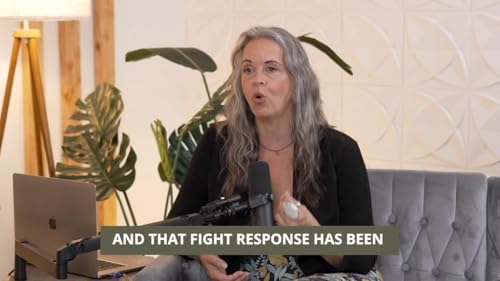
    Have you ever found yourself immediately reaching for a coping behavior like scrolling or stress eating, without even realizing what emotion triggered it? That could be a sign of emotional repression—a survival mechanism that protects you, but at a huge cost to your health and boundaries. In part one of this essential two-part series on emotional health and post-traumatic growth, co-hosts Elisabeth Kristof (founder of BrainBased.com) and Jennifer Wallace (Neurosomatic Psychedelic Preparation and Integration Guide) dive into the powerful energy of anger. They are joined by their friend and lead educator, Matt Bush, an international applied neurology expert and founder of Next Level Neuro. This conversation explores how a lifetime of suppressed anger, tied to the fight response and complex trauma, creates a toxic internal environment, linking chronic stress to diagnoses like Stage 3 cancer. You will learn the crucial difference between conscious suppression and unconscious repression, how this shifts your entire neurological perception of the world, and what safe, structured steps you can take to begin discharging this vital energy from your body. This episode is for anyone who struggles with quick reactivity, feeling disconnected from what they feel, or understanding the deep mind-body connection of stored emotion. Timestamps: 00:00 Introduction: anger, fight response, and health diagnosis. 01:37 Emotional expression & its vitality for nervous system health and reducing stress. 07:06 Perceived vs. real threat and the roots of repression in childhood. 16:45 Defining suppression versus repression as protective mechanisms. 23:42 The neurological and physiological consequences of repression. 35:34 Anger as a natural response to a boundary violation and safe release practices. 42:47 The link between repressed anger, boundaries, and immune system dysfunction. 48:28 Rewiring for a new homeostasis and the role of epigenetics. Key Takeaways: Emotional repression—the unconscious blocking of emotions—is a trauma-informed survival strategy that traps the nervous system in a constant state of threat response, leading to the buildup of toxic stress hormones. Repression is often tied to complex post-traumatic stress, where a child's nervous system was unable to process big emotions and lacked co-regulation from caregivers, learning that emotional expression was unsafe or threatening. When repressed, anger (the natural response to a boundary violation) becomes internalized, resulting in behaviors like overworking, people-pleasing, and, ultimately, immune system dysregulation (e.g., autoimmune conditions). Chronic repression can alter your entire perception of the world, making everyday situations feel threatening (non-cognitive), and driving unconscious avoidance or numbing behaviors (e.g., binging, workaholism, mindless scrolling). Healing involves creating a safe and structured environment (alone or with a trusted person/coach) to gradually access and discharge emotional energy, using neurosomatic intelligence tools to repattern the nervous system. Resources Mentioned: NSI Foundations Bundle (Self-Paced Program): NeurosomaticIntelligence.com/Foundations Boundary Rewire (4-Module Neurosomatic Journey): BoundaryRewire.com Book: When the Body Says No: Understanding the Stress-Disease Connection by Gabor Maté Subscribe on your favorite audio platform or join us on YouTube so you don't miss Part 2 next week, where we dive deeper into shame, grief, and joy! 👉 Ready to ground your work in neuroscience and somatics? Start with the NSI Foundations Bundle — 3 self-paced workshops blending applied neuroscience, somatics, and trauma-informed tools: www.neurosomaticintelligence.com/foundations 👉 For deeper support this season, explore Boundary Rewire —a 5-module neurosomatic course designed to help you repattern stress responses and create boundaries that feel safe, natural, and grounded in authenticity. It's just $27 through the end of the year. boundaryrewire.com Disclaimer: Trauma Rewired podcast is intended to educate and inform but does not constitute medical, psychological or other professional advice or services. Always consult a qualified medical professional about your specific circumstances before making any decisions based on what you hear. We share our experiences, explore trauma, physical reactions, mental health and disease. If you become distressed by our content, please stop listening and seek professional support when needed. Do not continue to listen if the conversations are having a negative impact on your health and well-being. If you or someone you know is struggling with their mental health, or in mental health crisis and you are in the United States you can 988 Suicide and Crisis Lifeline. If someone's life is in danger, immediately call 911. We do our best to stay current in research, but older episodes are always available. We don't warrant or guarantee that this...
    Voir plus Voir moins
    56 min
  • The Childhood Pattern That Silence's Your Emotions
    Dec 1 2025
    What if "nothing happened" in your childhood, yet you still feel numb, flooded, or stuck in people pleasing or hyper-independence? This episode explores childhood emotional neglect, an often overlooked Adverse Childhood Experience that can wire the nervous system away from felt safety, expression, and connection. We look at how a lack of attunement can shape brain function, stress responses, and adult relationships, and why naming the pattern opens a path to repair. In this conversation, co-hosts Elisabeth Kristof and Jennifer Wallace map out how emotional neglect shows up across attachment patterns, boundaries, and health outputs. They share trauma-informed context, lived reflections, and practical neurosomatic tools to rebuild capacity for feeling, processing, and connection without blame. You will learn how repression becomes protection, why hyper-independence can feel "safer" than asking for help, and where to begin with gentle, minimum-effective-dose practices to increase interoceptive awareness and co-regulation in daily life. This episode is for anyone who grew up in a "pretty good" home yet struggles with shutdown or overwhelm, for cycle-breaking parents, and for practitioners supporting clients with complex stress patterns. You will leave with language for your experience and first steps to begin rewiring. Timestamps: 00:00 Why emotional neglect is an overlooked ACE 05:00 Defining emotional neglect and attunement needs in development 11:00 Repression as protection and links to adult health outputs 18:00 Attachment patterns, people pleasing, and hyper-independence 25:00 Practicing self-compassion while breaking cycles 32:00 Parenting notes: modeling emotions and co-regulation 39:00 Neurosomatic tools and first steps for repair Key Takeaways: Emotional neglect can be subtle yet impactful, shaping nervous system patterns, attachment, and long-term health without assigning blame. Repression often begins when big emotions are not met with co-regulation; later, it can appear as numbness, pain, inflammation, or compulsive coping. Hyper-independence can be a protective strategy that avoids the vulnerability of asking for support. Gentle, consistent practices that build interoceptive awareness and capacity help contribute to feeling safe again. Modeling emotional expression and staying present are powerful ways caregivers support nervous system development. Resources Mentioned: Attachment Theory research (John Bowlby and colleagues) Neurosomatic Intelligence Coaching Certification (NSI) Sacred Synapse on YouTube (psychedelics, neuroscience, NSI education) https://www.youtube.comhttps://www.youtube.com/channel/UC0_Bz9OvfHN0nvQos4kfi9Q Explore working with Jennifer www.illuminatedwithjennifer.com Boundary Rewire Course: boundaryrewire.com – Repattern your nervous system for safer, more authentic boundaries. If this conversation resonated with you, subscribe to Trauma Rewired wherever you listen to podcasts and leave a review to help more people discover trauma-informed education grounded in neuroscience. 👉 For deeper support this season, explore Boundary Rewire —a 5-module neurosomatic course designed to help you repattern stress responses and create boundaries that feel safe, natural, and grounded in authenticity. It's just $27 through the end of the year. boundaryrewire.com 👉 You can also continue learning tools for nervous system regulation and post-traumatic growth at rewiretrial.com Disclaimer: Trauma Rewired podcast is intended to educate and inform but does not constitute medical, psychological or other professional advice or services. Always consult a qualified medical professional about your specific circumstances before making any decisions based on what you hear. We share our experiences, explore trauma, physical reactions, mental health and disease. If you become distressed by our content, please stop listening and seek professional support when needed. Do not continue to listen if the conversations are having a negative impact on your health and well-being. If you or someone you know is struggling with their mental health, or in mental health crisis and you are in the United States you can 988 Suicide and Crisis Lifeline. If someone's life is in danger, immediately call 911. We do our best to stay current in research, but older episodes are always available. We don't warrant or guarantee that this podcast contains complete, accurate or up-to-date information. It's very important to talk to a medical professional about your individual needs, as we aren't responsible for any actions you take based on the information you hear in this podcast. We invite guests onto the podcast. Please note that we don't verify the accuracy of their statements. Our organization does not endorse third-party content and the views of our guests do not necessarily represent the views of our organization. We talk about general neuro-science and nervous system health, but you are ...
    Voir plus Voir moins
    50 min
  • Are You Living In An Emotional Flashback Without Knowing It
    Nov 24 2025
    What if those sudden waves of fear, shame, or despair are not "too much," but your nervous system remembering something your mind cannot see yet? In this episode, co-hosts Elisabeth Kristof, founder of the Neurosomatic Intelligence framework and the NSI Coaching Certification, and Jennifer Wallace, NSI educator and founder of Sacred Synapse, return to one of Trauma Rewired's most downloaded episodes: emotional flashbacks in complex trauma. Through personal stories, they explore how emotional flashbacks can shift perception, body sensations, and behavior in real time, and how NSI helps map these experiences as neurotags in the brain and body. You will learn how to recognize emotional and somatic flashbacks, why tiny cues can create giant waves of activation, and how these states connect with emotional neglect, toxic shame, boundary struggles, and other patterns of complex trauma. Elisabeth and Jennifer share how building daily capacity and emotional processing skills has changed the frequency and intensity of their own flashbacks over time. This episode offers a grounded, neuroscience-informed look at emotional flashbacks and post-traumatic growth. You will walk away with language to name your experience, a deeper understanding of how "state creates story," and hopeful frameworks for working with your nervous system more gently. Timestamps: 00:00 – Personal Story of an Emotional Flashback 00:39 – Who This Episode Is For 03:08 – What an Emotional Flashback Is (NSI Definition) 08:53 – The Greenbelt Experiment & Perception Shift 16:22 – Somatic Flashbacks & CPTS Patterns 22:18 – Holidays, Medicine Work & Intense Emotional Activation 33:05 – State Creates Story 45:15 – Repression, Completion & Daily Practice 50:21 – Post-Traumatic Growth Key Takeaways: Emotional flashbacks are often somatic flashbacks, with intense body sensations and state shifts even when there is no clear narrative memory. From an NSI perspective, a flashback is a neurotag activation that changes how the brain filters sensory input, which can make familiar places or people suddenly feel unsafe. Emotional flashbacks in complex trauma are intertwined with toxic shame, harsh inner critics, emotional neglect, attachment wounds, and boundary struggles. Behaviors like binge eating, drinking, overworking, shutdown, or chronic pain and inflammation can be protective outputs and important clues that a survival pattern has been activated. Consistent neurosomatic practice, emotional processing, rest, and supportive relationships can reduce the frequency and intensity of emotional flashbacks and support long-term post-traumatic growth. Resources Mentioned: Boundary Rewire Course: boundaryrewire.com – Repattern your nervous system for safer, more authentic boundaries. Rewire Trial: rewiretrial.com – Learn neurosomatic tools to regulate and rewire your system. BrainBased.com – Explore applied neurology and somatic tools for behavior change and resilience. Neurosomatic Intelligence Coaching Certification – neurosomaticintelligence.com Sacred Synapse on Youtube www.youtube.com/sacredsynapse-23 Call to Action: If this conversation resonated with you, subscribe to Trauma Rewired wherever you listen to podcasts and leave a review to help more people discover trauma-informed education grounded in neuroscience. For deeper support this season, explore Boundary Rewire—a 5-module neurosomatic course designed to help you repattern stress responses and create boundaries that feel safe, natural, and grounded in authenticity. It's just $27 through the end of the year. Disclaimer: Trauma Rewired podcast is intended to educate and inform but does not constitute medical, psychological or other professional advice or services. Always consult a qualified medical professional about your specific circumstances before making any decisions based on what you hear. We share our experiences, explore trauma, physical reactions, mental health and disease. If you become distressed by our content, please stop listening and seek professional support when needed. Do not continue to listen if the conversations are having a negative impact on your health and well-being. If you or someone you know is struggling with their mental health, or in mental health crisis and you are in the United States you can 988 Suicide and Crisis Lifeline. If someone's life is in danger, immediately call 911. We do our best to stay current in research, but older episodes are always available. We don't warrant or guarantee that this podcast contains complete, accurate or up-to-date information. It's very important to talk to a medical professional about your individual needs, as we aren't responsible for any actions you take based on the information you hear in this podcast. We invite guests onto the podcast. Please note that we don't verify the accuracy of their statements. Our organization does not endorse third-party content and the views of our ...
    Voir plus Voir moins
    56 min
  • 5 Nervous-System Errors We Make Every Holiday
    Nov 17 2025
    What if your holiday stress wasn't about what's happening now—but about what your nervous system remembers? In this episode, co-hosts Elisabeth Kristof and Jennifer Wallace unpack the neuroscience of the holidays, exploring how sensory cues like songs, smells, or family dynamics can reactivate old emotional patterns stored in the body. Together, they explain how neurotags—the networks of neurons linking memory, emotion, and physical response—shape our experience of the season and why this time of year can trigger emotional flashbacks or overwhelm. You'll learn how to recognize when the past is replaying through your nervous system, how cycles like circadian and seasonal rhythms affect capacity, and why rest is a biological need—not a luxury. The conversation moves from emotional regulation and boundaries to post-traumatic growth, exploring how slowing down and honoring natural rhythms can transform holiday survival into healing and integration. This episode offers neuroscience-backed practices to help you reclaim presence, build new associations with safety, and rewrite your nervous system's holiday story. Timestamps: 0:00 – Seasonal mismatch & why holidays strain the nervous system 2:43 – What are neurotags and how they shape holiday reactions 6:39 – Emotional flashbacks: the body's real-time state shifts 10:20 – Orientation and regulation tools for holiday triggers 12:26 – Boundaries as nervous system protection 18:19 – Honoring natural cycles: seasonal, menstrual, and circadian rhythms 27:30 – Post-traumatic growth through rest, reflection, and integration Key Takeaways: Neurotags explain why certain holiday cues can trigger powerful emotional and physical responses. Emotional flashbacks are not regressions—they're real-time nervous system shifts that can be regulated through awareness and sensory grounding. Setting boundaries is a form of nervous system protection, not disconnection. Seasonal, menstrual, and circadian rhythms all affect capacity—rest is a biological requirement for resilience. Post-traumatic growth happens in the pauses—through rest, orientation, and compassionate self-boundaries. Resources Mentioned: Boundary Rewire Course: boundaryrewire.com – Repattern your nervous system for safer, more authentic boundaries. Rewire Trial: rewiretrial.com – Learn neurosomatic tools to regulate and rewire your system. BrainBased.com – Explore applied neurology and somatic tools for behavior change and resilience. Neurosomatic Intelligence Coaching Certification – neurosomaticintelligence.com Sacred Synapse https://www.youtube.com/@sacredsynapse-23 If this conversation resonated with you, subscribe to Trauma Rewired wherever you listen to podcasts and leave a review to help more people discover trauma-informed education grounded in neuroscience. For deeper support this season, explore Boundary Rewire—a 5-module neurosomatic course designed to help you repattern stress responses and create boundaries that feel safe, natural, and grounded in authenticity. It's just $27 through the end of the year. Disclaimer: Trauma Rewired podcast is intended to educate and inform but does not constitute medical, psychological or other professional advice or services. Always consult a qualified medical professional about your specific circumstances before making any decisions based on what you hear. We share our experiences, explore trauma, physical reactions, mental health and disease. If you become distressed by our content, please stop listening and seek professional support when needed. Do not continue to listen if the conversations are having a negative impact on your health and well-being. If you or someone you know is struggling with their mental health, or in mental health crisis and you are in the United States you can 988 Suicide and Crisis Lifeline. If someone's life is in danger, immediately call 911. We do our best to stay current in research, but older episodes are always available. We don't warrant or guarantee that this podcast contains complete, accurate or up-to-date information. It's very important to talk to a medical professional about your individual needs, as we aren't responsible for any actions you take based on the information you hear in this podcast. We invite guests onto the podcast. Please note that we don't verify the accuracy of their statements. Our organization does not endorse third-party content and the views of our guests do not necessarily represent the views of our organization. We talk about general neuro-science and nervous system health, but you are unique. These are conversations for a wide audience. They are general recommendations and you are always advised to seek personal care for your unique outputs, trauma and needs. We are not doctors or licensed medical professionals. We are certified neuro-somatic practitioners and nervous system health/embodiment coaches. We are not your doctor or medical ...
    Voir plus Voir moins
    35 min
  • The Neuroscience of Grief: How the Brain Rewrites Safety and Self After Loss
    Nov 10 2025
    What if grief isn't something to "get over," but a biological process that reshapes your sense of self, capacity, and connection? In this episode, co-hosts Elisabeth Kristof and Jennifer Wallace are joined by Piper Rose—founder of Shadowplay Coaching and Director of Operations and Continuing Education at NSI—to explore grief through the lens of neuroscience and the body. Together, they examine how the brain and body respond to major transitions, why sensations like heaviness or ache are part of adaptive prediction, and how practices that mobilize breath, voice, and thoracic movement can support your physiology's innate ability to heal. You'll hear why grief looks different for everyone—from action-oriented logistics to relational sharing—and how both are valid paths. The conversation moves through the concept of a minimum effective dose for grief work, the overlap between pain and emotional circuits, the role of co-regulation, and why meaning-making often comes later in the process. Anger and sacred rage also get their space here—alongside pathways back to nourishment. Whether you're navigating loss, identity transitions, or the transformations that come with growth, this episode offers grounded language, body-based tools, and community-centered practices to help you fall apart, be held, and reform with greater capacity. Timestamps: 00:00 — Grief as a physiological process, not a problem to fix 06:30 — How the brain maps grief: interoception, prediction, pain circuits 14:10 — Two grief styles: action orientation and expressive processing 21:40 — Minimum-effective-dose grief practice and daily resourcing 29:00 — Anger inside grief, sacred rage, and safe expression 36:20 — Belonging, co-regulation, and being held by people or the earth 44:15 — Timing of meaning-making and avoiding premature silver linings 51:00 — Practical ways to start: personal, relational, and community supports Key Takeaways: Grief is an adaptive social-threat response that updates your body's internal maps. The same networks tied to physical pain can interpret loss, which is why grief can ache. People grieve differently. Action and expression are both valid pathways. Small, repeatable practices help build capacity without overwhelm. Co-regulation and clear support reduce isolation and soften protective patterns. Resources Mentioned: NeuroSomatic Intelligence (NSI) Foundations Bundle — Three on-demand workshops to integrate applied neuroscience and somatics into your work: https://neurosomaticintelligence.com/foundations BrainBased.com — Community using applied neurology and somatics: https://brainbased.com Shadowplay Coaching (Piper Rose) — Relationship and grief-support coaching. If this episode supported you, subscribe and leave a review so others can find the show. Share it with someone who could use compassionate, science-informed language for grief. If you're a coach, therapist, or practitioner ready to integrate applied neuroscience and somatics into your work, start with the NSI Foundations Bundle at NeurosomaticIntelligence.com/Foundations. Disclaimer: Trauma Rewired podcast is intended to educate and inform but does not constitute medical, psychological or other professional advice or services. Always consult a qualified medical professional about your specific circumstances before making any decisions based on what you hear. We share our experiences, explore trauma, physical reactions, mental health and disease. If you become distressed by our content, please stop listening and seek professional support when needed. Do not continue to listen if the conversations are having a negative impact on your health and well-being. If you or someone you know is struggling with their mental health, or in mental health crisis and you are in the United States you can 988 Suicide and Crisis Lifeline. If someone's life is in danger, immediately call 911. We do our best to stay current in research, but older episodes are always available. We don't warrant or guarantee that this podcast contains complete, accurate or up-to-date information. It's very important to talk to a medical professional about your individual needs, as we aren't responsible for any actions you take based on the information you hear in this podcast. We invite guests onto the podcast. Please note that we don't verify the accuracy of their statements. Our organization does not endorse third-party content and the views of our guests do not necessarily represent the views of our organization. We talk about general neuro-science and nervous system health, but you are unique. These are conversations for a wide audience. They are general recommendations and you are always advised to seek personal care for your unique outputs, trauma and needs. We are not doctors or licensed medical professionals. We are certified neuro-somatic practitioners and nervous system health/embodiment coaches. We are not your doctor or medical ...
    Voir plus Voir moins
    1 h et 5 min
  • Inside the Jealous Mind: What Neuroscience Reveals About Threat, Envy, and the Drive for Connection
    59 min
  • Post Traumatic Growth vs Post Traumatic Wisdom; Emotional Processing and Female Nervous System AUDIO
    Oct 27 2025
    Functional healing isn't about bouncing back, it's about becoming more whole. In this episode of Trauma Rewired, Elisabeth Kristof and Jennifer Wallace are joined by somatic expert Veronica Rottman, founder of Soma School, to explore what happens when post-traumatic growth deepens into post-traumatic wisdom. Together, they unpack how healing often involves grief, identity shifts, and surrender, not just resilience and strength. You'll hear how emotions are constructed in the body, why dissociation and fawning are intelligent survival responses, and how safety is rebuilt through slow, titrated somatic experiences. We discuss how cultural narratives about "getting stronger" can overlook the body's need for modulation, rest, and relational repair. You'll learn how capacity building is nonlinear, why co-regulation and oxytocin-based safety cues matter, and how tending to wounds rather than fixing them can transform pain into embodied wisdom. Join us for a workshop, taking a deeper dive into Hormones, Stress and the Female Nervous System, combining applied neuroscience and somatics to support female cycles: https://neurosomaticintelligence.com/female-nervous-system-workshop/ Timestamps: 00:00 Welcome and framing: growth vs. wisdom 05:30 Emotions as predictions and survival patterning 14:00 Dissociation, boundaries, and identity shifts 22:30 Somatic titration, oxytocin, and co-regulation practices 31:00 Capacity, achievement, and health trade-offs 39:30 Reframing fawn and freeze as intelligent responses 47:00 Cyclical needs, rest, and redefining growth 54:00 Integration, tending, and systemic context 59:00 Takeaways and next steps Key Takeaways: Post-traumatic wisdom includes grief, ambiguity, and letting identities evolve, not only resilience. Emotions are constructed from interoception and predictions; safety cues can update those predictions. Small, consistent somatic doses help the system perceive more safety without overwhelm. Fawn and freeze are adaptive; meeting them with curiosity reduces shame and supports change. Capacity building is relational; co-regulation and oxytocin-supportive practices can expand what feels possible. Resources Mentioned: Soma School – founded by Veronica Rottman Neurosomatic Intelligence Coaching Certification Brain Based The Highly Sensitive Person by Elaine Aron (via Alanis Morissette interview) Peter Levine on Somatic Titration and Safety Dr. Stephen Porges and the Polyvagal Perspective Lisa Feldman Barrett – Theory of constructed emotion Vincent Felitti – The ACE (Adverse Childhood Experiences) Study Raja Selvam – Integral Somatic Psychology Call to Action: If this episode offered you a new perspective on healing—or gave language to something you've felt but couldn't name—share it with someone who needs to hear it. And don't forget to subscribe on your favorite audio platform or tap the bell on YouTube so you never miss an episode. If you've ever noticed your focus, energy, or emotions shift throughout your cycle, this next workshop will help you understand why. On November 13th at 12pm Central, Elisabeth Kristof and Veronica Rottman will explore how your hormones interact with your nervous system—and how somatic tools can support you through every phase. Join live or catch the replay at https://neurosomaticintelligence.com/female-nervous-system-workshop/ Disclaimer: Trauma Rewired podcast is intended to educate and inform but does not constitute medical, psychological or other professional advice or services. Always consult a qualified medical professional about your specific circumstances before making any decisions based on what you hear. We share our experiences, explore trauma, physical reactions, mental health and disease. If you become distressed by our content, please stop listening and seek professional support when needed. Do not continue to listen if the conversations are having a negative impact on your health and well-being. If you or someone you know is struggling with their mental health, or in mental health crisis and you are in the United States you can 988 Suicide and Crisis Lifeline. If someone's life is in danger, immediately call 911. We do our best to stay current in research, but older episodes are always available. We don't warrant or guarantee that this podcast contains complete, accurate or up-to-date information. It's very important to talk to a medical professional about your individual needs, as we aren't responsible for any actions you take based on the information you hear in this podcast. We invite guests onto the podcast. Please note that we don't verify the accuracy of their statements. Our organization does not endorse third-party content and the views of our guests do not necessarily represent the views of our organization. We talk about general neuro-science and nervous system health, but you are unique. These are conversations for a wide audience. They are general recommendations and ...
    Voir plus Voir moins
    1 h et 2 min
  • Self Compassion and How The Science of Kindness Changes Your Brain
    Oct 20 2025
    In this conversation with Dr. Kristin Neff, Associate Professor of Educational Psychology at the University of Texas and the pioneering researcher who introduced self-compassion into modern psychology, we explore why self-esteem is a fair-weather friend while self-compassion provides steady support through challenge and failure. Dr. Neff shares how her early mindfulness practice reshaped her own relationship with shame, and how research now shows that self-criticism keeps the body's threat system active while compassion engages the brain's caregiving network—reducing cortisol, inflammation, and emotional reactivity. Together we examine the three pillars of self-compassion—mindfulness, common humanity, and kindness—and how these transform both personal healing and co-regulation. You'll learn about the concept of backdraft (why opening to care can surface old pain), the difference between tender and fierce compassion, and why caring for yourself actually strengthens motivation and performance. If you've ever felt that being softer might make you weaker, this episode offers a science-based reframe: self-compassion is strength regulated. Timestamps: 00:00 Why self-compassion matters in trauma healing 05:10 Self-compassion vs. self-esteem: stable worth vs. comparison 12:30 Three components: mindfulness, common humanity, kindness 20:45 Threat vs. care systems; shame, rumination, regulation 29:00 "Backdraft" and pacing: minimum-effective-dose practices 37:20 Tender & fierce self-compassion: soothing + boundaries 46:15 Motivation myths: keeping your edge without self-attack 55:00 Post-traumatic growth, wisdom, and everyday practices Key Takeaways: Self-esteem is contingent; self-compassion is unconditional. Worth isn't earned—it's acknowledged, especially when things go wrong. Three pillars: notice suffering (mindfulness), remember you're not alone (common humanity), respond with support (kindness). Threat vs. care: self-criticism can keep the threat system active; compassion practices can engage caregiving circuits and support regulation. Expect "backdraft." Opening to care may surface old pain—go slow, titrate, choose tools that feel safe for your system. Compassion supports performance. Less shame → better learning, repair, and values-aligned motivation. Resources Mentioned: Self-Compassion (book) - Kristin Neff Fierce Self-Compassion (book) - Kristin Neff Neurosomatic Intelligence Coaching Certification - NeurosomaticIntelligence.com BrainBased community - BrainBased.com Call to Action: If this episode brought you clarity, comfort, or a deeper understanding of your emotional world, share it with someone who needs to hear it. Don't forget to subscribe on your favorite audio platform or hit the bell on YouTube so you never miss an episode. 👉 Want to learn how to rewire your nervous system, strengthen emotional regulation, and support others in doing the same? Explore the Neurosomatic Intelligence Certification at NeurosomaticIntelligence.com. Healing starts with integration—when your brain and body begin working together, real regulation becomes possible. Disclaimer: Trauma Rewired podcast is intended to educate and inform but does not constitute medical, psychological or other professional advice or services. Always consult a qualified medical professional about your specific circumstances before making any decisions based on what you hear. We share our experiences, explore trauma, physical reactions, mental health and disease. If you become distressed by our content, please stop listening and seek professional support when needed. Do not continue to listen if the conversations are having a negative impact on your health and well-being. If you or someone you know is struggling with their mental health, or in mental health crisis and you are in the United States you can 988 Suicide and Crisis Lifeline. If someone's life is in danger, immediately call 911. We do our best to stay current in research, but older episodes are always available. We don't warrant or guarantee that this podcast contains complete, accurate or up-to-date information. It's very important to talk to a medical professional about your individual needs, as we aren't responsible for any actions you take based on the information you hear in this podcast. We invite guests onto the podcast. Please note that we don't verify the accuracy of their statements. Our organization does not endorse third-party content and the views of our guests do not necessarily represent the views of our organization. We talk about general neuro-science and nervous system health, but you are unique. These are conversations for a wide audience. They are general recommendations and you are always advised to seek personal care for your unique outputs, trauma and needs. We are not doctors or licensed medical professionals. We are certified neuro-somatic practitioners and nervous system health/embodiment coaches. We are not your ...
    Voir plus Voir moins
    50 min