Épisodes

  • From Mold To Market Value: The Real Reasons People Fix Crawl Spaces
    Dec 15 2025

    Send us a text

    The air you breathe and the floors you walk on both depend on what’s happening under your feet. We take you beneath the house to reveal the three real reasons homeowners choose crawl space encapsulation: healthier indoor air, a stronger structure, and smoother real estate transactions. Along the way, we cut through common myths, explain why quick patches often backfire, and share the steps that turn a damp, musty space into a clean, controlled foundation for your home.

    First, we focus on indoor air quality and moisture control. Mold and dust mites thrive when humidity climbs, and the stack effect pulls crawl space air into living areas. We walk through how a sealed vapor barrier, proper air sealing, and a right-sized dehumidifier work together to hold relative humidity near 50 percent. We also dig into soil gases—radon, methane, and other vapors—and why a poorly installed liner can trap contaminants. You’ll hear how sub-membrane ventilation, sump pumps, and drainage upgrades prevent standing water and the odors it brings.

    Next, we turn to structure. Wet wood invites mold, termites, and wood rot fungi, all of which weaken joists and subfloors over time. We outline practical steps to keep wood dry: fix exterior water routes, seal the ground and walls, insulate with the right materials, and maintain stable conditions year-round. This approach preserves load-bearing members, reduces bouncy floors and cupping hardwoods, and can prevent thousands in future repairs.

    Finally, we tackle the real estate reality. Inspectors and appraisers scrutinize crawl spaces, and unresolved moisture or microbial issues can stall or kill a sale. While encapsulation doesn’t automatically raise appraised value, it removes red flags that lead to delays, concessions, and failed closings. We contrast cosmetic band-aids with durable solutions and share the documentation buyers and agents respect: moisture readings, photos, and service plans.

    Support the show

    Check out Michael's book, "Crawl Space Repair Myths-Busted" now available on Amazon!

    Schedule a consultation: https://buymeacoffee.com/csninja/extras

    Need help: https://crawlspaceninja.com or https://supply.crawlspaceninja.com

    Voir plus Voir moins
    5 min
  • Stop Using Your AC To Dry The Basement or Crawl Space
    Dec 10 2025

    Send us a text

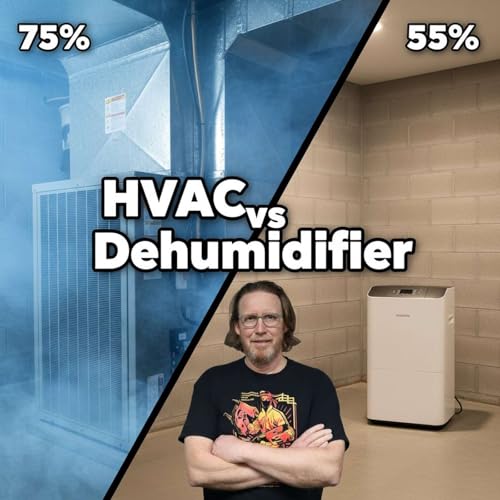
    Cold air can fool you. A basement can feel crisp at 60 degrees while humidity sneaks past 70% and turns prized gear into mold bait. We bring on Alex Hamilton from Aprilaire to demystify why HVAC systems are built to control temperature, not moisture, and how that gap leads to musty smells, surface mold, and ruined finishes in basements and crawl spaces.

    20% OFF DIY Products Code: "youtube" Use at https://supply.crawlspaceninja.com
    10% OFF DIY Mold Testing: https://fas.st/t/8cfyT8P3

    We start with the classic contractor mistake: finishing or encapsulating a space without adding a dehumidifier. Alex explains how added ductwork without resizing the system reduces coil contact time and causes short cycling, which means the AC removes less moisture even if the upstairs feels perfect. Then we dive into a real-world case of a stunning, brand-new basement with humidity near 80%—leather pockets and felt on the pool table blooming with mold—because the basement sat below the thermostat setpoint and the AC rarely ran.

    From there, we break down how dedicated dehumidifiers prioritize relative humidity and dew point, measuring inlet and outlet conditions to condense water efficiently and reheat the air so comfort rises without overcooling. We cover ducted installs from a mechanical room, RH targets for healthy homes, and why sealed basements and crawl spaces need active drying year-round. You’ll learn how reducing moisture can help the AC run less, why the stack effect moves damp air through the whole house, and the simple metrics to watch so you never get blindsided by hidden humidity again.

    If you care about indoor air quality, building durability, and true comfort, this conversation gives you the clear path: seal smart, dry proactively, and stop asking your AC to do a job it wasn’t designed to do. Subscribe, share this episode with a homeowner or contractor who needs it, and leave a review with your biggest humidity headache—we may tackle it next.

    Support the show

    Check out Michael's book, "Crawl Space Repair Myths-Busted" now available on Amazon!

    Schedule a consultation: https://buymeacoffee.com/csninja/extras

    Need help: https://crawlspaceninja.com or https://supply.crawlspaceninja.com

    Voir plus Voir moins
    9 min
  • Dormant Mold, Real Risks, Smart Fixes
    Dec 3 2025

    Send us a text

    ver wondered why “dormant mold” keeps coming back the moment the seasons change? We pull back the curtain on what dormant really means, why 50–55% humidity isn’t a cure by itself, and how a moldy subfloor turns into a hidden hazard when spray foam goes on too soon.

    • 20% OFF DIY Products Code: "youtube" Use at https://supply.crawlspaceninja.com
    • 10% OFF DIY Mold Testing: https://fas.st/t/8cfyT8P3

    AJ joins me to tackle a real homeowner question from a 1927 house with a tight crawl space and visible mold. We break down the fruiting-body concept so you understand what you’re seeing versus what’s inside the wood, then dig into wood moisture content, leak pathways, and the blind spots created by covering the subfloor. You’ll hear why foam is great for targeted air sealing at penetrations and rim joists, but risky when used to blanket a subfloor that hasn’t been remediated and dried. We share simple checks for toilet flange leaks, ice-maker lines, laundry connections, and bath drains—plus why you should listen for drip sounds on plastic ground covers as an early warning.

    From there we lay out the correct order of operations: remove visible growth, eliminate the moisture source, apply a root-killing treatment, verify dryness with a moisture meter, then insulate smart. Instead of burying problems, focus on sealing big gaps, insulating crawl space walls to reduce the stack effect, and keeping the subfloor visible for inspection. We talk practical targets for wood moisture, sizing dehumidification, and how to balance energy savings with long-term durability in older homes.

    If you’ve ever been told to “just keep humidity under 55 and spray foam it,” this conversation will save you money and headaches. Hit play to get a clear plan for mold remediation, moisture control, and crawl space insulation that protects your home for the long haul. If this helped, subscribe, share it with a neighbor, and leave a quick review—what’s your biggest crawl space question right now?

    Support the show

    Check out Michael's book, "Crawl Space Repair Myths-Busted" now available on Amazon!

    Schedule a consultation: https://buymeacoffee.com/csninja/extras

    Need help: https://crawlspaceninja.com or https://supply.crawlspaceninja.com

    Voir plus Voir moins
    10 min
  • Wet Basement Déjà Vu? Your Waterproofer Missed Something
    Nov 24 2025

    Send us a text

    Are you feeling frustrated after spending thousands on basement waterproofing only to still find water seeping in? You're not alone. This crushing disappointment is the most common complaint we hear from homeowners who've been caught in the partial solution trap.

    The truth is shocking: many contractors install quick fixes like interior drains or waterproofing paint without addressing where water actually comes from. They're treating symptoms while ignoring causes like poor exterior grading, failing downspouts, and hydrostatic pressure beneath your foundation. Basement waterproofing isn't a single solution but an integrated system - when one component is missing, water still finds its way in.

    Take our Knoxville customer who suffered flooding every spring despite having interior perimeter drains installed. Their previous contractor had installed a system that literally tried to defy physics by moving water uphill! Parts weren't even connected to the sump pump. We solved their persistent leak problem with a comprehensive approach: rerouting downspouts, upgrading the sump pump with battery backup, sealing wall cracks, installing vapor barriers, addressing mold, and adding proper dehumidification. Four years later? Not a single leak.

    The consequences of partial waterproofing extend beyond inconvenience. With 50% of your home's air coming from below, moisture issues affect your family's health through mold and allergens. Structural damage compounds over time, eventually requiring costly repairs that insurance won't cover. The average water damage restoration project costs $3,000-$7,000 - money better spent on proper waterproofing from the start.

    Support the show

    Check out Michael's book, "Crawl Space Repair Myths-Busted" now available on Amazon!

    Schedule a consultation: https://buymeacoffee.com/csninja/extras

    Need help: https://crawlspaceninja.com or https://supply.crawlspaceninja.com

    Voir plus Voir moins
    8 min
  • Waterproofing Your Home: Why "It Never Happened Before" Isn't Good Enough
    Nov 17 2025

    Send us a text

    Water will eventually find its way into your home—it's not a question of if, but when. This fundamental truth challenges the common homeowner refrain: "I've lived here for 25 years and never had water before!" As our experts explain, just because you haven't experienced a major flood doesn't mean water hasn't been infiltrating your foundation for decades.

    When homes are built, contractors disrupt virgin soil to create foundations, then backfill around them. This backfilled soil never fully compacts to its original density, creating what professionals call a "bowl effect"—a perfect pathway for water to travel toward your foundation. During normal rainfall, water may enter minimally without causing noticeable flooding, often trapped within block walls or appearing as white efflorescence deposits. But during extreme weather events like the recent Kentucky floods that dropped 14 inches of rain, that water has nowhere to go except into your home.

    The discussion reveals why traditional waterproofing approaches often fail. Exterior waterproofing only protects from the downspout pipe up—not below the footer where water can still enter. Most exterior drainage systems installed decades ago use outdated materials like terracotta pipes that become clogged over time. Simply installing a sump pump without comprehensive drainage is compared to cooling a 1,500-square-foot home with a single window air conditioner—it can't possibly address the entire space.

    Our experts detail how proper waterproofing addresses all water entry points: wall penetrations, cove joints where walls meet footers, and the hydrostatic pressure beneath concrete floors. The most effective systems include drainage pathways positioned beside (not atop) the footer, with channels connecting all problem areas to properly sized sump pumps with battery backups. This approach creates necessary pressure release points while controlling humidity levels to prevent mold growth, which requires only 24-48 hours of elevated moisture to establish.

    Ready to protect your home from inevitable water intrusion? Contact our team for a comprehensive assessment before water damage compromises your foundation, indoor air quality, and structural integrity.

    Support the show

    Check out Michael's book, "Crawl Space Repair Myths-Busted" now available on Amazon!

    Schedule a consultation: https://buymeacoffee.com/csninja/extras

    Need help: https://crawlspaceninja.com or https://supply.crawlspaceninja.com

    Voir plus Voir moins
    40 min
  • Maintenance Matters: Protecting Your Home's Mechanical Systems
    Nov 10 2025

    Neglect is the silent killer of home mechanical systems. Michael Church and Stephen Malpass dive deep into a shocking discovery at a beach house where a never-maintained dehumidifier had developed what professionals call "zooglea" - a foul-smelling bacterial growth that resembles "the jelly from a Costco chicken bag, but four times nastier."

    Order Bacazap enzyme cleaner - https://amzn.to/3GrYlkZ

    Crawl Space Ninja of Wilmington, NC

    Video mentioned - https://youtu.be/MOpv3NKwFW0

    This conversation reveals the critical distinction many homeowners miss: the difference between warranty coverage and maintenance requirements. As Stephen explains, "They get the warranty and the maintenance programs kind of mixed up. They kind of just think because there's a warranty I'm supposed to come out and constantly do this for them." This misunderstanding leads to premature equipment failure that warranty won't cover - just as car manufacturers won't replace an engine that never received oil changes.

    What makes this particularly dangerous is how these systems often fail. When condensate pumps clog or stop working, dehumidifiers continue running while water overflows, potentially causing significant damage. In crawl spaces where homeowners rarely venture, these problems can persist undetected for months. The experts recommend twice-yearly professional maintenance not just to service equipment but to comprehensively inspect the entire crawl space environment for developing issues.

    The most compelling reason to maintain these systems? Longevity and reliability. Well-maintained equipment can last twice as long as neglected systems - potentially extending from 5 years to 10+ years. Many companies, including Crawl Space Ninja, offer maintenance programs that include extended warranty coverage beyond the manufacturer's warranty, providing both professional care and financial protection.

    Don't fall into the "set it and forget it" trap. Whether you're comfortable doing maintenance yourself or prefer professional service, regular attention to your home's mechanical systems is an investment that pays dividends through extended equipment life and prevention of costly water damage. Reach out to learn more about protecting your home's foundation and mechanical systems.

    Support the show

    Check out Michael's book, "Crawl Space Repair Myths-Busted" now available on Amazon!

    Schedule a consultation: https://buymeacoffee.com/csninja/extras

    Need help: https://crawlspaceninja.com or https://supply.crawlspaceninja.com

    Voir plus Voir moins
    15 min
  • Why Crawl Space Encapsulation Actually Costs $15,000, Not $1,500
    Nov 3 2025

    Send us a text

    Tired of misleading information about crawl space encapsulation costs? In this frank, no-nonsense episode, I cut through the confusion to reveal what you'll actually pay for quality crawl space work and why those $1,500-$4,000 estimates you see online are dangerously inaccurate.

    Drawing from years of industry experience, I break down the real factors that determine crawl space encapsulation pricing. We explore the crucial difference between DIY and professional work, including the often-overlooked value of your time. Would you rather spend 3-4 weeks crawling under your house, or have professionals complete the job in 3-4 days? I share candid insights about labor costs, insurance coverage, and the significant difference between hiring experienced professionals versus day laborers.

    The discussion gets particularly eye-opening when I analyze common cost components that online estimates conveniently omit. Most homeowners don't realize that electrical work alone for a dehumidifier and sump pump can add $1,000-$1,500 to your project. Speaking of dehumidifiers—an absolute necessity for proper encapsulation—they'll cost another $1,100-$1,500 by themselves. Add in variables like crawl space size (from tiny 500 sq ft spaces to massive 4,500 sq ft areas), height challenges (some as low as 12 inches, others as tall as 22 feet!), and existing moisture or mold issues, and you quickly understand why the national average for quality encapsulation hovers around $15,000.

    I share a sobering real-world example of a homeowner who paid $25,000 for improper work that had to be completely redone for $40,000. This illustrates why focusing solely on price rather than quality creates expensive problems down the road. Whether you're considering DIY options or hiring professionals, this episode provides the honest cost breakdown you need to make informed decisions about your crawl space project. Subscribe to our channel for more straight-talking crawl space advice that could save you thousands!

    Support the show

    Check out Michael's book, "Crawl Space Repair Myths-Busted" now available on Amazon!

    Schedule a consultation: https://buymeacoffee.com/csninja/extras

    Need help: https://crawlspaceninja.com or https://supply.crawlspaceninja.com

    Voir plus Voir moins
    9 min
  • The Hidden Dangers of Mold Growing on Your Crawl Space Soil
    Oct 27 2025

    Send us a text

    That fuzzy growth on your crawl space soil isn't just "dirt being dirt" – it's a potential health hazard silently affecting your home and family. Most homeowners don't realize that the perfect mold habitat exists right beneath their feet, with all five essential growth factors readily available.

    Clay soil in your crawl space acts like a nutrient-rich refrigerator for mold, storing organic matter and vital minerals while holding moisture like a sponge – up to 55% by volume according to Cornell University research. Combined with adequate oxygen and the comfortable 60-80°F temperature your home maintains year-round, it's no wonder mold flourishes in this hidden environment. Within just 24-48 hours, mold begins its growth cycle, becoming visible within three weeks and continuously releasing spores and mycotoxins that can infiltrate your living space.

    The health implications shouldn't be ignored. These microscopic invaders can trigger allergic reactions, exacerbate respiratory conditions, and gradually weaken your immune system through prolonged exposure. But before you grab a shovel to remove that moldy soil, stop! Disturbing contaminated soil triggers mold's defense mechanisms, sending spores airborne to colonize new areas of your home. Instead, professional remediation through proper waterproofing, encapsulation, and dehumidification creates an environment where mold simply cannot thrive. Your crawl space deserves professional attention – not just for your home's structural integrity, but for your family's long-term health and wellbeing. Ready to address that moldy soil properly? Check out my comprehensive guide to crawl space repair and protect what matters most.

    Playlist mentioned in video: https://www.youtube.com/playlist?list=PLxsYiAum9ovwBw3L_-MD37h2rGoh4ho3p

    Support the show

    Check out Michael's book, "Crawl Space Repair Myths-Busted" now available on Amazon!

    Schedule a consultation: https://buymeacoffee.com/csninja/extras

    Need help: https://crawlspaceninja.com or https://supply.crawlspaceninja.com

    Voir plus Voir moins
    9 min